
 •
• English
 日本語
日本語 Español
 Português
 Français
 Polski
 Deutsch
 Italiano
 Nederlands
 한국어
한국어 Русский
 简体中文
简体中文




Apr



By Steve Pawlyk
Published April 10, 2026
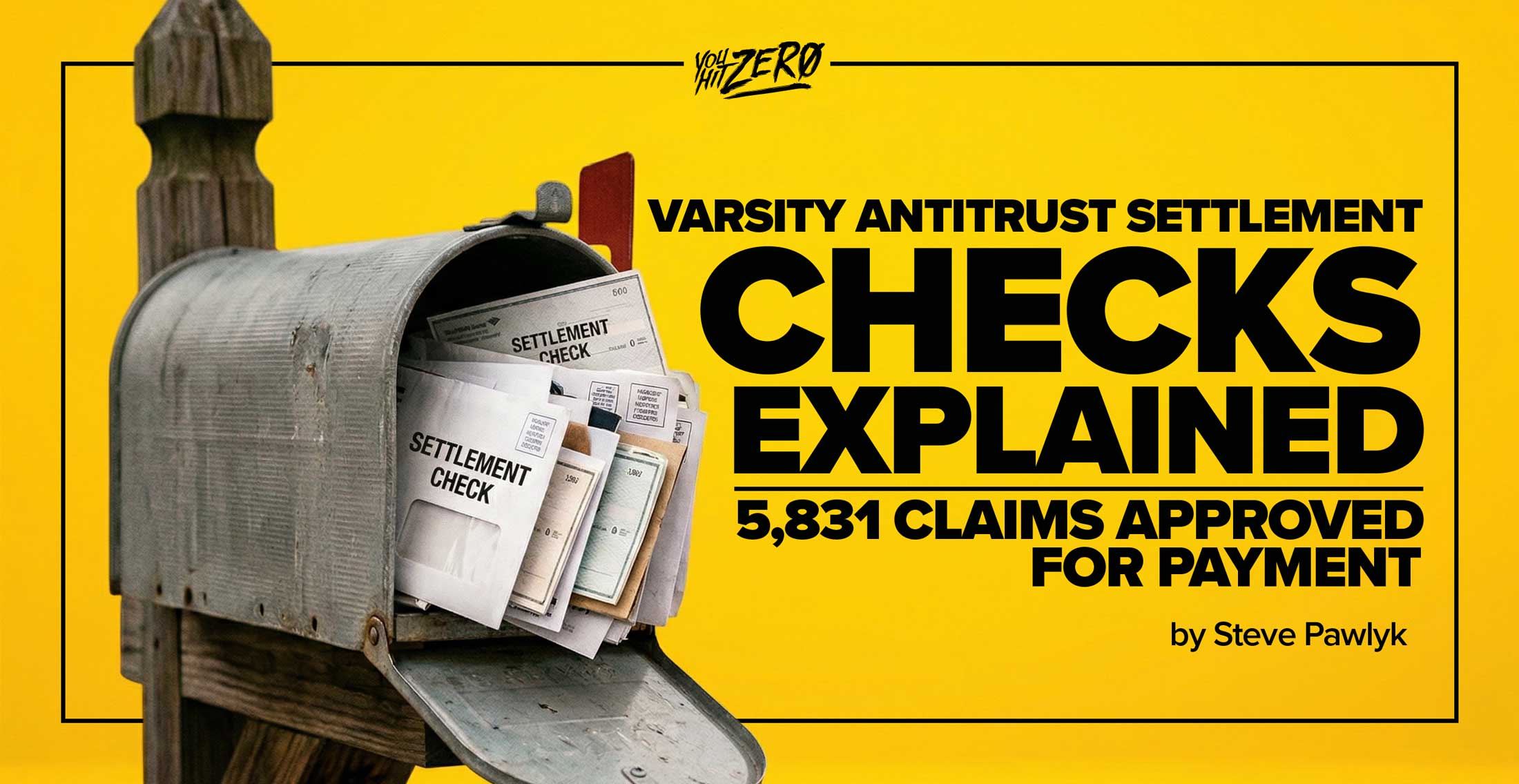
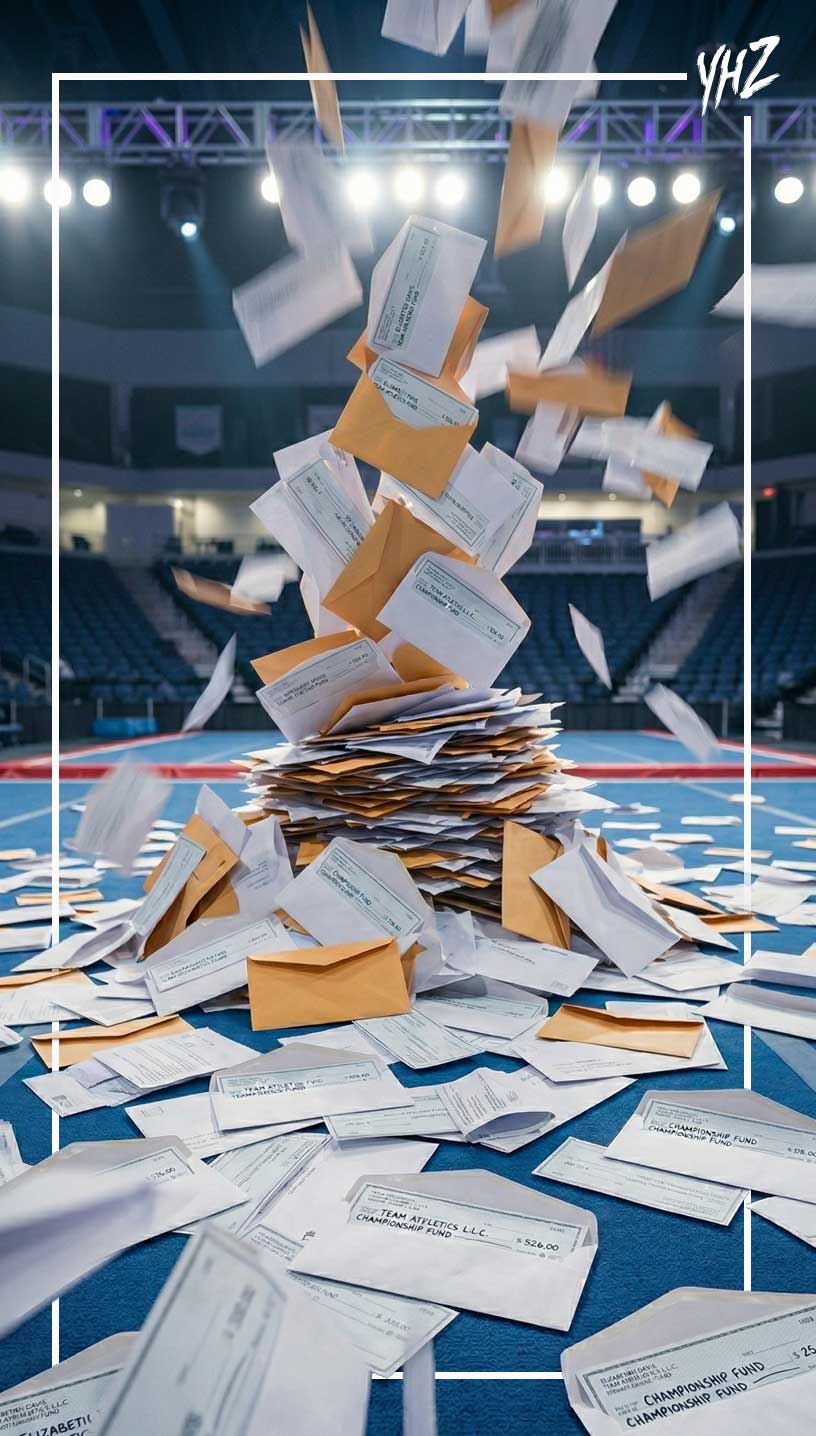
After years of litigation, a federal judge approved the final distribution of funds in the $82.5 million antitrust settlement involving Varsity Brands and related defendants. The court’s February 12, 2026 order cleared payments to eligible claimants, and the numbers are not small: 8,875 claims were processed, 5,831 were ultimately deemed valid and payable, and $47,708,437.40 was approved for distribution to the state-law damages class. The estimated average payment came out to $8,181.86, with projected payments ranging from $334.67 to $51,604.97.
That means the Instagram post making the rounds is basically right on the core facts. It is not just rumor, and it is not one of those class-action situations where people wait years for a coupon and a shrug. Real payments have started hitting mailboxes and accounts. Cheer Daily reported on March 27, 2026 that it had confirmed multiple family payments, including examples around $8,000 and $12,000, with one reported payout of $18,570.90 tied to documented participation spanning multiple years.
What the Varsity Brands antitrust settlement was about
The lawsuit accused Varsity and related entities of maintaining and exploiting monopoly power across cheer competitions, camps, and apparel. In the court-approved long-form notice, plaintiffs alleged that Varsity used an exclusionary scheme involving acquisitions, exclusive dealing, and collusion with USASF, and that this conduct caused families and others to overpay for cheer competitions, camps, and apparel. Defendants denied wrongdoing and maintained that their conduct was pro-competitive and that they had valid defenses.
That matters because this case was never just about one fee, one event, or one invoice. The broader accusation was that the structure of competitive cheer itself had become too concentrated, and that families were effectively paying the price for that concentration year after year. The court did not rule on the merits at trial because the case settled, but the settlement amount and the accompanying business-practice changes make it clear this was a major industry case, not background noise.
Why only 5,831 claims were approved
This is the part a lot of social posts leave out.
The settlement was not a blank check for everyone in cheer. The damages class was limited to people and entities in 33 states plus the District of Columbia that indirectly paid Varsity or a Varsity affiliate between December 10, 2016 and March 31, 2024 for eligible categories including competition-related fees, apparel, camp fees, and certain accommodations. The approved states were Arizona, Arkansas, California, Connecticut, D.C., Florida, Hawaii, Idaho, Iowa, Illinois, Kansas, Maine, Massachusetts, Maryland, Michigan, Minnesota, Mississippi, Missouri, Montana, Nebraska, Nevada, New Hampshire, New Mexico, New York, North Carolina, North Dakota, Oregon, Rhode Island, South Dakota, Tennessee, Utah, Vermont, Washington, West Virginia, and Wisconsin.
So right away, a huge chunk of the cheer world was never in line for damages payments. Texas, Georgia, and Alabama were not part of the damages class, despite being massive states in competitive cheer. Cheer Daily highlighted that exclusion too, and it is a big reason the final number of paid claims was far lower than the number of people who may have thought they were covered.
On top of that, claimants had to actually submit a valid claim, provide proof of participation, and affirm their purchases under penalty of perjury. The court-approved notice said participation documentation was required, and the settlement administrator could ask for additional records tied to events, purchases, participants, or residency. Claims with deficiencies were given a chance to be corrected, but not everyone made it through that process. The final court order states that all initially deficient claimants were offered an extended deadline to resubmit, yet only 5,831 claims were ultimately deemed valid and payable out of 8,875 reviewed.

How the money was divided
The $82.5 million headline number was never the amount families would split directly.
According to the February 2026 court order and the settlement administrator’s final report, the settlement included $27.5 million in attorneys’ fees, $7,450,156.47 in litigation costs, $125,000 in service awards for the named plaintiffs, taxes and related fees, and notice and administration expenses. After those deductions, the net settlement fund available for approved claimants was $47,708,437.40. The court also approved withholding $200,000 to handle any remaining disputes or unexpected distribution issues.
From there, the net fund was divided into three pools: 53% for competitions, 26% for camps, and 21% for apparel. Payments were then calculated on a pro rata basis according to the number of years a claimant made valid purchases in each category, rather than simply reimbursing exact receipts dollar for dollar. That structure explains why payouts vary so much. A family with many documented years in the system could land a dramatically larger payment than someone with a short or lightly documented participation window.
Why these payouts are getting so much attention
Because in cheer, families are used to the opposite experience.
They are used to paying. They are used to fees stacking on top of fees, and they are used to being told that this is just what serious participation costs. So when a settlement produces real checks in the thousands, it instantly hits a nerve. It feels less like abstract legal paperwork and more like a public acknowledgment that the financial burden in this industry may have gone way too far for way too long.
And honestly, that is the real story here.
Yes, the settlement is about money. But culturally, it is also about validation. For years, families, gym owners, and industry people have complained that the cost structure around competitive cheer had become bloated, consolidated, and hard to escape. This settlement does not prove every complaint was legally correct in the way a trial verdict would have, but it absolutely confirms that the concerns were serious enough to generate an $82.5 million resolution and court-supervised industry changes.
The business changes may matter more than the checks
This is the part that should not get buried.
The court-approved settlement notice says Varsity agreed to several business-practice changes. Among them: Varsity cannot condition eligibility for an end-of-season championship on prior attendance at a Varsity-owned cheer camp; it cannot require exclusive purchasing arrangements as a condition for participation in rebate or discount programs tied to cheer competitions; and it cannot require participants in 35% or more of its cheer competitions to stay at Varsity-approved accommodations as a condition of competing. The settlement also imposed limits on how USASF can share certain confidential information from event producers.
Those changes are not as flashy as a check, but they may be the more important long-term piece. A one-time payout is nice. Structural change is what actually alters the experience of future athletes, gyms, and families.
What cheer families should understand right now
First, if you already filed and your claim was validated, the distribution phase is real. This is not speculation anymore. The court approved it, and reporting shows payments have started reaching recipients.
Second, if you did not file a claim by the court-approved process, this is almost certainly not something you can jump into now. The February 2026 order states that no further claims received by the administrator shall be allowed.
Third, if you were in cheer during the class period but live in a non-covered state, that is likely why you are seeing others get paid while you get nothing. That is not necessarily because your experience was different. It is because the damages class was built around specific state-law claims, not a full nationwide damages recovery.
The bigger takeaway for the cheer industry
This settlement lands at a weird but important moment for cheer.
The sport keeps growing. The costs keep climbing. Families keep stretching themselves to stay in it. At the same time, the industry still has serious unresolved questions about market power, pricing, transparency, and who actually benefits from the current structure.
So no, this is not just a legal footnote. It is a signal flare.
If 5,831 approved claims are now splitting more than $47.7 million after fees and costs, then the economic pressure points in cheer were substantial enough to survive years of litigation and produce one of the most consequential settlements the industry has ever seen.
And that is why this story matters even to people who are not getting a check.
Because the real question is not only who got paid.
It is whether competitive cheer is finally being forced to confront the business model that made a case like this possible in the first place.

IPP's Premade Mixes are USA Cheer Compliant and customizable! Add Sound FX, swap songs, & more! Add your Team Name to the mix for only $10!

 Cheer Mixes
 Past-Season Mixes (40% off!)
 You Hit Zero Cheer Blog
 Spotify Playlists
 Quick Quote Video Tutorial