
 •
• English
 日本語
日本語 Español
 Português
 Français
 Polski
 Deutsch
 Italiano
 Nederlands
 한국어
한국어 Русский
 简体中文
简体中文





Aug



By Steve Pawlyk
Published August 4, 2026
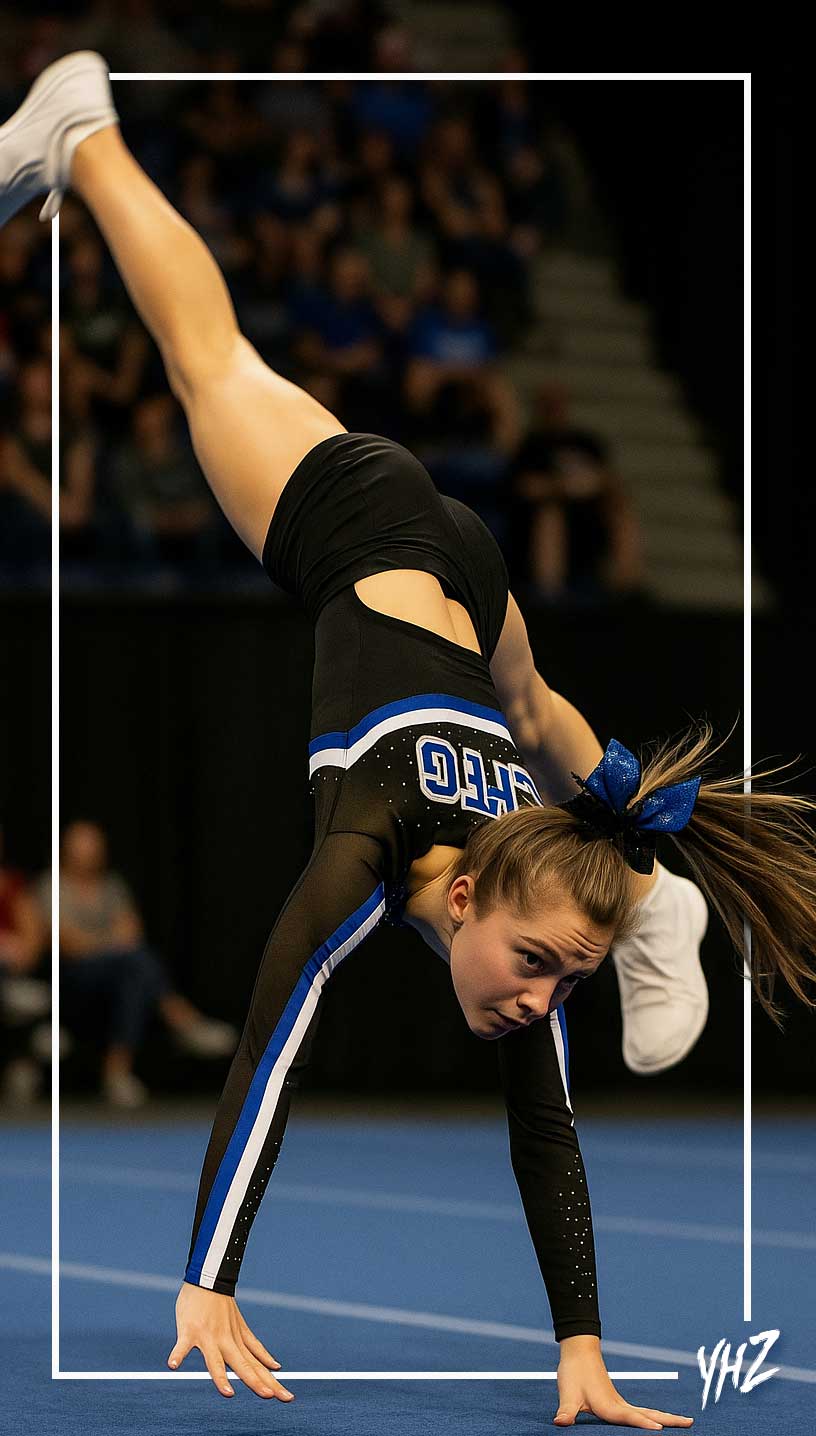
Cheer camp can make a team feel like it improved an entire season in four days.
Athletes learn new stunts. Captains come home motivated. Coaches have videos, notes, cheers, dances, warmups and corrections they swear they will remember. Everyone is tired, sore and excited about what the team could become.
Then regular practice starts.
Two weeks later, half the new material has disappeared. The stunt that hit at camp will not hit in your gym. Athletes remember different versions of the same motion sequence. Coaches move on to the next deadline before deciding which camp lessons belong in the season plan.
That is why every program needs a cheer camp follow-up plan.
Many teams are returning from camp right now. Recent NCA cheer camps included sessions at Shippensburg University from July 27 through August 3, the Gaylord Texan from July 30 through August 2 and the Renaissance Esmeralda from August 3 through August 6. UCA also held a University of Texas camp from July 23 through July 26.
The timing matters. What coaches do during the first month after camp will decide whether those four days become part of the team’s season or simply become a collection of videos on everyone’s phone.
Soooo…here’s a practical 30-day plan for turning camp progress into cleaner practices, safer skills and material your athletes can still perform when the season picks up
Why cheer camp material disappears so quickly
Camp is a controlled environment.
Your team has long practice blocks, instructors standing nearby and very few outside responsibilities. Athletes are surrounded by other teams working hard. They get immediate corrections and more repetitions than they normally would during a school-week practice.
That environment helps athletes learn quickly. It can also give coaches a misleading picture of what the team owns.
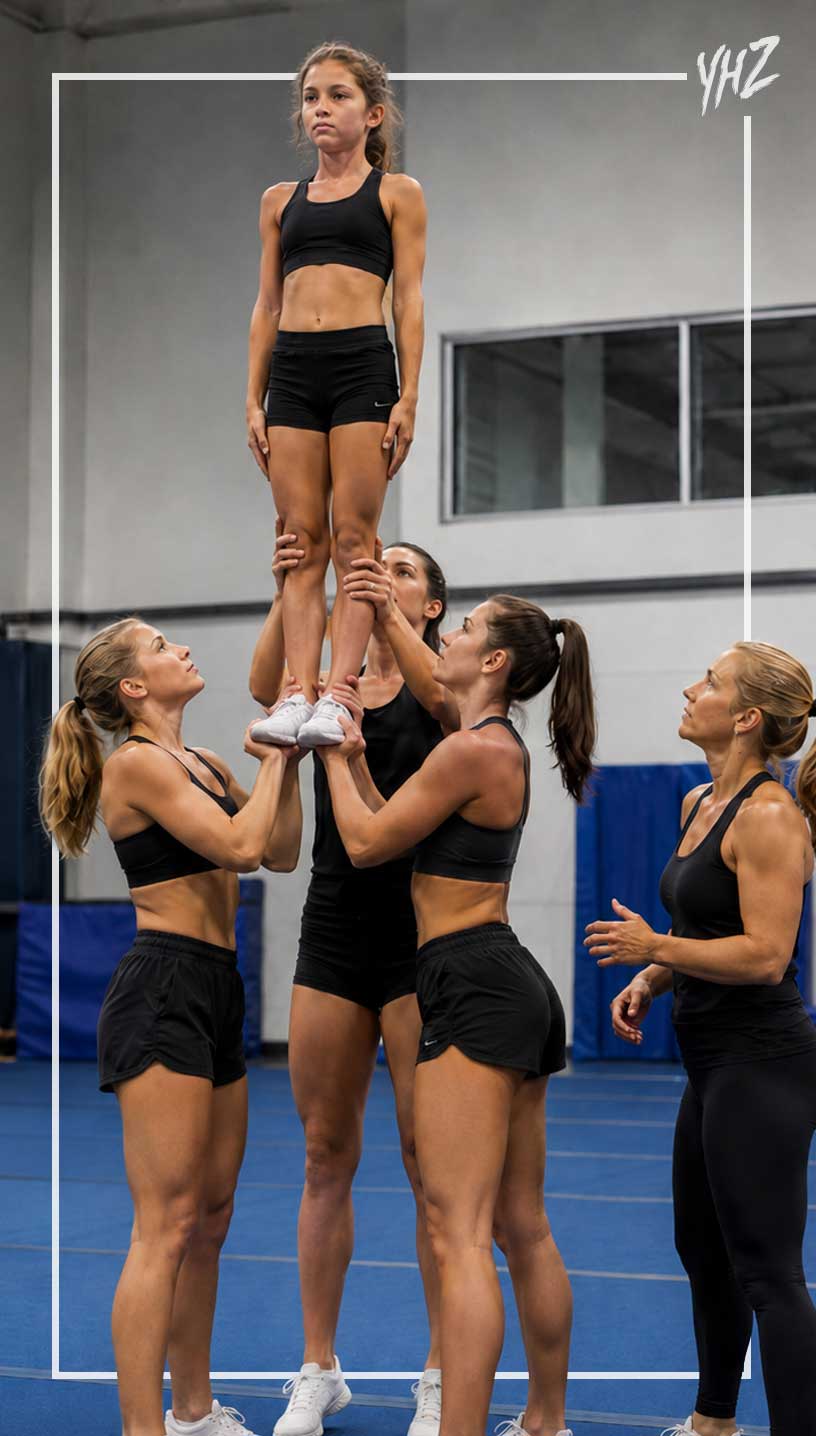
A stunt that hits twice with an instructor nearby is not automatically ready for a football game. A dance athletes performed after learning it that morning may look completely different a week later. A team can leave camp understanding a correction without having repeated it enough to make it a habit.
NCA overnight camps include both game day and performance training, while other camp formats may concentrate on leadership, skills, non-building material or custom instruction. Home camps can also be adjusted to spend more time on areas such as stunts, pyramids or baskets.
Your follow-up plan should match what your team actually worked on. A squad that spent four days learning game day material needs a different first month than a team that used camp to rebuild stunt technique.
The problem starts when coaches try to keep everything.
You do not need every cheer, dance, transition and stunt variation taught at camp. You need the material that fits your athletes, your schedule and the jobs your team must perform this season.
Before the first practice back, meet with your staff
Do not wait until athletes walk into the gym to decide what happens next. Set aside 45 minutes for the coaching staff. Include assistants, choreographers and any captains who need to understand the plan.
Bring your camp notes, score sheets, instructor feedback and videos. Put everything in one shared folder before the meeting. If four coaches each have different clips on their phones, nobody has a complete record of what happened.
During the meeting, answer these questions:
- What improved most during camp?
- Which corrections did athletes hear repeatedly?
- Which skills only worked with instructor assistance?
- Which material fits our actual season?
- What caused the team the most trouble?
- Did anyone leave camp injured, unusually sore or mentally discouraged?
- What do we want to look different 30 days from now?
Be specific. “The stunts got better” isn’t super helpful…“Our main bases stopped stepping forward during full-ups after the instructor changed their starting position” gives you something you can coach.
“Game day improved” is too broad….“The team’s volume dropped whenever they added signs and poms” tells you what to test at home.
End the meeting with no more than 4 priorities for the month. Your team may have learned 20 things at camp. They can’t treat all 20 as equally urgent.

Sort every piece of camp material
Create one list of everything the team brought home. Include:
- Cheers and chants
- Band dances and timeout material
- Fight song changes
- Stunts and stunt variations
- Pyramid ideas
- Basket drills
- Tumbling corrections
- Jump drills
- Warmups and conditioning
- Leadership exercises
- Team traditions
- Practice-management ideas
Give each item one of four labels:
Ready now
The team remembers it, can perform it safely and has an immediate use for it.
This might include a sideline cheer, a motion correction or a conditioning drill you want to use every week.
Needs work
The material fits your team, but the athletes do not own it yet.
Most new stunts and dances will probably land here. That is fine. “Needs work” means the material earns practice time. It does not mean you should put it into a performance immediately.
Save for later
The idea may help during basketball season, competition season or a future phase of training, but it does not deserve time right now.
Save the video and notes. Add a date for reviewing it again. Without a review date, “later” usually means “never.”
Cut it
Some camp material will not fit your team.
Maybe the cheer is too long. Maybe the stunt requires a top athlete you do not have. Maybe another team in your conference already uses the same dance. Maybe you simply dislike it.
Cutting material is part of coaching. Camp gave you options. It did not give you an obligation to use every option.
Days 1 through 3: Recover, review and take inventory
Your first practice after camp should not be a test of toughness.
Athletes may be dealing with sore wrists, ankles, backs or shoulders. Some will have bruises they ignored during camp because they wanted to keep participating. Others may be mentally drained after several long days of learning and performing.
Start practice with a physical check-in. Ask athletes to report pain, not just general soreness. Make it clear that honesty will not cost them a position.
The USA Cheer Cheerleading Safety Manual covers performer readiness, medical responsibilities, spotting and skill progression. Those standards still apply when a team returns home excited about new skills. A camp success does not replace your normal readiness and progression requirements.
Use the first practice to see what athletes remember without turning it into a pass-or-fail evaluation.
Ask the team to perform camp material in small sections. Record each attempt. Do not provide several minutes of reminders before the first run. You need to see what remained after the athletes left the camp environment.
You will probably find three kinds of memory:
- Material the athletes remember accurately
- Material they remember with small differences
- Material they barely remember at all
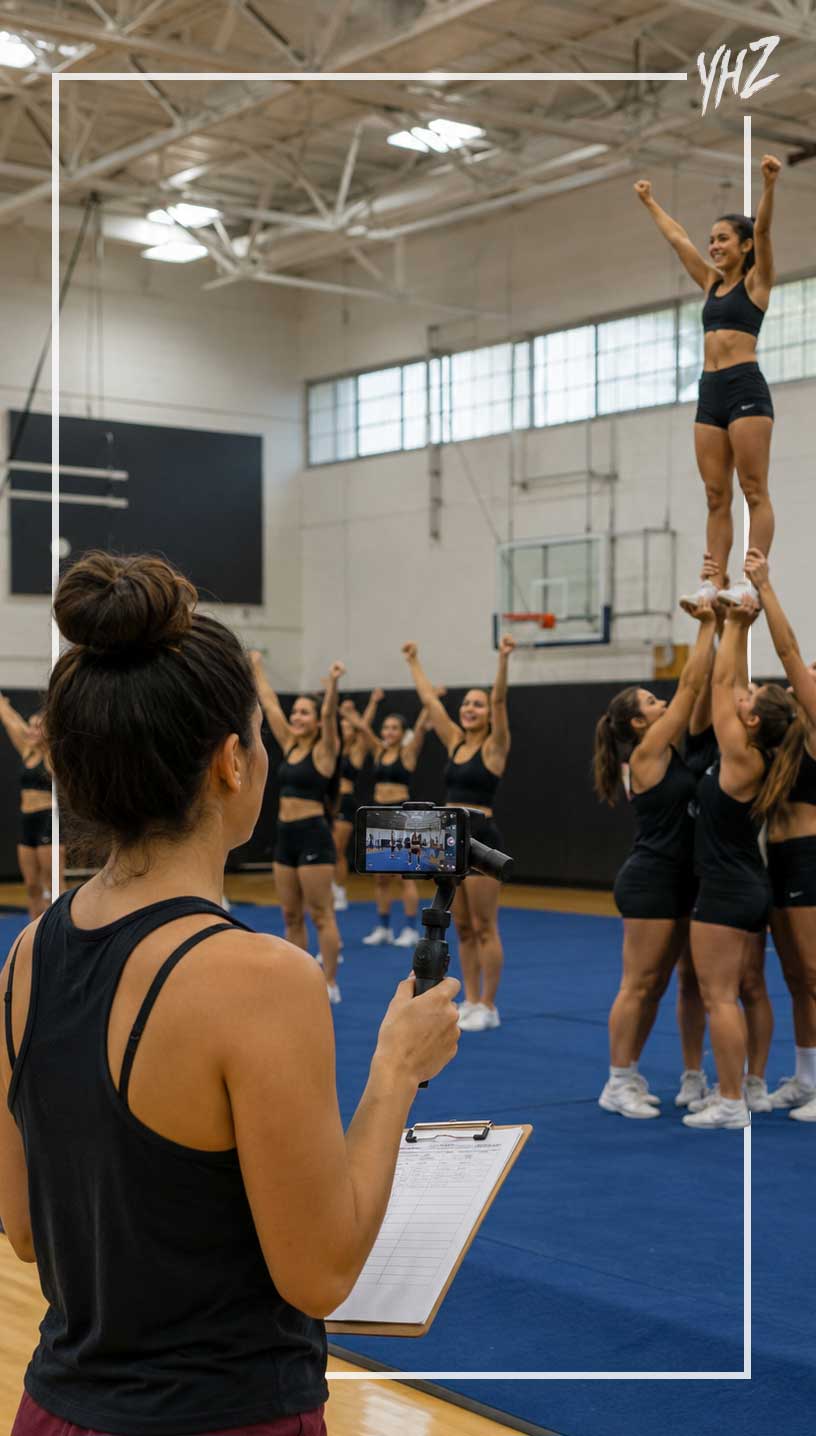
Do not spend an hour rebuilding a routine nobody retained. Save the video, decide whether the material is worth relearning and keep practice moving.
A sample first practice back
Try this structure for a two-hour practice:
First 15 minutes: Athlete check-in, light movement and mobility
Next 20 minutes: Review cheers, dances and motions without extensive coaching
Next 25 minutes: Revisit stunt grips, body positions and timing on the ground or at a reduced level
Next 10 minutes: Water break and staff discussion
Next 30 minutes: Test the two or three camp skills most likely to become part of the season
Next 15 minutes: Review the correction that helped the team most at camp
Final 5 minutes: Explain the 30-day plan and tell athletes what they should review before the next practice
The goal is to collect information. You are not trying to recreate the final night of camp.
Days 4 through 7: Test camp skills in your own environment
Camp conditions are different from home.
The floor may feel different. Ceiling height may change what athletes are comfortable throwing. Your normal practice could be shorter. An instructor who helped identify a timing problem is no longer standing beside the group.
This week, find out which improvements survive those changes.
Start new stunts below their highest camp level. Check grips, feet, timing and athlete confidence before adding difficulty. If the group learned a full-up to extension, begin with the entry at prep level. If they learned a new pyramid connection, test each piece separately.
You are looking for repeatability.
A stunt that hits once and falls four times is not ready. A stunt that requires a different save on every attempt is not ready. A skill that only works when the strongest coach spots one side is not ready.
That does not mean the stunt was a bad choice. It means you have found its current place in the progression.
Track the following for each stunt group:
- Number of attempts
- Number of clean hits
- Where the skill breaks down
- Whether the same mistake repeats
- How much coaching or spotting is required
- Whether athletes can explain the correction themselves
The last point matters. Athletes who understand why a correction works are more likely to reproduce it when the coach moves to another group.
Keep the language athletes heard at camp
Ask athletes what words the instructor used when the skill improved.
Maybe the instructor said “wait for the dip,” “hips under,” “finish through the top” or something else that clicked with the group. Write that language down and use it consistently.
Coaches sometimes replace a successful correction with their own preferred wording. That can create unnecessary confusion. If the camp cue worked and it is technically sound, keep it.
Week 2: Decide what stays in the season plan
By the second week, the excitement has settled enough for you to make better decisions.
Review your videos from camp and your first week at home. Move each item into one of these categories:
- Use immediately
- Continue developing
- Revisit on a specific date
- Remove from the plan
Be honest about your practice time.
If you have two 90-minute practices each week, you cannot maintain the same amount of material as a team practicing four days a week. Keeping too much creates rushed practices and half-clean performances.
Choose material based on where your team will use it.
For sideline and game day material
Ask:
- Can athletes perform it while watching the game?
- Is the wording easy for the crowd to follow?
- Does it work with your signs, poms or megaphones?
- Can the team maintain volume while moving?
- Is it different enough from your existing material to earn a place?
- Does it fit the moments your team regularly encounters?
A cheer can look great in a quiet camp setting and fall apart beside a loud student section. Practice it with noise. Have someone call out game situations. Make athletes find their spacing quickly instead of walking into perfect lines.
For competition material
Ask:
- Does the skill fit your division and routine needs?
- Can the team perform it when tired?
- Does it connect cleanly to the skills before and after it?
- Will the skill score well enough to justify its risk and practice time?
- Do you have backup athletes who understand the positions?
- Can the group hit it without constant coach intervention?
Do not place a camp stunt into choreography simply because athletes love it.
Athletes usually love the newest and hardest option. Your job is to decide whether it makes the routine better.
For practice drills
Keep drills that solve a problem you see regularly.
A drill may have helped one stunt group at camp but be unnecessary for the rest of the team. Another drill may be useful enough to become part of every warmup.
Assign each drill a purpose. Athletes should know whether it is improving timing, strength, body position, technique or confidence. Randomly repeating camp drills will make practice feel busy without making it productive.
Week 2 is also the time to reset expectations
Camp can temporarily change team dynamics.
An athlete may have won an individual award and returned with more confidence. Another athlete may have struggled in front of instructors and returned questioning her role. Captains may expect the team to maintain camp-level intensity at every practice.
Talk about it.
Explain what camp results mean and what they do not mean.
An award recognizes what an athlete showed during camp. It does not settle every lineup decision for the season. Struggling with one skill does not erase an athlete’s value. A great final-day performance does not mean the team can stop drilling fundamentals.
Give athletes clear jobs for the next two weeks.
One athlete may need to review material before practice. Another may need to improve her conditioning. A stunt group may need ten focused repetitions of the same entry at every practice.
Athletes handle corrections better when they know what success looks like.
Week 3: Connect camp lessons to regular practice
By the third week, camp should stop feeling like a separate event.
The useful parts should now appear in your normal practice structure.
If the team learned a better jump warmup, put it into the warmup. If athletes improved their motion placement, hold that standard during every cheer. If a stunt correction worked, use it across groups instead of treating it as a one-time camp note.
This is where coaches often lose progress. They review camp material for two weeks, then return to the same practice habits they used before camp.
Choose one camp lesson for each part of practice:
- Warmup
- Motions and jumps
- Stunts
- Tumbling
- Game day material
- Conditioning
- Team communication
You do not need a new lesson in every category. Use only what made a measurable difference.
Give athletes ownership without handing over practice
Captains and experienced athletes can help maintain camp material, but their role needs boundaries.
Assign one athlete to call a cheer review. Ask another to check whether a stunt group is using the agreed starting position. Have captains maintain the shared video folder.
Do not ask athletes to correct advanced technique they are not qualified to coach. Athlete leadership works best when the assignment is specific.
“Help everyone remember camp” is vague.
“Run the first five minutes of the sideline review using the videos in our folder” is clear.
Week 3 pressure test
Once material looks comfortable, change the conditions.
You are checking whether the team can perform the material while handling the distractions that come with the season.
Clean skills should survive small changes.
For game day material:
- Add crowd noise
- Use poms and signs
- Put athletes in their actual sideline spacing
- Call cheers from unexpected situations
- Require athletes to react without a long setup
- Run material after jumps or conditioning
For stunt material:
- Run the skill after a normal practice block
- Change which side of the floor the group uses
- Add the transition before the stunt
- Require the group to reset within a time limit
- Test backup athletes at safe progression levels
- Record from the front and side
Week 4: Record a new baseline
At the end of 30 days, film the same material you recorded during your first practice back. Use the same angle whenever possible. Do not choose only the best attempt. Record enough repetitions to show the team’s normal level.
Compare the videos with your staff & look for specific changes:
- Are motions arriving together?
- Has stunt timing become more consistent?
- Are athletes using the corrections without reminders?
- Can the team perform while tired?
- Is game day material loud and easy to follow?
- Did any pain or fear appear as repetitions increased?
- Has the material earned a permanent place in practice?
Share selected comparisons with athletes. Showing the team that its work produced visible improvement can be more effective than another speech about effort.
You should also identify what did not improve. Maybe the stunt is still inconsistent. Maybe the dance takes too much practice time. Maybe the cheer is difficult for the crowd to understand. Removing something after 30 days is not failure. It is a coaching decision based on evidence.
What to do when a camp stunt stops working
This happens every year: The stunt hit at camp. The group felt confident. Everyone came home expecting to use it. Now it will not stay in the air.
Start by comparing the camp video with your current attempts.
Check:
- Starting positions
- Grip placement
- Dip speed
- Footwork
- Flyer timing
- Base spacing
- Where athletes are looking
- Whether the group pauses between counts
- Which person begins correcting the stunt after a miss
Do not let the group redesign the skill after every attempt. Pick one correction, reduce the difficulty and repeat the corrected version. If the group cannot perform the lower progression consistently, stay there. Athletes may see that as moving backward. It is usually the fastest way forward.
Also consider whether the camp environment hid a personnel problem. An instructor may have provided a spot that changed the group’s confidence or timing. Another athlete may have filled a position for part of the session. The group may have attempted the stunt while fresher than it is during regular practice.
None of that makes the camp success fake. It tells you what support the group still needs.
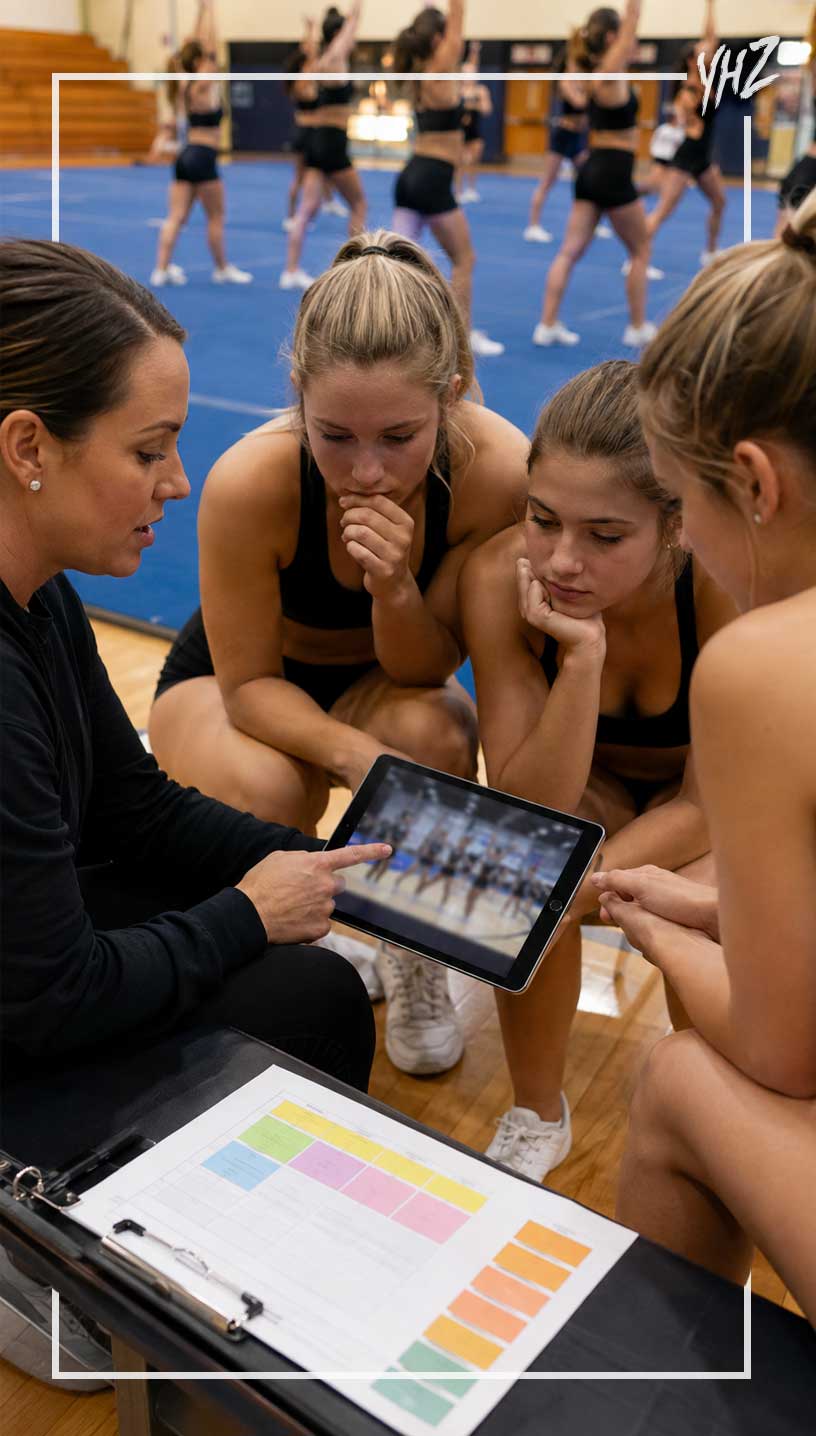
What to do with all those camp videos
Create one shared folder for the team. Do not rely on social media posts or group-message history. Those are difficult to search, and important clips will disappear beneath hundreds of unrelated messages.
Organize the folder by subject:
- Cheers
- Dances
- Stunts
- Pyramids
- Tumbling
- Jumps
- Instructor corrections
- Team performances
- Leadership notes
Name files clearly. “IMG_4837” tells you nothing. “Varsity full-up correction, left group, day two” is much easier to find in October.
Keep a second folder for coaches only. Use it for lineup discussions, injury information, athlete evaluations and anything else that should not be shared with the full team. Choose a few team videos for at-home review. Do not send athletes 40 clips and expect them to know which ones matter.
A simple camp follow-up assignment for athletes
Give each athlete a short reflection during the first week back.
Ask them to answer:
- What correction helped you most?
- What skill do you understand better now?
- What material do you need to review?
- Where did you struggle?
- What is one job you can take responsibility for this month?
- Is there any pain, fear or confusion the coaching staff should know about?
This gives quieter athletes a chance to communicate without speaking in front of the team. Read the answers. If athletes take the time to be honest and nothing changes, they will stop giving you useful information.
The biggest mistakes coaches make after cheer camp
Trying to keep every piece of material
Camp gives you a menu. Choose what your team needs.
Throwing new skills into performances too soon
A stunt that worked at camp still needs to pass your normal safety and consistency standards.
Forgetting the exact corrections that worked
Write down the instructor’s language while it is fresh.
Running a punishing first practice back
Tired and sore athletes do not need to prove their commitment by taking unnecessary repetitions.
Treating camp awards as permanent rankings
Use awards as recognition, not as the entire basis for lineup decisions.
Returning to the old practice routine
If camp taught your team a better way to warm up, communicate or correct skills, put it into the weekly plan.
Waiting too long to review material
The longer you wait, the more time you will spend reteaching.

Your 30-day cheer camp follow-up checklist
Before practice resumes
- Collect coach and athlete videos
- Save instructor feedback
- Hold a staff debrief
- Identify injured or unusually sore athletes
- Choose the month’s top priorities
- Sort material into ready, needs work, later or cut
During the first week
- Test what athletes remember
- Rebuild stunts through safe progressions
- Keep the camp cues that worked
- Record the first attempts
- Choose which material deserves practice time
- Explain the follow-up plan to athletes
During the second week
- Make final keep-or-cut decisions
- Assign athlete review responsibilities
- Connect material to actual game or competition needs
- Set measurable standards for each skill
- Speak privately with athletes whose confidence changed at camp
During the third week
- Add useful camp lessons to regular practice
- Test material under realistic conditions
- Practice transitions and equipment
- Check whether athletes can self-correct
- Introduce backup personnel where appropriate
At the end of 30 days
- Record a new baseline
- Compare it with the first week
- Review pain, fear and readiness
- Remove material that has not earned its place
- Set the next month’s priorities
- Tell athletes what improved and what comes next
Cheer camp should change something
Camp does not need to transform your entire program.
It should change something specific.
Maybe your stunt groups now understand timing. Maybe your sideline material is cleaner. Maybe captains communicate better. Maybe your staff finally found language that helps athletes understand a correction.
The coach’s job is to notice what worked, build it into practice and let go of the rest.
Thirty days from now, your team probably will not remember every cheer it learned at camp. That is normal. The goal is for your athletes to retain the lessons that make them safer, cleaner and easier to coach throughout the season.
That is how cheer camp becomes more than four exhausting days in the summer. ☺️

IPP's Premade Mixes are USA Cheer Compliant and customizable! Add Sound FX, swap songs, & more! Add your Team Name to the mix for only $10!




Frequently asked questions about cheer camp follow-up
How soon should a team practice after cheer camp?
The answer depends on travel, athlete soreness and your normal schedule. Avoid returning immediately to full-intensity repetitions when athletes are unusually tired or experiencing pain. Your first practice should include a physical check-in and a controlled review of what the team learned.
Should we use every cheer and dance learned at camp?
No. Keep material that fits your team’s game day responsibilities, identity and available practice time. Save other material for later or remove it from the plan.
When is a stunt learned at camp ready to perform?
A stunt is ready when athletes can perform it safely and repeatedly under normal practice conditions without unusual assistance. Coaches should also test the entry, exit, transitions and athlete readiness before using it in public.
How can athletes remember cheer camp material?
Record clear videos, organize them in a shared folder and assign small review sections before practice. Review the material within the first few days instead of waiting several weeks.
What should coaches discuss after cheer camp?
Coaches should review athlete health, repeated corrections, skill readiness, material retention, season needs and which camp lessons should become part of regular practice.
 Cheer Mixes
 Past-Season Mixes (50% off!)
 You Hit Zero Cheer Blog
 Spotify Playlists
 Quick Quote Video Tutorial