
 •
• English
 日本語
日本語 Español
 Português
 Français
 Polski
 Deutsch
 Italiano
 Nederlands
 한국어
한국어 Русский
 简体中文
简体中文




Sep



By Steve Pawlyk
Published September 8, 2026
Many athletes participate in all-star and school cheer during the same season. Each coach may see a reasonable schedule, while the athlete experiences something very different. School practices, games, tumbling classes, all-star practices, and weekend travel can fill every day. Homework and sleep must fit around whatever time remains.
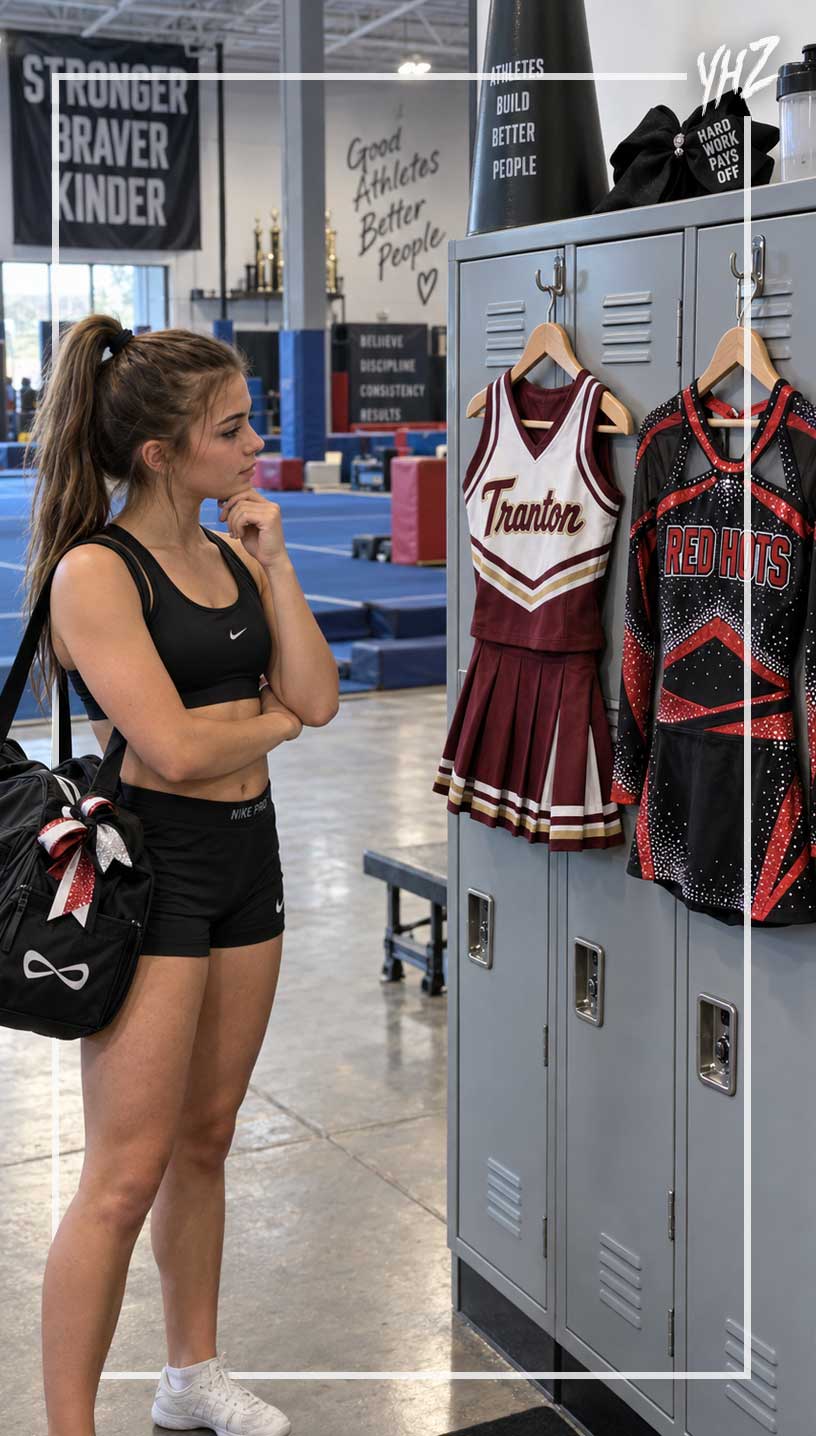
Doing both programs can work for some athletes. It can also create an exhausting schedule that neither coach fully understands. The problem starts when each program acts like the other one does not exist. An athlete only has one body, regardless of how many uniforms hang in the closet.
Coaches do not need to fight over ownership of an athlete. They need to see the complete workload and make informed decisions. That requires honest schedules, protected recovery, and clear attendance rules before the season begins.
Two Cheer Teams Create One Combined Workload
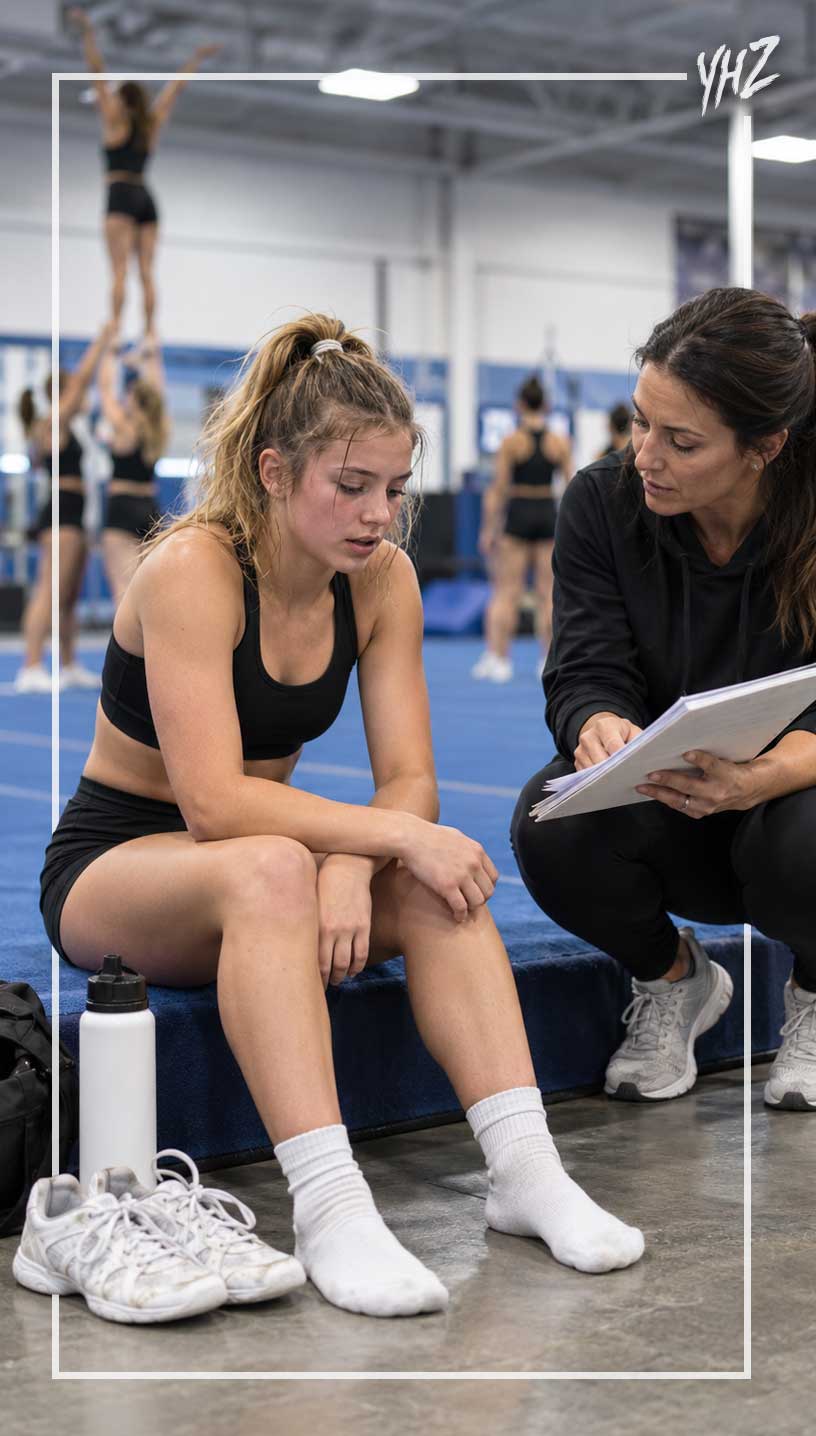
School and all-star cheer may have different goals, but they use many of the same physical skills. Both programs can include tumbling, jumps, stunts, baskets, pyramids, conditioning, and full-out routines. The athlete does not recover separately for each team. Every repetition contributes to the same weekly load.
A school coach may schedule two practices, a football game, and a Saturday competition. The all-star coach may add three practices, a tumbling class, and a Sunday event. Neither schedule looks extreme when viewed alone. Together, they can leave the athlete without a full recovery day.
This situation differs from seasonal participation in two distinct sports. All-star and school cheer repeat many of the same movements and impact patterns. The athlete may perform running tumbling for both teams within several hours. They may also base, backspot, or fly through dozens of added stunt repetitions.
The American Medical Society for Sports Medicine warns against simultaneous participation on multiple teams in the same sport. Its guidance links overscheduling with overtraining, injury, illness, sleep problems, stress, and burnout.
USA Cheer also recognizes the schedule problem. Its youth and junior national team guidance discourages athletes from joining multiple cheer teams during national team preparation. USA Cheer cites the number of required practices as the reason.
That does not mean every athlete must choose one team. It means coaches should stop treating dual participation as a harmless scheduling detail.
Coaches Usually See Only Half the Problem
A coach knows when an athlete attends that coach’s practice. They may not know what happened during the previous six hours. The athlete could arrive from another practice after completing full-outs, tumbling passes, or repeated elite stunts.
Young athletes often describe every practice as “fine.” They may worry that honest fatigue will cost them a position. Some athletes also believe that constant soreness proves commitment. That silence prevents both coaches from adjusting the workload.
Parents may know the schedule but lack the technical context. Two hours of choreography does not place the same demand on an athlete as two hours of full-outs. A game may include long breaks, while a stunt clinic may produce hundreds of high-effort contacts. Total hours matter, but the contents of those hours matter too.
Every dual-team athlete needs one complete weekly schedule. That schedule should include both teams, games, competitions, tumbling classes, private lessons, open gyms, strength work, and required school events. Travel time also affects recovery, even when it does not count as training.
Build a Weekly Cheer Workload Sheet
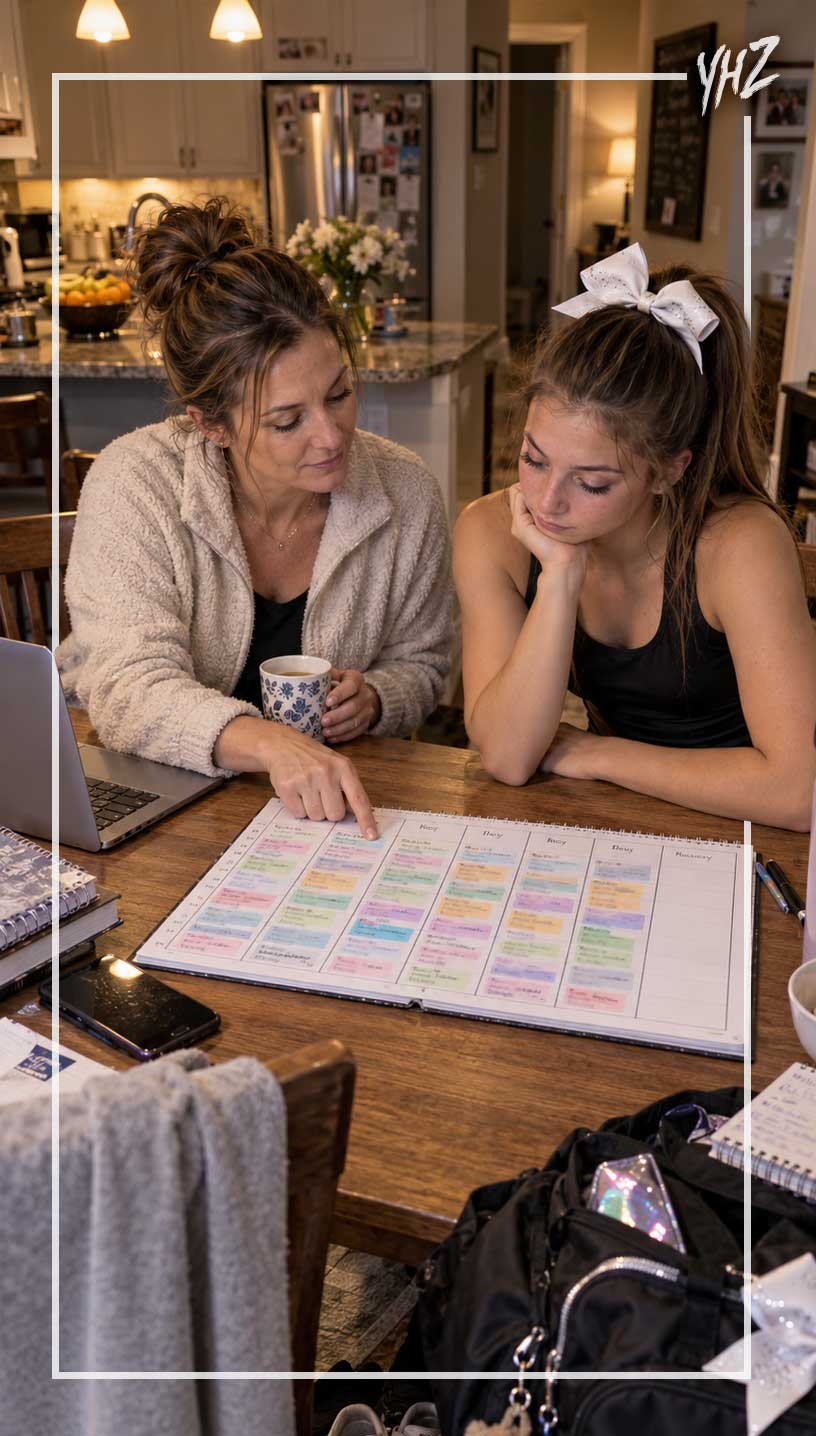
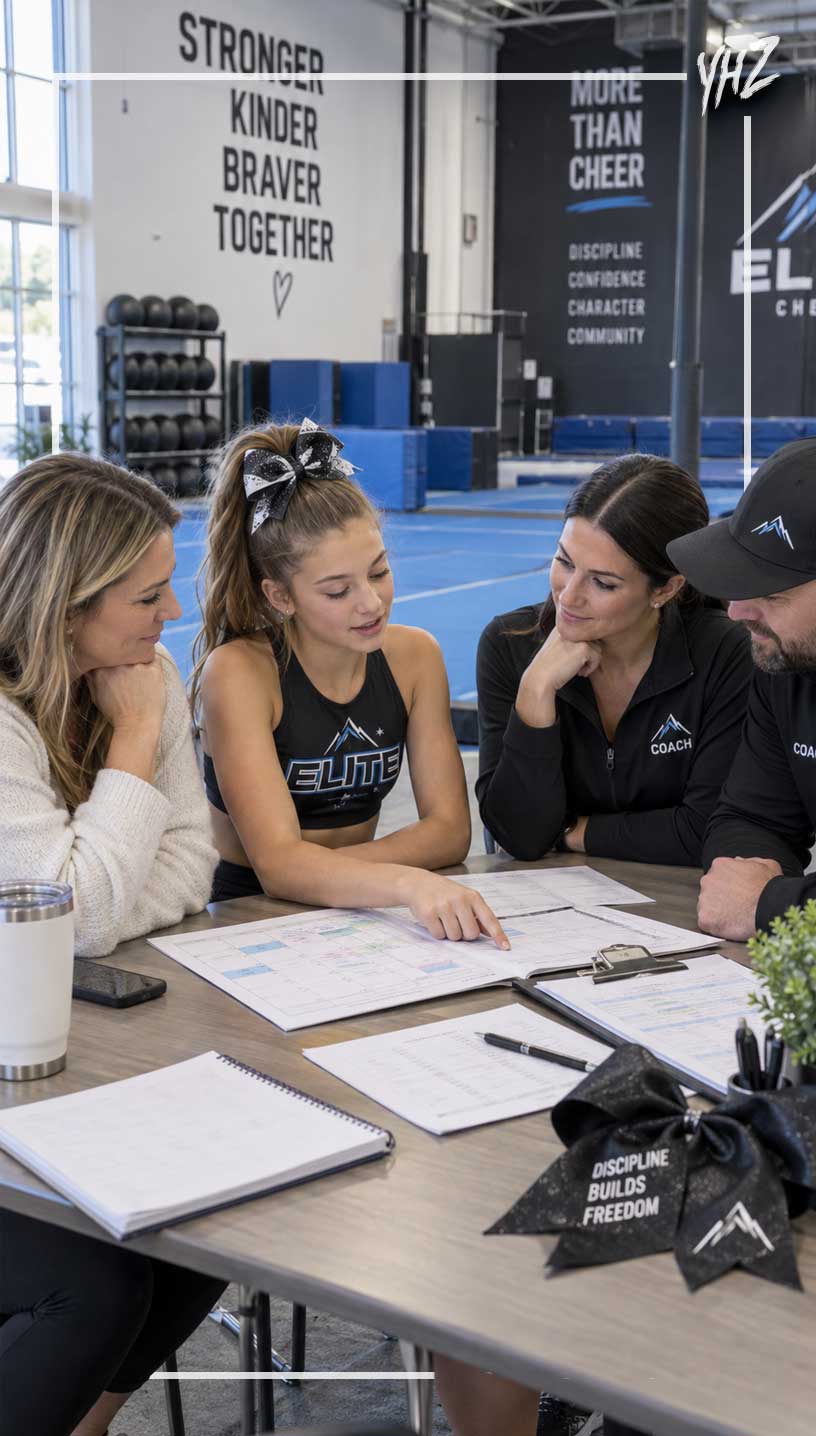
You do not need expensive tracking software. A shared spreadsheet or weekly form can expose the problem quickly. The athlete or parent can update it each Sunday. Both coaches can review it before planning the week.
Track these details:
|
Workload Item |
What to Record |
|
School cheer practices |
Date, duration, and planned sections |
|
All-star practices |
Date, duration, and planned sections |
|
Games and performances |
Call time, performance time, and physical demands |
|
Competitions |
Warmups, performance rounds, travel, and return time |
|
Tumbling classes |
Duration and approximate number of passes |
|
Stunt classes or privates |
Position, skills, and approximate repetitions |
|
Full-outs |
Full routine, marked routine, or section full-out |
|
Strength and conditioning |
Duration, exercises, and intensity |
|
Pain or unusual soreness |
Area, activity that caused it, and whether it changed movement |
|
Sleep |
Approximate hours and major disruptions |
|
Academic demands |
Tests, projects, and weeks with unusual school pressure |
The sheet does not need perfect numbers. Its job is to reveal crowded days, repeated high-impact sessions, and missing recovery. A blank calendar can make six practices look manageable. A detailed calendar may show three straight days of tumbling and full-outs.
Coaches should also mark each session as low, medium, or high demand. A film review may carry low physical demand. Stunt sections and repeated tumbling may carry medium or high demand. Full-outs, competitions, and intense double sessions usually belong in the high-demand category.
Do not use these labels to compete with the other coach. Use them to decide when an athlete needs reduced repetitions, modified conditioning, or a different practice assignment.

Count Repetitions, Not Only Practice Hours
Two practices of equal length can place very different demands on an athlete. One practice may focus on motions, counts, and transitions. The other may include repeated baskets, standing tumbling, and full-outs. Counting both as “two hours” hides the difference.
Track the skills that create the greatest load for each athlete. Flyers may need extra attention after repeated baskets, inversions, and body positions. Bases and backspots may need adjustments after heavy stunt sessions. Tumblers may need reduced passes after clinics, private lessons, or competitions.
You do not need an exact count for every motion. Approximate counts can still reveal patterns. “About 30 running passes” provides more useful information than “one tumbling class.” “Five full-outs” tells the other coach what happened before the athlete entered the next practice.
Ask athletes to report added training outside both programs. Open gym, backyard tumbling, and private lessons still create physical load. Optional training does not become invisible because neither head coach assigned it.
Protect Real Recovery Days
Medical groups differ slightly on the number of recommended rest days. They agree that young athletes need regular recovery.
The American Academy of Pediatrics recommends at least one or two days off each week from competition and sport-specific training. It also recommends two or three months away from one sport each year. The AAP connects insufficient recovery with overuse injuries, overtraining, lower performance, and burnout.
AMSSM advises young athletes to keep organized sports to five or six days each week. The organization also recommends at least one full day away from sports. NATA takes a stronger position and recommends two days away from organized training and competition.
At minimum, protect one complete rest day every week. Aim for two when the competition calendar permits it. A “rest day” cannot include tumbling privates, open gym, conditioning, or another team’s practice. Walking through choreography may also defeat the purpose when the athlete never gets a mental break.
Recovery cannot depend on whichever program gives in first. Coaches and families should identify the protected day before the season. When an event takes that day, move the recovery day somewhere else. Do not simply erase it.
Use Age-Based Hours as a Warning Light
NATA recommends that young athletes avoid more weekly organized sport hours than their age in years. Under that guidance, a 13-year-old should avoid more than 13 organized hours each week. The recommendation includes practices, competitions, classes, and other organized training.
This age-based measure cannot account for every athlete or practice. A low-impact instructional session does not equal two hours of full-outs. Still, the measure gives families and coaches a useful warning light. A 12-year-old logging 18 organized hours needs closer review.
Do not wait until the athlete crosses a number before paying attention. Rapid schedule increases can create problems even when total hours appear acceptable. The AAP recommends gradual increases in weekly training time and repetitions. Two programs can accidentally create a sudden increase because neither coach sees the combined change.
Decide Which Coach Adjusts the Load
Both programs cannot demand maximum effort every day. Someone must adjust when high-demand sessions overlap. That does not require one program to surrender authority to the other.
Start with the complete schedule. Identify games, competitions, choreography, camps, and required practices. Then mark dates when both programs plan high-demand work. Address those dates before the athlete reaches them.
The adjustment may involve fewer tumbling passes, marked sections, limited stunt repetitions, or removal from conditioning. Coaches can also assign film review, counts, motions, or leadership work. The athlete can still contribute without repeating every high-impact skill.
Do not make the athlete negotiate two coaches during practice. The adults should settle foreseeable conflicts before the session. A teenager should not have to choose which coach to disappoint while both wait for an answer.
When direct coach communication fits program policy, get written permission from the parent or guardian. Keep the exchange factual and limited to scheduling, workload, injuries, and attendance. Do not discuss routine strategy, athlete rankings, or another program’s private information.
Set Attendance Priorities Before the Season
Schedule conflicts will happen. Football games, pep rallies, choreography, all-star competitions, and school events do not coordinate themselves. Waiting for the first conflict guarantees anger and rushed decisions.
Both programs should publish their non-negotiable dates before athletes commit. Families should compare the calendars and identify every known conflict. Coaches should then approve the plan in writing. An athlete should not learn in October that both programs claim the same weekend.
A program can reasonably refuse dual-team participation when the schedule cannot work. Coaches also have the right to set attendance standards. They should state those standards before accepting the athlete. A clear “no” before the season causes less damage than a forced choice during competition week.
Do not punish an athlete for following a preapproved conflict plan. Extra conditioning adds physical load to a schedule that already caused concern. It also turns communication into punishment. Handle repeated unapproved absences through your normal attendance policy.
The athlete should know which event takes priority when both programs compete. School rules, contracts, and governing policies may decide the answer. When no rule applies, the coaches and family must agree before the season. “We will figure it out later” is not a plan.
Watch for Changes in the Athlete
Coaches should not diagnose overtraining or medical conditions. They should notice changes and involve qualified healthcare professionals when needed.
The AAP lists fatigue, mood changes, sleep problems, poor academic performance, and declining athletic performance among possible warning signs. Persistent muscle or joint complaints also deserve attention. AAP guidance explains that excessive training without enough recovery can affect physical and psychological health.
Watch for these changes:
- Skills that suddenly lose consistency
- Unusual fear during previously comfortable skills
- Repeated complaints of heavy or tired legs
- Pain that changes technique or movement
- Irritability or emotional withdrawal
- Trouble staying focused during practice
- Falling asleep during travel or team meetings
- Declining school performance
- Frequent minor illnesses
- Loss of interest in either team
- Anxiety about disappointing coaches
- Soreness that never appears to improve
One rough practice does not prove that an athlete has exceeded their limits. A repeated pattern deserves action. Speak privately with the athlete and parent. Ask about the complete schedule, sleep, pain, school pressure, and recent changes.
Remove the athlete from activity when you suspect a concussion or serious injury. Follow your organization’s emergency and return-to-play rules. A workload spreadsheet cannot replace an athletic trainer, physician, or other qualified professional.
Sleep and School Still Count
An athlete can follow every practice plan and still lack enough recovery. Travel, homework, early school hours, and family responsibilities affect the same body. Weekend competition travel can remove sleep before Monday’s practice. Late games can create the same problem during the school week.
Do not treat academic decline as an unrelated issue. The AAP lists poor academic performance among the possible signs of excessive training or inadequate recovery. AMSSM also warns that overscheduling can damage academic and athletic performance. School success belongs in the workload discussion.
Ask families about major exams, school projects, and travel weeks. A short practice adjustment during finals may protect both performance and attendance. Coaches often gain more from a rested athlete on Friday than an exhausted athlete who survived every practice.
Stop Rewarding Athletes for Hiding Fatigue
Cheer culture often praises athletes who push through everything. That attitude can make honest communication feel weak. Athletes may hide pain or exhaustion because they fear losing their spot. Coaches create that fear when every modification carries a punishment.
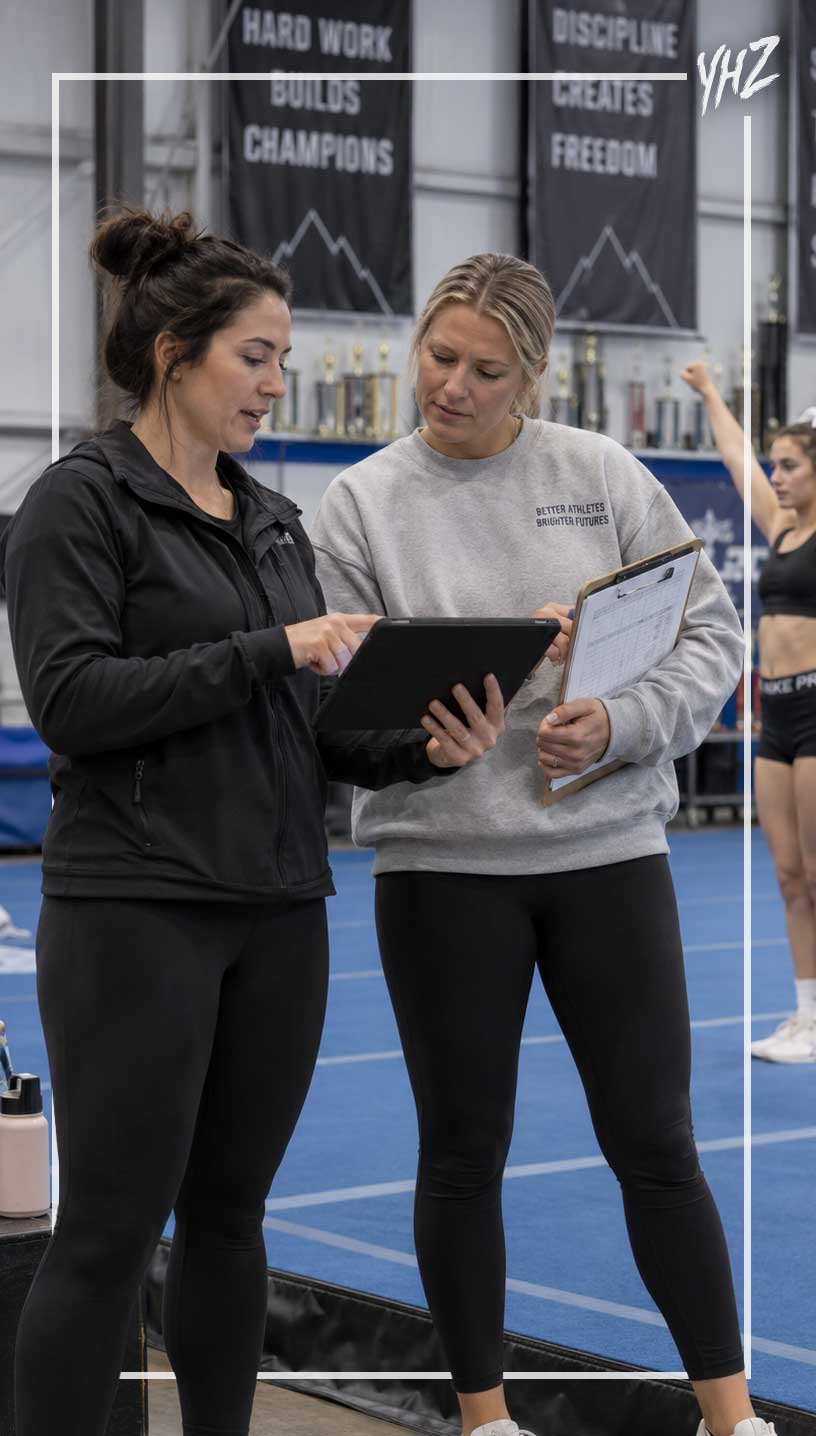
Tell athletes that reporting workload will not automatically remove them from the routine. Explain how you use the information. You may adjust repetitions, change conditioning, or ask a healthcare professional for guidance. Silence creates more risk than an honest report.
Do not praise an athlete for completing two full practices while injured or exhausted. Effort matters, but judgment matters too. Coaches should model the difference between normal training discomfort and symptoms that need attention.
Your team culture should reward athletes who communicate early. Early reports give you more options. Late reports often arrive after the athlete loses skills, misses school, or needs a longer break.
Give Dual-Team Athletes a Written Plan
A short dual-team participation agreement can prevent many conflicts. This document does not need legal language. It should record what the athlete, family, and coaches already discussed. Everyone should receive the same copy.
Include these items:
- Names and contact information for both programs
- Complete practice and competition calendars
- Known date conflicts
- Attendance priorities
- Protected weekly recovery day
- Private lessons and outside training
- Process for reporting pain or unusual fatigue
- Process for schedule changes
- Rules for injury information
- Conditions that may require reduced participation
- Person responsible for updating the master schedule
- Review dates during the season
Review the plan after choreography, during competition season, and before major travel. A schedule that worked in September may fail in February. Added practices and bid events can change the load quickly. The plan should change when the season changes.
Parents Must Manage the Master Calendar
Coaches control their own practices, but parents usually see the athlete’s complete life. They should maintain the master calendar and disclose schedule changes. They should also include private lessons, school demands, and optional training. Leaving out “extra” sessions defeats the process.
Parents should not use the second team to pressure either coach. “The other coach allows it” does not settle a safety or attendance question. Each program can set its own standards. The family must decide whether those standards can coexist.
Parents also need to protect sleep and recovery. An open day does not always need another class. More training can produce worse results when the athlete never absorbs the work. Improvement happens after the body gets time to recover.
When Doing Both No Longer Works
Some athletes can handle school and all-star cheer with good planning. Others cannot maintain both schedules safely or successfully. Age, skill level, travel, schoolwork, sleep, injuries, and program demands all affect that decision.
Do not frame leaving one team as failure. The athlete may need to protect their health, grades, or long-term development. Reducing commitments can help the athlete perform better for the remaining program. It can also help them enjoy cheer again.
Set specific reasons to review dual participation:
- The athlete cannot keep a weekly recovery day
- The schedule repeatedly violates attendance rules
- Pain or fatigue keeps returning
- School performance declines
- Sleep remains inadequate
- Skills continue to regress
- The athlete loses interest or shows persistent distress
- Coaches cannot coordinate necessary adjustments
- Competition conflicts have no workable solution
When these problems continue, the family may need to choose one program. Make that decision before an emergency or major competition. Coaches can provide honest information, but the family should make the final participation choice. Healthcare professionals should guide decisions involving injury or illness.
Frequently Asked Questions About All-Star and School Cheer
Can You Do All-Star and School Cheer at the Same Time?
Yes, some athletes successfully participate in both programs. The schedules must allow adequate recovery, schoolwork, sleep, and required attendance. Families should compare both calendars before committing. Coaches also need to consider the athlete’s combined physical workload.
How Many Days Per Week Should a Young Cheerleader Practice?
AAP and AMSSM guidance supports at least one full rest day each week. NATA recommends two days away from organized training and competition. The athlete’s age, health, schedule, and practice demands may require more recovery. A tumbling class or open gym does not count as rest.
What Should Coaches Count as Cheer Workload?
Count practices, games, competitions, tumbling classes, stunt privates, conditioning, open gyms, and full-outs. Also record high-impact repetitions and travel that reduces sleep. Total hours provide only part of the answer. Coaches need to know what the athlete did during those hours.
Which Team Should Take Priority?
School rules, program contracts, and published attendance policies may decide priority. When they do not, both coaches and the family should agree before the season. The athlete should not make the choice during a conflict. Programs should publish non-negotiable dates before accepting dual-team athletes.
What Are Possible Signs of Too Much Training?
Possible signs include persistent fatigue, sleep changes, mood changes, recurring pain, declining performance, and academic problems. These signs do not prove a specific condition. Coaches should speak with the family and refer medical concerns to qualified professionals. Suspected concussions and serious injuries require immediate action.
The Athlete Has One Body
School cheer and all-star cheer can both give an athlete valuable experiences. That does not make every combined schedule reasonable. Each coach must consider what happens outside their own gym. Ignoring the other program does not make its workload disappear.
Build one calendar, track demanding repetitions, protect recovery, and settle conflicts before the season. Listen when the athlete reports fatigue or pain. Adjust the plan when the workload grows. If two programs cannot share the athlete responsibly, the athlete should not carry the cost.

IPP's Premade Mixes are USA Cheer Compliant and customizable! Add Sound FX, swap songs, & more! Add your Team Name to the mix for only $10!




 Cheer Mixes
 Past-Season Mixes (50% off!)
 You Hit Zero Cheer Blog
 Spotify Playlists
 Quick Quote Video Tutorial