Tag Archives: cheer gym culture

USASF 2026-2027 Cheer Rules: Nothing Changed. Now Use It.

USASF 2026 2027 cheer rules 1

By Steve Pawlyk

Published June 10, 2026

USASF just dropped its 2026-2027 update, and the headline was almost boring. No changes to the cheer rules. No changes to the cheer age grid.

A lot of coaches read that, shrugged, and scrolled past. Big mistake. A quiet rule year is the best gift your program gets all season.

cheer age grid 2026 2027

What stayed the same

The cheer age grid keeps its current structure for 2026-2027. Birth years move forward one year, the way they always do. The top and bottom age limits for each division hold steady.

That covers every division, including Flex and Non-Tumbling. USASF landed here after surveying and meeting with more than 2,000 members. So this was a deliberate call, not an oversight.

For you, the math stays simple. The athlete who fit a division last year fits the same division this year. Nothing about your roster planning gets harder.

What actually changed

Two things shifted, and both live on the dance side. If you only coach cheer, you can almost skip this part. Almost.

First, Intermediate and Premier dance routines get shorter. The max time drops from two minutes and fifteen seconds to two flat. That is fifteen seconds you have to cut and rebuild around.

Second, USASF added a Groups and Pairs safety rule on inverted movement. It limits how a dancer travels through an inverted position during a descent. If you coach dance, read the full rule text before you choreograph anything.

Why a “no changes” year is a gift

Most seasons, you burn your summer relearning rules. You decode new legality charts. You rebuild skills that suddenly crossed a line.

Not this year. Your progressions from last season still stand. The skills you taught in May are still legal in August.

That frees up something you almost never have. Time. You get a full off-season to make good athletes great instead of making legal athletes legal again.

Need Competition Music Blue 1

What to do with the calm

Go deep, not wide. Pick the skills your teams rushed last season and slow them back down. Clean up the technique you papered over when the clock was ticking.

Audit your progressions on paper. Map how a flyer moves from a basic skill to the hard one, step by step. A written progression survives staff turnover and keeps your gym consistent.

Then build depth where you are thin. If your seniors lacked bases, train younger athletes to fill that hole now. You know the rules will not move under your feet.

This is also the year to fix culture, not just skills. Set your standards and expectations before the season heats up. Calm rule years reward the programs that plan.

Don’t get too comfortable

Quiet now does not mean quiet forever. The IASF plans a new 100-point score sheet for the 2027 Cheerleading World Championships. Bigger scoring shifts are already on the way.

So treat this season as runway. The programs that build real skill depth now will adapt faster when the next change lands. Use the gift while you have it.
USASF rules update

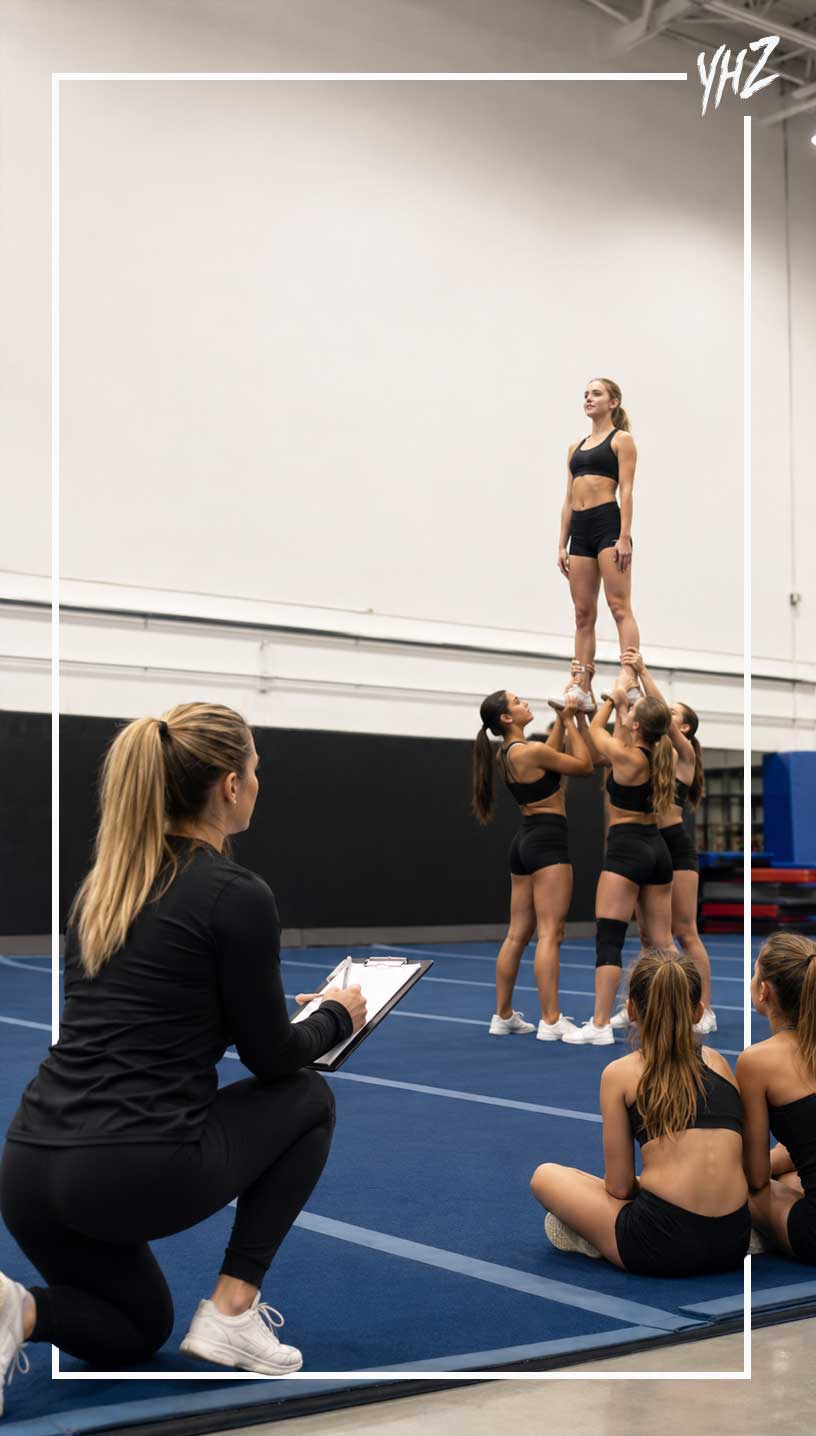
USASF handed you a rare season with stable footing. The athlete who fit last year fits this year, and your progressions still hold. Smart coaches will not coast on that. They will pour the saved time into technique, depth, and culture.

Do that, and a boring rule update turns into your edge.

Steve Pawlyk Signature Full

IPP's Premade Mixes are USA Cheer Compliant and customizable!  Add Sound FX, swap songs, & more!  Add your Team Name to the mix for only $10! 

SLAM artwork
Full_Out_130 mp3 image
1 minute cheer mix
WAKE UP THE FIRE
SLAM artwork
WAKE UP THE FIRE
Full_Out_130 mp3 image
1 minute cheer mix

The 2025 All-Star Coaching Crisis: How Staff Retention Became the Hidden Battle in Cheerleading

cheer coach retention 2025

By Steve Pawlyk

Published November 4, 2025

All-star cheer is stacked with choreography arms races and upgrade-season flexes, but the teams winning consistently in 2025 share a less flashy superpower: they keep great coaches. Across gyms, programs report rising burnout, thin hiring pools, and junior coaches cycling out just as they become valuable. With athlete numbers climbing again post-covid, staffing gaps can be brutal. So what do you do? You treat retention like a core competitive strategy.

Why retention is wobbling (and how it shows up on the mat)

  • Participation rebounded. High-school sports hit record participation in 2024-25, which swells feeder systems and tryout interest. That’s great—until your coaching bench is shallow and every extra team stretches staff thinner.
  • Coach burnout is real. Research on elite coaches points to heavy cognitive/emotional load, role conflict, and time pressure—classic burnout drivers that accelerate turnover. Gym-level guidance this year echoes the same theme: unchecked mental exhaustion tanks decision quality, erodes culture, and bleeds staff.
  • Policy and professionalism keep rising. From USASF compliance updates to USA Cheer’s body-positive uniform guidance and social-media consent norms, expectations on coaches are broader than “teach skills.” That’s progress—but it also expands the job description, which you must acknowledge with training and compensation.
  • Market shakeups siphon talent. Pro-style initiatives and high-visibility events (The MAJORS, Worlds pipelines) make top coaches more mobile and more valuable. If your gym doesn’t have a clear growth path, recruiters (and rivals) do.

Bottom line: retention isn’t “HR paperwork.” It’s the difference between clean, consistent hit-ratios and volatile seasons where skills stall because roles keep resetting.

usasf coach credentialing

The Retention Flywheel for Cheer Gyms (5 repeatable moves)

1) Redefine the job (and pay) for 2025 reality

What to do this month:

  • Publish role scorecards that include modern responsibilities: athlete-wellbeing practices, parent communications, compliance checkpoints, and social-media boundaries aligned to USA Cheer guidance.
  • Create tiered coach ladders (Assistant → Lead → Head → Program Director) with transparent criteria: certifications/credentailling status, team outcomes, athlete retention, safety/compliance execution. Note: USASF has a credentialing transition slated for late Fall 2025—build that into your ladder and budgets.
  • Peg pay ranges to role complexity and team count, not just mat hours. Add seasonal completion bonuses and “return next season” retention bonuses for senior staff.

Why it works:
People stay when expectations and compensation feel fair for the whole job you’re asking them to do—skills, culture, and compliance.

2) Build a bench with a STAFF Funnel

A pipeline beats panic hiring. Use this funnel to convert alumni and part-time talent into reliable coaches:

  • Scout: Invite alumni and college cheerleaders to shadow nights once per month.
  • Train: Run a quarterly “Assistant Coach Mini-Camp” (two evenings) covering progressions, spotting, athlete-wellbeing, and current USASF rules.
  • Apprentice: Assign each apprentice to one team + one mentor; track a simple skill-checklist and practice-planning reps.
  • Formalize: After 8–12 weeks, move successful apprentices onto the payroll with a clear ladder step and next credential.
  • Forecast: Maintain a 90-day hiring board with the number of athletes, projected teams, and required coaching hours to prevent last-minute scrambles.

3) Make mental-health sustainability part of operations

Structural fixes that beat “self-care” platitudes:

  • Cap practice loads per coach (e.g., 4 practices/night max, two consecutive late nights max).
  • Rotate “parent-night duty” so a single coach doesn’t absorb all high-friction conversations.
  • Schedule recovery windows after showcase/nationals weeks; plan coverage in advance.
  • Offer EAP-style resources or partner with a local provider for short-form counseling options.

These moves mirror best practice from coach-burnout literature and cheer-specific leadership guidance published this year.

Need Competition Music Blue 1

4) Upgrade onboarding: the First 90 Days blueprint

New hires leave when day-to-day reality doesn’t match the interview. Solve it with a tight 3-phase plan:

Days 1–30 (Absorb & Align)

  • Safety & progressions clinic (USASF rules, spotting protocols).
  • Culture primer: communication tone, uniform/photo policy, consent workflows.
  • Shadow two different head coaches; co-run warm-ups and cool-downs.

Days 31–60 (Own a Lane)

  • Own one specialty block (tumbling stations, baskets, or pyramids) on two teams.
  • Pass a feedback loop: submit one practice plan/week; receive written notes.

Days 61–90 (Lead with Support)

  • Lead a full practice under observation; get a scored rubric on pacing, technical accuracy, and athlete communication.
  • Meet with the director to set next-season goals tied to the ladder (e.g., credentialing step, team assignment).
cheerleading coach hiring

5) Tie retention to performance KPIs coaches actually control

Track 4 coaching KPIs monthly—share the dashboard with staff:

  1. Athlete Retention % (by team and season-to-date)
  2. Skill Progression Rate (e.g., % of athletes who advanced a tumbling/jump/stunt progression)
  3. Safety/Compliance Hits (checklist adherence, incident-report quality)
  4. Parent Satisfaction (2-question pulse after showcases: communication clarity + athlete experience)

Reward improvements with cash or PTO, not just plaques.

Need Competition Music Blue 1
usasf coach credentialing

Hiring: stop fishing; build bait

The market is noisy. Here’s what’s cutting through in 2025:

  • Mission-first job posts. Lead with athlete experience and safety—not just “come win banners.” (Consider Indeed/USA Cheer listings language trends and program context.)
  • Show your ladder and pay philosophy in the post. If you hide it, your competitor will flaunt theirs.
  • Offer portfolio time. Allocate 1–2 paid hours/week for lesson-planning and film review—top coaches value prep time.
  • Flexible contracts. Split roles (e.g., “Tumbling Lead Tue/Thu + Weekend Choreo”) to attract college-seasonal staff and parents with coaching backgrounds.

Culture: the moat your rivals can’t copy

Uniform and media-consent conversations used to be afterthoughts; they’re table stakes now. Gyms adopting the updated USA Cheer posture (body-positive, consent-forward, athlete-first) are seeing better parent relations and stronger staff morale—because coaches aren’t firefighting preventable conflicts every week. Pair that with intentional team-bonding and you get the compound effect: athletes stay longer, parents become advocates, and coaches do their best work instead of their most work.

Putting it together: a one-page retention plan you can deploy this week

1) Publish: role scorecards + the four KPIs. (30 minutes)
2) Announce: a two-step retention bonus (season completion + next-season return). (15 minutes)
3) Schedule: a monthly Shadow Night + quarterly Assistant Coach Mini-Camp. (15 minutes)
4) Install: practice-load caps and a rotating parent-duty schedule. (20 minutes)
5) Kick off: the 90-day onboarding track for any coach hired since June. (15 minutes)

Total: ~95 minutes to signal you’re serious.

The top of all-star is ruthless and glamorous (hello, The MAJORS), but the through-line among perennial finalists is continuity. They don’t re-learn systems every fall. They don’t re-negotiate culture via group texts. They retain. As the sport professionalizes (credentialing refresh, compliance, bigger events, even semi-pro pathways), smart directors are building organizations where great coaches want to stay. That’s the competitive edge in 2025.

If you’re still treating retention like “hope they come back,” you’re paying the price in skill plateaus, chaotic schedules, and frazzled staff. Treat it like choreography: design it, rehearse it, score it. Your coaches will feel the difference—and so will your scores.

Appendix: copy-paste assets

Sample job post snippet (steal this):

Lead All-Star Coach (Progressions + Culture) — Boston North
You’ll lead stunt/tumbling progressions for 2–3 teams, co-own athlete-wellbeing and safety checklists (USASF), and help us deliver a consent-forward, body-positive athlete experience (USA Cheer guidance). Transparent ladder, paid prep time, completion & return bonuses. Apply with one practice plan and one short video clip explaining your progression philosophy.

6-point parent communication policy (shareable)

  1. 24-hour “cool-down” after events
  2. One weekly update per team (logistics + goals)
  3. No athlete images posted without consent (team policy link)
  4. Stick to chain of command (assistant → head → director)
  5. Safety & compliance questions answered in writing within 48 hours
  6. 6. Quarterly parent town-hall (15 minutes + Q&A)

Steve Pawlyk Signature Full

IPP's Premade Mixes are USA Cheer Compliant and customizable!  Add Sound FX, swap songs, & more!  Add your Team Name to the mix for only $10! 
SLAM artwork
Full_Out_130 mp3 image
1 minute cheer mix
WAKE UP THE FIRE
SLAM artwork
WAKE UP THE FIRE
Full_Out_130 mp3 image
1 minute cheer mix
SHARE YOUR CART