
 •
• English
 日本語
日本語 Español
 Português
 Français
 Polski
 Deutsch
 Italiano
 Nederlands
 한국어
한국어 Русский
 简体中文
简体中文


Jul



By Steve Pawlyk
Published July 28, 2026
USA Cheer updated its 2026 College Cheer and STUNT Recruiting Combine page on July 14. Athlete registration runs $99, with an early bird discount that takes off another $10. College coaches attend free, which is why so many of them show up.
The recruiting picture also changed this year. In January 2026, all three NCAA divisions voted to make STUNT a championship sport, the 94th one the NCAA sponsors. The first NCAA STUNT championship happens in spring 2027.
So if you’re a current junior, you’re being recruited into a sport that will crown an NCAA champion during your freshman year. That’s new. Here’s how to handle the next twelve months.
What a college cheer and STUNT combine is
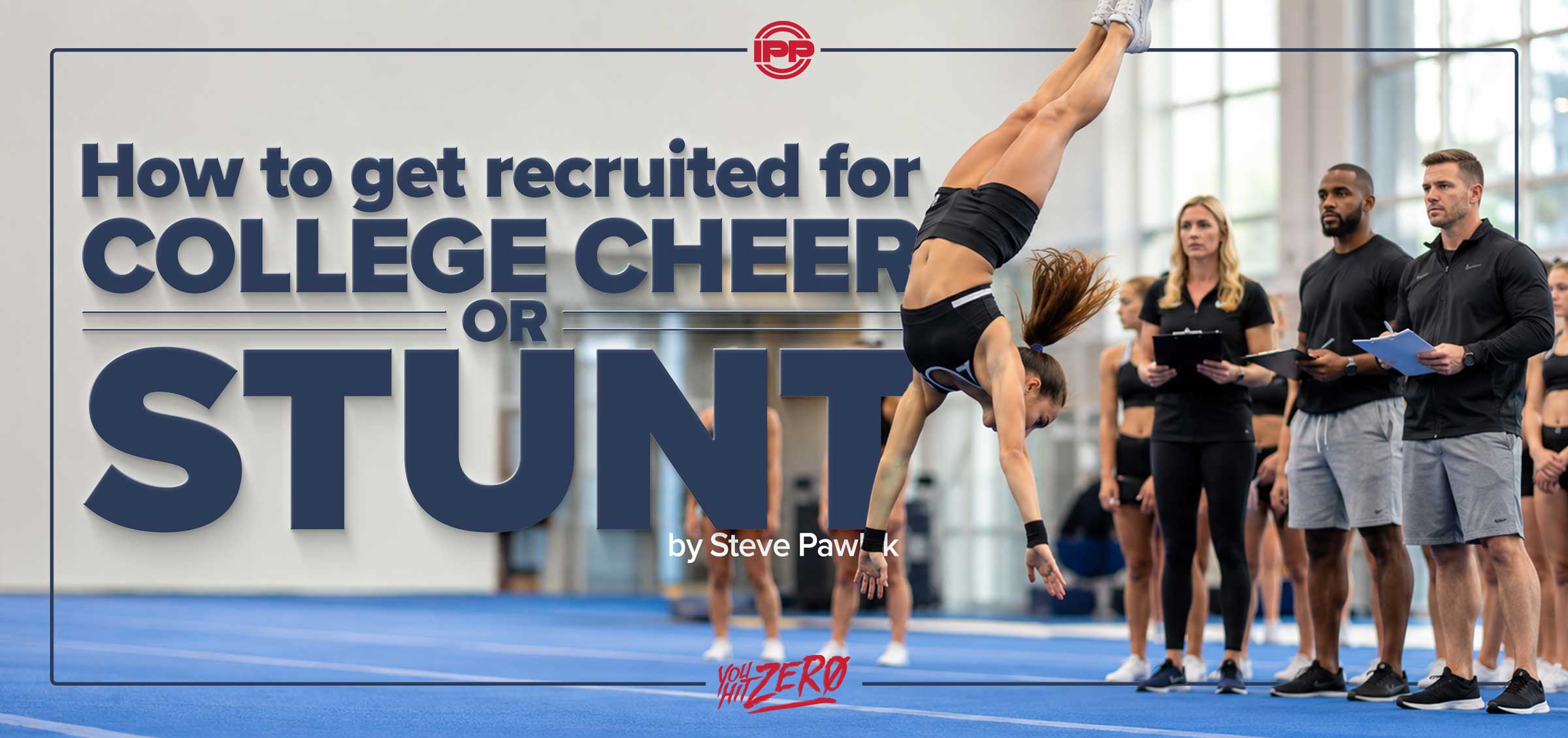
A combine is a recruiting event, not a tryout. You register as an individual, you demonstrate skills in front of coaches from dozens of programs at once, and then you talk to those coaches face to face.
USA Cheer publishes a sample schedule for the day. Registration comes first, then a welcome session where each college program introduces itself. After a warm-up, you demonstrate two jumps and standing tumbling.
A second warm-up leads into running tumbling. Partner stunts follow, split between all girl and coed. Then a college coaches panel takes questions from the floor.
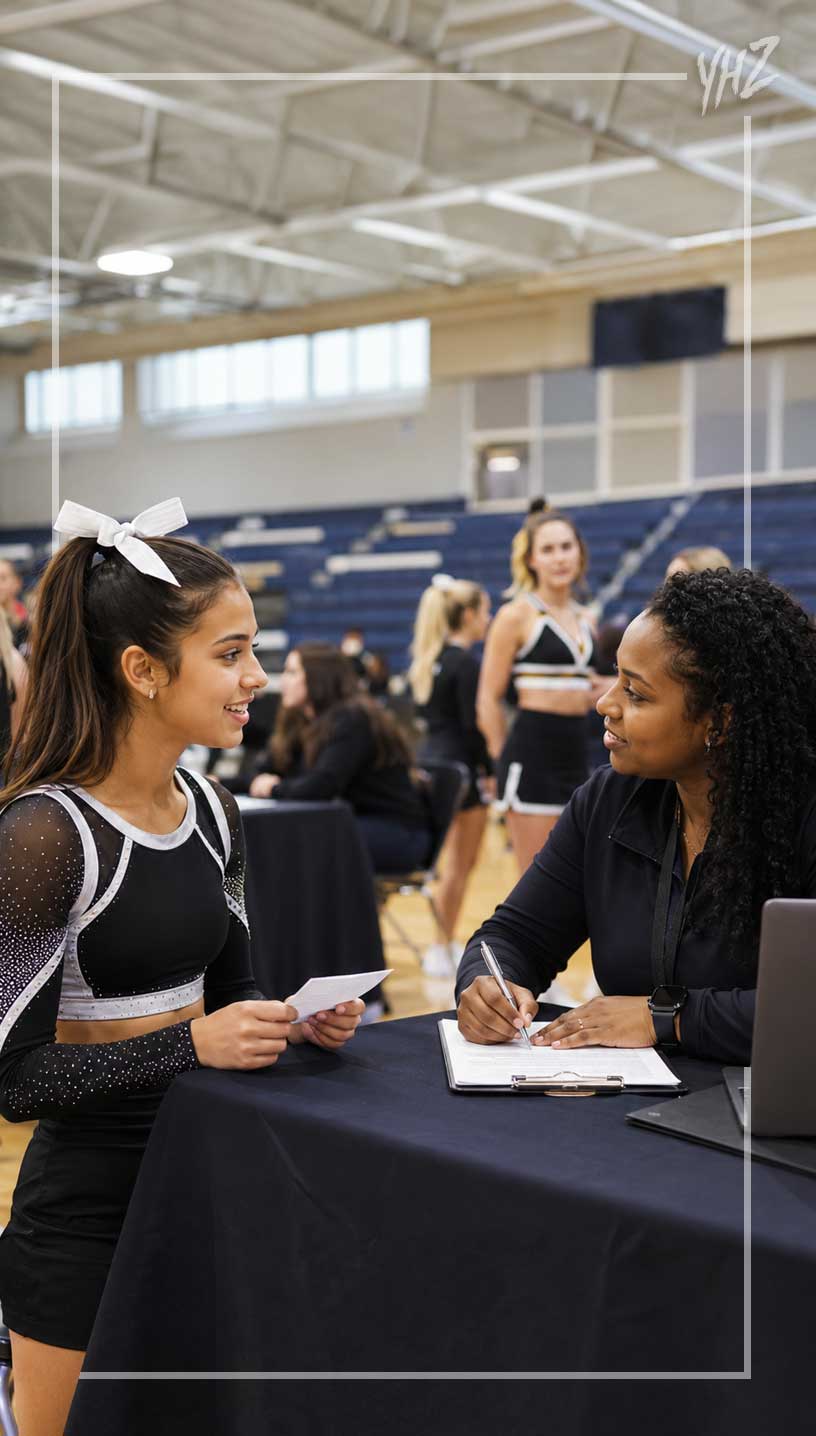
The day ends with table time. You walk the room and talk one on one with coaches at their tables. That last stretch does more for your recruiting than anything you throw on the mat.
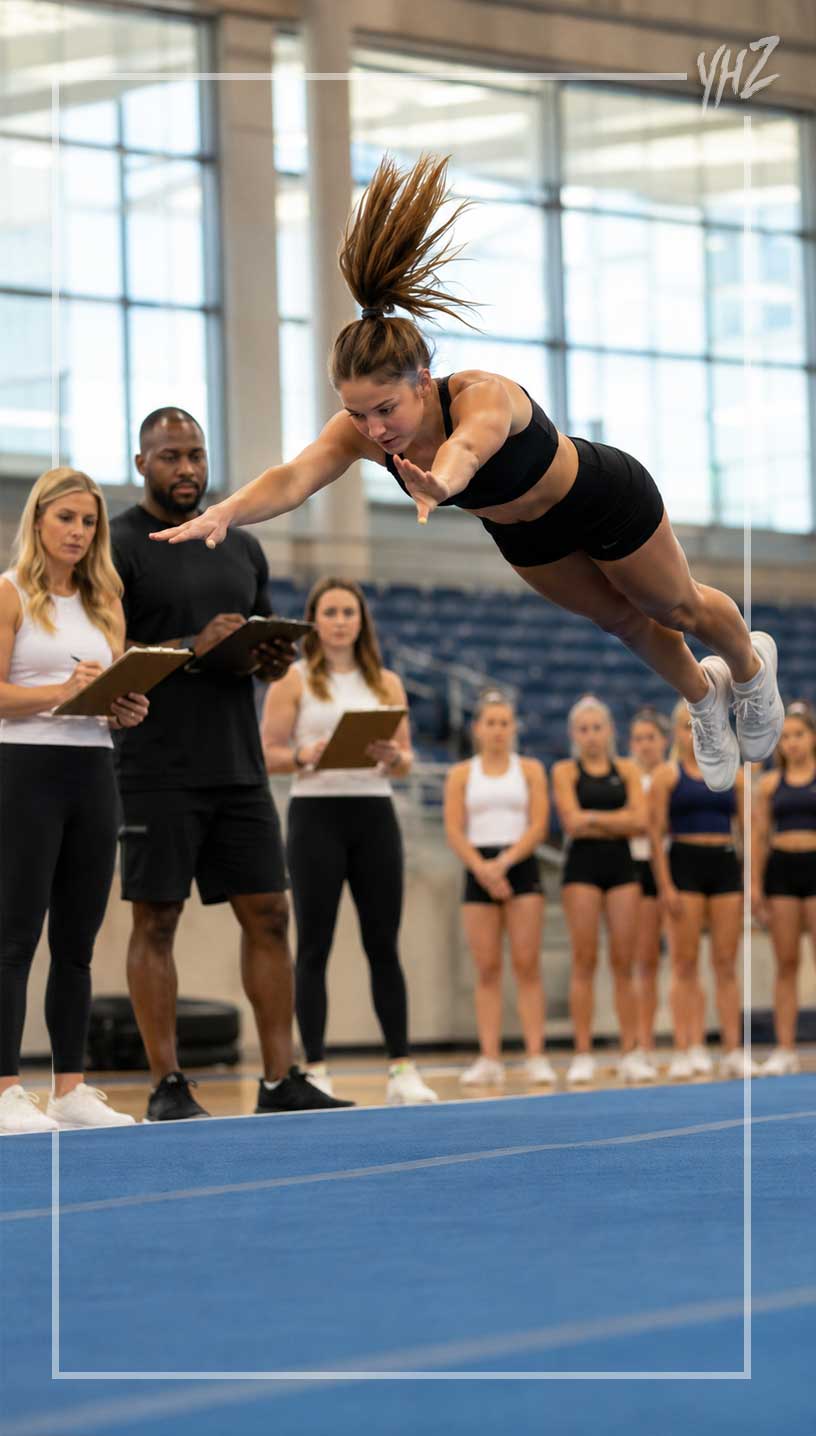
You don’t have to bring a stunt group. USA Cheer encourages it, and your own group gives you the best chance of hitting clean. If you come alone, you’ll stunt with other attendees, and some colleges bring current team members who pull participants into groups. Wear your hair in a ponytail. Athletic shorts, a tank or t-shirt, cheer shoes and socks. Nothing you have to adjust mid-tumbling pass.
Who should go
USA Cheer aims these events at high school juniors, high school seniors and junior college athletes. There’s a separate freshman and sophomore rate too, so underclassmen can attend. The early bird discount doesn’t apply to that rate.
Go if you’re weighing cheer against STUNT. Go if you genuinely don’t know what level is realistic for you. Three hours of watching coaches react to your skills answers that question better than a year of guessing from Instagram.
One administrative note. Junior college participants who are 18 or older need a current USA Cheer membership before they can register. Sort that out first, because the event won’t show up in the app otherwise.
The 2026 combine dates
The Nashville combine already ran on July 9, alongside the USA Cheer and USASF National Conference. Here’s what’s left.
August:
- Aug 22, River Forest, IL, Concordia University Chicago
- Aug 29, Bethany, OK, Southern Nazarene University
- Aug 30, Dallas, TX, Dallas Baptist University
September:
- Sep 12, Costa Mesa, CA, Vanguard University (two sessions)
- Sep 13, Sacramento, CA, Sacramento State University
- Sep 26, Newark, DE, University of Delaware
- Sep 27, Raleigh, NC, NC State University (two sessions)
October:
- Oct 3, Fresno, CA, Fresno Pacific University (two sessions)
- Oct 4, Spokane, WA, Whitworth University
- Oct 24, Ogden, UT, Weber State University
USA Cheer adds participating colleges to each location as programs register, and the list looks very different in August than it did in May. Check the page again before you book travel. Some programs attend virtually, marked with a “(v)” next to the school name, so a school on the list isn’t necessarily in the room.

What coaches evaluate
Tumbling gets watched twice, standing and running. Coaches care about what you land clean under pressure, not the one skill you hit in April. A clean back handspring tuck reads better than a shaky full.
Stunting comes down to position and flexibility. A base who can also back spot is easier to roster than a base who can only base. Flyers who can base are rare and coaches notice them immediately.
Jumps and motions tell coaches how you were trained. Sloppy motions are visible from the top row of a basketball arena, and a coach watching you at a combine is doing that math already.
Game day presence matters for traditional cheer programs, since those teams work football and basketball all season. Coaches are watching whether you look like you want to be there during the parts that aren’t skills.
Coachability shows up in the panel and at the tables. Take a correction without making a face. Answer a question with more than three words.
Fitness and injury history come up in conversation, so be ready to talk about both honestly. Academics come up too, and this is where athletes lose spots. A coach can’t recruit you if admissions won’t take you.
Cheer recruiting and STUNT recruiting work differently
Traditional college cheer isn’t an NCAA sport. Some programs sit under athletics, some under student affairs, and each school sets its own rules for aid, roster size and tryouts. There’s no NCAA recruiting calendar telling coaches when they can contact you.
That’s why so much traditional cheer recruiting still ends at a spring campus tryout. The combine gets you invited. It doesn’t get you rostered.
STUNT works like other varsity sports. A match runs four quarters: partner stunts, pyramids and tosses, group jumps and tumbling, then a team performance. Both teams run the same routine at the same time and officials score execution and synchronization. Whoever performs it better takes the point.
STUNT rosters have defined positions, including main bases, secondary bases, flyers, back spots and tumblers. A tumbling specialist can hold a spot without ever stunting. If your tumbling runs well ahead of your stunt work, that’s worth knowing.
The growth numbers explain why coaches are recruiting hard right now. STUNT cleared the 40-program threshold in its first year as an emerging sport across all three divisions, faster than any of the sports that came through that program before it.
If you’re open to both, say so out loud at every table. Plenty of schools at these combines run a cheer program and a STUNT program, sometimes under different coaches.
What to prepare before you go
Film a skills video first. Sixty to ninety seconds is plenty. Standing tumbling, running tumbling, jumps and stunting, shot from an angle where a coach can actually see your body line. Post it unlisted on YouTube and keep the link somewhere you can paste it in five seconds.
Write your academic information on a card and put it in your bag. Unweighted GPA, test scores if you have them, intended major. You will absolutely blank on your GPA at the third table.
Build a target list of eight to twelve schools before the event. For each one, check whether the school has traditional cheer, STUNT or both, whether the team competes, and roughly what the admissions profile looks like. Sort the list by how likely you are to make that roster.
Then take an honest inventory of your own skills. Write down what you hit nine times out of ten, not what you hit once at a competition in March. Bring contact information you can hand someone, and clean up your public social profiles before you go. Coaches look. So do compliance offices.
Mistakes that cost athletes roster spots
Inflating your skills is the fastest way to lose a coach. Tell someone you have a full and you’ll get asked to throw one that afternoon. Coaches talk to each other and they remember.
Generic outreach is the second. An email that opens with “Dear Coach, I am interested in your program” gets deleted before the second line. Name the school, name the coach, say what specifically drew you to that program.
Ignoring admissions requirements wastes months. If a school’s average admitted student sits well above your transcript, no coach can fix that for you.
Chasing only the programs you see on TV in January is a strategy that fails almost everyone. There are hundreds of college cheer and STUNT programs, and the ones with open spots aren’t usually the famous ones.
Failing to check what a school actually offers is a common one. A school might have STUNT and no traditional cheer, or both under separate staffs with separate tryouts.
Treating the combine as an audition is the last one. Nobody hands out roster spots on the mat that day. You’re opening conversations that play out over the next six to nine months.
Questions to ask coaches
Ask these at every table and write the answers down. The differences between programs will surprise you.
- Is there scholarship or aid money for this team, and how do you award it?
- What does a normal practice week look like during the season?
- How much travel is there, and who pays for it?
- What do athletes pay out of pocket for uniforms, shoes, camp and warmups?
- How many spots are you filling this year, and how many returners do you have?
- Who covers injuries, and is there an athletic trainer at practice?
- Does the team compete, and at what event?
That last question catches people off guard more than it should. Some programs go to nationals every January. Some do game day only.
What to do in the 48 hours after
Email every coach you spoke with within two days. Reference something specific from your conversation so they can place you. Attach your video link and your academic information in the same message.
Then keep those coaches updated on a schedule. New skill, better grades, a competition result. A short email every six to eight weeks does more than one long one in March.
Start this week
Pick the closest combine date from the list above and register in the USA Cheer app. Then film your skills video this weekend, while you still have gym time and a spotter.

IPP's Premade Mixes are USA Cheer Compliant and customizable! Add Sound FX, swap songs, & more! Add your Team Name to the mix for only $10!







 Cheer Mixes
 Past-Season Mixes (50% off!)
 You Hit Zero Cheer Blog
 Spotify Playlists
 Quick Quote Video Tutorial