
 •
• English
 日本語
日本語 Español
 Português
 Français
 Polski
 Deutsch
 Italiano
 Nederlands
 한국어
한국어 Русский
 简体中文
简体中文




Choreography, Coaching, Featured, News, Rules
2026-27 NFHS cheer rules: What coaches need to know before competition season
Aug



By Steve Pawlyk
Published August 31, 2026
NFHS released the 2026-27 Spirit rule changes in March. On August 25, NFHS published new comments that explain how coaches should read those changes. Several updates affect skills that high school cheer teams already use. Others change definitions that can affect whether a skill counts as tumbling or a legal transition. If you coach under NFHS rules, this is a good time to review your routine. A small detail can change the legality of a sequence.
Here are the 2026-27 NFHS cheer rules that coaches need to understand before competition season starts.
NFHS changed the definition of tumbling
This change could affect more routines than its short wording suggests.
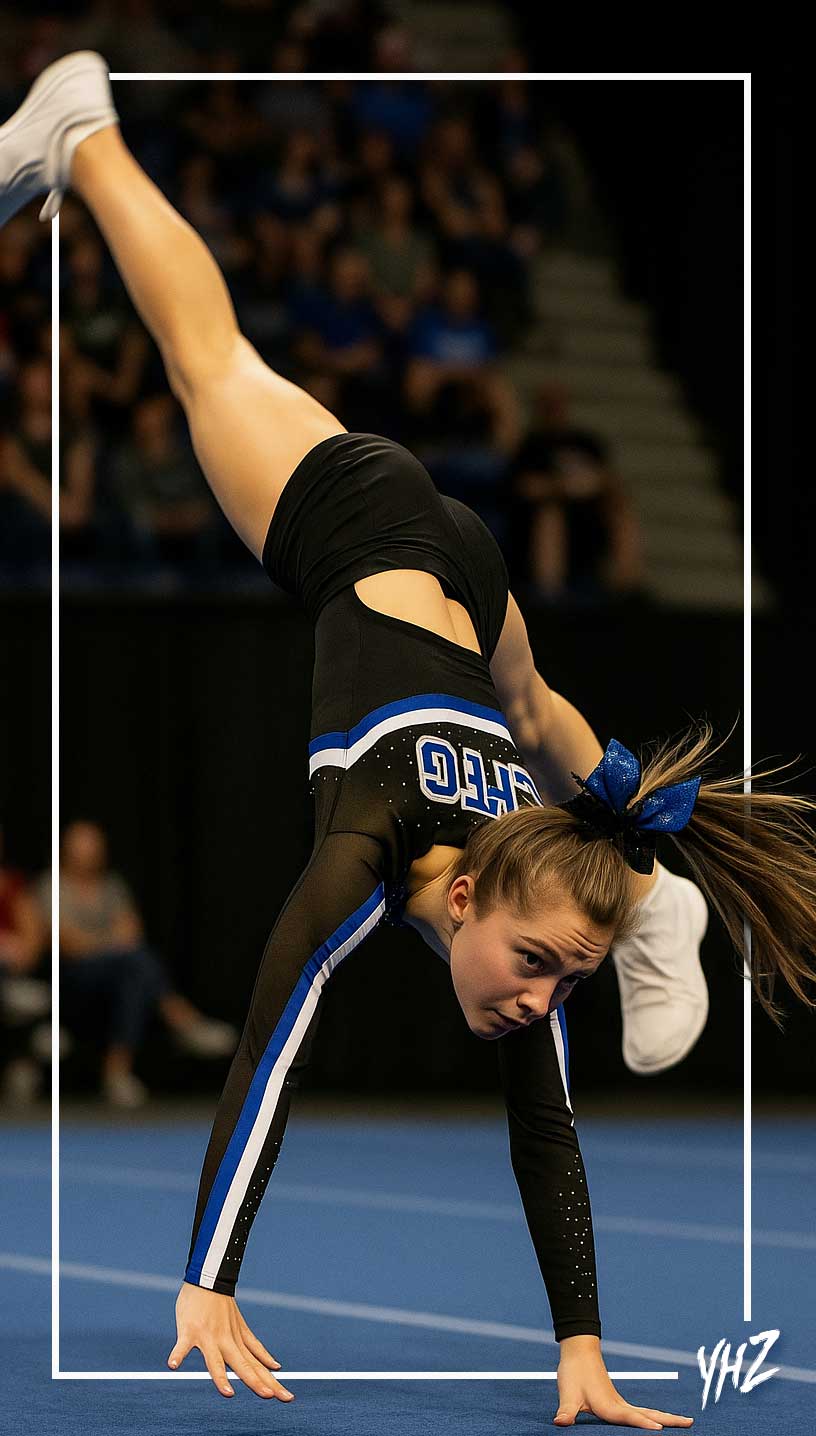
NFHS now defines tumbling as an unsupported hip-over-head skill that begins and ends on the performing surface. A base cannot support the athlete during the skill. That definition creates a clearer line between tumbling and other acrobatic movements.
NFHS specifically mentions seat rolls and side rolls as examples. Those movements do not become tumbling simply because an athlete rolls across the floor. That matters most in divisions or situations that restrict tumbling. A coach could see an acrobatic floor skill and assume that officials will classify it as tumbling. The new definition gives coaches a better test.
Ask four questions when you review a questionable floor skill:
- Does the athlete’s hip travel over the head?
- Does a base support the athlete?
- Does the skill begin on the performing surface?
- Does it also end there?
If those details do not match the NFHS definition, the rulebook may classify the movement differently. Do not rely on what your gym has always called the skill. Use the NFHS definition when you build an NFHS routine.
A loading position can now occur during a transition
NFHS also changed its definition of a loading position, or load. A loading position occurs when bases support the top person under the feet below the bases’ shoulder level. NFHS now states that transitions can include loads. The 2nd part is kinda confusing…you might hear “load” and picture the starting position before a stunt goes up. NFHS does not limit the term to that moment.
Your group can move through a loading position during a transition. That wording matters because other rules can refer to a load position during a stunt sequence. Coaches now have a more exact definition. Watch the support point and height during transitions. Do not identify the position only by where it appears in the sequence.
NFHS expanded the rules for flip inversions
Rules 2-3-5a and the new 2-3-5k change one type of braced flip inversion. NFHS now allows a flip inversion when the top person and bracer use a hand-to-foot connection. The rule also adds restrictions for that connection.
The connection can exist without an additional hand-to-arm connection. That doesnt mean coaches can use any flip inversion with a hand-to-foot connection. NFHS prohibits twisting when the hand-to-foot connection is the only connection. The other requirements for the skill still apply.
This rule gives coaches another construction option for some inversion sequences. It does not create an unrestricted new category of flipping skills. If you add this connection, check the entire inversion against Rule 2-3-5. Don’t stop your review after you confirm the hand-to-foot grip.

A bracer can release during some descending flip inversions
NFHS also changed Rule 2-3-5d.
A bracer can now release the top person during certain parts of a flip inversion. The bracer can also move into a load position. (NFHS)
Timing matters here: The top person must be descending. The top must also move toward a cradle, horizontal position, or the performing surface. (NFHS)
in plain english :): The flyer can’t be released by the bracer while she is still rising, hovering, or transitioning into another elevated stunt. She must already be coming down, and her destination must be one of three things: a cradle, a horizontal catch/position, or the floor.
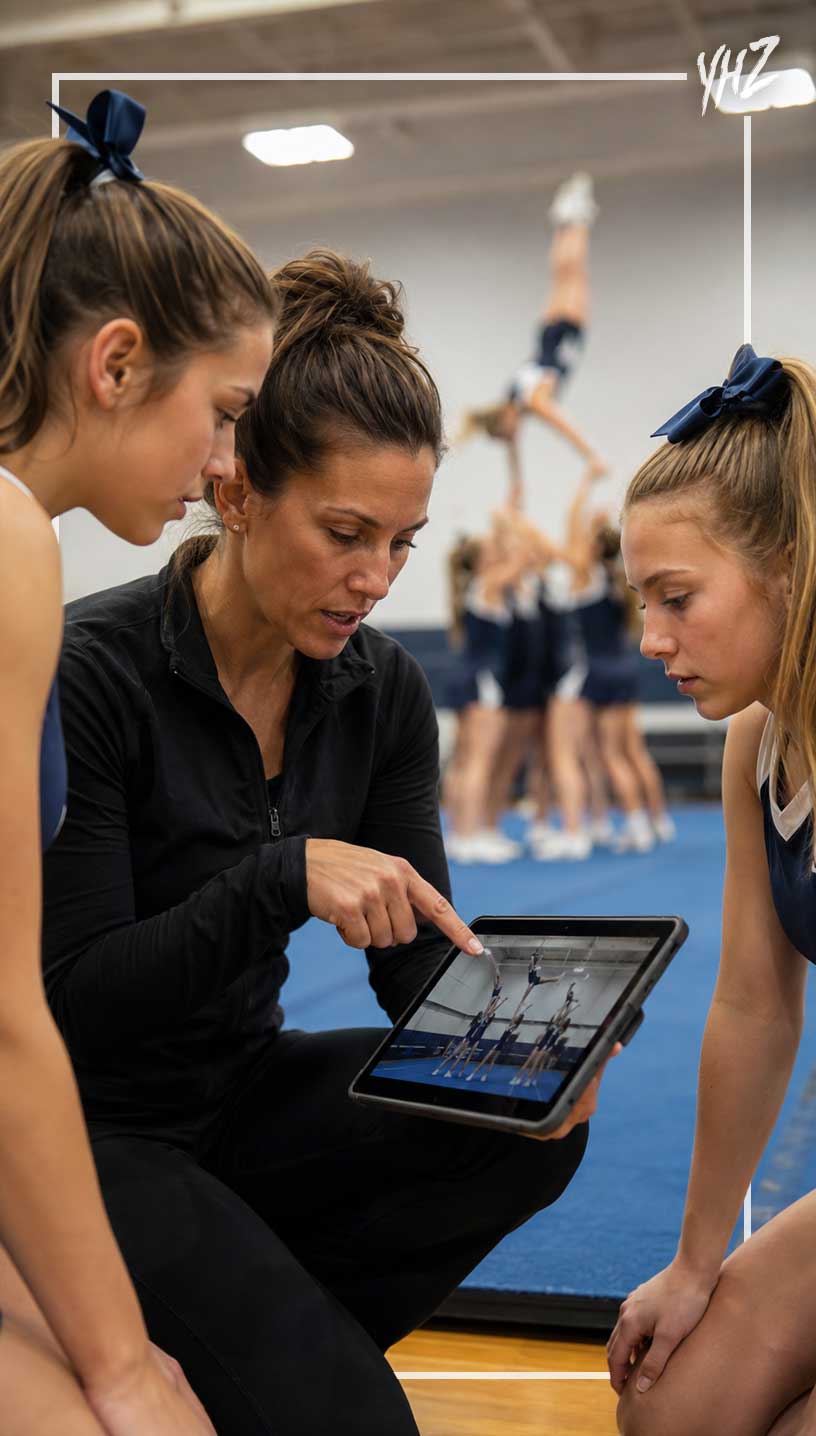
Don’t read this rule as permission for a bracer to release anywhere during the inversion. The rule applies to a specific part of the skill. The top person’s direction and destination both matter. Coaches who use braced inversions should review the moment when the connection changes. Video can help you see exactly when the bracer releases. Slow the video down. Check the top person’s body position at the instant the connection ends.
New catchers must be free when a transition starts
Rules 2-4-2c and 3-4-3c address vertical-to-horizontal releases that use new catchers. NFHS now states that new catchers cannot take part in another skill when the transition starts.
Picture a top person who releases from a vertical stunt and travels into different catchers. Those catchers must already be available when the transition begins. You cannot pull them from another active stunt after the release starts.
This can affect busy pyramid choreography. A routine might look possible because the new catchers reach the top person on time. Their activity when the transition begins can still create a problem. Review the whole stunt group during these transitions. Do not watch only the top person.
A top person cannot pass over another top person or bracer
NFHS added Rule 2-5-5g for 2026-27. The rule prohibits a top person from passing over another top person or bracer during a stunt. (NFHS) This wording gives coaches a direct restriction for overlapping stunt paths. You should check this rule when two stunt groups work close together. Pay special attention when one top travels across another group’s space. A sequence can look clean from the front while the athletes’ paths overlap from another angle. Record these sections from the side during practice. That view can make the travel path easier to see.
Extended releases can now include up to one twist
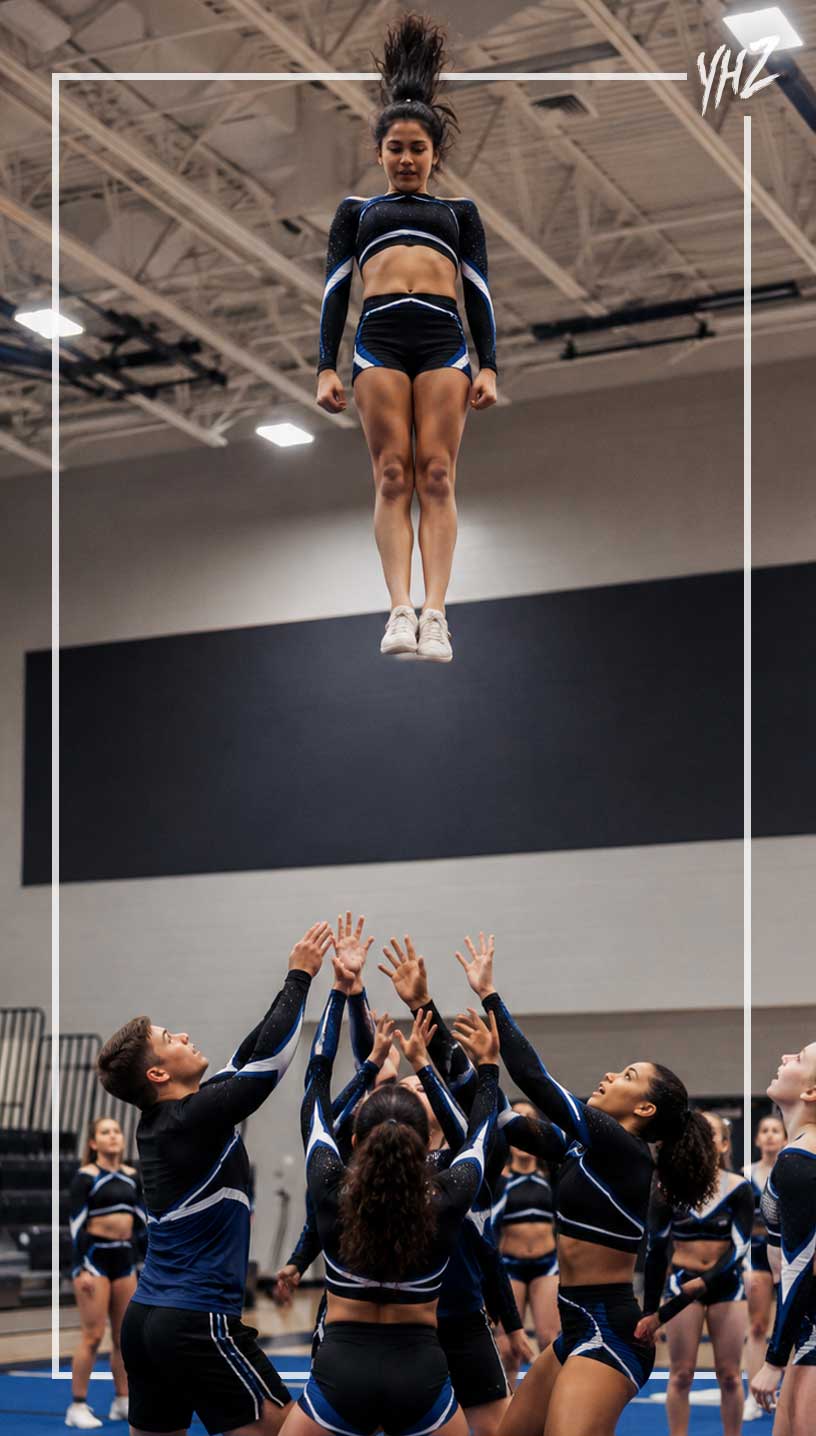
Rule 2-5-6c contains one of the more interesting changes for advanced high school teams. NFHS now permits a non-braced vertical release from an extended position to include up to one twist. (NFHS)
The change applies to an extended-to-extended vertical release. NFHS already allowed a full twist from prep level to an extended position. The new rule permits similar twisting progression from extension. (NFHS)
The wording matters. NFHS did not open every extended release to twisting. The rule covers the specific release described in Rule 2-5-6c. Coaches should check the starting position, release type, body position, catch position, and number of twists. Do that before you teach the skill as part of competition choreography.
This change may give advanced teams another way to add difficulty or movement without changing the final stunt position. Still, legality comes before routine construction. Build the skill from the exact rule language.
Vertical-to-horizontal releases require two catchers
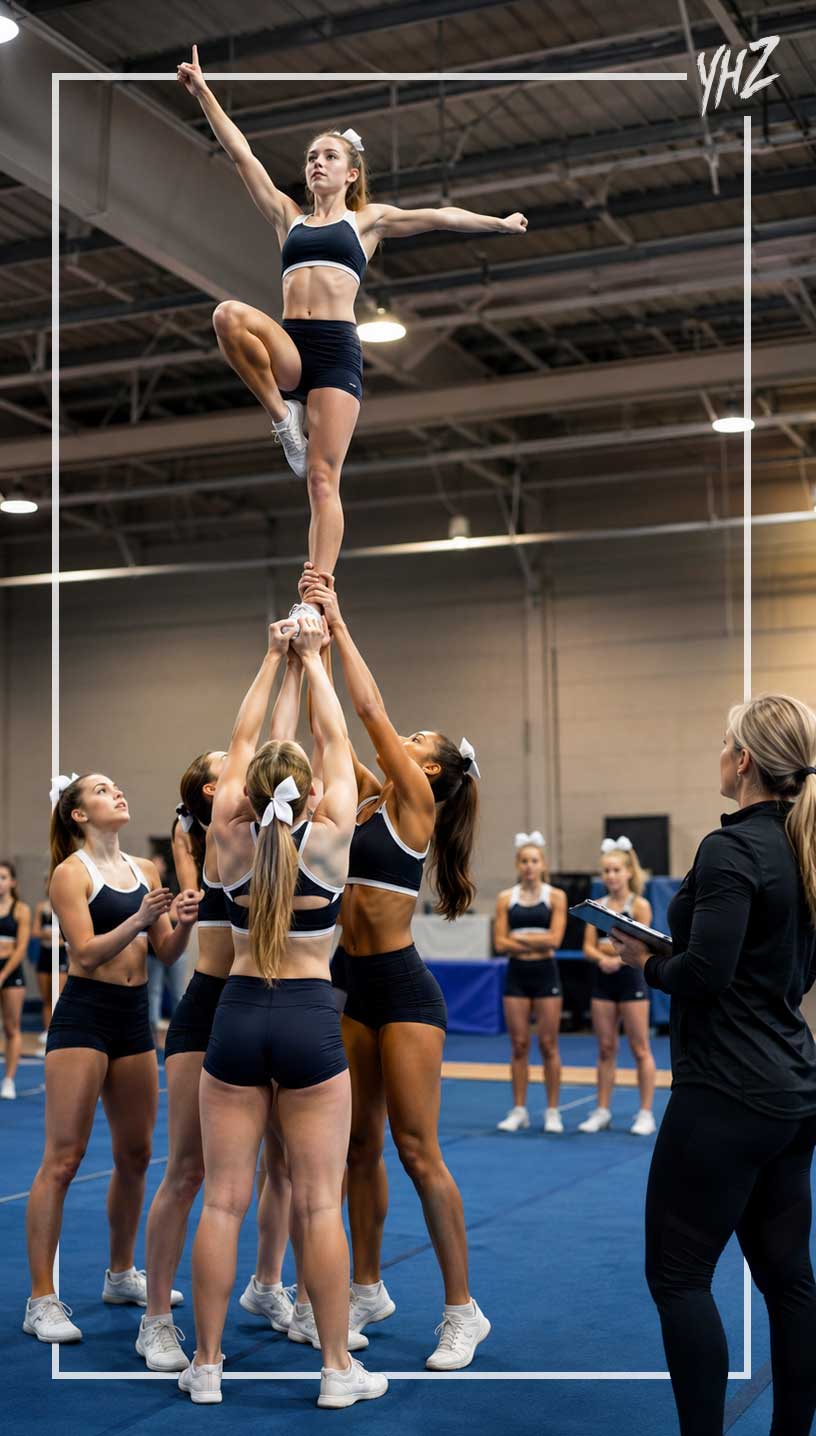
NFHS also clarified Rule 2-5-6e. A release from a vertical position to a horizontal position requires two catchers. That requirement also applies when one base starts the stunt. (NFHS) The single-base detail can catch coaches.
You might build a stunt around one strong base and assume the same athlete can complete the entire release. The new wording removes that interpretation. Once the top releases toward a horizontal position, the skill needs two catchers. Look closely at creative single-base sequences in your routine. Check any release that changes the top from vertical to horizontal.
Dismounts to new catchers can include a quarter twist
Rules 2-7-8d and 3-7-8d add another useful option. NFHS now allows a quarter twist during a dismount to new catchers. (NFHS)
NFHS gives a simple example:
A forward-facing top person can dismount toward new catchers who stand to the side. The top can use a quarter twist to face the catch correctly. (NFHS)
This change can make some transitions easier to choreograph. It can also solve awkward spacing when the next formation sits beside the original stunt group. The limit still matters. The rule permits a quarter twist in this situation. Do not turn that allowance into a larger twisting dismount without checking the rest of Rule 2-7.
The new rules give coaches more options, but details decide legality
The 2026-27 NFHS cheer rules do not rewrite high school cheer from scratch. Most changes deal with specific positions, connections, catchers, releases, and definitions. Those details can still change what you can put on the floor.
The extended twisting release may attract the most attention. The new tumbling definition could affect more teams. The catcher rules also deserve a careful review. They can affect choreography that coaches already built before the season started.
NFHS approved eight rule changes and two definition changes for the 2026-27 Spirit season. The organization published its detailed comments on August 25. (NFHS) They also published a free 2026-27 Spirit Rules poster in August. Might be useful as a quick reference during practice. (NFHS)
What coaches should review in their routines now
Start with every inversion, release, dismount, and vertical-to-horizontal transition in your routine. Check the actual athlete connections. Then check where each catcher stands and what each catcher does when the skill begins.
Review your floor choreography under the new tumbling definition. A movement your team calls tumbling may not meet the NFHS definition. The reverse assumption can also cause trouble.
Check extended releases for twisting. If your team uses an extended-to-extended release, confirm that the skill fits Rule 2-5-6c before you keep it.
Review any stunt that sends one top person across another stunt group. Rule 2-5-5g now directly prohibits a top person from passing over another top person or bracer.
Finally, check your dismounts to new catchers. A quarter twist now has a legal use in that situation. That does not make larger twisting dismounts legal under the same rule.
Don’t wait for competition day to find a rules problem
A routine can feel familiar and still contain a rule issue after a definition changes. Run a rules review before your team locks its competition routine. Review the skills again after major choreography changes.
Keep the current NFHS Spirit Rules Book available during that process. NFHS comments can explain the changes, but the complete rulebook contains the full requirements around each skill.
When a sequence sits near the edge of a rule, get an official ruling before competition. Changing four counts in practice is much easier than changing a stunt during warmups.

IPP's Premade Mixes are USA Cheer Compliant and customizable! Add Sound FX, swap songs, & more! Add your Team Name to the mix for only $10!



 Cheer Mixes
 Past-Season Mixes (50% off!)
 You Hit Zero Cheer Blog
 Spotify Playlists
 Quick Quote Video Tutorial