
 •






Sep


By Steve Pawlyk
Published September 21, 2026
On September 16, 2026, a University of Connecticut cheerleader fell during practice at the UConn Volleyball Center. Paramedics treated the athlete at the scene, and a medical helicopter took the athlete to Hartford Hospital. The university said the athlete stayed overnight for evaluation and left the hospital the next morning with no major physical injuries. That good outcome does not make the incident easy to dismiss. It raises a direct question for every cheer coach: If an athlete suffers a serious fall at your next practice, does everyone know what to do?
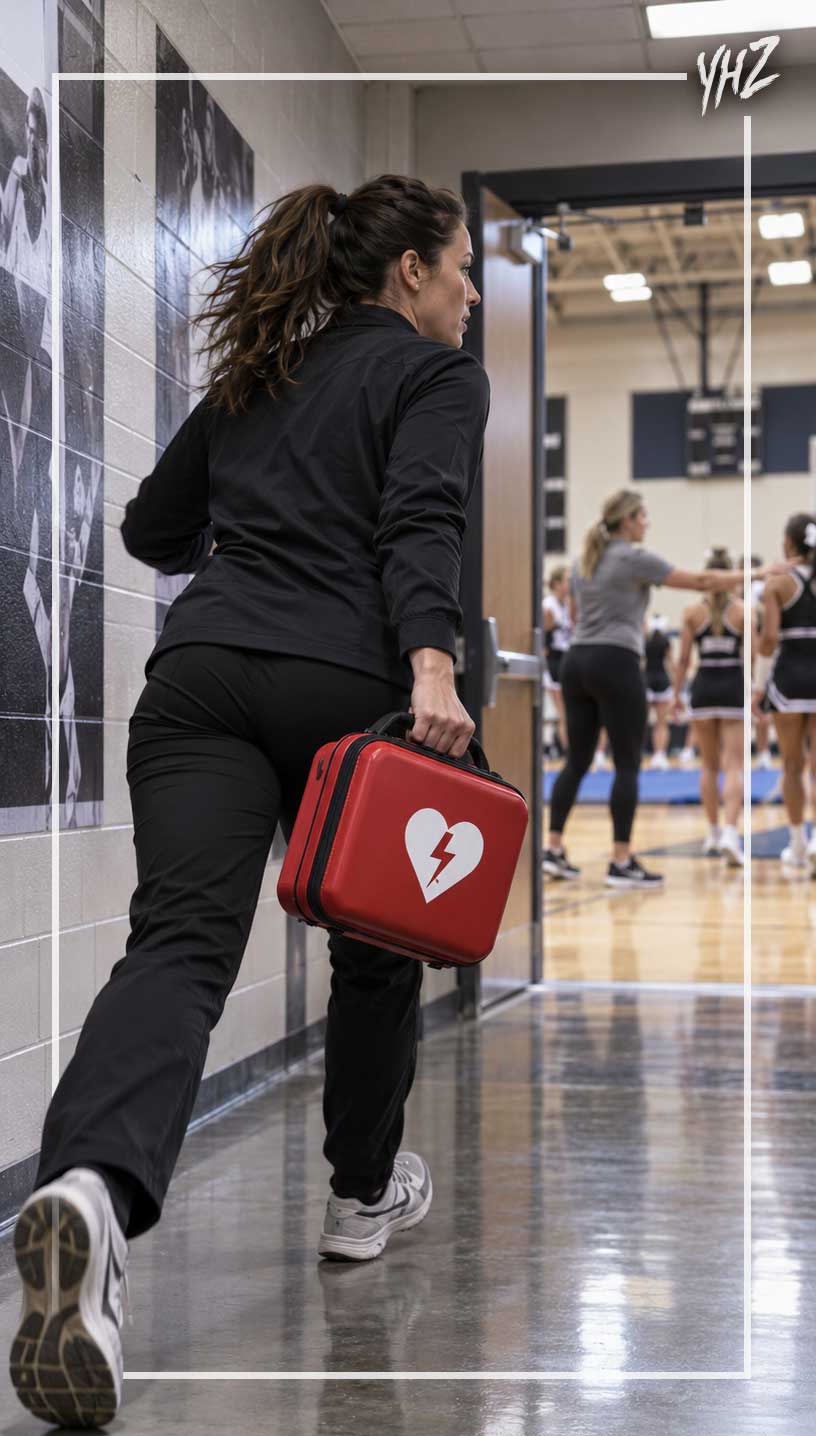
A cheerleading emergency action plan answers that question before anyone gets hurt. It assigns jobs, gives responders the correct address, identifies the nearest AED and tells staff how to manage the rest of the team. A plan on paper is only the start. Your staff and athletes must practice it.
What is a cheerleading emergency action plan?
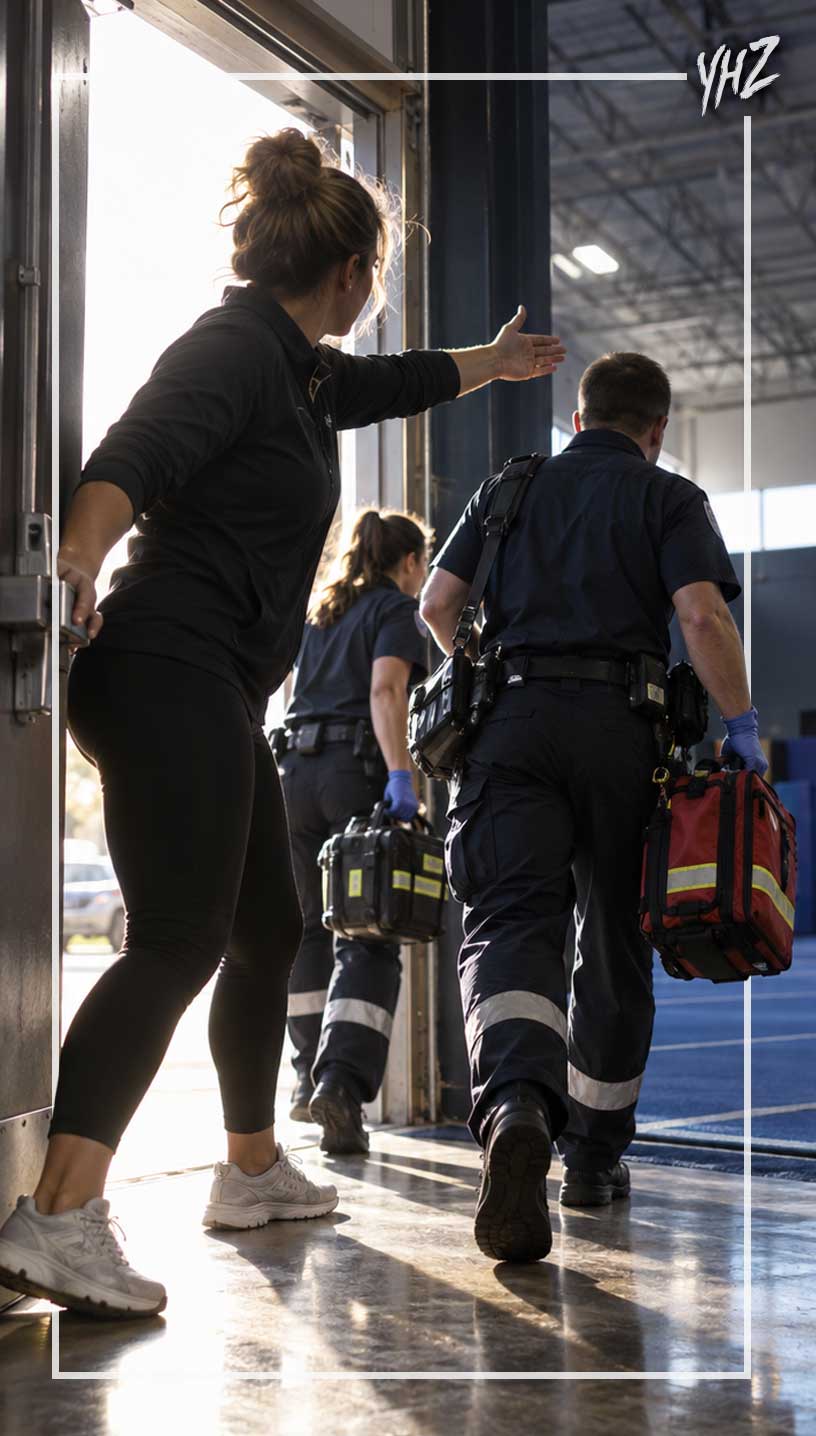
An emergency action plan, often called an EAP, is a written response plan for a serious injury or medical emergency. It tells each person what to do from the moment activity stops until emergency medical services take control. It also covers team supervision, parent contact and incident records. USA Cheer provides a sample cheerleading emergency action plan, a 9-1-1 phone script, an athlete information card and a printable flip chart.
Those tools give programs a good starting point, but each program must adapt them to its own staff, athletes and facilities. Your school or gym may already have a general emergency plan. Read it, then check whether it works for cheer practice. A plan for the football field may fail inside an auxiliary gym with a locked exterior door and no athletic trainer nearby.
Write a different plan for each venue
One address does not equal one response plan. Your main gym, tumbling room, outdoor practice field and performance space may have different entrances. The AED may sit near one location but several hallways away from another. USA Cheer advises teams to create a separate plan for each venue. Practice also needs its own plan when the medical staff who attend games are not present.
The same rule applies when your team trains in a rented facility. A venue sheet gives every staff member the same information.
Create one page for every place where your team practices or performs, and include these details:
- The full street address and ZIP code
- The building name, room name and floor
- The nearest cross street
- The best entrance for an ambulance
- The door or gate that staff must unlock
- The AED location
- The first-aid kit location
- The name and phone number of the athletic trainer, nurse or facility manager
- The location where a staff member will meet emergency responders
Do not assume that a person who calls 9-1-1 can describe the location from memory. Many athletes do not know the street address of their practice facility, and a visiting coach may not know which parking lot leads to the gym. Post the venue sheet near the practice floor. Keep a copy in the coach’s bag and on each staff member’s phone. Make sure staff can reach it if a power outage or weak internet connection blocks the usual system.
Assign jobs before the emergency
A vague instruction such as “someone call 9-1-1” wastes time. Name the primary person and a backup for each job, then update the names when staffing changes. The head coach or another trained adult should stay with the injured athlete. That person should give care only within the limits of their training. USA Cheer recommends that coaches complete first-aid and CPR/AED training.
Assign the remaining jobs to adults when possible. Use the roles below as a starting point. Add other jobs when your building or program requires them:
- One person calls 9-1-1.
- One person gets the AED and first-aid kit.
- One person opens the correct entrance and meets emergency responders.
- One person contacts the athletic trainer, nurse or facility manager.
- One person supervises the rest of the team.
- One person contacts the athlete’s parent or guardian.
- One person records the timeline after medical staff take control.
Give every job a backup because the primary caller may be absent. The assistant coach may be the person who needs medical care. A useful plan still works when one assigned person cannot do the job. Review the assignments whenever your roster or staff changes.
You can give older athletes simple support jobs during a drill, such as clearing the entrance or guiding an adult to the correct door. Keep an adult in charge of the response. Do not make a minor solely responsible for medical care, team supervision or parent contact. Age-appropriate practice can still help athletes follow directions and stay calm.

Prepare a 9-1-1 script
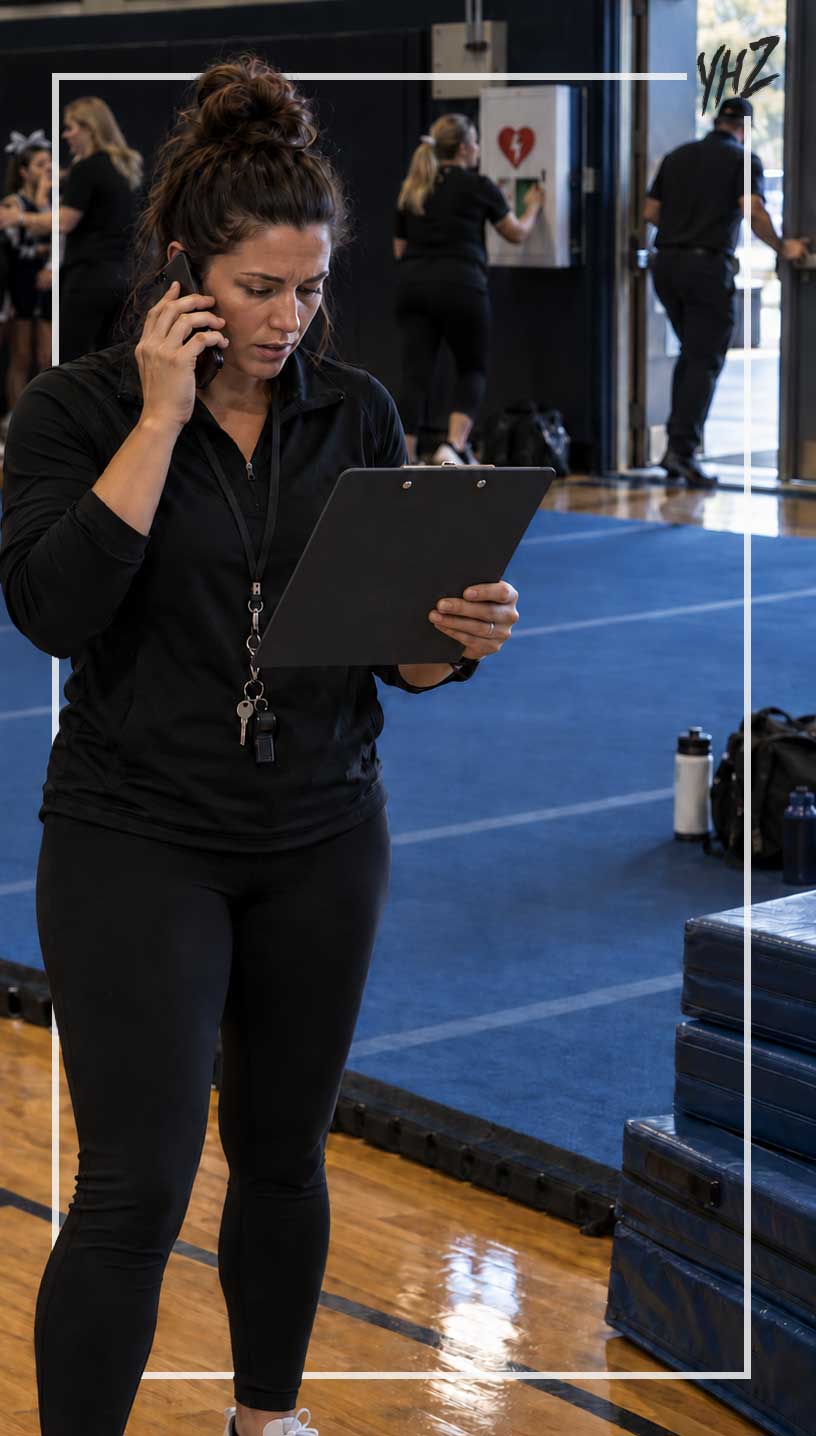
Stress changes how people speak and remember. A written script helps the caller give clear information without searching for words. Place the script beside the venue sheet. Give the caller a paper copy in case a phone battery dies.
The caller should know what information the dispatcher will request. Keep the details short and factual. The script should cover these points:
- “We have a medical emergency.”
- The full address and nearest cross street
- The exact place inside the building
- The athlete’s condition, including whether the athlete is conscious and breathing
- A short description of what happened
- The entrance where someone will meet responders
- The phone number used for the call
The caller should answer the dispatcher’s questions and follow the dispatcher’s instructions. Do not guess about an injury or give a diagnosis. Describe what you can see and what happened. Run a phone-script drill without placing a real emergency call. Have each designated caller read the script out loud so you can fix awkward wording and missing information during practice.
Clear a route for emergency responders
An ambulance in the parking lot does not help if responders cannot find the athlete. Locked doors, crowded hallways and unclear building names can slow access. Your plan must cover the full path from the road to the practice floor. Walk that path during the same hours when your team trains. A school entrance that stays open at noon may lock at 4:00 p.m.
Equipment carts, other teams or event barriers may block a route that looked clear in the morning. Assign one person to meet responders outside and place another person at any turn where the route becomes unclear. Give those people a way to unlock doors and gates. At competitions, ask event staff which entrance emergency crews use. Find the athletic training area and AED before warm-ups, then save the venue address in the team travel notes.
Keep medical and contact information ready
Emergency responders may need an athlete’s name, age, allergies, medical conditions and current medications. Coaches also need current parent or guardian phone numbers. Outdated forms can create another problem during an already difficult situation. Review athlete information before each season and ask families to report changes during the year.
Store the forms in a secure place that authorized staff can reach quickly. Decide who can open that file when the head coach is absent. Share medical information only with the people who need it for care. Do not discuss the athlete’s condition in a team group chat or on social media.
Know where the AED is
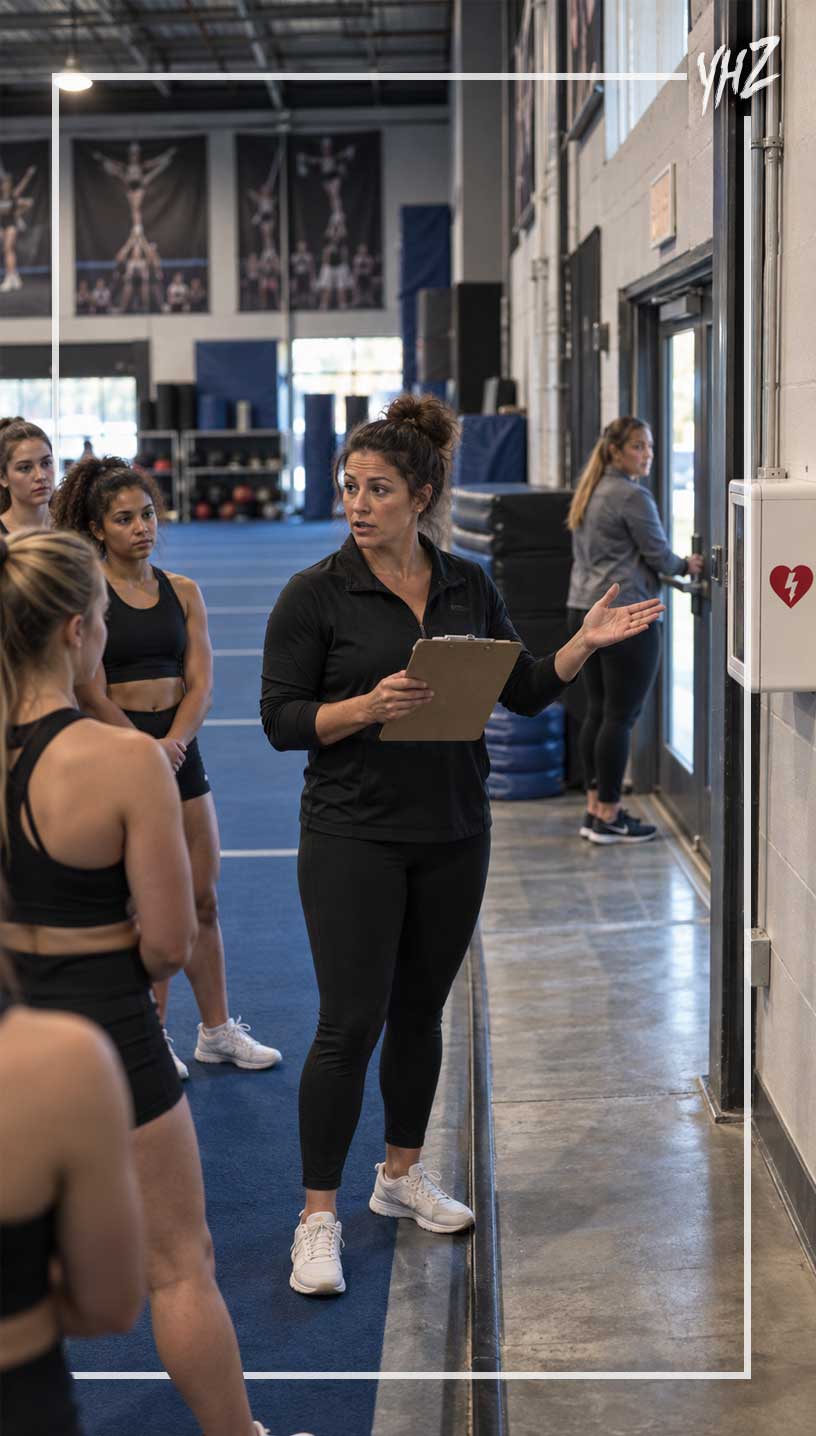
An automated external defibrillator cannot help if no one can find it or access it. Record its exact location in each venue plan. Check whether a locked office, closed school wing or after-hours schedule limits access. USA Cheer recommends CPR, first-aid and AED training for coaches. At least one trained adult should attend every practice, game and performance.
More than one trained adult gives the program coverage when a coach is absent or attending to another athlete. Include the AED in each drill. The assigned person should walk to it and return to the practice area. This test tells you how long retrieval takes and whether anything blocks access.
Treat a possible head, neck or spine injury with care
A coach should not diagnose an injury, but a coach must recognize when an athlete needs immediate medical help. Loss of consciousness, breathing trouble, loss of sensation or a suspected head, neck or spine injury calls for a trained response. USA Cheer’s emergency plan tells responders not to move an athlete when they suspect a head, neck or spine injury, unless an immediate hazard makes the location unsafe. Keep the athlete still and wait for trained medical help. Follow instructions from the 9-1-1 dispatcher.
Do not ask an athlete to “walk it off” after a serious fall. Do not let the desire to restart practice rush the decision. Stop activity and give responders room to work. Resume practice only after qualified staff say the area and remaining athletes are ready.
Use a firm concussion rule
A concussion can follow a hit to the head or a forceful hit to the body. Symptoms may appear without a loss of consciousness. Coaches should know the signs and remove the athlete from participation when they suspect a concussion. The coach should not judge the severity of a possible concussion.
The CDC HEADS UP guidance says to remove the athlete right away, check for danger signs and keep the athlete out for the rest of that day. A healthcare provider must clear the athlete before return to sport. Write that rule into your plan and explain it to athletes and parents before the season starts. A close competition or an important practice does not change the medical standard. This article gives emergency-planning information and does not replace medical advice, professional training or instructions from emergency personnel.
Manage the rest of the team
A serious injury affects every athlete in the room. Some athletes may panic, cry or crowd around their teammate. Others may reach for a phone and start recording. Assign an adult to move the team to a set location away from the injured athlete. Keep the group supervised and leave the access route open.
Tell athletes not to record, post or speculate about what happened. Give the team a short, factual update when you can do so without exposing private medical information. Do not blame an athlete, stunt group or coach during the emergency because staff can review the incident later. Your plan must also state who supervises the team if the head coach goes to the hospital. Do not leave minors alone or dismiss them without an approved pickup plan and confirmed parent contact.
Practice the plan like a routine
An unread EAP will not control a stressful room. Run a drill and give each person a job. Stop the clock when the assigned person reaches the AED and when the outside guide reaches the ambulance entrance. USA Cheer advises programs to practice the plan until everyone knows the assigned roles, then repeat the drill each month. The organization compares the process to a fire drill because repetition helps people act when the room becomes loud and confusing.
Test more than one situation. Run a drill with the head coach “unavailable,” then run another after normal school hours when exterior doors are locked. Test the plan during a travel practice or at a secondary facility. After each drill, ask whether the caller found the address, the guide opened the correct door and an adult supervised the rest of the team. Fix each failure before the next practice.
Review what happened after an emergency
Complete an incident report as soon as the situation allows. Record the time of the injury, the observed condition, the care provided, the 9-1-1 call and the transfer to medical personnel. Use facts and avoid guesses about fault or diagnosis. Meet with the adult staff after the emergency and check which parts of the plan worked. Note where the response slowed down.
Update the plan, replace used supplies and contact the proper school or gym administrator. Witnessing a serious injury can upset teammates and staff. Offer access to the school counselor or another qualified support person when needed. Give the injured athlete and family control over what medical information the program shares.
A 15-minute safety check for cheer coaches
You do not need a full staff meeting to find the largest gaps in your current plan. Take 15 minutes before your next practice and complete this check. Record any item that your staff cannot confirm:
- Ask one coach to state the facility’s full address.
- Ask one athlete to point to the nearest AED.
- Check whether staff can open the ambulance entrance.
- Confirm that at least one present adult has current CPR/AED and first-aid training.
- Open the emergency contact file and check when families last updated it.
- Name the adult who will call 9-1-1.
- Name the adult who will supervise the team.
- Walk the route from the street to the practice floor.
- Schedule the first full drill.
Any answer of “I think” or “probably” identifies work that your program needs to do. Write down the correct answer, assign a person and test it. The best emergency drill feels boring because everyone moves to the assigned place, the caller reads the correct address and the right door opens. That is the goal.
Find the confusion during a drill, not while an injured athlete waits on the mat.

IPP's Premade Mixes are USA Cheer Compliant and customizable! Add Sound FX, swap songs, & more! Add your Team Name to the mix for only $10!




Sources
- UConn cheerleader out of hospital after falling during practice, university says, CT Insider, September 18, 2026
- Cheerleading Emergency Action Plan, USA Cheer
- Safety Training, USA Cheer
- Responding to a Sports-related Concussion, CDC HEADS UP
 Cheer Mixes
 Past-Season Mixes (50% off!)
 You Hit Zero Cheer Blog
 Spotify Playlists
 Quick Quote Video Tutorial