





Tag Archives: cheer endurance training

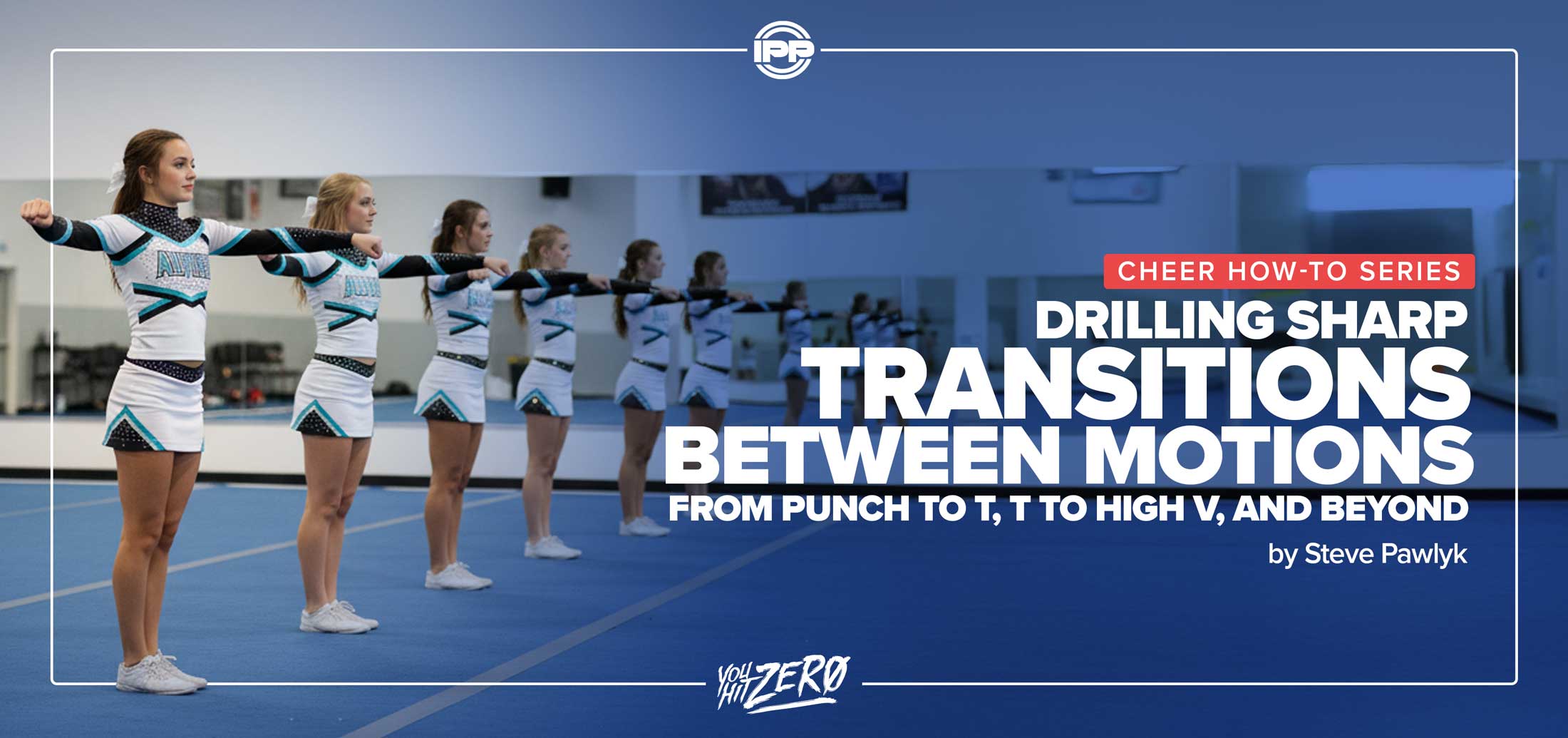
Drilling Sharp Transitions Between Motions: From Punch to T, T to High V, and Beyond

Drilling Sharp Transitions Between Motions From Punch to T T to High V and Beyond

By Steve Pawlyk

Published November 12, 2025

Sharp transitions are what separate a good routine from a championship-level one. Every clean line depends not only on where a motion lands but how it gets there. In All-Star cheer, those split-second pathways between positions – Punch to T, T to High V, High V to Low V – are where most visual sloppiness occurs. This guide explains how to teach precise, fast, and uniform transitions step-by-step, with drills and cue language that create muscle memory, synchronization, and control across your entire team.
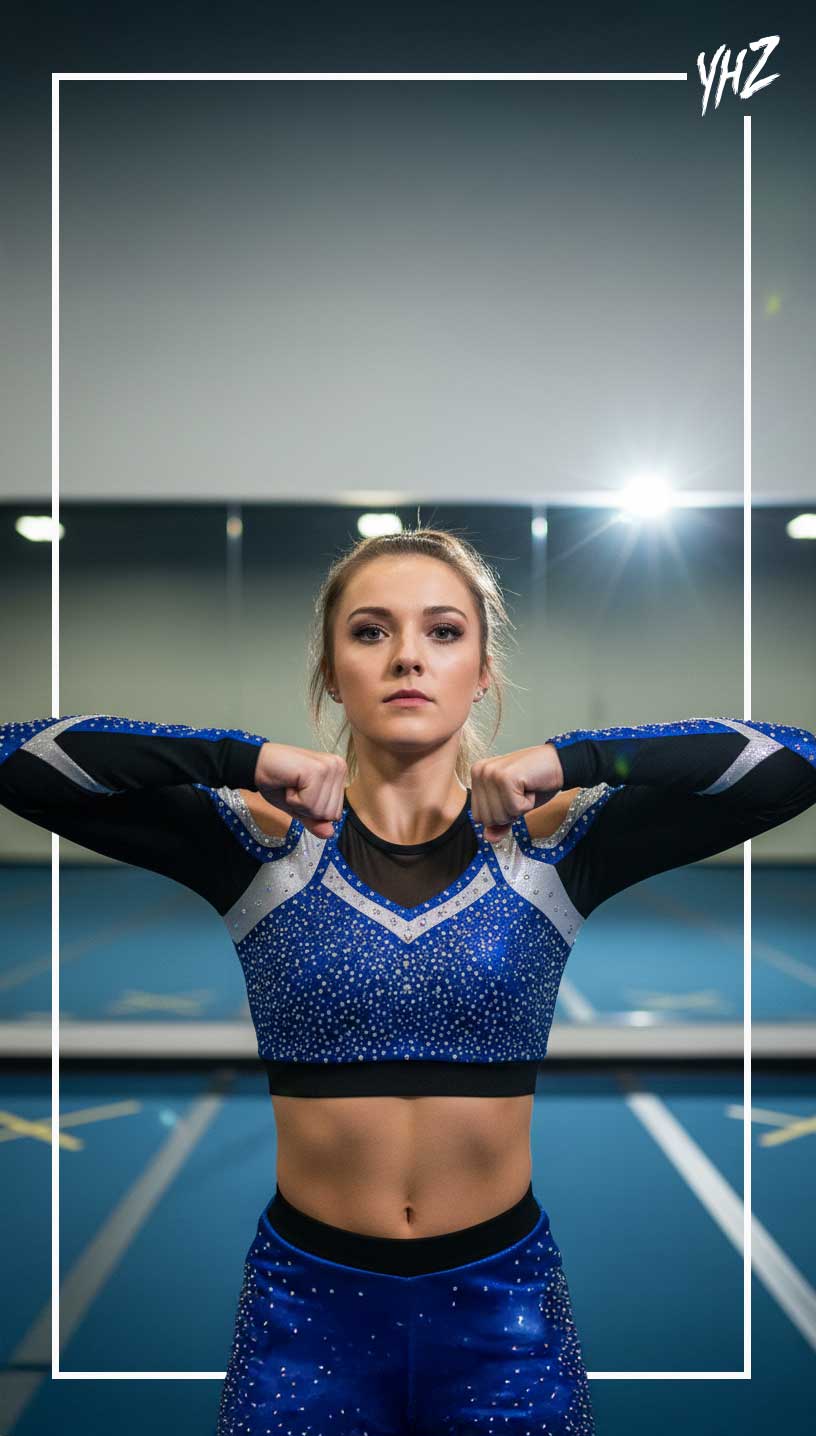
cheer motion transitions

Understanding Motion Transitions

Definition:
A motion transition is the controlled movement connecting two defined positions in a routine. The transition must travel the shortest, most direct path with even tension and zero bounce at the endpoint.

Core Mechanics:

  • Economy of Motion: The arms travel the smallest path possible between positions.
  • Constant Tension: Shoulders, core, and wrists stay engaged throughout.
  • Timing: Every athlete hits the new motion on the same count.
  • Stillness Between Movements: Once a position hits, there is no residual wobble.

Common Transition Types:

  1. Linear: Straight pathways (e.g., T → High V).
  2. Rotational: Turning the arms around the axis of the shoulders (e.g., Punch → T).

3. Sequential: Linked multi-position changes (e.g., T → High V → Low V).

Step-by-Step: Teaching Sharp Transitions One-on-One

Step 1: Isolate the Start and End Points

Begin by teaching each motion independently until the athlete can hold both perfectly.
Cue: “You can’t travel cleanly between two crooked spots.”

Once the endpoints are mastered, have the athlete slowly connect them — pausing halfway to confirm arm path and shoulder control.

Step 2: Slow-Motion Rehearsal

Execute the transition in four counts:

  • Count 1–2: Travel halfway.
  • Count 3–4: Arrive at endpoint and freeze.
    Cue: “No swinging. No bouncing. Just slide and stop.”

Step 3: Gradual Acceleration

Once technique is clean, reduce to 2 counts, then 1 count, maintaining the same pathway discipline.
Use a metronome (90–120 BPM) to build rhythmic consistency.

Step 4: Add Visual Checkpoints

Use mirrors or record video to ensure elbows and wrists track symmetrically.
Cue: “Both hands should take the same route, same speed, same finish.”

Need Competition Music Blue 1

Teaching Small Groups

Step 1: Synchronization Drills

  • Have 3–5 athletes perform T → High V together to an 8-count.
  • Assign one athlete as “visual lead.” Others mirror their timing and endpoint.
  • Cue: “If you can see another arm move before yours, you’re late.”

Step 2: Mirror Pair Work

Partners face each other and perform transitions simultaneously.
Each athlete watches for delay, angle deviation, or path wobble.
Swap partners every 30 seconds for fresh observation.

Step 3: Pathway Consistency

Use painter’s tape on the mirror or wall to mark arm travel paths.
Have athletes trace those lines visually while transitioning.
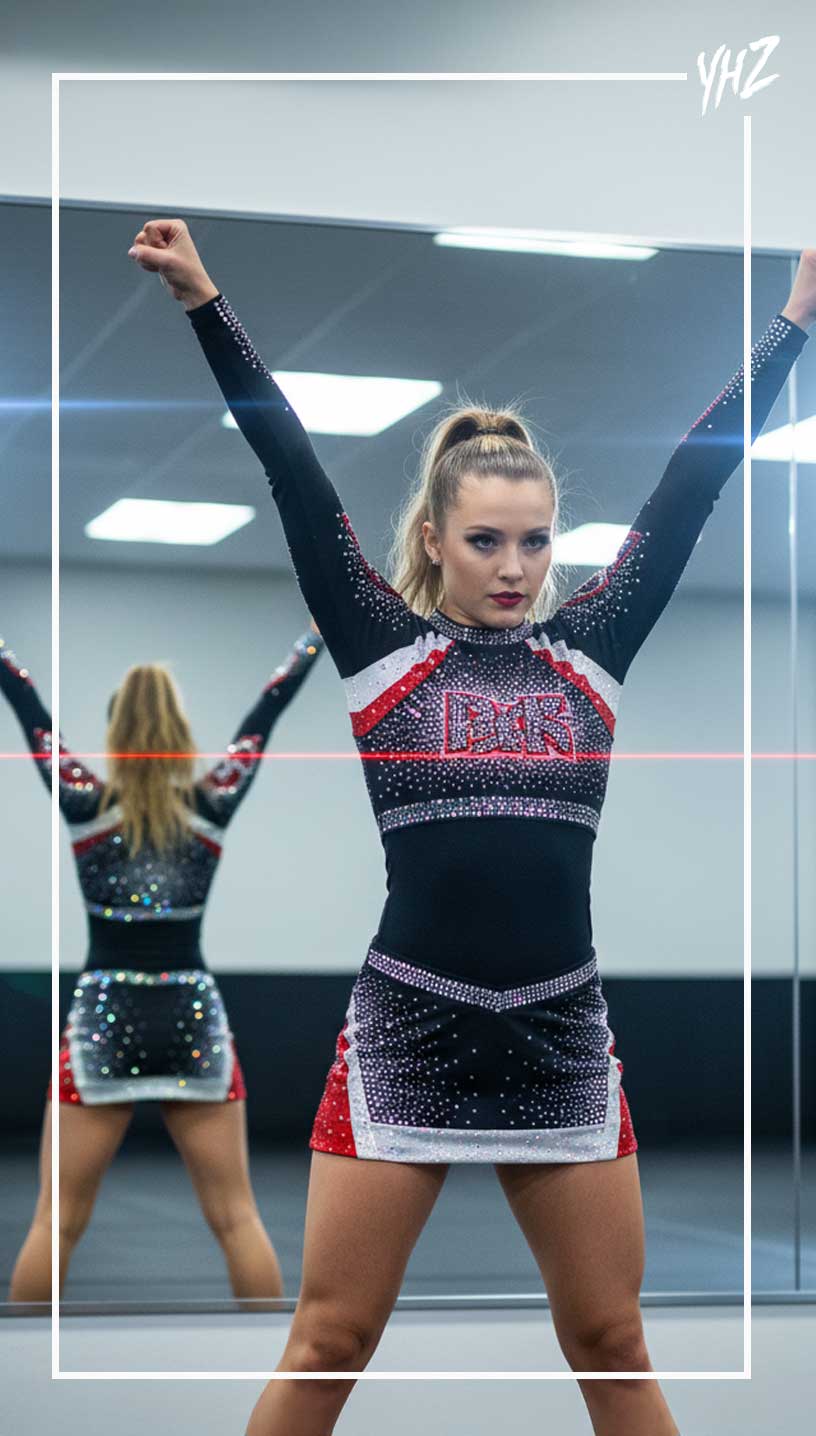
cheer technique drills

Teaching the Whole Team

Step 1: Sectional Isolation

Work in formation lines. Each line executes a single transition (e.g., Punch → T) repeatedly on count 8.
Front line serves as timing reference for the rest of the team.

Step 2: Layered Tempo Progression

Run the same transition series at three speeds:

  1. Half-tempo with pauses for alignment.
  2. Full-tempo to counts.
  3. Music-speed under pressure.

Record each version for video review.

Step 3: Full-Team Transition Pyramid

Group the team by skill level: beginners drill T ↔ High V, intermediates add Low V, advanced groups run sequential combos.
Cue across levels: “Fast is fine, sloppy is not.”

cheer motion transitions

Coaching Language That Reinforces Clean Transitions

Effective Cues:

  • “Travel tight – elbows scrape your ribs.”
  • “Path, not power.”
  • “Snap through, don’t swing through.”
  • “Freeze like the motion owes you money.”
  • “Speed without chaos.”

Avoid:

  • “Faster!” – without form reference, it causes flailing.
  • “Bigger!” – encourages over-rotation

Drills to Build Transition Precision

  1. Four-Count Path Drill
Execute one transition in four controlled counts. Builds awareness of midpoint control.
  2. Metronome Timing Drill
Perform continuous transitions to beats at 100–120 BPM; freeze on downbeat. Develops rhythm discipline.
  3. Laser Line Drill
Use a low laser or elastic cord to mark shoulder height. Arms should never cross below or above during T → High V.
  4. Mirror Snap Challenge
Athletes face mirrors; coach calls random transitions (“T → Punch,” “High V → Low V”). Points for exact count accuracy.
    5. Full-Team Transition Ladder
Entire team runs a chain of motions (Punch → T → High V → Low V → T). Each error restarts the ladder. Builds endurance and focus.

Common Athlete Errors and How to Correct Them

Error

Cause

Correction Strategy

Arm swing too wide

Lack of spatial awareness

Tape floor/mirror lines; cue “Shortest path wins.”

Delay between counts

Weak timing control

Use audible 8-counts or metronome to reinforce rhythm.

Over-rotation or bounce

No core engagement

Add planks and hollow holds; cue “Stop from your ribs.”

Elbows bent mid-path

Fatigue or poor triceps activation

Strengthen with resistance bands; cue “Lock then travel.”

Unsynchronized finishes

Visual dependency

Drill “eyes closed” reps to develop proprioception.

Conditioning for Transition Endurance

Sharp transitions demand explosive muscle control and sustained tension. Integrate:

  • Shoulder raises: 3×12 front/lateral combo sets.
  • Core twists with med ball: 3×20 for torso stabilization.
  • 8-count motion circuits: Repeat 3 rounds nonstop for stamina.

Cue: “You don’t just hit motions — you connect them with power.”


Transitions define the rhythm, cleanliness, and energy of your choreography. Precision between motions communicates professionalism and teamwork.
Teach your athletes to value the space between counts as much as the counts themselves. Clean transitions are a learned habit — built through repetition, awareness, and exact language from you, the coach.

Steve Pawlyk Signature Full

IPP's Premade Mixes are USA Cheer Compliant and customizable!  Add Sound FX, swap songs, & more!  Add your Team Name to the mix for only $10! 

SLAM artwork
Full_Out_130 mp3 image
1 minute cheer mix
WAKE UP THE FIRE
SLAM artwork
WAKE UP THE FIRE
Full_Out_130 mp3 image
1 minute cheer mix

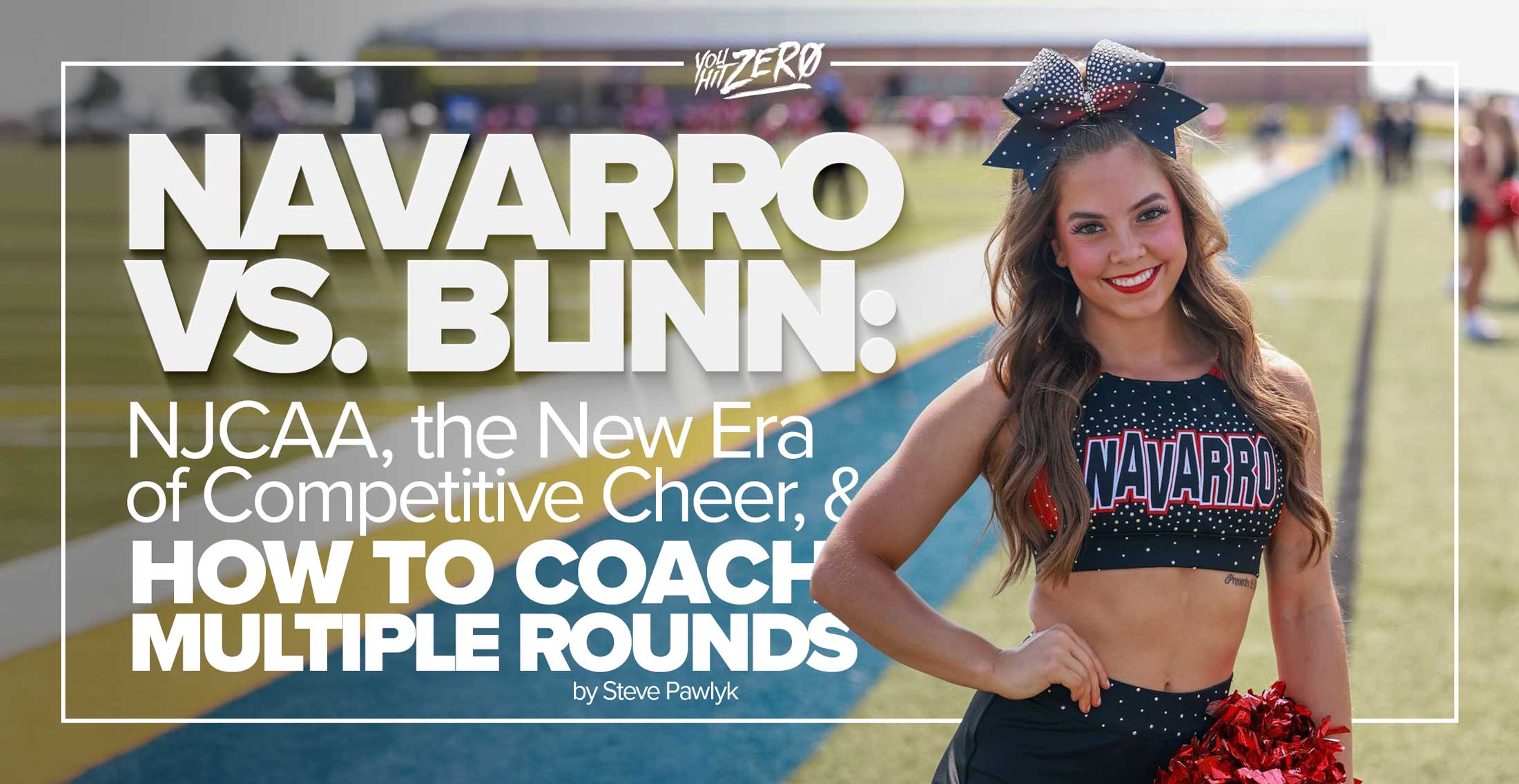
Navarro vs. Blinn: NJCAA, the New Era of Competitive Cheer, & How to Coach Multiple Rounds

Navarro vs. Blinn NJCAA the New Era of Competitive Cheer and How to Coach Multiple Rounds

By Steve Pawlyk

Published October 25, 2024

The first-ever NJCAA competitive cheerleading meet took place on October 19, 2024, marking a pivotal moment for junior college cheerleading. This historic meet featured two powerhouse programs, Navarro College and Blinn College, going head-to-head at the Kruse Center in Brenham, Texas. Traditionally known for their dominance at the National Cheer Association (NCA) competitions, both schools embraced the NJCAA’s shift to a structured, multi-round competition format, signaling a new era for collegiate cheer at the junior college level.

Meet Structure: A New Format for Cheer

This NJCAA meet differed from the typical one-shot routines seen at NCA championships. Instead, it featured a three-period format with multiple heats, offering more opportunities for athletes to showcase their skills in specific categories such as tumbling, stunt building, and creative tosses. The shift to this format reflects a growing emphasis on precision and consistency, requiring teams to sustain high energy and focus across multiple rounds rather than a single performance.

Performance Breakdown: Key Highlights

  1. Compulsory Tumbling (Period 1):
    • Blinn secured early wins with impressive toe tucks and standing layouts.
    • Navarro answered back with victories in standing hand tucks and round-off tucks, resulting in a tightly contested start.
  2. Creative Building and Stunts (Period 2):
    • Both teams excelled in pyramid formations and stunt sequences, splitting wins across the heats.
    • The second period also featured basket tosses and creative elements, further challenging athletes to showcase both skill and artistry.
  3. Final Compulsory Routine (Period 3):
    • The competition culminated in a one-minute compulsory routine, with Navarro narrowly edging out Blinn, 50-45.

The meet ended with Navarro scoring 154 points over Blinn’s 150, underscoring just how evenly matched these teams were throughout the event.

What This Competition Means for Cheerleading

This meet represents more than just a rivalry—it highlights a new direction for NJCAA cheerleading. Historically, junior college programs like Blinn and Navarro balanced sideline performances with NCA competitions, where they had one chance to impress. With the NJCAA format, cheerleading now emphasizes multi-round strategy, offering athletes multiple opportunities to perform and adapt throughout the meet.

Need Competition Music Blue 1

For cheer coaches and athletes nationwide, this shift offers new opportunities:

  • Development of Endurance and Versatility: Athletes must now maintain energy and composure over extended periods and adjust in real-time.
  • Increased Focus on Technique and Execution: The format rewards clean execution and strategic decision-making, fostering skill development across different areas of cheer.

• • Expanded Competitive Opportunities: Blinn’s coach expressed optimism about more NJCAA events being scheduled, opening the door for other programs to adopt the format and grow junior college cheer into a more structured sport.

Looking Ahead: A Growing Landscape

This first NJCAA meet sets a precedent for future competitions, potentially expanding the sport’s visibility and providing new pathways for student-athletes. Both Navarro and Blinn, with their storied NCA success, have proven that cheerleading at the junior college level can thrive in this evolving competitive landscape.

How to Coach Multiple Rounds: Lessons from NJCAA Cheer Meets

Coaching for multi-round cheer competitions, like those recently introduced by the NJCAA, requires a fresh approach compared to single-routine events. The Navarro vs. Blinn meet, which featured multiple heats across three periods, offers valuable insights into maintaining energy, focus, and strategy throughout these demanding events. Below is a breakdown of key coaching strategies to excel in multi-round competitions.

1. Strategic Energy Management Across Heats

In multi-round formats, it’s critical to pace your athletes to sustain energy. Unlike single-shot performances, multiple heats require athletes to perform at peak levels several times. Coaches can incorporate interval training into practice to simulate competition pacing. Rest and recovery periods should also be built between routines to ensure athletes are refreshed for each heat.

  • Tip: Rotate athletes in non-essential heats to prevent fatigue during crucial rounds, such as stunt or creative building heats later in the event.
  • Incorporate Conditioning: Endurance drills like circuit training and high-intensity interval workouts help athletes build the stamina needed to perform multiple routines successfully over extended periods.

2. Building Versatility and Flexibility

Coaches should train athletes to handle multiple roles, such as switching between positions in pyramids and stunt sequences. Versatility ensures seamless transitions between heats and gives the team more flexibility to adapt to changes or injuries during competitions. Athletes performing as both bases and flyers can become key assets in ensuring smooth routine shifts.

  • Role Assignments: Use grid systems to track athlete participation across heats and avoid overloading individuals, ensuring they can perform optimally throughout the event.
  • Skill Assessments: Evaluate each athlete’s strengths in tumbling, stunts, and pyramids before the season, giving you a strategic advantage when assigning routines.

3. Maintaining Focus Through Mental Preparation

Multi-round competitions demand more mental stamina from athletes. Coaches can use visualization techniques and breathing exercises to help athletes stay focused and calm during breaks between heats. Group mindfulness sessions during practice can also foster mental resilience, keeping athletes sharp for every round.

  • Pre-Performance Rituals: Establish routines to reduce anxiety and ensure athletes remain focused between heats.
  • Visualization: Encourage athletes to mentally rehearse routines during downtime, envisioning each heat as a new opportunity to excel.

4. Using Strategic Adjustments Between Heats

The NJCAA’s multi-heat format offers the advantage of mid-competition adjustments. Coaches can review performance trends between heats, such as timing issues or minor form breaks, and provide immediate feedback. This adaptability allows teams to recover and correct mistakes in real time, potentially turning a competition in their favor.

  • Video Analysis: If possible, film heats and review them with the team between rounds to identify areas for quick improvement.
  • Adapt Strategies: Have backup plans for stunts or routines that prove inconsistent during early heats, focusing on cleaner execution to maximize later rounds.

5. Coaching Beyond the Routine: Building Team Chemistry

Cohesive teamwork is essential for multi-round success. Coaches can foster camaraderie with team-building exercises and ensure that athletes support each other through the highs and lows of competition. A supportive team culture ensures that athletes stay motivated across multiple heats.

  • Team Bonding Sessions: Activities like group dinners or team outings before competitions can build trust and communication among athletes.
  • Positive Reinforcement: Celebrate small victories after each heat to keep morale high, even if adjustments are needed for later rounds.

6. Looking Forward: NJCAA’s Impact on Competitive Cheer Coaching

The NJCAA’s adoption of multi-round formats brings a new dimension to cheerleading, providing athletes with more opportunities to showcase their skills and perform under varied conditions. This shift requires coaches to rethink traditional training methods, focusing on endurance, mental resilience, and strategic planning. As this format grows, coaches will need to emphasize flexibility and adaptability to remain competitive.

As the NJCAA aims to host more events like this, expect other programs to join in, creating a national circuit that could further elevate the sport at the collegiate level. This moment marks the beginning of a more inclusive and competitive cheer environment, where athletes have more chances to showcase their skills and teams can develop more comprehensive strategies to succeed.

Steve Pawlyk Signature Full

IPP's Premade Mixes are USA Cheer Compliant and customizable!  Add Sound FX, swap songs, & more!  Add your Team Name to the mix for only $10! 

SLAM artwork
Full_Out_130 mp3 image
1 minute cheer mix
WAKE UP THE FIRE
SLAM artwork
WAKE UP THE FIRE
Full_Out_130 mp3 image
1 minute cheer mix

Showcase Season: A Comprehensive Guide for Cheer Coaches

Showcase Season A Comprehensive Guide for Cheer Coaches

By Steve Pawlyk

Published October 14, 2024

As we approach one of the most thrilling times in the cheerleading calendar—Showcase Season—it’s crucial for coaches to prepare their teams both mentally and physically. Showcases provide the opportunity to perform in front of an audience without the pressure of competition scores, making them the perfect rehearsal for the upcoming competition season. Here’s a detailed guide to ensure your team shines during their showcase.

1. Structured and Consistent Training

Creating a well-balanced training schedule is vital in the weeks leading up to your showcase. Regular practice is the key to achieving smooth transitions, timing precision, and confidence. Focus on:

  • Skill-building and Routine Refinement: Dedicate part of each practice to clean up any rough spots in the routine, emphasizing synchronization and stunt timing.
  • Strength and Stamina: Incorporate conditioning exercises like endurance drills, circuit training, and cardio to build the stamina necessary for a high-energy performance.
  • Full-Out Dress Rehearsals: Ensure your athletes are practicing the full routine in uniform, under conditions as close to showcase day as possible. This includes performing in front of a small audience to simulate the nerves and adrenaline rush they will experience during the real thing.

2. Mastering Presentation and Clean Execution

While showcases are less formal than competitions, the performance should still be sharp and clean to leave a lasting impression:

  • Showmanship Matters: Encourage athletes to maintain high energy, smile, and engage with the audience through eye contact. Performance quality can make a big difference in how your routine is perceived, even if you’re not executing the most complex stunts.
  • Technical Precision: Judges at future competitions will notice the smallest details. Use the showcase to refine tight formations, sharp motions, and clean transitions. Work on eliminating unnecessary movements that could result in deductions in competition.
  • Polish the Routine: If your team struggles with consistency on certain elements, consider simplifying those sections to prioritize clean execution over complexity. You want the audience to leave impressed by a flawless performance.
Need Competition Music Blue 1

3. Mental and Emotional Preparedness

Physical preparation is only part of the equation—mental readiness is equally important. Here are some strategies to ensure your team is mentally focused:

  • Visualization: Encourage your athletes to use mental imagery. Have them visualize hitting their stunts, tumbling, and dance sequences perfectly. Studies show that visualizing success helps athletes perform better when the time comes.
  • Setting Intentions: Before each practice, guide your athletes to set a positive intention for the day. It could be something as simple as “I will stay focused and confident” or “I will support my teammates”. This not only keeps their mindset positive but also reinforces team unity.
  • Energy Management: Coaches should help athletes manage performance anxiety by teaching breathing techniques like box breathing. This helps athletes center themselves and turn nervous energy into focus.

4. Nutrition and Hydration

Fueling the body properly is crucial for peak performance:

  • Balanced Meals: Leading up to the showcase, ensure your athletes are eating balanced meals with a mix of complex carbohydrates (for energy) and protein (for muscle recovery). A good pre-performance snack could be oatmeal with eggs or a turkey sandwich.
  • Stay Hydrated: Encourage athletes to drink water consistently during practices and especially on showcase day. Dehydration can lead to fatigue and a lackluster performance.

5. Building Team Camaraderie

A cohesive team will always perform better under pressure. Use the showcase season to foster deeper connections among teammates:

  • Team Bonding: Organize activities like team dinners, movie nights, or even post-practice outings to strengthen the bond among your athletes. This sense of unity can translate to better communication and synchronization on the mat.
  • Positive Reinforcement: After each practice, highlight individual and group successes. This will boost confidence and help keep morale high leading up to showcase day.

6. Post-Performance Reflection

After the showcase, take the opportunity to reflect on what went well and what needs improvement:

  • Review the Performance: Record the showcase and review it with the team. Analyze the areas where the team excelled and where further refinement is needed before competition season.
  • Celebrate Achievements: Regardless of any mistakes, celebrate the team’s hard work and dedication. Showcase season is not just about nailing the routine, but also about enjoying the process and setting the stage for future success.

By incorporating these strategies, your team will not only perform their best at the showcase but also be well-prepared for the high-pressure environment of competition season. Showcase season is an invaluable opportunity for growth—both individually and as a team—so make the most of it!

Steve Pawlyk Signature Full

IPP's Premade Mixes are USA Cheer Compliant and customizable!  Add Sound FX, swap songs, & more!  Add your Team Name to the mix for only $10! 

SLAM artwork
Full_Out_130 mp3 image
1 minute cheer mix
WAKE UP THE FIRE
SLAM artwork
WAKE UP THE FIRE
Full_Out_130 mp3 image
1 minute cheer mix
SHARE YOUR CART