





Tag Archives: cheerleading coaching tips

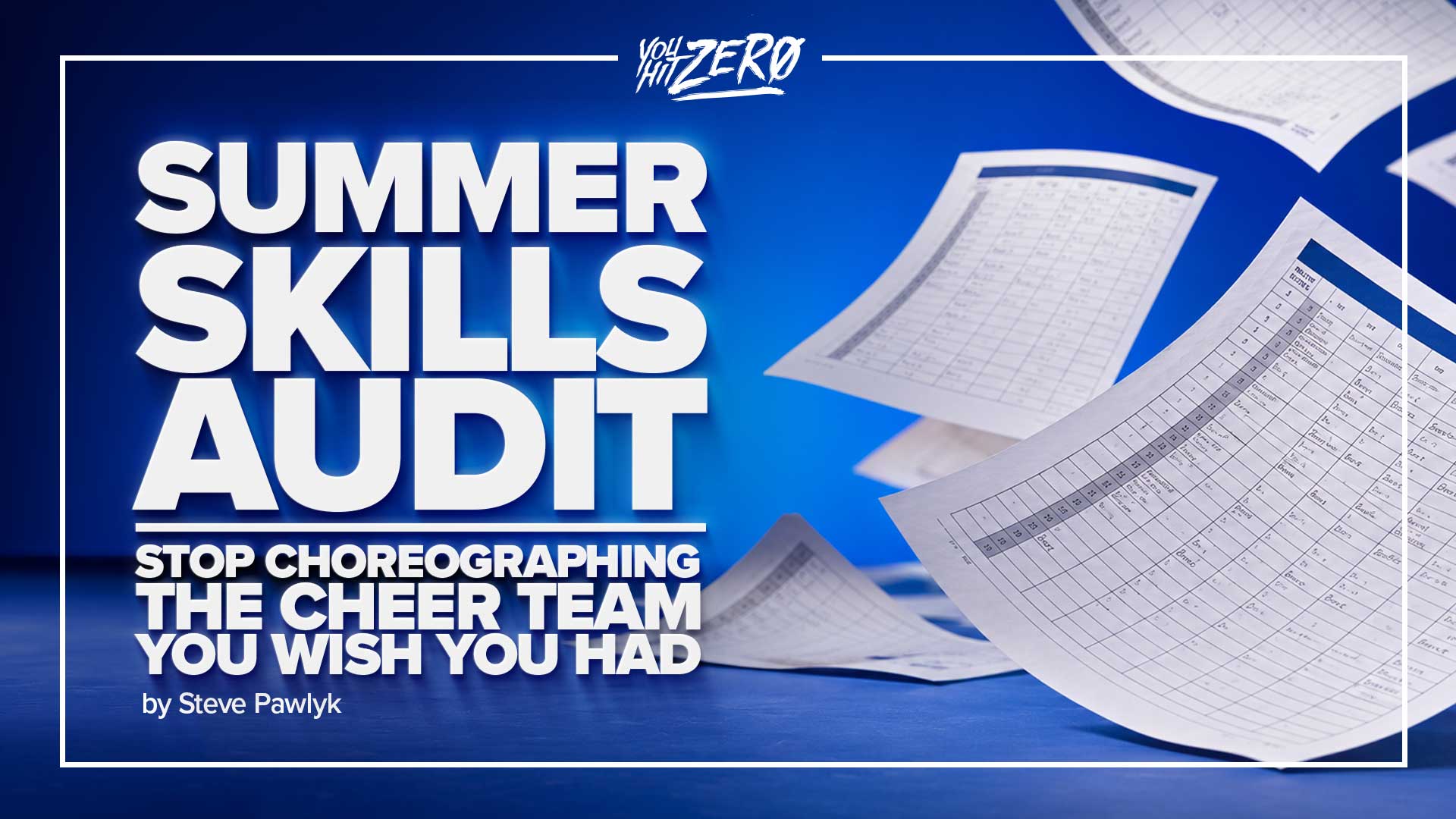
The summer skills audit: stop choreographing the cheer team you wish you had

cheerleading skills audit before choreography

By Steve Pawlyk

Published June 29, 2026

Every coach has done it.

You look at the team in June or July and imagine what they could become by competition season. The stunt group is close. The tumbling is almost there. The flyer has the body position if she stays tight. The bases can hit it when everyone is fresh. The jumps are not sharp yet, but they will be.

So the routine gets built around the future version of the team…a version that may never show up.

This is where a summer skills audit helps. It forces coaches to separate what athletes can actually hit from what they might hit later. That difference matters before choreography starts, before music gets ordered, and before athletes spend weeks learning a routine that does not fit them.

The goal is not to lower expectations. The goal is to build a routine with clean, realistic skills and smart upgrade paths. Coaches can still push the team. They just need to know which skills belong in the routine now, which skills need more time, and which skills should stay out until the team proves they can handle them.

What is a summer skills audit?

A summer skills audit is a routine-readiness check; not a tryout. It’s not a punishment or a way to embarrass athletes who are behind. It is a coaching tool.

The audit asks one question over and over: Can this team perform this skill safely, cleanly, and consistently enough for choreography?
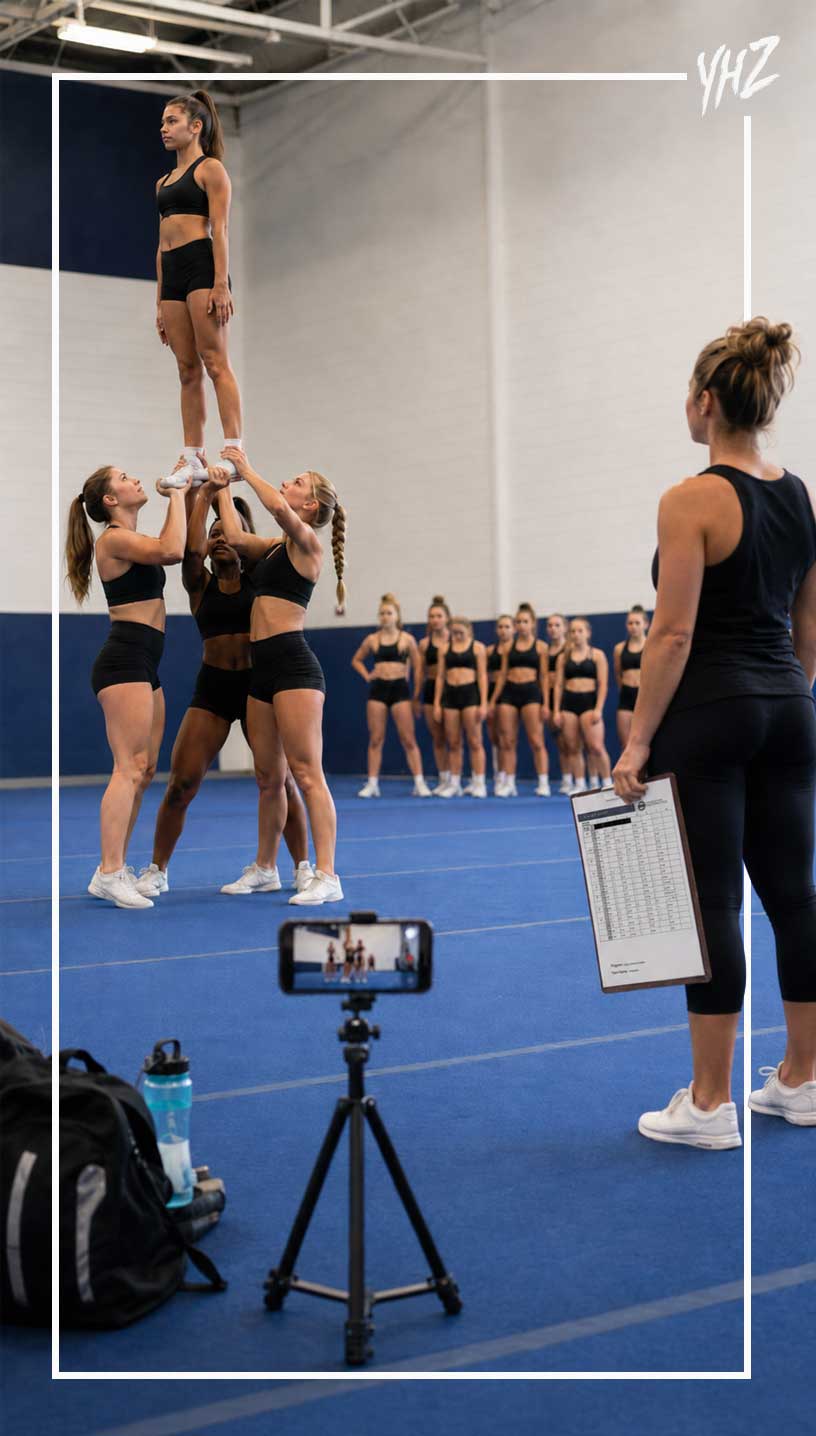
cheerleading practice plan

A skill that hits once in practice is not ready. A stunt that works only with one perfect group is not ready. A tumbling pass that lands when the athlete feels good but disappears under pressure is not ready. A pyramid section that needs five coach saves before it works is not ready. Summer is when coaches should find that out. Too many routines get choreographed around hope. Hope is fine in a team meeting.  It’s not a routine strategy.

Why coaches overestimate summer skills

Coaches usually do not overestimate their teams because they are careless. They do it because cheer makes almost-finished skills look tempting.

A stunt that hits three times in a row can feel routine-ready. Then the group loses it when they add counts, music, formations, fatigue, and pressure. A tumbler who lands a pass on a dead mat can look ready. Then the pass changes when the athlete has to wait through a transition, run from a new corner, and perform after jumps.

A flyer may hit a body position during drills. Then the same body position falls apart inside a full sequence with choreography before and after it. That’s normal…practice skills and routine skills are not the same thing. A summer skills audit closes that gap. It asks athletes to prove the skill in conditions that look more like the routine.

The 8-out-of-10 rule

A clean routine needs skills that repeat. For most teams, a useful standard is simple: if a skill does not hit cleanly at least 8 out of 10 times in practice, it should not be locked into choreography yet. That doesn’t mean the team stops training it. It means the coach treats it as an upgrade, not a foundation.

Use 3 categories:

Green skills are ready. They hit most of the time. Athletes understand the timing. Coaches do not have to stop practice every time the skill appears. The skill can handle counts, music, and pressure.

Yellow skills are close. They hit sometimes, but they still need help. Timing changes. Technique slips. Groups need extra resets. These skills may work in a routine if the coach builds a backup plan.

Red skills are not ready. They miss too often, need heavy spotting, create safety concerns, or only work when conditions are perfect. Red skills belong in training, not choreography.

The categories should stay flexible. A yellow skill can become green. A green skill can become yellow when the team adds movement or music. The audit is not a one-day verdict. It is a way to keep the routine honest.

Need Competition Music Blue 1

Audit stunts first

Stunts deserve the first audit because they take the most time to fix after choreography. A shaky stunt section does not stay isolated. It affects formations, transitions, pyramid timing, music pacing, athlete confidence, and the rest of practice. If a coach builds the routine around stunt skills that are not ready, the team spends the whole season chasing the routine instead of cleaning it.

Start with each stunt group by itself. Ask the group to perform the skill ten times. Track clean hits, shaky hits, missed grips, late dips, unstable body positions, rough dismounts, and coach saves. Don’t count a skill as clean just because nobody fell.

A clean hit should look controlled. The flyer should show the intended body position. Bases should stay under the stunt. The back spot should not rescue every rep. The dismount should land safely. Athletes should know where they go next.

Then test the skill in motion. Add the entrance. Add counts. Add the transition before it. Add the transition after it. Add nearby groups. Add music when possible.

This is where the truth usually shows up. A stunt that looks good in isolation may not survive the routine. That does not make the skill useless. It tells the coach where the skill belongs.

Maybe it stays in training. Maybe it moves later in the routine. Maybe it gets simplified. Maybe only one group performs it. Maybe it becomes an upgrade after the first competition. That decision is easier in July than October.
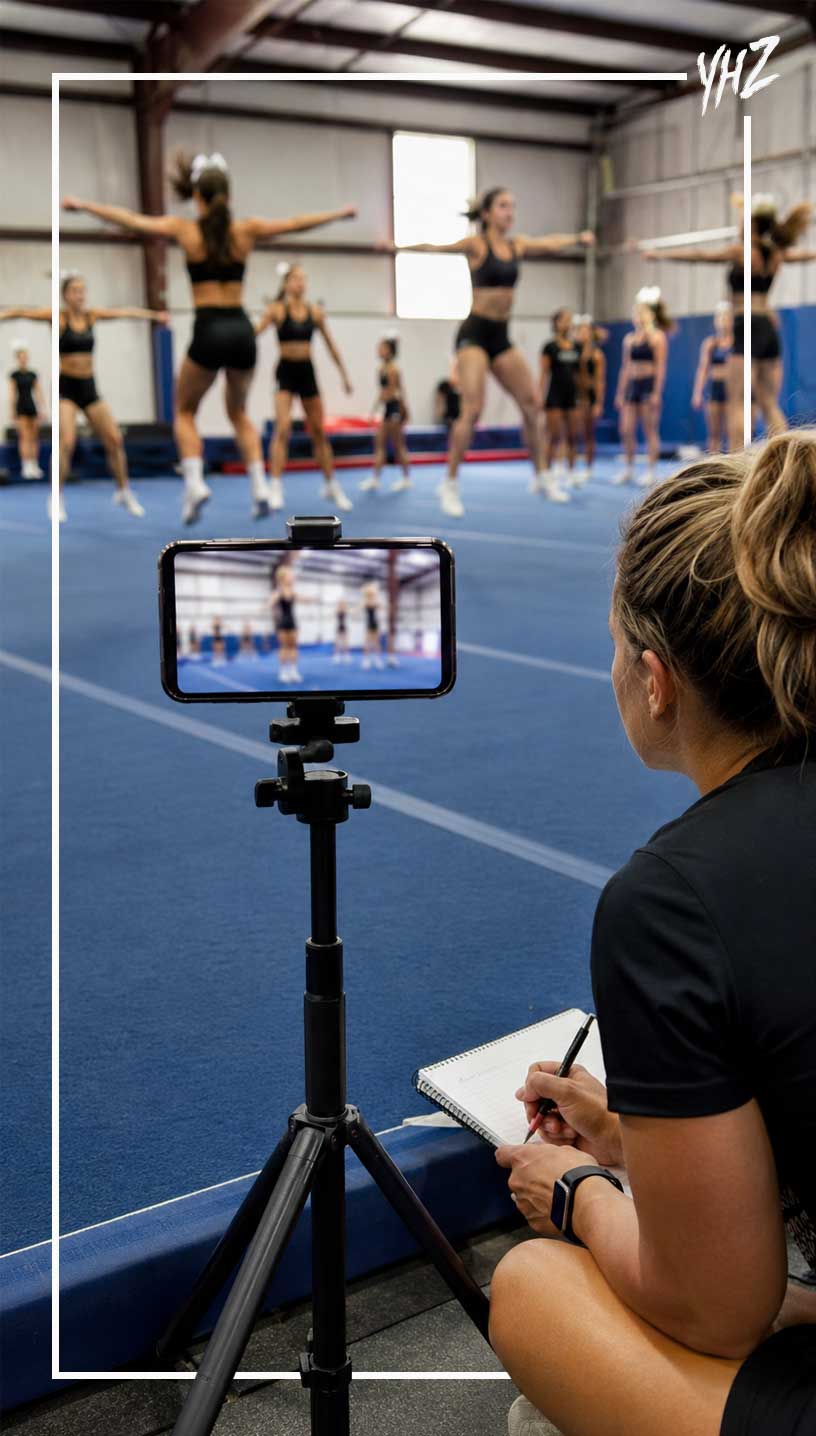
summer skills audit

Do not let one strong stunt group trick you

One strong group can make a team look more advanced than it is. That group hits the elite skill. Everyone gets excited. The routine gets built around that level of difficulty. Then the other groups spend months trying to catch up.

This is a bad trade.

Competition routines are judged as full-team products. If one group looks great and two groups fight for survival, the routine does not look strong. It looks uneven. The summer skills audit should judge the team, not the best group.

If only one group can hit the skill, the coach has a choice to make. Feature that group intentionally, or choose a skill the full section can hit. Both choices can work. Pretending the whole team owns the skill does not work.

A clean stunt section with slightly lower difficulty will usually age better than a high-difficulty section that scares everyone in the gym.

Audit tumbling under routine conditions

Tumbling is another place where coaches overcount skills.

An athlete may have a pass. That does not mean the pass belongs in the routine.

Test tumbling in the way the routine will use it. If the athlete has to run from a corner, test that corner. If the pass comes after jumps, test it after jumps. If the pass comes after a long transition, test it after movement. If the athlete has to wait on music, test the timing.

A tumbling pass should not count as routine-ready until the athlete can land it with the same setup they will use in the routine.

Coaches should also separate technical readiness from performance readiness.

A pass may be legal and land safely, but still look messy. Bent legs, low chest, uncontrolled rebounds, and scary landings can hurt the routine. They can also make the athlete less confident over time.

Some passes need more training. Some need a different placement. Some need to come out until the athlete can hit them without the whole section holding its breath.

That is not negative coaching. That is good routine design.

Audit jumps without lying to yourself

Jumps often get treated as a small section. They should not.

A weak jump section can make a polished routine look unfinished fast. Bent knees, low height, loose arms, bad timing, and messy landings are easy to see. Judges do not need replay to notice them.

A summer jump audit should test three things: technique, timing, and recovery. Technique asks whether the jumps have the shape the coach wants. Timing asks whether the team can hit together. Recovery asks whether athletes can land and move into the next skill without falling apart.

That last part matters. Many jump sections look acceptable until the team has to tumble, transition, or stunt immediately after. If the jumps drain the athletes so much that the next section suffers, the coach needs to know that now.

Do not build the jump section around the one athlete with great flexibility. Build it around what the team can hit together. Clean, synchronized jumps usually beat ambitious jump combinations that land like popcorn.
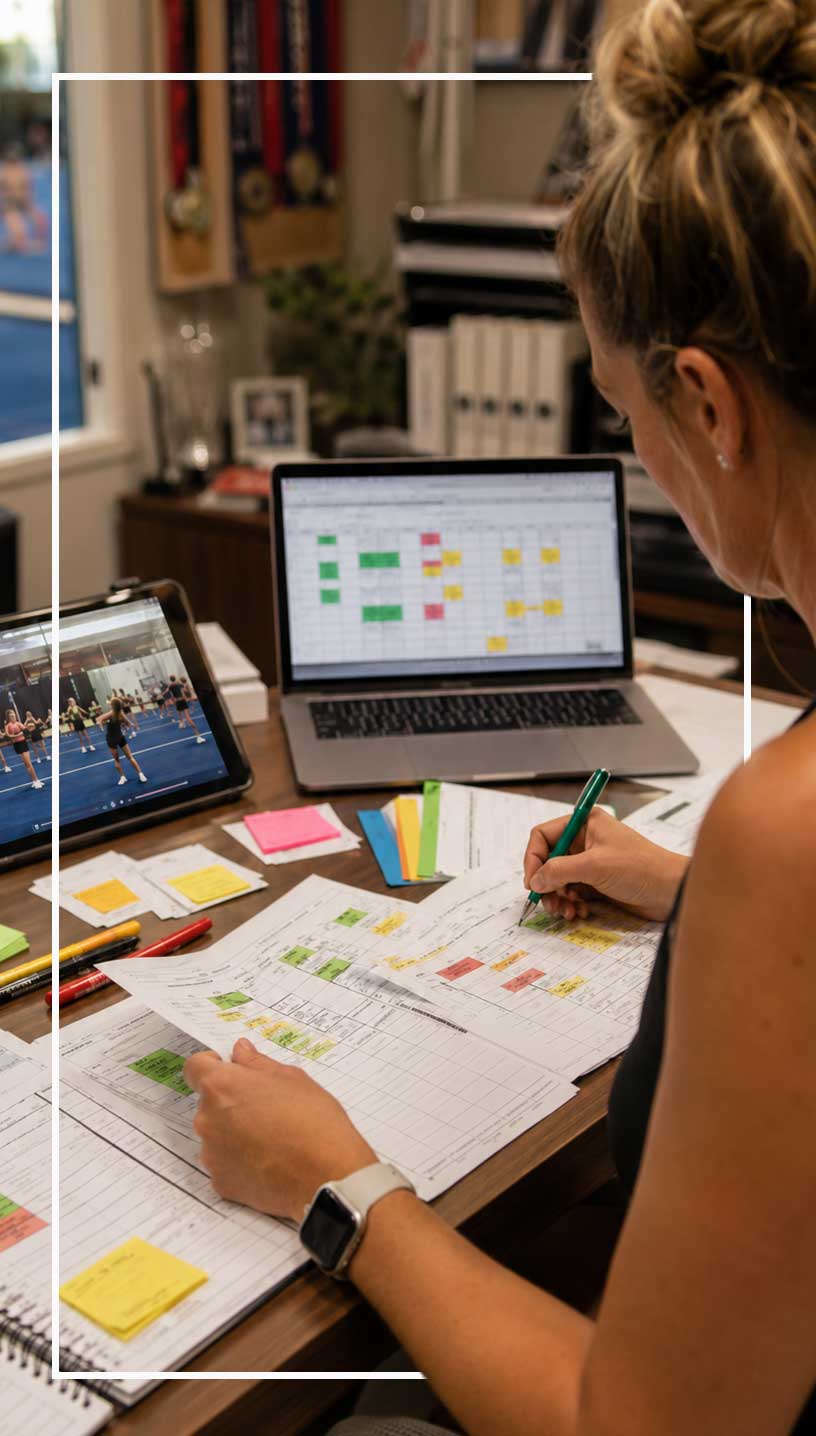
cheer routine planning

Audit pyramids in pieces

Pyramids can fool coaches because small pieces may work even when the full structure is not ready. Start with the parts.

Can each group hit its job? Can the bracers stay connected? Can flyers maintain body positions? Can bases move safely? Can the team hit the timing without a coach talking them through every count? Then connect the pieces.

This is where pyramid problems usually appear. Groups that hit alone may not travel well. Bracers may arrive late. Flyers may look unsure. Transitions may take more counts than expected. The pyramid may technically hit, but the visual may not read from the front.

The audit should include a front-view check. Record the pyramid from the judges’ angle and watch it without sound. If the visual does not make sense on video, music will not fix it. Pyramid difficulty should serve the routine. It should not become a maze the team barely survives.

Audit transitions like skills

Transitions are skills. Coaches do not always treat them that way, but they should.

A transition needs timing, spacing, body control, traffic awareness, and performance quality. Bad transitions make strong skills look worse. They also create avoidable stress for athletes.

During the summer audit, coaches should identify the athletes who struggle with spacing, speed, direction changes, and formation responsibility. That information should shape choreography.

Some teams can handle fast, layered transitions. Some teams need cleaner pathways and simpler movement. Some teams need extra counts because they have younger athletes, mixed experience levels, or big formation changes. That does not mean the routine has to feel slow. It means the routine has to move in a way the team can execute.

A coach who ignores transition skill level will end up cleaning the same traffic problems all season.

Film everything

Video makes the audit harder to argue with.

Athletes often feel like a skill hit because they survived it. Coaches may remember the best rep because it was exciting. Parents may hear that a skill is close and assume it should go in the routine.

Film solves a lot of that.

Record stunt reps, tumbling passes, jump sections, pyramid pieces, and short routine-style sequences. Watch them from the front. Watch them without stopping after the first hit. Watch the misses too.

The camera shows what the judges will see.

It also helps coaches spot patterns. Maybe a stunt group misses every time the flyer rushes the body position. Maybe a tumbler changes technique when tired. Maybe the jump timing problem starts with the arms, not the legs. Maybe the transition looks messy because two athletes cross the same lane.

Those details are easy to miss live.

A summer skills audit does not need fancy software. A phone camera and honest eyes are enough.

summer skills audit

Create a no-drama scoring system

A skills audit can get emotional if athletes think every result is a judgment of their worth. Keep the language clean.

Do not label athletes as good or bad. Label skills as ready, close, or still training. That distinction matters.

A flyer is not a problem because one body position is inconsistent. A base is not a failure because one grip needs work. A tumbler is not behind as a person because one pass is not routine-ready.

The audit should help athletes see the path forward.

Use simple notes:

Ready for routine
Needs more reps
Needs technique fix
Needs safer version
Use only in featured spot
Train as upgrade
Do not use yet

That kind of language gives coaches useful information without turning the audit into a public ranking.

Build the routine with a base version and upgrades

The smartest coaches do not choose between easy and hard. They build layers.

Start with a base routine the team can hit. Then plan upgrades that can replace sections when the team earns them.

For example, a stunt group may start with a cleaner prep-level body position, while training the extended version as an upgrade. A tumbling section may start with the passes athletes can land under pressure, while keeping harder passes ready for later. A pyramid may use a safer connection first, then add a harder visual once timing improves. This approach gives the team confidence early.

It also keeps the routine from becoming stale. Athletes can work toward upgrades without feeling like the first version is a failure. The base version should still look intentional. It should not look like a watered-down placeholder. It should be choreographed to score as cleanly as possible.

If the upgrade never becomes safe or consistent, the team still has a routine. That is the point.

Set deadlines for routine decisions

A skill cannot stay “almost ready” forever. Coaches need decision deadlines. Without them, the team keeps waiting for skills that may not arrive in time.

Set a date before choreography when each major skill must prove itself. Set another date after choreography for upgrades. Set a final date before the first competition when the coach stops adding risk and starts cleaning.

The exact timeline depends on the program, but the principle stays the same. At some point, a skill either belongs in the routine or it does not. This protects the team. It also protects practice time.

A team that changes major routine sections too late loses cleaning reps. Athletes get nervous. Coaches get frustrated. Music edits pile up. The routine starts to feel temporary. Temporary routines do not perform with confidence.
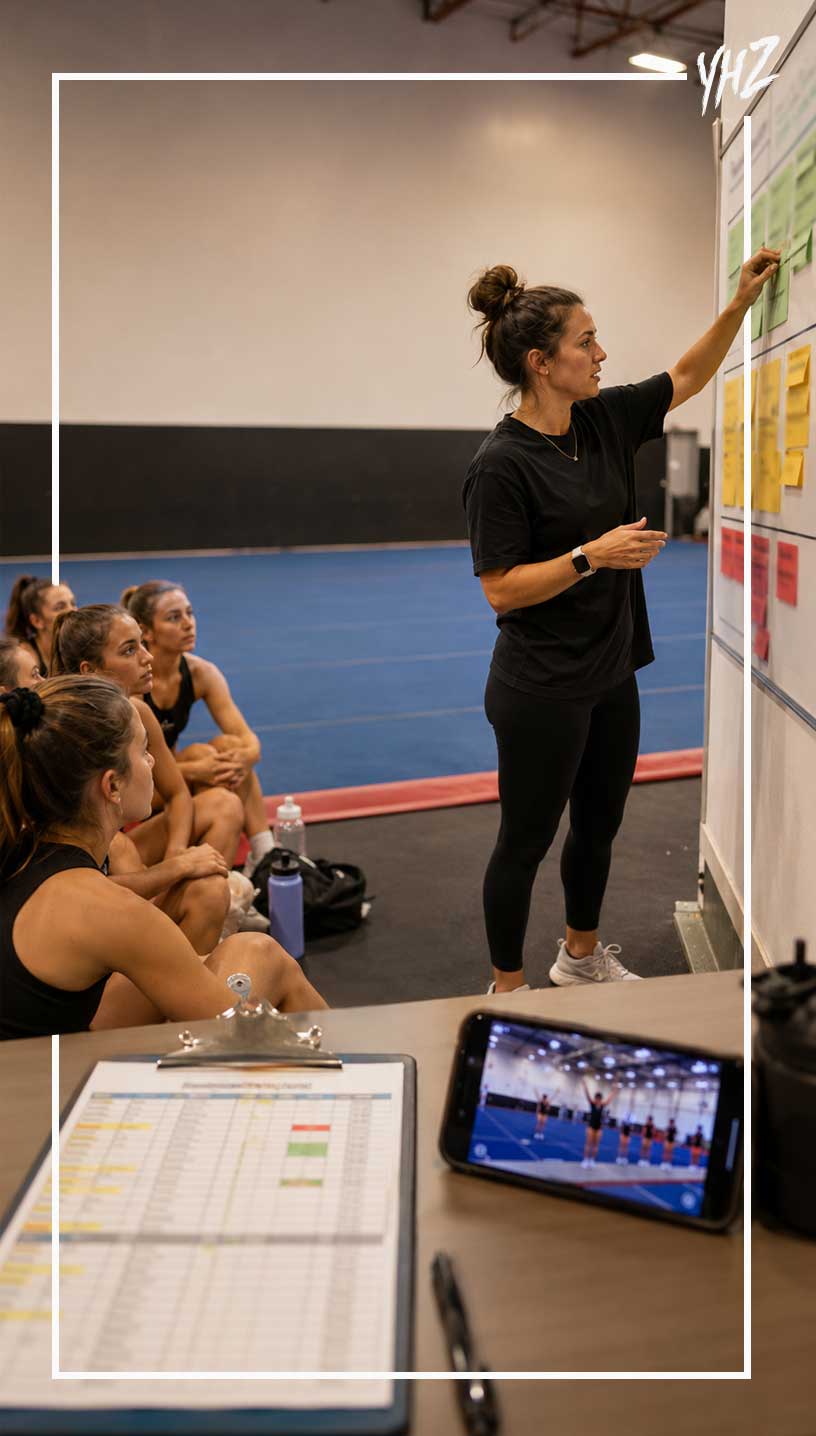
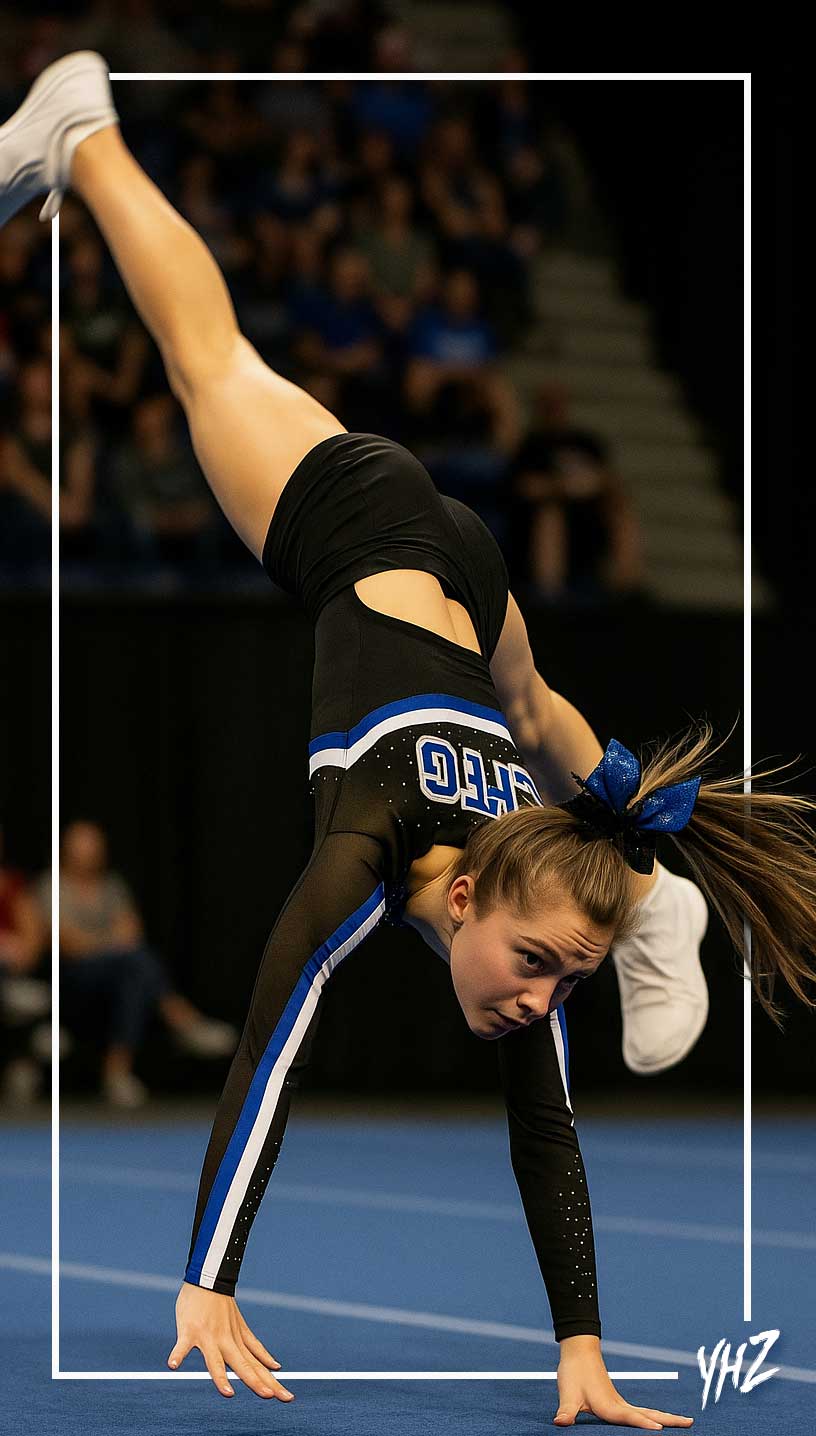
cheerleading tumbling audit

Watch for the “one more week” trap

“Give it one more week” can become a season-long habit. Sometimes one more week makes sense. A group may need reps. An athlete may be coming back from vacation. A stunt may need one technical fix. But coaches should ask what will actually change in that week.

Will the team get more reps with the full group present? Will a coach fix a specific technique problem? Will the athlete get private tumbling work? Will the group drill the entry that keeps breaking?

If the answer is no, one more week may only delay the decision. Hope is not a training plan.

When a skill stays inconsistent after repeated chances, the coach should move it out of the routine and keep training it separately. That choice may feel disappointing in the moment. It usually saves the routine later.

Match skills to the team’s identity

The summer audit should not only ask what the team can do. It should ask what the team can sell.

Some teams are explosive. Some are sharp and clean. Some have strong stunt technique. Some have big personalities. Some have excellent dancers. Some have powerful tumbling but need simpler transitions. Some have young athletes who perform better when the routine is clear and confident. The routine should fit that reality.

Do not build a routine that hides the team’s best qualities because everyone is chasing difficulty. Use the audit to find what the team can own.

If the team has strong jumps, give the jump section a real moment.

If the team has one standout tumbler, feature that pass without forcing everyone else into skills they cannot match.

If the team performs well, give them music and choreography that let them connect with the crowd.

If the team has clean stunts, do not bury them inside overcomplicated transitions.

A good routine makes the team look more like itself. A bad routine makes the team look like it is pretending.

Use the audit to guide music and count sheets

The skills audit should feed directly into the count sheet.

If the team needs extra time for stunt setups, the count sheet should show that. If a transition needs more room, plan the counts before the music gets built. If the pyramid has one major visual, make sure the music supports that moment. If jumps need a clean recovery before tumbling, do not cram the next section too close.

Music cannot solve a routine that ignores skill readiness. A producer can help with pacing, energy, voiceovers, sound effects, and section changes. But the coach has to know what the team can actually execute.

The audit gives the music producer better information. It also helps the choreographer make smarter choices. This is where planning pays off. The routine feels less forced because the counts, skills, and music all come from the same honest picture of the team.

What to do when parents push for harder skills

Parents hear what their athlete says. Athletes often say the skill is close. That can create pressure.

A parent may ask why a stunt is not in the routine. An athlete may say they hit it at practice. Another parent may compare the team to a rival program. Someone may post a video of one successful rep and wonder why the coach will not use it. This is where the audit helps.

The coach can explain that routine decisions come from consistency, safety, and full-team execution. One hit does not decide choreography. Ten reps tell a better story. Routine conditions tell an even better one. Keep the message simple.

The team will train upgrades. The routine will use the skills that give the team the best chance to hit. The goal is not to avoid difficulty. The goal is to earn it.

Most parents can understand that when the coach explains it before emotions take over.

A sample summer skills audit plan

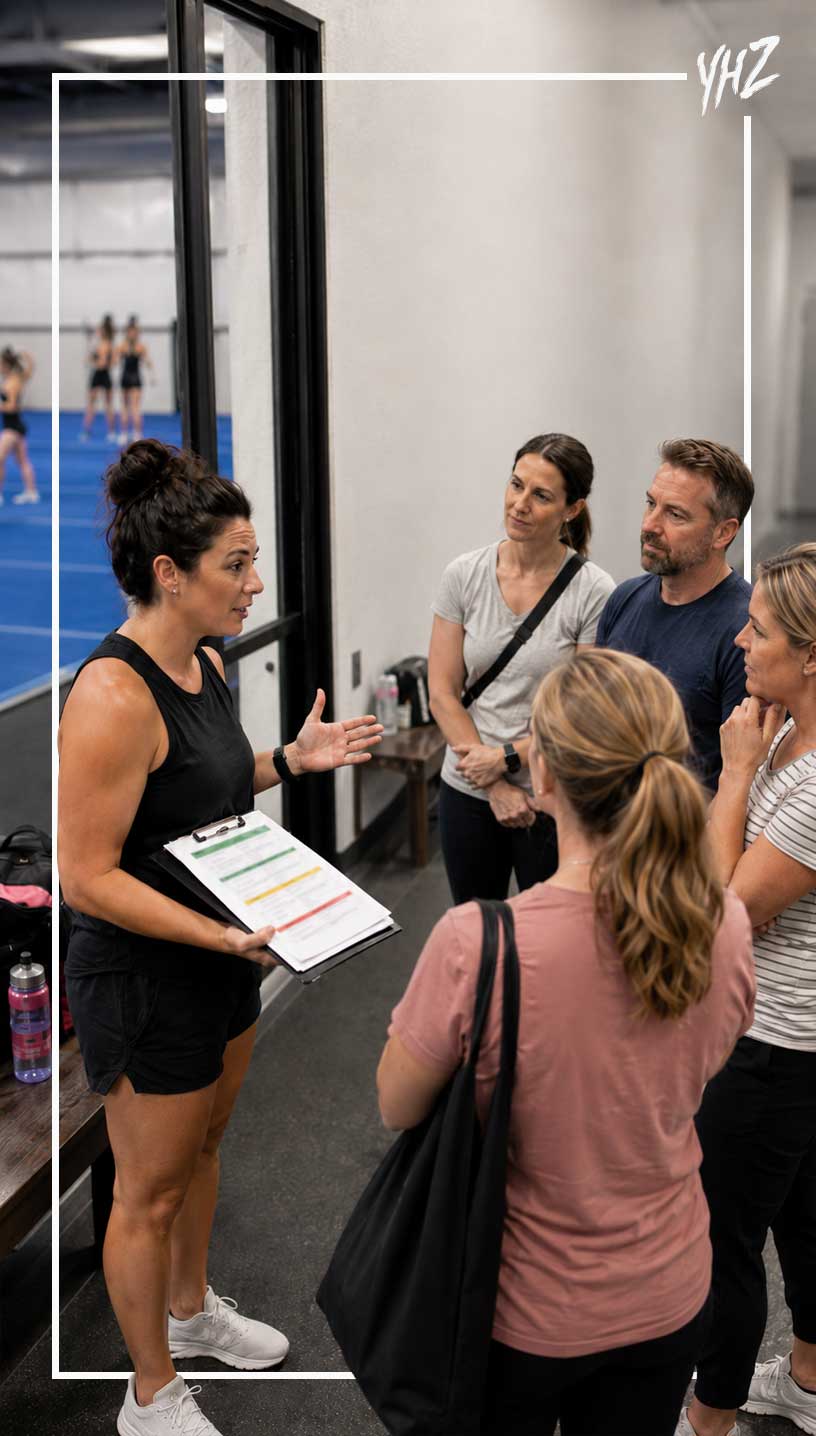
Coaches can run a basic audit in one or two practices. Start with stunts. Test the main skills each group wants to use. Track clean hits out of ten. Add entries and exits after the first round.

Move to tumbling. Test standing tumbling and running tumbling from routine-style setups. Record landings, timing, and consistency.
cheer tumbling readiness

Run jumps as a group. Check height, timing, arm placement, landings, and recovery into the next section. Break down pyramid pieces. Test each group, then connect sections. Film from the front.

Finish with transitions. Give athletes formation changes and watch spacing, speed, and confusion points. After practice, sort the results into green, yellow, and red.

Then make routine decisions from that list.

Green skills can go into the first choreography plan.

Yellow skills need backup versions.

Red skills stay in training until they prove they are ready.

The audit does not need to be complicated. It needs to be honest.

The coach’s real job

Cheer coaches live between ambition and reality. Push too little, and the team never grows. Push too much, and the routine becomes a weekly emergency.

The summer skills audit helps coaches find the middle. It gives athletes room to improve without letting unfinished skills take over the routine. It helps choreographers build around truth. It helps music producers support the routine instead of guessing. It helps parents understand why consistency matters more than one good video.

Most of all, it protects the team from spending the season chasing a version of itself that only exists in the coach’s imagination.

Build for the team in front of you.

Train for the team they can become.

Those are different jobs. Good coaches know when they are doing each one.

Steve Pawlyk Signature Full

IPP's Premade Mixes are USA Cheer Compliant and customizable!  Add Sound FX, swap songs, & more!  Add your Team Name to the mix for only $10! 

SLAM artwork
Full_Out_130 mp3 image
1 minute cheer mix
WAKE UP THE FIRE
SLAM artwork
WAKE UP THE FIRE
Full_Out_130 mp3 image
1 minute cheer mix

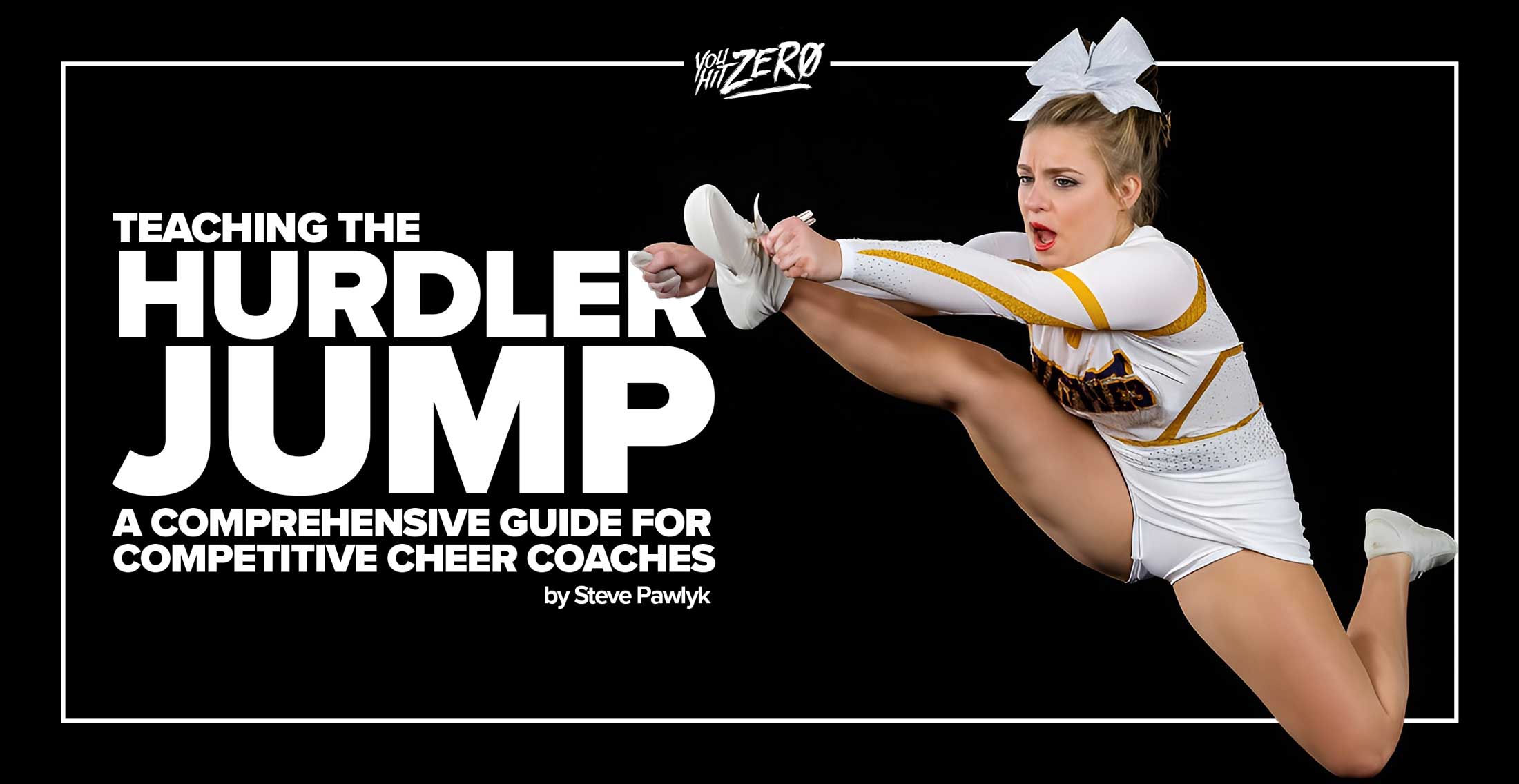
Teaching the Hurdler Jump: A Comprehensive Guide for Competitive Cheer Coaches

Teaching the Hurdler Jump A Comprehensive Guide for Competitive Cheer Coaches

By Steve Pawlyk

Published July 9, 2025

If you’ve been coaching cheerleading for any length of time, you know that certain skills just make or break a routine. The hurdler jump? It’s definitely one of those game-changers. After spending years in the trenches coaching everyone from tiny mini athletes to college competitors, I’ve learned that teaching this jump isn’t just about demonstrating and hoping for the best. It’s about understanding the science, breaking down the progression, and meeting each athlete where they are.

So grab your coffee (or protein shake – no judgment here!), and let’s dive deep into everything you need to know about teaching the hurdler jump to young competitive cheerleaders.

Understanding the Anatomy of a Hurdler Jump

Before we even step foot on the mat, let’s get crystal clear on what we’re teaching. I’ve seen too many coaches confuse variations or teach hybrid versions that end up hurting scores at competition.

The Front Hurdler

This is probably what you’ll teach most often. Picture this: your athlete is positioned at a 45-degree angle to the crowd (this angle is crucial – straight-on looks awkward, and full profile hides the back leg). The leg furthest from the crowd will come up straight in front as high as possible, while the other bends behind. Arms can be in a touchdown or in a high V.

The key here is that straight leg – it should be reaching for the sky, ideally getting close to the athlete’s nose level. The back leg? That’s where things get interesting. The knee should be bent with the foot pulled up toward the glutes, and the knee itself should be pointing down toward the ground. Think of a track hurdler clearing a hurdle – hence the name!

The Side Hurdler

Less common but equally impressive when done right. Here, one leg extends to the side, while the other bends toward the back with the knee facing out. Arms should be in a “T” motion. The main difference? That bent knee faces the crowd rather than the ground, and the whole body orientation is different.

The “Not-a-Hurdler” (aka The Herkie)

Quick story time: Named for Lawrence Herkimer, the founder of the National Cheerleaders Association, this jump is similar to a side-hurdler, except that instead of both arms being in a T-shaped motion, both arms are opposite of what the leg beneath them is doing. The legend goes that Herkie couldn’t quite nail the hurdler, so he created his own version. It’s different enough that judges will dock points if your athletes throw a Herkie when they’re supposed to hit a hurdler!

Prerequisites: Building the Foundation

Here’s where I might ruffle some feathers, but I’m going to say it anyway: if your athletes aren’t ready, pushing them into hurdlers is a recipe for injury and frustration. Let’s talk about what “ready” really means.

Flexibility Requirements

Flexibility is the first area a cheerleader should address. If a cheerleader is tight throughout her hamstrings, groin, or lower back they must stretch. Range of motion is the number one cause of injuries.

Here’s my flexibility checklist for hurdler-ready athletes:

Hamstring Flexibility Test:

  • Have the athlete lie on their back
  • Lift one straight leg up while keeping the other flat on the ground
  • They should reach at least 90 degrees without the bottom leg lifting
  • Less than that? Time for targeted stretching

Hip Flexor Mobility Test:

  • Lunge position with back knee on the ground
  • Push hips forward gently
  • If they feel extreme tightness or can’t keep their torso upright, those hip flexors need work

Dynamic Flexibility Check:

  • Standing leg swings forward and back (should reach at least hip height)
  • Standing kicks to the front (controlled, not ballistic)
  • If they’re struggling here, the jump will be a struggle too
Need Competition Music Blue 1

Strength Prerequisites

Flexibility without strength is like having a sports car with no engine. Here’s what your athletes need:

Core Strength: Can they hold a hollow body position for 30 seconds? If not, start there. The core is what keeps that chest up during the jump.

Leg Power: Single-leg squat test – can they do at least 5 on each leg with good form? This translates directly to jump height.

Hip Flexor Strength: Have them lie on their back and lift one straight leg up and down 10 times without touching the ground. If they’re shaking by rep 5, you’ve found a weakness to address.

The 12-Week Progressive Teaching Method

After years of trial and error (emphasis on the error in my early coaching days), I’ve developed this progression that actually works. The timeline can be compressed or extended based on your athletes’ abilities, but don’t skip steps!

Weeks 1-3: Flexibility and Strength Foundation

Week 1: Assessment and Flexibility Focus

Start every practice with what I call the “Hurdler Prep Circuit”:

  • 5 minutes of dynamic warm-up (high knees, butt kicks, leg swings)
  • 10 minutes of targeted stretching:
    • Pike stretch holds (30 seconds x 3)
    • Butterfly stretch for hip opening (30 seconds x 3)
    • Standing quad stretches (30 seconds each leg x 2)
    • Seated hurdler stretch (the actual position) – 30 seconds each side x 3

Ground position work:

  • Have athletes sit in the hurdler position on the floor
  • Focus on proper positioning: straight leg fully extended, bent leg tucked comfortably
  • Hold for 30 seconds, switch sides
  • Progress to lifting the arms to touchdown position while seated

Week 2: Building Specific Strength

Add resistance work:

  • Theraband kicks: 3 sets of 10 each leg (front and side)
  • Single-leg glute bridges: 3 sets of 10 each leg
  • Core work specific to jumps:
    • Hollow holds (work up to 45 seconds)
    • V-ups focusing on keeping chest high (3 sets of 10)
    • Russian twists with emphasis on tall posture (3 sets of 20)

Continue flexibility work and add:

  • Partner stretching for deeper range of motion
  • PNF stretching techniques (contract-relax method)

Week 3: Movement Patterns

Time to get moving:

  • Walking hurdlers: Literally walk across the floor hitting the position with each step
  • Hurdler holds against the wall: Kick up and hold the position for 5 seconds
  • Jump prep without the hurdler:
    • Straight jumps focusing on landing (3 sets of 5)
    • Tuck jumps for height (3 sets of 5)
  • Single-leg bounds for power (3 sets of 5 each leg)

Weeks 4-6: Introduction to the Jump

Week 4: Breaking Down the Prep

The prep is everything. After you count 5, 6, 7, 8, on the first 1, 2 bring your hands into a “clasp” right under your chin and hold them there for those two counts. On 3, 4, proceed to a “High-V” and hold that motion for those two counts.

Drill this until it’s automatic:

  • Prep practice: 50 reps of just the arm sequence
  • Add the knee bend on counts 3, 4
  • Practice the swing through without jumping
  • Mirror work: Athletes watch themselves to ensure chest stays high

Week 5: Adding the Jump

Start small:

  • Mini hurdlers: Jump just a few inches off the ground, focus on hitting the position
  • Use a prop: Have them jump and touch their knee to a coach’s hand held at appropriate height
  • Box jumps with hurdler position: Jump onto a small box (6-12 inches) landing in hurdler
  • Video review: Film each athlete and review together

Common issues at this stage:

  • Chest dropping (fix: “pretend there’s a string from your chest to the ceiling”)
  • Arms not hitting position (fix: practice arms separately 100 more times)
  • Bent leg not pulling up (fix: hamstring curls and targeted strength work)

Week 6: Height and Extension

Now we’re cooking:

  • Full jump attempts with focus on ONE aspect at a time:
    • Monday: Just focus on chest position
    • Tuesday: Just focus on straight leg height
    • Wednesday: Just focus on bent leg position
    • Thursday: Just focus on arms
    • Friday: Put it all together
  • Introduce combination work: Hurdler to immediate rebound

Weeks 7-9: Refinement Phase

Week 7: Technical Precision

Details matter in competitive cheer:

  • Toe point drills: Even in warm-ups, toes are pointed
  • Landing practice: Make sure to land properly with your feet together, toe to heel and with bent knees
  • Timing with music: Start incorporating counts and rhythm
  • Side-by-side comparisons: Athletes watch each other and provide feedback

Week 8: Power Development

Complete 6 to 8 reps of the hurdler with resistance bands while maintaining technique for maximal jump height and kick height:

  • Resistance band training (if appropriate for age/level)
  • Plyometric progressions:
    • Depth jumps from 6-inch box
    • Broad jumps focusing on explosive takeoff
    • Single-leg bounds with hurdler arms
  • Recovery focus: Teach proper stretching and foam rolling

Week 9: Consistency Building

The goal: 8 out of 10 perfect:

  • Set-based training: 5 sets of 3 jumps, rest between sets
  • Fatigue training: Hurdlers at the end of practice when tired
  • Pressure training: Perform for other teams or parents
  • Video analysis: Athletes self-assess using rubric

Weeks 10-12: Competition Ready

Week 10: Combinations and Connections

Real routines require connected skills:

  • Hurdler to toe touch combinations
  • Running tumbling into hurdler
  • Hurdler to immediate cradle prep (for younger teams)
  • Focus on maintaining height through fatigue

Week 11: Mental Preparation

The mental game is huge:

  • Visualization exercises: Athletes close eyes and see perfect hurdler
  • Positive self-talk training: Replace “I can’t” with “I’m learning”
  • Competition simulation: Full routine run-throughs
  • Individual goal setting: Each athlete sets personal best goals

Week 12: Polish and Peak

Time to shine:

  • Full routine integration
  • Focus on performance quality, not just technique
  • Team synchronization drills
  • Confidence building through success tracking
Need Competition Music Blue 1

Advanced Drills That Actually Make a Difference

Here are the drills I’ve collected over the years that really move the needle:

The Wall Series

Basic Wall Kicks:

  • Stand arm’s length from wall
  • 20 kicks straight up, trying to touch above head marker
  • Progress to faster tempo
  • Add ankle weights for advanced athletes (with caution)

Wall Hurdler Holds:

  • Back against wall
  • Jump and press back against wall in hurdler position
  • Hold for 3-5 seconds
  • Builds muscle memory and strength

Partner Drills

Assisted Hurdlers:

  • Partner holds athlete’s hands
  • Athlete jumps while partner provides slight upward assistance
  • Gradually reduce assistance
  • Great for building confidence

Resistance Partners:

  • Partners hold resistance bands attached to jumper’s waist
  • Provides resistance on the way up, assistance on the way down
  • Builds explosive power

Equipment-Based Progressions

Box Jump Variations:

  • Single leg box jumps (builds unilateral power)
  • Hurdler position box jumps
  • Depth jump to hurdler (advanced only)

Trampoline Work (if available):

  • Allows athletes to feel the position with more air time
  • Reduces impact during learning phase
  • Great for athletes afraid of the skill

Troubleshooting Common Problems

Let’s get real about the issues you’re going to see over and over:

Problem 1: The Dreaded Chest Drop

It’s important not to cut off the height of your jump by tilting your chest forward. This is THE most common issue.

Why it happens:

  • Lack of core strength
  • Trying to kick too high too soon
  • Poor spatial awareness

Fix it:

  • Wall sits with arms in touchdown (builds postural strength)
  • Video review from side angle
  • Verbal cue: “Show your number to the judges!”
  • Physical cue: Light tap on upper back during prep

Problem 2: The Lazy Back Leg

The tendency is to concentrate so hard on kicking your front leg, that you don’t realize that the back leg is still dangling around down there.

Why it happens:

  • All focus goes to the front leg
  • Lack of hamstring strength
  • Poor muscle activation patterns

Fix it:

  • Isolated back leg drills: Just practice the bent leg portion
  • Hamstring curls with resistance bands
  • Mental cue: “Kick your heel to your booty!”
  • Partner feedback: Have partner tap the heel when it’s in correct position

Problem 3: Sloppy Feet

Judges notice everything, and floppy feet scream “recreational team.”

Why it happens:

  • Never been properly trained
  • Lack of ankle strength
  • Poor habit formation

Fix it:

  • Releve walks across the floor
  • Theraband foot exercises
  • Point and flex drills during every water break
  • Make it non-negotiable: pointed toes from warm-up to cool-down

Problem 4: The Split Landing

Nothing ruins a beautiful hurdler like a sloppy landing.

Why it happens:

  • Uneven leg strength
  • Poor spatial awareness
  • Trying to land before ready

Fix it:

  • Landing drills separate from jumps
  • Single leg landing practice
  • Visual markers on the floor
  • Verbal cue: “Feet like magnets!”

Creating the Right Training Environment

Your gym’s culture makes or breaks skill development. Here’s how to optimize:

Space Considerations

Minimum requirements:

  • 8×8 feet per athlete for safe practice
  • Ceiling height of at least 12 feet
  • Spring floor or quality mats
  • Mirrors on at least one wall

Safety Protocols

Non-negotiables:

  • 10-minute dynamic warm-up (every. single. practice.)
  • Proper landing surface
  • Athlete-to-coach ratios (I recommend 8:1 maximum for jump training)
  • Clear progression requirements before moving to next level

Building Confidence

Remember: confidence builds skills as much as drills do.

Strategies that work:

  • Celebrate small wins publicly
  • Use positive correction: “I love your height! Now let’s add that toe point!”
  • Film progress videos monthly so athletes see improvement
  • Create skill-specific awards or recognition

Creating Buy-In From Athletes and Parents

Success requires everyone on board:

Athlete Buy-In

Make them partners:

  • Explain the “why” behind each drill
  • Let them track their own progress
  • Create peer mentorship opportunities
  • Connect skills to their goals

Parent Education

Informed parents = supportive parents:

  • Host a skills education night
  • Send home progress videos
  • Explain the progression timeline
  • Share the injury prevention focus

Final Thoughts: The Art and Science of Coaching

Teaching the hurdler jump is about so much more than just the mechanics. It’s about building confident, strong athletes who understand that excellence comes from consistent, focused effort. Every athlete will progress at their own pace, and that’s not just okay – it’s expected.

I’ve been fortunate to work with thousands of athletes over my years coaching, from tiny three-year-olds taking their first cheer class to Division 1 college competitors. The one constant? The athletes who master the fundamentals with patience and proper progression are the ones who excel long-term.

Remember, we’re not just teaching a jump. We’re teaching discipline, body awareness, goal setting, and the value of quality practice. These lessons extend far beyond the mat.

Your athletes don’t need to be perfect on day one, week one, or even month one. They need to be progressing, staying safe, and building confidence. Focus on the journey, not just the destination, and you’ll develop not just better cheerleaders, but better athletes and people.

Keep your energy high, your corrections positive, and your standards consistent. Before you know it, you’ll have a team throwing hurdlers that make the crowd go absolutely wild – and more importantly, you’ll have athletes who are proud of what they’ve accomplished through hard work and dedication.

Now get out there and start building those champion hurdlers! Your athletes are counting on you to guide them to success, and with this comprehensive approach, you’ve got everything you need to make it happen.

Stay passionate about the process,

P.S. – Remember to document the journey. Those “before” videos from week 1 compared to competition performances? Pure gold for showing athletes how far they’ve come. Plus, they make great material for end-of-year banquets!

Check out the conversation on our podcast “You Hit Zero”


Steve Pawlyk Signature Full

IPP's Premade Mixes are USA Cheer Compliant and customizable!  Add Sound FX, swap songs, & more!  Add your Team Name to the mix for only $10! 

SLAM artwork
Full_Out_130 mp3 image
1 minute cheer mix
WAKE UP THE FIRE
SLAM artwork
WAKE UP THE FIRE
Full_Out_130 mp3 image
1 minute cheer mix

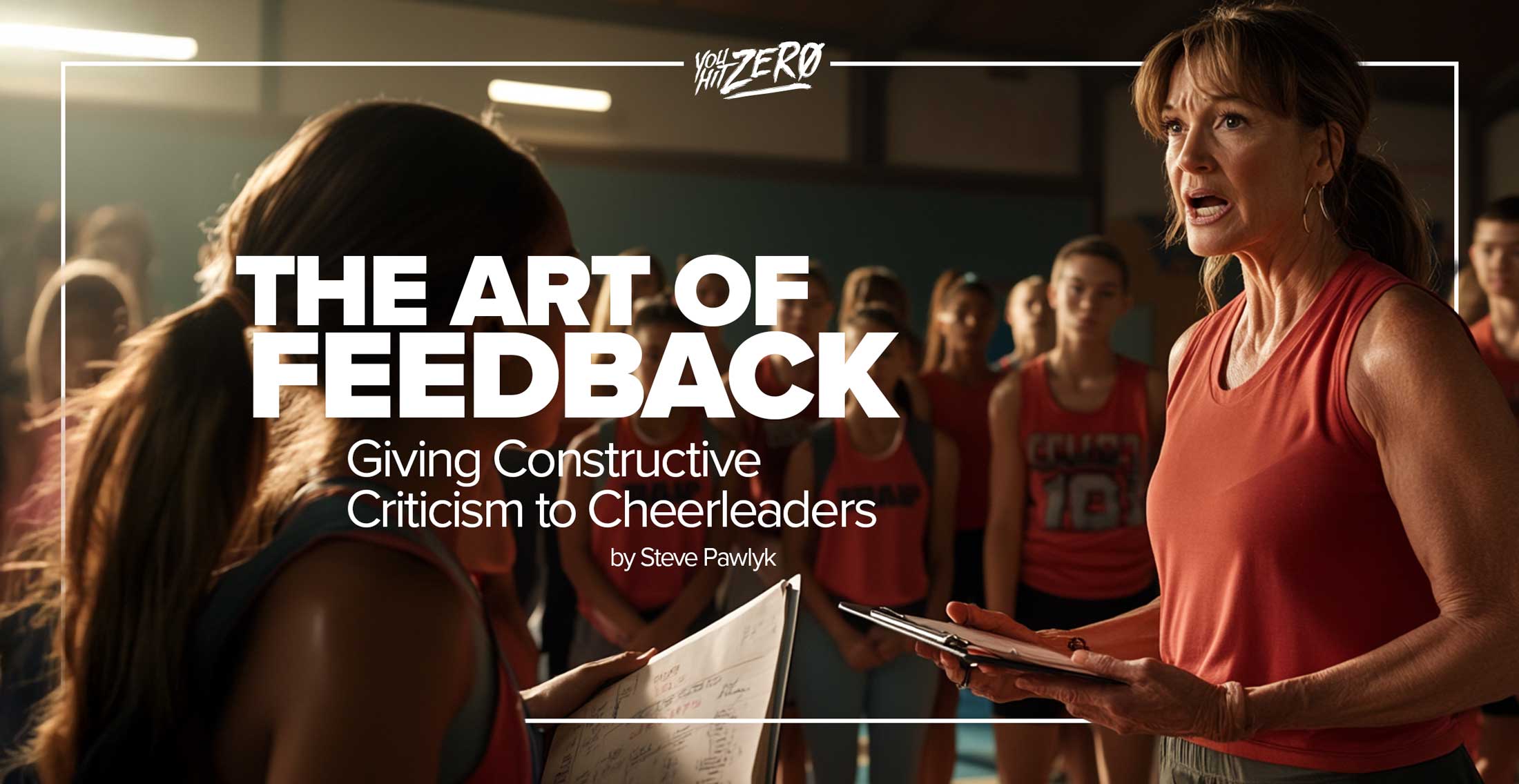
The Art of Feedback: Giving Constructive Criticism to Cheerleaders

constructive criticism cheerleading coaching tips

By Steve Pawlyk

Published December 16, 2024

I gotta guess most of you already know that being a cheer coach isn’t just about teaching stunts and choreography—it’s also about helping your athletes grow as individuals and teammates. One of the most challenging yet vital aspects of coaching is giving constructive criticism. Delivered effectively, it can motivate athletes, build confidence, and improve performance. Poorly communicated feedback, however, can lead to frustration, low morale, and misunderstandings. In this article, we’ll explore strategies for giving constructive criticism that will elevate your team’s success while fostering a positive environment.

Why Constructive Criticism Matters in Cheerleading

Cheerleading is a high-pressure sport that demands precision, teamwork, and resilience. Athletes thrive when they understand what’s working well and what needs improvement. Constructive criticism allows you to:

  • Address mistakes and refine skills.
  • Encourage personal and team growth.
  • Build trust between athletes and coaches.
  • Keep practices focused and efficient.

The goal is to make feedback a tool for improvement, not a source of discouragement.

1. Set the Stage for Feedback

Before delivering any critique, it’s essential to create a culture where feedback is viewed as a positive part of the learning process. Here’s how:

  • Establish a Feedback Routine: Let your team know that feedback is a regular part of practice and performance reviews. Normalize it as a way to improve, not punish.
  • Focus on Effort, Not Perfection: Make it clear that mistakes are an opportunity for learning and growth. Highlight effort and progress over immediate success.
  • Encourage Open Communication: Build trust by inviting athletes to ask questions or share concerns. When athletes feel heard, they’re more receptive to feedback.

2. Balance Praise and Critique

Constructive criticism works best when it’s balanced with positive reinforcement. A simple formula to follow is the “Sandwich Method”:

  • Start with a Positive: Begin with something the athlete is doing well. For example, “Your timing in the last stunt was perfect—great job staying sharp.”
  • Address the Issue: Move to the critique in a way that’s specific and actionable. Avoid general comments like “You need to work harder.” Instead, say, “When you lift your leg in the scorpion, focus on locking your knee to improve your line.”
  • End on a High Note: Finish with encouragement or optimism. For instance, “You’ve made so much progress this season, and I know you’ll nail this with practice.”

3. Be Specific and Actionable

Vague feedback can confuse athletes and leave them unsure of how to improve. To avoid this, make your feedback:

  • Clear: “Your toe touch needs work” is less helpful than, “Focus on snapping your legs together faster and pointing your toes.”
  • Actionable: Provide steps for improvement. For example, “Practice your jumps with ankle weights to build strength and improve height.”
  • Relevant: Tailor your feedback to the athlete’s role or skill level. A base, flyer, or spotter will each need different kinds of guidance.
Need Competition Music Blue 1

4. Deliver Feedback in the Right Moment

Timing is everything when it comes to criticism. Consider these guidelines:

  • In Practice: Give immediate feedback for skill corrections, but keep it concise to maintain the flow of practice.
  • After Performances: Review routines during post-performance meetings. Allow the team to celebrate successes before diving into critiques.
  • Privately for Sensitive Issues: If the feedback is personal or might embarrass the athlete, pull them aside for a one-on-one discussion.

5. Use Visual and Hands-On Examples

Many cheerleaders are visual or kinesthetic learners, so pairing verbal feedback with demonstrations or physical adjustments can be highly effective. For example:

  • Demonstrations: Show athletes the correct way to perform a motion or stunt.
  • Video Reviews: Record routines and review them as a team, pointing out both strengths and areas for improvement.
  • Hands-On Corrections: Safely guide an athlete’s body into the correct position if appropriate.

6. Empower Athletes to Self-Correct

One of the best ways to instill long-term improvement is to encourage self-awareness. Teach athletes to evaluate their own performance by asking questions like:

  • “What do you think went well in that stunt?”
  • “What could you have done differently?”
  • “How did the timing feel for you?”

By guiding athletes to assess their own performance, you create independent thinkers who take ownership of their improvement.

7. Foster a Growth Mindset

A growth mindset is key to turning criticism into motivation. Reinforce the idea that improvement comes through effort and persistence. Share examples of team members who overcame challenges through hard work or show videos of professional teams that emphasize perseverance.

8. Follow Up and Track Progress

Feedback doesn’t end with critique. Be sure to:

  • Check In: Revisit the skill or behavior you addressed to see if progress has been made.
  • Acknowledge Improvement: Celebrate when athletes apply your feedback successfully.

• • Adjust as Needed: If an athlete isn’t improving, revisit your critique and offer new strategies.

Constructive criticism is a powerful tool that can help cheerleaders improve their skills, build confidence, and strengthen their commitment to the team. By creating a culture of feedback, balancing praise and critique, and delivering actionable advice, you can foster an environment where athletes thrive both on and off the mat.

Mastering the art of feedback is an ongoing process, but with patience and practice, you can turn every critique into a stepping stone for success. Start implementing these tips today, and watch your team soar to new heights.

Steve Pawlyk Signature Full

IPP's Premade Mixes are USA Cheer Compliant and customizable!  Add Sound FX, swap songs, & more!  Add your Team Name to the mix for only $10! 

SLAM artwork
Full_Out_130 mp3 image
1 minute cheer mix
WAKE UP THE FIRE
SLAM artwork
WAKE UP THE FIRE
Full_Out_130 mp3 image
1 minute cheer mix

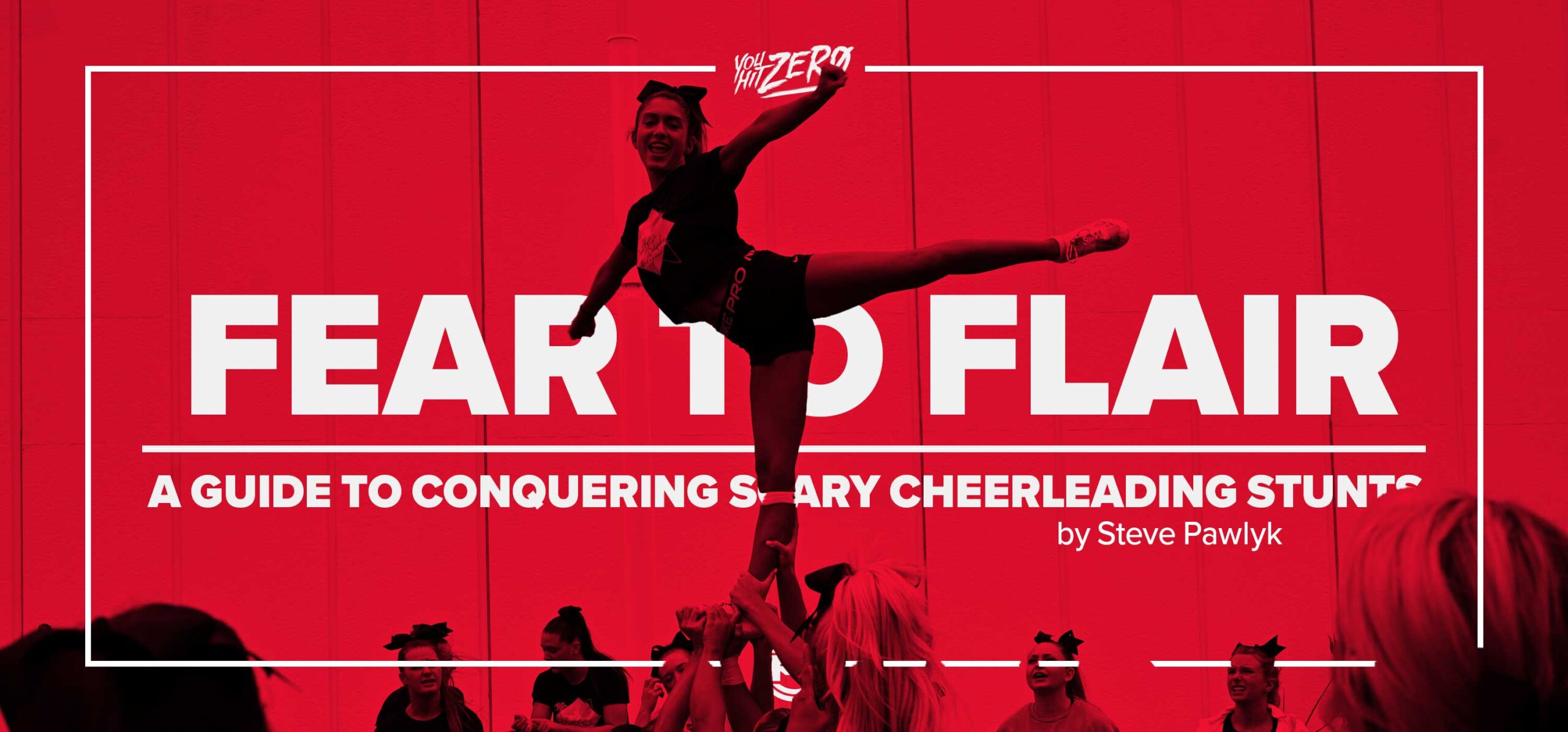
Fear to Flair: A Guide to Conquering Scary Cheerleading Stunts

From Fear to Flair A Guide to Conquering Scary Cheerleading Stunts

By Steve Pawlyk

Published April 25, 2024

As a cheer coach, I’ve seen firsthand the mix of excitement and anxiety that comes with tackling the most challenging stunts in cheerleading. From towering pyramids to dizzying flips, mastering these elements is as much about conquering fear as it is about physical skill. Let’s dive into how you can guide your athletes through their fears and turn daunting tricks into show-stopping routines.

Understanding the Fear

In cheer, performing as the top flyer in 2 1/2 high pyramids or executing complex flipping and twisting baskets can strike fear even in the most experienced cheerleaders. One common scare, the back handspring up, hinges on the flyer’s trust in their bases to catch and support them—a psychological hurdle as much as a physical one.

Conquering the Mental Block

1. Master the Technique: The first step in overcoming fear is to ensure that the technique is flawless. As a coach, I stress the importance of drills and conditioning exercises that enhance muscle memory and build a strong technical foundation. When athletes feel confident in their abilities, the fear starts to fade.

2. Incremental Progression: I often start my athletes on lower-risk versions of a stunt and gradually increase the difficulty as their confidence and competence grow. This step-by-step approach helps reduce overwhelm and allows cheerleaders to feel in control throughout the learning process.

Need Competition Music Blue 1

3. Visualize Success: Visualization is a powerful tool in sports psychology. I encourage my team to spend time visualizing their routines, focusing particularly on the segments that make them most nervous. By mentally rehearsing successful executions, they can approach their stunts with more confidence.

4. Build Trust Within the Team: Cheer is all about teamwork. I focus on building a strong sense of trust and camaraderie among the athletes. Regular team-building activities and clear, supportive communication help create a safe and supportive environment where athletes are less afraid to take risks.

5. Repetition is Key: Nothing builds confidence like repetition. The more an athlete practices a stunt, the more familiar and less intimidating it becomes. It’s important for cheerleaders to repeatedly practice their stunts until they feel almost second nature.

Sharing Real Experiences

In my experience, I’ve seen athletes who initially hesitated at the thought of flying high or flipping backward. Through dedication and a focus on technique, they’ve not only mastered their stunts but have also learned to enjoy the thrill that comes with executing them perfectly. Like one of my top flyers often says, “If I did everything right, how bad could it be? Once the technique clicked, it was all about repeating it until it felt like second nature.”

Embracing the Challenge

To my fellow coaches and cheerleaders, remember that mastering scary stunts is a journey. Each small victory builds the path to greater achievements. Celebrate every step forward, no matter how small, and keep pushing the boundaries of what your team can achieve. You’re constantly setting the bar higher, not just in the stunts you perform but also in the resilience and courage you develop. So lace up, cheer loud, and let your confidence soar as high as your stunts

Steve Pawlyk Signature Full

IPP's Premade Mixes are USA Cheer Compliant and customizable!  Add Sound FX, swap songs, & more!  Add your Team Name to the mix for only $10! 
SLAM artwork
Full_Out_130 mp3 image
1 minute cheer mix
WAKE UP THE FIRE
SLAM artwork
WAKE UP THE FIRE
Full_Out_130 mp3 image
1 minute cheer mix

How to Match Cheer Music with Your Team’s Skill Level

How-to-Match-Cheer-Music-with-Your-Team's-Skill-Level

By Steve Pawlyk

Published September 20, 2023

When it comes to creating the perfect cheerleading routine, the choice of music plays a pivotal role. The right music can uplift your team’s performance, energize the crowd, and even impress the judges. But one size doesn’t fit all. Matching the music to your team’s skill level is crucial for a harmonious and impactful routine. So, how do you go about it?

In this guide, we’ll delve into how you can select the best cheer music for your team by assessing various factors and considering the different options available. Specifically, we’ll focus on the offerings from IPP Music, a leader in the cheer music industry, to guide you through the decision-making process.

Assessing Your Team’s Skill Level

Before you even think about music, it’s essential to assess your team’s skill level accurately. Consider these factors:

  • Skill Range: Is your team made up of beginners, intermediates, or advanced athletes?
  • Routine Complexity: Are you aiming for simple routines or complex formations and stunts?
  • Competition Level: Are you competing locally, or do you have your eyes set on national or global championships?
Need Competition Music Blue 1

Why IPP Music?

IPP Music offers two primary categories of mixes—Premade and Custom. These options make it easier to tailor your music to match your team’s abilities and aspirations.

Premade Mixes: For Convenience and Affordability

PREMADE MIXES

Premade mixes are less expensive and can be easily customized with various add-ons. They are a fantastic option for entry-level and intermediate teams. Here’s how you can customize a Premade Mix:

  • Voiceovers: Add your team’s name or other basic phrases. Packages range from “Team Name Only” at $10 to “Unlimited” at $99.
  • Sound FX: Add impactful sound effects for $99.
  • Cheer Breaks: Insert cheer breaks into the mix for $5 each.
  • Tempo Adjustments: Modify the tempo to match your routine’s pace for $25.
  • Mix Splitting: Split the mix into two separate files at any point for $25.
  • Song Swapping: Swap songs within the IPP Music library for $25.

Custom Mixes: For Uniqueness and Complexity

CUSTOM MIX PRICING

If you’re an advanced team aiming for high-level competitions, Custom Mixes are worth considering. IPP Music offers five tiers of Custom Mixes:

  • Standard: Ideal for entry-level teams, costs start at $875.
  • Advanced: Suited for teams competing at a higher level, with prices starting at $1028.
  • Elite: Designed for competitive all-star teams, starting at $1185.
  • Semi-Custom: Perfect for Worlds and Summit teams, priced from $2420.
  • Full Custom: Completely original compositions for top-tier teams, starting at $3399.

Each tier offers various levels of voiceovers, raps, and sound effects tailored to your needs. Also, all custom mix packages come with free edits, making it easier to adjust your mix as your routine evolves.

Making the Right Choice: A Step-by-Step Guide

  • Identify Needs and Budget: Begin by understanding your team’s requirements and how much you’re willing to spend.
  • Consider the Skill Level: Use the skill assessment to narrow down whether a Premade or Custom Mix is more appropriate.
  • Choose the Type:
    • For lower budgets and simpler routines, a Premade Mix with essential add-ons can suffice.
    • For advanced teams, consider the various Custom Mix tiers based on your specific needs.
  • Customize: Once you’ve chosen the type, utilize the various add-ons or tiers to tailor the mix to your liking.
  • Review and Edit: IPP Music allows free edits for Custom Mixes and offers various add-ons for Premade Mixes to fine-tune your selection.
  • Test the Music: Before finalizing, practice your routine with the music to ensure it complements your team’s skill level and choreography.

Whether you’re coaching a beginner squad or a championship-level team, the right music can make all the difference. By thoughtfully considering your team’s skill level and taking advantage of IPP Music’s flexible and high-quality offerings, you can find the perfect match that helps your athletes shine.

So, are you ready to take your team’s performance to the next level? When the season begins, make sure you’re down with IPP!

Steve Pawlyk Signature Full

IPP's Premade Mixes are USA Cheer Compliant and customizable!  Add Sound FX, swap songs, & more!  Add your Team Name to the mix for only $10! 
SLAM artwork
Full_Out_130 mp3 image
1 minute cheer mix
WAKE UP THE FIRE
SLAM artwork
WAKE UP THE FIRE
Full_Out_130 mp3 image
1 minute cheer mix
SHARE YOUR CART