




Tag Archives: YouHitZero

The summer skills audit: stop choreographing the cheer team you wish you had

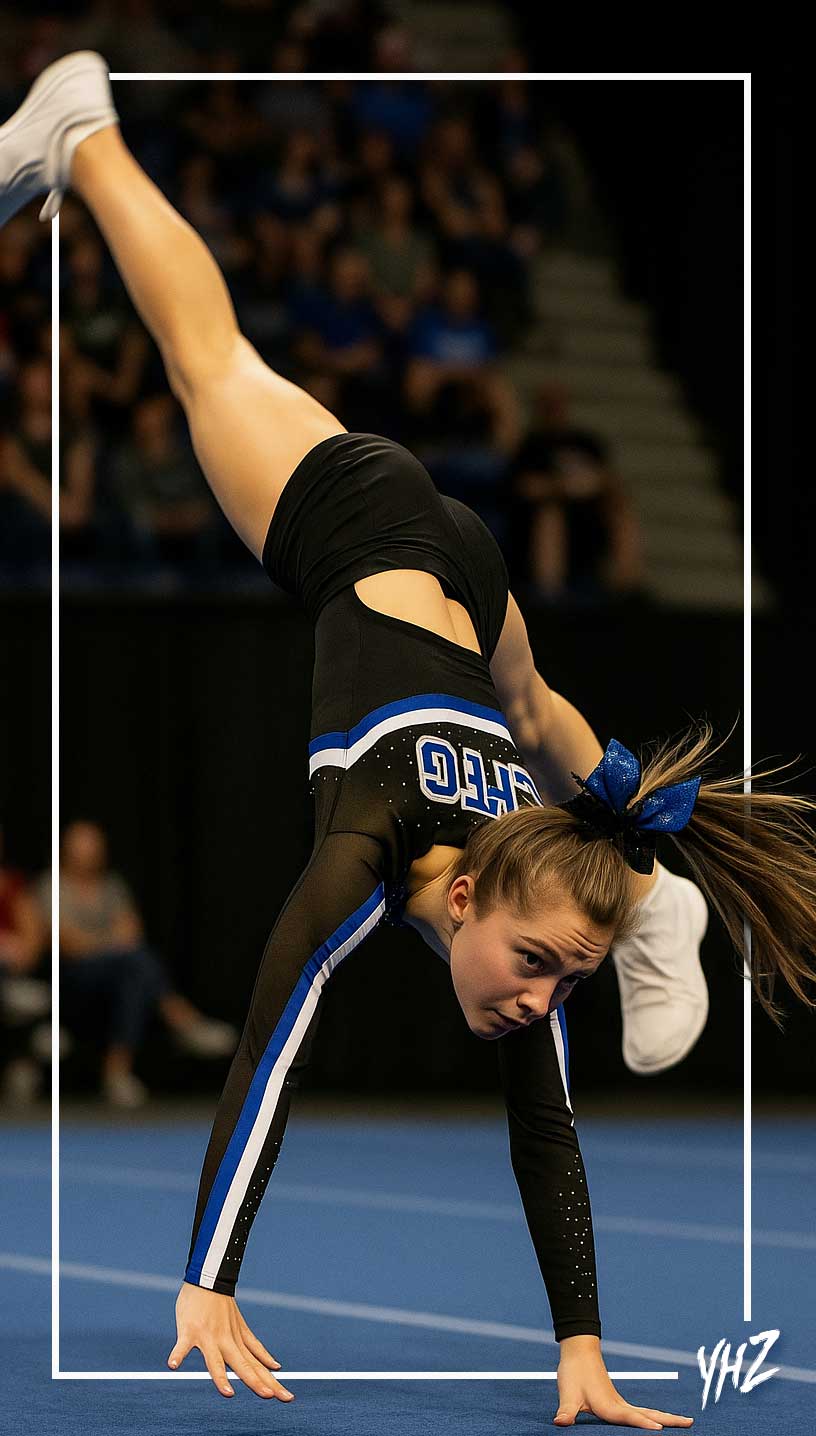
cheerleading skills audit before choreography

By Steve Pawlyk

Published June 29, 2026

Every coach has done it.

You look at the team in June or July and imagine what they could become by competition season. The stunt group is close. The tumbling is almost there. The flyer has the body position if she stays tight. The bases can hit it when everyone is fresh. The jumps are not sharp yet, but they will be.

So the routine gets built around the future version of the team…a version that may never show up.

This is where a summer skills audit helps. It forces coaches to separate what athletes can actually hit from what they might hit later. That difference matters before choreography starts, before music gets ordered, and before athletes spend weeks learning a routine that does not fit them.

The goal is not to lower expectations. The goal is to build a routine with clean, realistic skills and smart upgrade paths. Coaches can still push the team. They just need to know which skills belong in the routine now, which skills need more time, and which skills should stay out until the team proves they can handle them.

What is a summer skills audit?

A summer skills audit is a routine-readiness check; not a tryout. It’s not a punishment or a way to embarrass athletes who are behind. It is a coaching tool.

The audit asks one question over and over: Can this team perform this skill safely, cleanly, and consistently enough for choreography?
cheerleading practice plan

A skill that hits once in practice is not ready. A stunt that works only with one perfect group is not ready. A tumbling pass that lands when the athlete feels good but disappears under pressure is not ready. A pyramid section that needs five coach saves before it works is not ready. Summer is when coaches should find that out. Too many routines get choreographed around hope. Hope is fine in a team meeting.  It’s not a routine strategy.

Why coaches overestimate summer skills

Coaches usually do not overestimate their teams because they are careless. They do it because cheer makes almost-finished skills look tempting.

A stunt that hits three times in a row can feel routine-ready. Then the group loses it when they add counts, music, formations, fatigue, and pressure. A tumbler who lands a pass on a dead mat can look ready. Then the pass changes when the athlete has to wait through a transition, run from a new corner, and perform after jumps.

A flyer may hit a body position during drills. Then the same body position falls apart inside a full sequence with choreography before and after it. That’s normal…practice skills and routine skills are not the same thing. A summer skills audit closes that gap. It asks athletes to prove the skill in conditions that look more like the routine.

The 8-out-of-10 rule

A clean routine needs skills that repeat. For most teams, a useful standard is simple: if a skill does not hit cleanly at least 8 out of 10 times in practice, it should not be locked into choreography yet. That doesn’t mean the team stops training it. It means the coach treats it as an upgrade, not a foundation.

Use 3 categories:

Green skills are ready. They hit most of the time. Athletes understand the timing. Coaches do not have to stop practice every time the skill appears. The skill can handle counts, music, and pressure.

Yellow skills are close. They hit sometimes, but they still need help. Timing changes. Technique slips. Groups need extra resets. These skills may work in a routine if the coach builds a backup plan.

Red skills are not ready. They miss too often, need heavy spotting, create safety concerns, or only work when conditions are perfect. Red skills belong in training, not choreography.

The categories should stay flexible. A yellow skill can become green. A green skill can become yellow when the team adds movement or music. The audit is not a one-day verdict. It is a way to keep the routine honest.

Need Competition Music Blue 1

Audit stunts first

Stunts deserve the first audit because they take the most time to fix after choreography. A shaky stunt section does not stay isolated. It affects formations, transitions, pyramid timing, music pacing, athlete confidence, and the rest of practice. If a coach builds the routine around stunt skills that are not ready, the team spends the whole season chasing the routine instead of cleaning it.

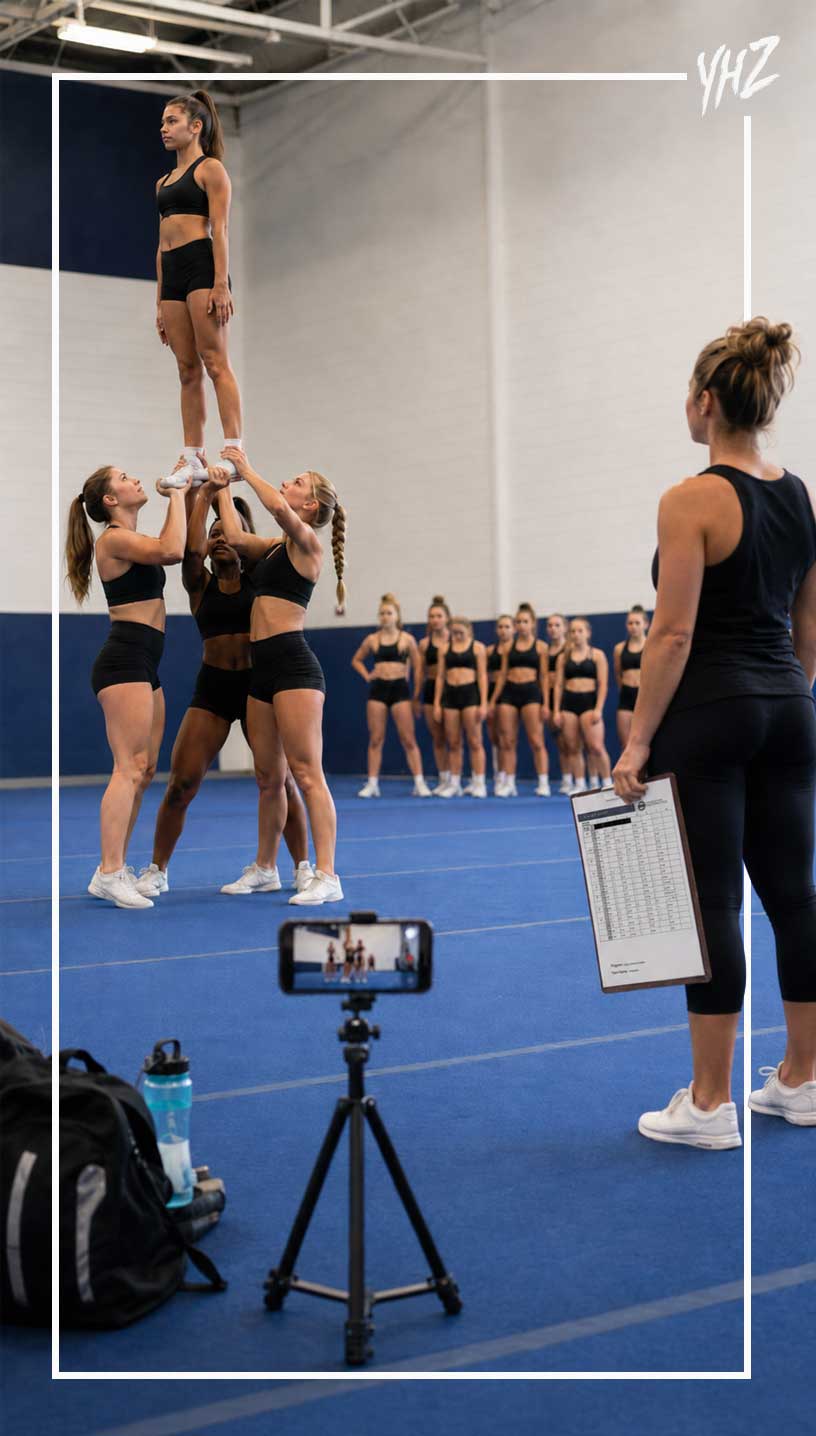
Start with each stunt group by itself. Ask the group to perform the skill ten times. Track clean hits, shaky hits, missed grips, late dips, unstable body positions, rough dismounts, and coach saves. Don’t count a skill as clean just because nobody fell.

A clean hit should look controlled. The flyer should show the intended body position. Bases should stay under the stunt. The back spot should not rescue every rep. The dismount should land safely. Athletes should know where they go next.

Then test the skill in motion. Add the entrance. Add counts. Add the transition before it. Add the transition after it. Add nearby groups. Add music when possible.

This is where the truth usually shows up. A stunt that looks good in isolation may not survive the routine. That does not make the skill useless. It tells the coach where the skill belongs.

Maybe it stays in training. Maybe it moves later in the routine. Maybe it gets simplified. Maybe only one group performs it. Maybe it becomes an upgrade after the first competition. That decision is easier in July than October.
summer skills audit

Do not let one strong stunt group trick you

One strong group can make a team look more advanced than it is. That group hits the elite skill. Everyone gets excited. The routine gets built around that level of difficulty. Then the other groups spend months trying to catch up.

This is a bad trade.

Competition routines are judged as full-team products. If one group looks great and two groups fight for survival, the routine does not look strong. It looks uneven. The summer skills audit should judge the team, not the best group.

If only one group can hit the skill, the coach has a choice to make. Feature that group intentionally, or choose a skill the full section can hit. Both choices can work. Pretending the whole team owns the skill does not work.

A clean stunt section with slightly lower difficulty will usually age better than a high-difficulty section that scares everyone in the gym.

Audit tumbling under routine conditions

Tumbling is another place where coaches overcount skills.

An athlete may have a pass. That does not mean the pass belongs in the routine.

Test tumbling in the way the routine will use it. If the athlete has to run from a corner, test that corner. If the pass comes after jumps, test it after jumps. If the pass comes after a long transition, test it after movement. If the athlete has to wait on music, test the timing.

A tumbling pass should not count as routine-ready until the athlete can land it with the same setup they will use in the routine.

Coaches should also separate technical readiness from performance readiness.

A pass may be legal and land safely, but still look messy. Bent legs, low chest, uncontrolled rebounds, and scary landings can hurt the routine. They can also make the athlete less confident over time.

Some passes need more training. Some need a different placement. Some need to come out until the athlete can hit them without the whole section holding its breath.

That is not negative coaching. That is good routine design.

Audit jumps without lying to yourself

Jumps often get treated as a small section. They should not.

A weak jump section can make a polished routine look unfinished fast. Bent knees, low height, loose arms, bad timing, and messy landings are easy to see. Judges do not need replay to notice them.

A summer jump audit should test three things: technique, timing, and recovery. Technique asks whether the jumps have the shape the coach wants. Timing asks whether the team can hit together. Recovery asks whether athletes can land and move into the next skill without falling apart.

That last part matters. Many jump sections look acceptable until the team has to tumble, transition, or stunt immediately after. If the jumps drain the athletes so much that the next section suffers, the coach needs to know that now.

Do not build the jump section around the one athlete with great flexibility. Build it around what the team can hit together. Clean, synchronized jumps usually beat ambitious jump combinations that land like popcorn.
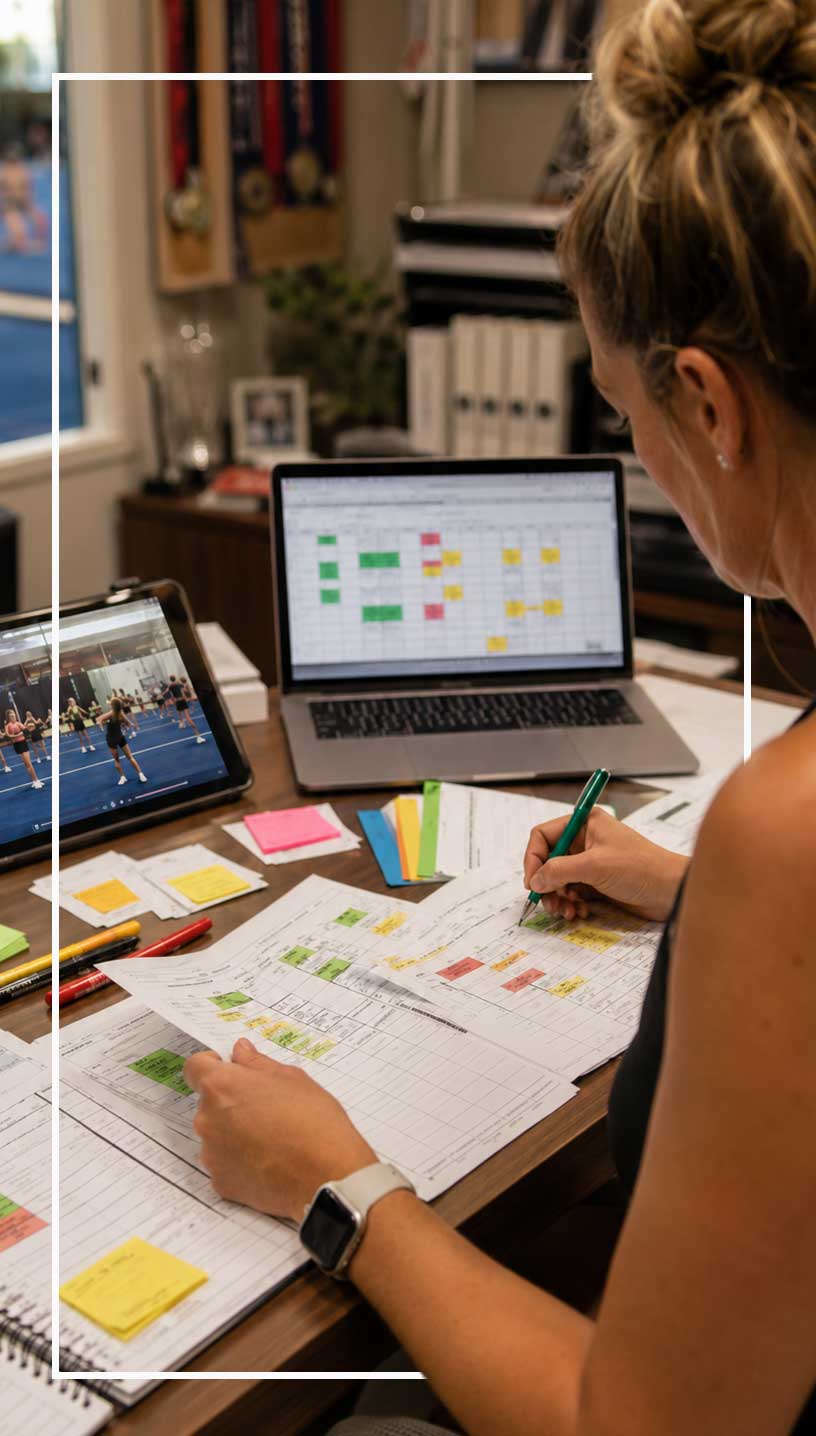
cheer routine planning

Audit pyramids in pieces

Pyramids can fool coaches because small pieces may work even when the full structure is not ready. Start with the parts.

Can each group hit its job? Can the bracers stay connected? Can flyers maintain body positions? Can bases move safely? Can the team hit the timing without a coach talking them through every count? Then connect the pieces.

This is where pyramid problems usually appear. Groups that hit alone may not travel well. Bracers may arrive late. Flyers may look unsure. Transitions may take more counts than expected. The pyramid may technically hit, but the visual may not read from the front.

The audit should include a front-view check. Record the pyramid from the judges’ angle and watch it without sound. If the visual does not make sense on video, music will not fix it. Pyramid difficulty should serve the routine. It should not become a maze the team barely survives.

Audit transitions like skills

Transitions are skills. Coaches do not always treat them that way, but they should.

A transition needs timing, spacing, body control, traffic awareness, and performance quality. Bad transitions make strong skills look worse. They also create avoidable stress for athletes.

During the summer audit, coaches should identify the athletes who struggle with spacing, speed, direction changes, and formation responsibility. That information should shape choreography.

Some teams can handle fast, layered transitions. Some teams need cleaner pathways and simpler movement. Some teams need extra counts because they have younger athletes, mixed experience levels, or big formation changes. That does not mean the routine has to feel slow. It means the routine has to move in a way the team can execute.

A coach who ignores transition skill level will end up cleaning the same traffic problems all season.

Film everything

Video makes the audit harder to argue with.

Athletes often feel like a skill hit because they survived it. Coaches may remember the best rep because it was exciting. Parents may hear that a skill is close and assume it should go in the routine.

Film solves a lot of that.

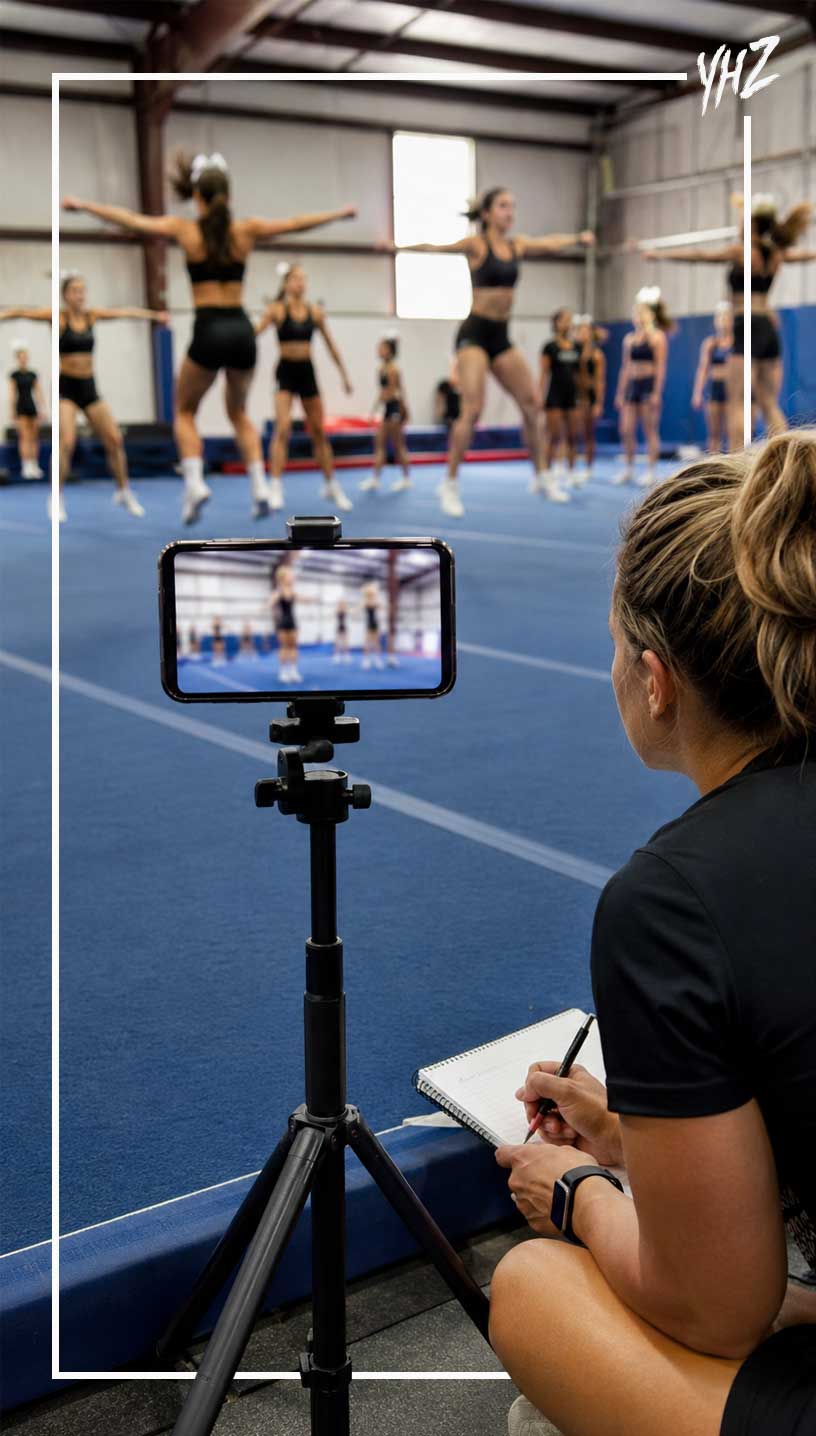
Record stunt reps, tumbling passes, jump sections, pyramid pieces, and short routine-style sequences. Watch them from the front. Watch them without stopping after the first hit. Watch the misses too.

The camera shows what the judges will see.

It also helps coaches spot patterns. Maybe a stunt group misses every time the flyer rushes the body position. Maybe a tumbler changes technique when tired. Maybe the jump timing problem starts with the arms, not the legs. Maybe the transition looks messy because two athletes cross the same lane.

Those details are easy to miss live.

A summer skills audit does not need fancy software. A phone camera and honest eyes are enough.

summer skills audit

Create a no-drama scoring system

A skills audit can get emotional if athletes think every result is a judgment of their worth. Keep the language clean.

Do not label athletes as good or bad. Label skills as ready, close, or still training. That distinction matters.

A flyer is not a problem because one body position is inconsistent. A base is not a failure because one grip needs work. A tumbler is not behind as a person because one pass is not routine-ready.

The audit should help athletes see the path forward.

Use simple notes:

Ready for routine
Needs more reps
Needs technique fix
Needs safer version
Use only in featured spot
Train as upgrade
Do not use yet

That kind of language gives coaches useful information without turning the audit into a public ranking.

Build the routine with a base version and upgrades

The smartest coaches do not choose between easy and hard. They build layers.

Start with a base routine the team can hit. Then plan upgrades that can replace sections when the team earns them.

For example, a stunt group may start with a cleaner prep-level body position, while training the extended version as an upgrade. A tumbling section may start with the passes athletes can land under pressure, while keeping harder passes ready for later. A pyramid may use a safer connection first, then add a harder visual once timing improves. This approach gives the team confidence early.

It also keeps the routine from becoming stale. Athletes can work toward upgrades without feeling like the first version is a failure. The base version should still look intentional. It should not look like a watered-down placeholder. It should be choreographed to score as cleanly as possible.

If the upgrade never becomes safe or consistent, the team still has a routine. That is the point.

Set deadlines for routine decisions

A skill cannot stay “almost ready” forever. Coaches need decision deadlines. Without them, the team keeps waiting for skills that may not arrive in time.

Set a date before choreography when each major skill must prove itself. Set another date after choreography for upgrades. Set a final date before the first competition when the coach stops adding risk and starts cleaning.

The exact timeline depends on the program, but the principle stays the same. At some point, a skill either belongs in the routine or it does not. This protects the team. It also protects practice time.

A team that changes major routine sections too late loses cleaning reps. Athletes get nervous. Coaches get frustrated. Music edits pile up. The routine starts to feel temporary. Temporary routines do not perform with confidence.
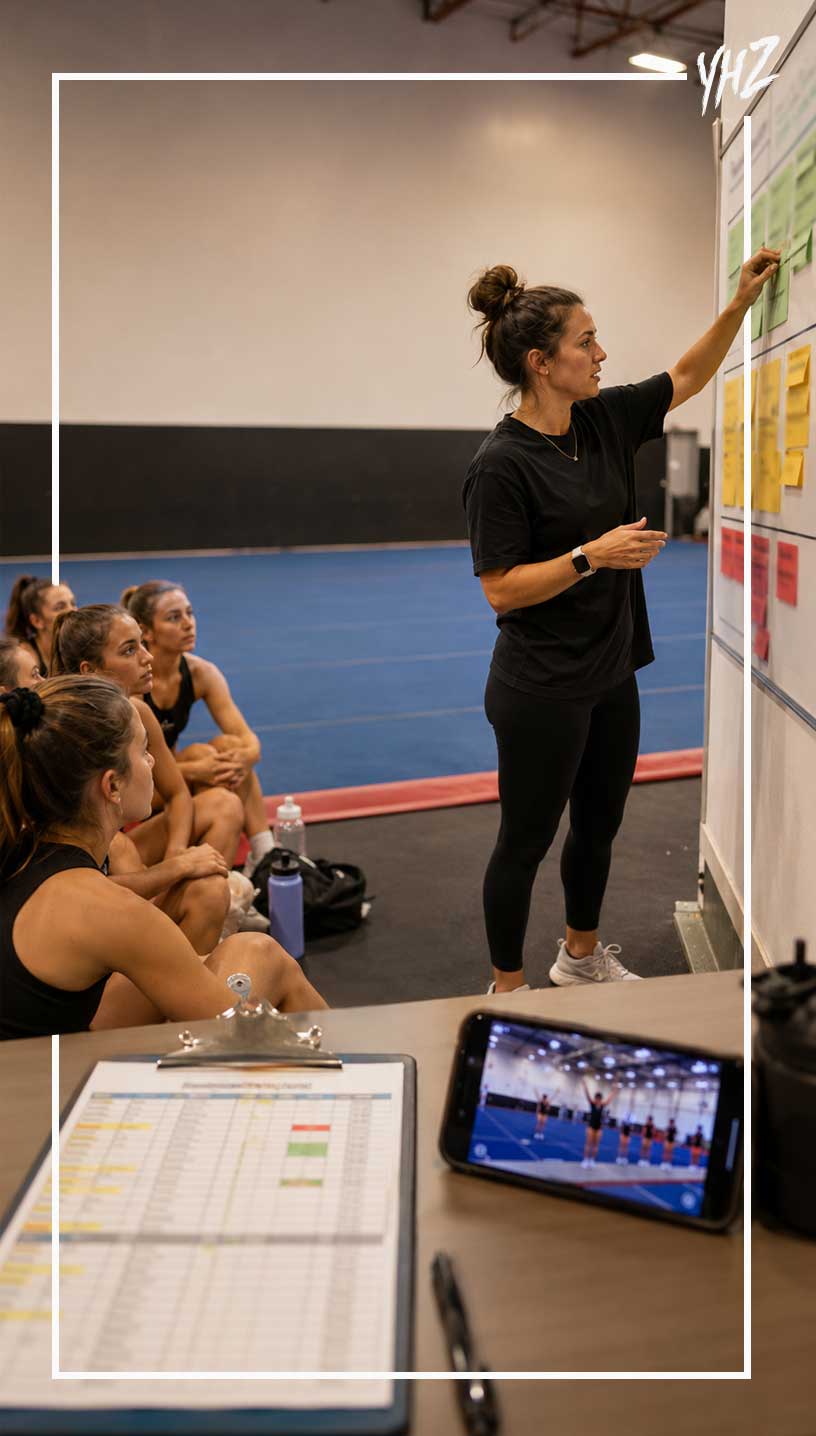
cheerleading tumbling audit

Watch for the “one more week” trap

“Give it one more week” can become a season-long habit. Sometimes one more week makes sense. A group may need reps. An athlete may be coming back from vacation. A stunt may need one technical fix. But coaches should ask what will actually change in that week.

Will the team get more reps with the full group present? Will a coach fix a specific technique problem? Will the athlete get private tumbling work? Will the group drill the entry that keeps breaking?

If the answer is no, one more week may only delay the decision. Hope is not a training plan.

When a skill stays inconsistent after repeated chances, the coach should move it out of the routine and keep training it separately. That choice may feel disappointing in the moment. It usually saves the routine later.

Match skills to the team’s identity

The summer audit should not only ask what the team can do. It should ask what the team can sell.

Some teams are explosive. Some are sharp and clean. Some have strong stunt technique. Some have big personalities. Some have excellent dancers. Some have powerful tumbling but need simpler transitions. Some have young athletes who perform better when the routine is clear and confident. The routine should fit that reality.

Do not build a routine that hides the team’s best qualities because everyone is chasing difficulty. Use the audit to find what the team can own.

If the team has strong jumps, give the jump section a real moment.

If the team has one standout tumbler, feature that pass without forcing everyone else into skills they cannot match.

If the team performs well, give them music and choreography that let them connect with the crowd.

If the team has clean stunts, do not bury them inside overcomplicated transitions.

A good routine makes the team look more like itself. A bad routine makes the team look like it is pretending.

Use the audit to guide music and count sheets

The skills audit should feed directly into the count sheet.

If the team needs extra time for stunt setups, the count sheet should show that. If a transition needs more room, plan the counts before the music gets built. If the pyramid has one major visual, make sure the music supports that moment. If jumps need a clean recovery before tumbling, do not cram the next section too close.

Music cannot solve a routine that ignores skill readiness. A producer can help with pacing, energy, voiceovers, sound effects, and section changes. But the coach has to know what the team can actually execute.

The audit gives the music producer better information. It also helps the choreographer make smarter choices. This is where planning pays off. The routine feels less forced because the counts, skills, and music all come from the same honest picture of the team.

What to do when parents push for harder skills

Parents hear what their athlete says. Athletes often say the skill is close. That can create pressure.

A parent may ask why a stunt is not in the routine. An athlete may say they hit it at practice. Another parent may compare the team to a rival program. Someone may post a video of one successful rep and wonder why the coach will not use it. This is where the audit helps.

The coach can explain that routine decisions come from consistency, safety, and full-team execution. One hit does not decide choreography. Ten reps tell a better story. Routine conditions tell an even better one. Keep the message simple.

The team will train upgrades. The routine will use the skills that give the team the best chance to hit. The goal is not to avoid difficulty. The goal is to earn it.

Most parents can understand that when the coach explains it before emotions take over.

A sample summer skills audit plan

Coaches can run a basic audit in one or two practices. Start with stunts. Test the main skills each group wants to use. Track clean hits out of ten. Add entries and exits after the first round.

Move to tumbling. Test standing tumbling and running tumbling from routine-style setups. Record landings, timing, and consistency.
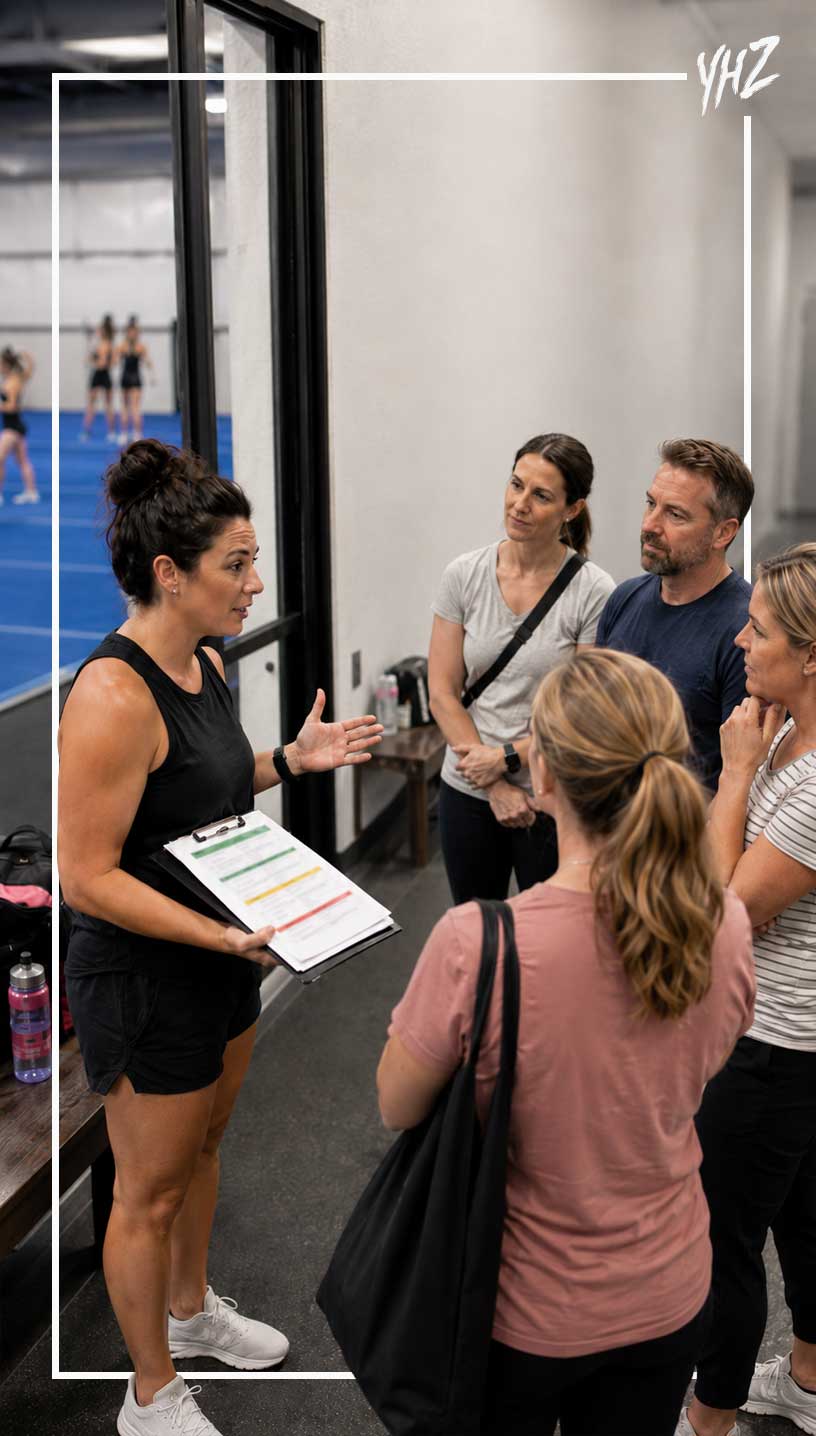
cheer tumbling readiness

Run jumps as a group. Check height, timing, arm placement, landings, and recovery into the next section. Break down pyramid pieces. Test each group, then connect sections. Film from the front.

Finish with transitions. Give athletes formation changes and watch spacing, speed, and confusion points. After practice, sort the results into green, yellow, and red.

Then make routine decisions from that list.

Green skills can go into the first choreography plan.

Yellow skills need backup versions.

Red skills stay in training until they prove they are ready.

The audit does not need to be complicated. It needs to be honest.

The coach’s real job

Cheer coaches live between ambition and reality. Push too little, and the team never grows. Push too much, and the routine becomes a weekly emergency.

The summer skills audit helps coaches find the middle. It gives athletes room to improve without letting unfinished skills take over the routine. It helps choreographers build around truth. It helps music producers support the routine instead of guessing. It helps parents understand why consistency matters more than one good video.

Most of all, it protects the team from spending the season chasing a version of itself that only exists in the coach’s imagination.

Build for the team in front of you.

Train for the team they can become.

Those are different jobs. Good coaches know when they are doing each one.

Steve Pawlyk Signature Full

IPP's Premade Mixes are USA Cheer Compliant and customizable!  Add Sound FX, swap songs, & more!  Add your Team Name to the mix for only $10! 

SLAM artwork
Full_Out_130 mp3 image
1 minute cheer mix
WAKE UP THE FIRE
SLAM artwork
WAKE UP THE FIRE
Full_Out_130 mp3 image
1 minute cheer mix

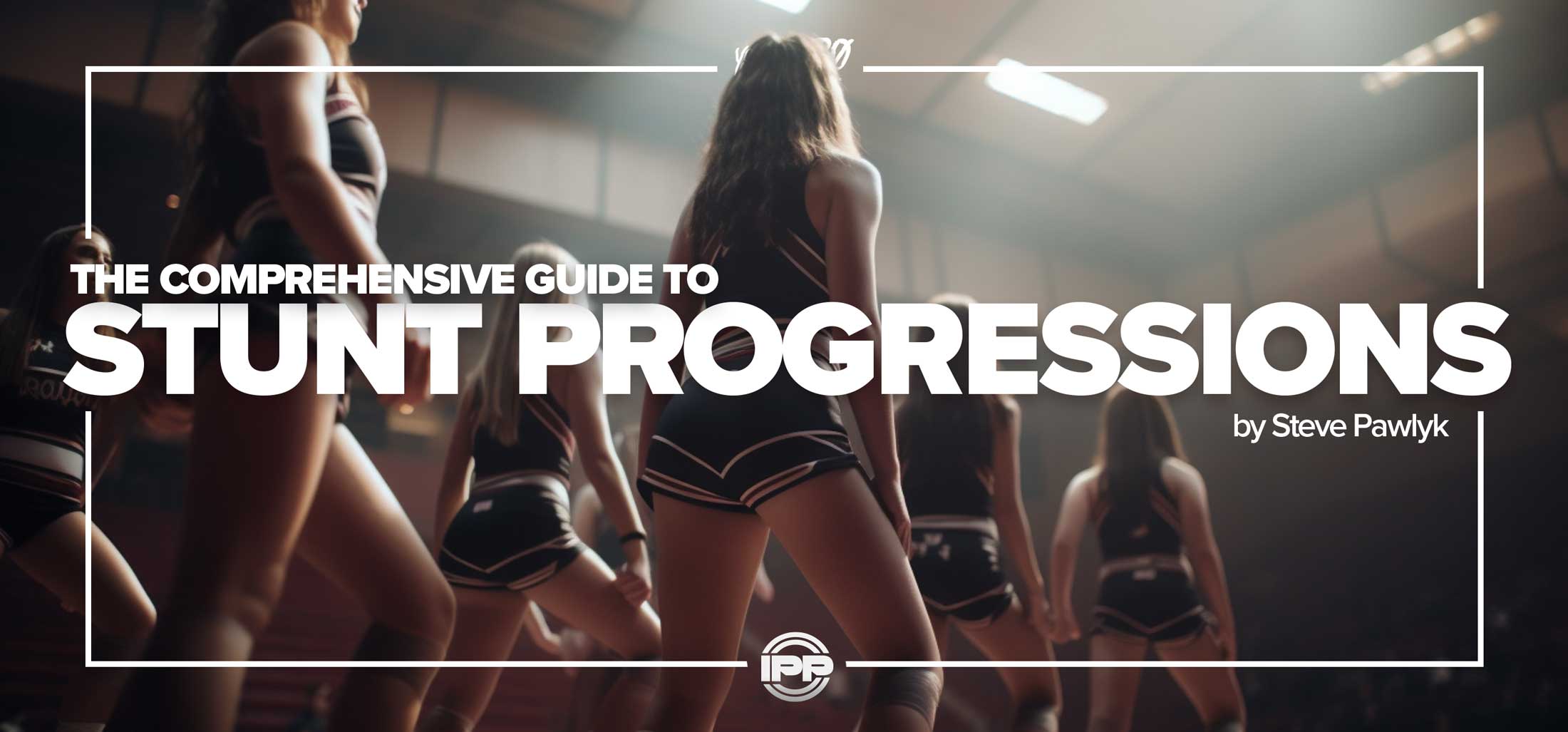
The Comprehensive Guide to Stunt Progressions for Cheer Coaches

The Comprehensive Guide to Stunt Progressions for Cheer Coaches

By Steve Pawlyk

Published October 18, 2023

Today we’ll delve into the science of stunting, the psychology of team dynamics, and the art of performance, offering you actionable insights to elevate your squad to unparalleled heights.

Why Stunt Progressions Are Not Just for Rookies

While it’s easy to associate stunt progressions with beginner levels, even the most accomplished teams can benefit from revisiting these foundational building blocks. However, for the advanced team, the approach shouldn’t be repetitive but rather analytical. Here’s why:

  • Risk Mitigation: A nuanced understanding of each progression allows coaches to pinpoint minor, often overlooked errors that could spell disaster in complex stunts.
  • Skill Specialization: Mastering the nuances of each progression enables athletes to specialize in their roles, which in turn significantly improves individual and team performance.
  • Performance Metrics: Leveraging tools like video analysis and biomechanics software allows coaches to optimize each movement, timing, and force, lending a scientific rigor to the art of cheerleading.

The Roles Re-Examined: More than Just Titles

In competitive cheerleading, roles are not just labels but encapsulate specific skill sets, expectations, and responsibilities that each team member must fulfill.

Need Competition Music Blue 1
  • Flyer: At advanced levels, training should include vestibular exercises to improve body awareness, control, and mid-air adjustment skills. Psychological coaching can also be beneficial for managing performance anxiety.
  • Base: Specialized strength training regimes like plyometrics or isometric exercises can hone specific muscle groups that are vital for bases. Additionally, drills focusing on adaptive grip techniques can improve stunt stability.
  • Spotter: Rather than being passive overseers, spotters should engage in active problem-solving during stunts. Communication drills can help them deliver effective, real-time feedback and corrections.

Mastering the Nuances: Beyond Basic Skills

While basic stunts form the foundation of all cheerleading routines, mastering their intricacies can yield exponential performance improvements.

Prep-Level Stunts:

  • Thigh Stand with Core Activation: Incorporating core-engagement techniques can offer more stable thigh stands and can also improve the bases’ ability to adjust and adapt to movement variations from the flyer.

Extension-Level Stunts:

  • Full Extension with Synchronized Breathing: Introduce meditative breathing exercises to help your team focus. Synchronized breathing between the bases and the flyer can add an additional layer of stability and control.

Intermediate Skills: The Untold Tricks

These transitional stunts require a blend of solid foundational skills and advanced techniques, making them critical stepping stones for aspiring champions.

  • Bow and Arrow with Momentum Control: Emphasize the importance of core stability and dynamic balance to control momentum effectively. Advanced squads can also incorporate angular momentum calculations to improve performance.
  • Basket Toss with Aerial Awareness: Introduce visualization and spatial awareness drills that flyers can employ mid-air to adjust their body position for a safer and more precise landing.

Elite Stunt Techniques: The Next Frontier

For squads ready to break barriers and defy gravity, these high-difficulty stunts provide the ultimate test of skill, teamwork, and courage.

  • Rewind with Pre-Lift Cues: Employ auditory or tactile cues to ensure the entire team is mentally and physically prepared to execute a rewind flawlessly.
  • Double Down with Angular Momentum Conservation: Advanced squads can use biomechanical analysis tools to evaluate the optimum rotational speed and body posture for executing a flawless Double Down.

Unseen Pitfalls Even Pros Should Avoid

Even seasoned coaches and elite athletes are susceptible to pitfalls. These are often due to overconfidence or complacency.

  • Overconfidence: Assuming that a mastery of the basics negates the need for revisiting them can be a grave mistake.
  • Technique Stagnation: The world of cheerleading is dynamic and rapidly evolving. Refusing to update and adapt your techniques to new standards and best practices can lead to performance plateaus.

Safety Measures for the Advanced

Even with advanced skills, safety remains paramount. From regular biomechanical assessments to sophisticated technologies like pressure-sensitive mats and motion capture, advanced safety measures are an investment in your team’s longevity and success.

Excellence in cheerleading stunting doesn’t come from mere repetition but from deep, insightful understanding and continuous innovation. This Advanced Guide to Stunt Progressions aims to catalyze your journey towards technical mastery, optimized performance, and world-class excellence.

Steve Pawlyk Signature Full

IPP's Premade Mixes are USA Cheer Compliant and customizable!  Add Sound FX, swap songs, & more!  Add your Team Name to the mix for only $10! 

SLAM artwork
Full_Out_130 mp3 image
1 minute cheer mix
WAKE UP THE FIRE
SLAM artwork
WAKE UP THE FIRE
Full_Out_130 mp3 image
1 minute cheer mix

7 Creative Strategies for Boosting Cheer Team Performance

7-Creative-Strategies-for-Boosting-Cheer-Team-Performance

By Steve Pawlyk

Published October 2, 2023

The secret to standing out is constant innovation. You need creative strategies to boost your cheer team’s performance and guarantee not only precision but also awe-inspiring execution.

Today, we will delve into 7 creative strategies to elevate your cheer team’s performance to the next level. Whether you’re a coach, an athlete, or a cheer enthusiast, these tips will help you bring a breath of fresh air to your routines.

1. Add a Dash of Gymnastics

Incorporating gymnastic elements into your routine can significantly boost the dynamic energy of your team. Gymnastic techniques not only add a wow factor but also showcase your team’s technical prowess. Moves such as handstands, flips, and cartwheels can be seamlessly integrated into your existing routines.

Tips:

  • Consult a Gymnastic Coach: To ensure proper technique and safety.
  • Start Small: Incorporate basic elements first before moving on to more complex maneuvers.
  • Safety First: Make sure all team members are comfortable and physically prepared for the new elements.

2. Visual Storytelling Through Routine

Narrative routines are catching on as they add depth to the performance. Instead of merely stringing stunts and cheers together, create a storyline that can be easily followed throughout the routine.

Tips:

  • Storyboarding: Plan out the story you want to tell.
  • Choreographic Transitions: Use transitions to move the narrative along.
  • Facial Expressions: Teach your team to use facial expressions to convey emotions and tell the story effectively.
Need Competition Music Blue 1

3. Utilize Props Creatively

Props are not just fillers; they can be the star of your show. Think pompoms, banners, or even custom-made props that align with your routine’s theme.

Tips:

  • Thematic Relevance: Ensure that the props contribute to the story or theme.
  • Safety: Make sure the props are safe to use and won’t cause any accidents.

4. Crowd Interaction

Engaging the crowd can elevate your performance and energize your team. The energy of the audience often mirrors that of the performance.

Tips:

  • Audience Cues: Pre-plan moments where your team directly engages with the crowd.
  • Interactive Cheers: Develop cheers where the audience can respond or participate

5. Incorporate Technology

In the modern age, technology is your friend. From LED lights sewn into uniforms to the use of projection screens, technology can add a unique twist.

Tips:

  • Sound Effects: Use tech to incorporate sound effects that align with your routine’s theme.
  • Lighting: Strategically use lighting to highlight key moments in your performance.

6. Encourage Individuality Within Unity

While the essence of cheerleading lies in perfect synchronization, allowing for moments where individual talents shine can make your team memorable.

Tips:

  • Spotlight Moments: Create segments within the routine where individual talents can be showcased.
  • Personal Flair: Encourage team members to bring their unique flair to their moves, without breaking the team’s harmony.

7. Embrace the Power of Music

Never underestimate the impact of a well-chosen soundtrack. Music can make or break your routine. Customized cheer music can give your performance a unique edge.

Tips:

  • Theme Alignment: Choose or create music that aligns with your theme.
  • Dynamic Rhythms: Use varying tempos and rhythms to emphasize different sections of your routine.

Creativity is the secret sauce that will set your cheer team apart from the rest. From adding a dash of gymnastics to embracing the power of custom cheer music, these seven creative strategies can significantly boost your cheer team’s performance.

Incorporate these strategies into your practice and performance routines to see dramatic improvements. Here at YouHitZero, we’re all about helping you reach the pinnacle of cheerleading excellence

Steve Pawlyk Signature Full

IPP's Premade Mixes are USA Cheer Compliant and customizable!  Add Sound FX, swap songs, & more!  Add your Team Name to the mix for only $10! 

SLAM artwork
Full_Out_130 mp3 image
1 minute cheer mix
WAKE UP THE FIRE
SLAM artwork
WAKE UP THE FIRE
Full_Out_130 mp3 image
1 minute cheer mix

How to Match Cheer Music with Your Team’s Skill Level

How-to-Match-Cheer-Music-with-Your-Team's-Skill-Level

By Steve Pawlyk

Published September 20, 2023

When it comes to creating the perfect cheerleading routine, the choice of music plays a pivotal role. The right music can uplift your team’s performance, energize the crowd, and even impress the judges. But one size doesn’t fit all. Matching the music to your team’s skill level is crucial for a harmonious and impactful routine. So, how do you go about it?

In this guide, we’ll delve into how you can select the best cheer music for your team by assessing various factors and considering the different options available. Specifically, we’ll focus on the offerings from IPP Music, a leader in the cheer music industry, to guide you through the decision-making process.

Assessing Your Team’s Skill Level

Before you even think about music, it’s essential to assess your team’s skill level accurately. Consider these factors:

  • Skill Range: Is your team made up of beginners, intermediates, or advanced athletes?
  • Routine Complexity: Are you aiming for simple routines or complex formations and stunts?
  • Competition Level: Are you competing locally, or do you have your eyes set on national or global championships?
Need Competition Music Blue 1

Why IPP Music?

IPP Music offers two primary categories of mixes—Premade and Custom. These options make it easier to tailor your music to match your team’s abilities and aspirations.

Premade Mixes: For Convenience and Affordability

PREMADE MIXES

Premade mixes are less expensive and can be easily customized with various add-ons. They are a fantastic option for entry-level and intermediate teams. Here’s how you can customize a Premade Mix:

  • Voiceovers: Add your team’s name or other basic phrases. Packages range from “Team Name Only” at $10 to “Unlimited” at $99.
  • Sound FX: Add impactful sound effects for $99.
  • Cheer Breaks: Insert cheer breaks into the mix for $5 each.
  • Tempo Adjustments: Modify the tempo to match your routine’s pace for $25.
  • Mix Splitting: Split the mix into two separate files at any point for $25.
  • Song Swapping: Swap songs within the IPP Music library for $25.

Custom Mixes: For Uniqueness and Complexity

CUSTOM MIX PRICING

If you’re an advanced team aiming for high-level competitions, Custom Mixes are worth considering. IPP Music offers five tiers of Custom Mixes:

  • Standard: Ideal for entry-level teams, costs start at $875.
  • Advanced: Suited for teams competing at a higher level, with prices starting at $1028.
  • Elite: Designed for competitive all-star teams, starting at $1185.
  • Semi-Custom: Perfect for Worlds and Summit teams, priced from $2420.
  • Full Custom: Completely original compositions for top-tier teams, starting at $3399.

Each tier offers various levels of voiceovers, raps, and sound effects tailored to your needs. Also, all custom mix packages come with free edits, making it easier to adjust your mix as your routine evolves.

Making the Right Choice: A Step-by-Step Guide

  • Identify Needs and Budget: Begin by understanding your team’s requirements and how much you’re willing to spend.
  • Consider the Skill Level: Use the skill assessment to narrow down whether a Premade or Custom Mix is more appropriate.
  • Choose the Type:
    • For lower budgets and simpler routines, a Premade Mix with essential add-ons can suffice.
    • For advanced teams, consider the various Custom Mix tiers based on your specific needs.
  • Customize: Once you’ve chosen the type, utilize the various add-ons or tiers to tailor the mix to your liking.
  • Review and Edit: IPP Music allows free edits for Custom Mixes and offers various add-ons for Premade Mixes to fine-tune your selection.
  • Test the Music: Before finalizing, practice your routine with the music to ensure it complements your team’s skill level and choreography.

Whether you’re coaching a beginner squad or a championship-level team, the right music can make all the difference. By thoughtfully considering your team’s skill level and taking advantage of IPP Music’s flexible and high-quality offerings, you can find the perfect match that helps your athletes shine.

So, are you ready to take your team’s performance to the next level? When the season begins, make sure you’re down with IPP!

Steve Pawlyk Signature Full

IPP's Premade Mixes are USA Cheer Compliant and customizable!  Add Sound FX, swap songs, & more!  Add your Team Name to the mix for only $10! 
SLAM artwork
Full_Out_130 mp3 image
1 minute cheer mix
WAKE UP THE FIRE
SLAM artwork
WAKE UP THE FIRE
Full_Out_130 mp3 image
1 minute cheer mix

2023-2024 Christian Cheerleading Season: A Comprehensive Guide to Key Competitions

2023-2024-Christian-Cheerleading-Season--A-Comprehensive-Guide-to-Key-Competitions

By Steve Pawlyk

Published August 12, 2023

The upcoming Christian cheerleading season for 2023-2024 is an inspiring blend of faith, community, and athleticism. From the opening kick-off in October to the closing championships in February, this season offers a wide array of Christian cheerleading events. Let’s explore the spiritual and competitive highlights of this remarkable season:

1. Impact Kick Off Classic – October 14, 2023, Dalton, GA

This event at Christian Heritage School symbolizes the harmonious fusion of faith and sport, bringing together Christian cheerleading teams for an invigorating start to the season.

2. FCC Atlanta Classic – October 21, 2023, Villa Rica, GA

Held at Villa Rica High School, this Christian-focused event emphasizes values like teamwork, integrity, and excellence, all while offering fierce competition.

3. Impact Kick Off Classics

These faith-centered editions are scheduled in different states:

  • Virginia: October 28, 2023, at Greenbrier Christian Academy, Chesapeake, VA.
  • Florida: November 4, 2023, with the venue to be announced.

4. Texas Showdown – November 11, 2023, Ft Worth, TX

At Lake Country Christian School, this showdown provides an opportunity for Christian teams in Texas to compete and fellowship.

5. FCC Fall Classic – November 18, 2023

This fall classic celebrates Christian cheerleading, with the Georgia location soon to be announced.

6. Georgia State Championships – December 2, 2023, Suwannee, GA

Hosted at Lambert High School, these state championships are a pinnacle of Christian cheerleading in Georgia.

7. East Coast Championships – December 9, 2023, Lynchburg, VA

Liberty University’s faith-filled environment will be the backdrop for this major East Coast Christian cheerleading event.

8. Florida State & National Christian Cheerleading Championships

  • Florida State Championships: December 16, 2023, at Rosen Shingle Creek Resort, Orlando, FL.
  • National Christian Cheerleading Championships: January 4-6, 2024, also at Rosen Shingle Creek Resort, a defining moment in Christian cheerleading.

9. Carolina Championships – January 20, 2024, Raleigh, NC

North Raleigh Christian will host this spiritually uplifting competition, connecting faith and athleticism.

10. West Coast Championships – February 10, 2024, Azusa, CA

Concluding the season at Felix Event Center – Azusa Pacific Univ., these championships promise to be a faith-filled grand finale.

Christian Cheer Competitions 2023-2024

wdt_ID Date Event Name Venue Participants Location
1 10/14/2023 Impact Kick Off Classic Christian Heritage School Private Schools, Impact Programs, Public Schools, Allstar Programs, Recreational Programs Dalton, GA
2 10/21/2023 FCC Atlanta Classic Villa Rica High School Private Schools, Impact Programs, Public Schools, Allstar Programs, Recreational Programs Villa Rica, GA
3 10/28/2023 Impact Kick Off Classic (VA) Greenbrier Christian Academy Private Schools, Impact Programs, Public Schools, Allstar Programs, Recreational Programs Chesapeake, VA
4 11/04/2023 Impact Kick Off Classic (FL) TBA Private Schools, Impact Programs, Public Schools, Allstar Programs, Recreational Programs TBA, FL
5 11/11/2023 Texas Showdown Lake Country Christian School Private Schools, Impact Programs, Public Schools, Allstar Programs, Recreational Programs Ft Worth, TX
6 11/18/2023 FCC Fall Classic TBA Private Schools, Impact Programs, Public Schools, Allstar Programs, Recreational Programs TBA, GA
7 12/02/2023 Georgia State Championships Lambert High School Private Schools, Impact Programs, Public Schools, Allstar Programs, Recreational Programs Suwannee, GA
8 12/09/2023 East Coast Championships Liberty University - The Vines CenterHotel Info Private Schools, Impact Programs, Public Schools, Allstar Programs, Recreational Programs Lynchburg, VA
9 12/16/2023 Florida State Championships Rosen Shingle Creek Resort Private Schools, Impact Programs, Public Schools, Allstar Programs, Recreational Programs Orlando, FL
10 National Christian Cheerleading Championships Rosen Shingle Creek Resort Private Schools, Impact Programs, Allstar Programs, Recreational Programs Orlando, FL
11 01/20/2024 Carolina Championships North Raleigh ChristianHotel Info Private Schools, Impact Programs, Public Schools, Allstar Programs, Recreational Programs Raleigh, NC
12 02/10/2024 West Coast Championships Felix Event Center - Azusa Pacific Univ. Private Schools, Impact Programs, Public Schools, Allstar Programs, Recreational Programs Azusa, CA

The 2023-2024 Christian cheerleading season exemplifies the beautiful connection between faith and sport. By fostering Christian values, these events create a sense of community, encouragement, and inspiration. For Christian athletes, coaches, and supporters, this season offers an opportunity to celebrate faith through the dynamic world of cheerleading.


Steve Pawlyk Signature Full

IPP's Premade Mixes are USA Cheer Compliant and customizable!  Add Sound FX, swap songs, & more!  Add your Team Name to the mix for only $10! 
SLAM artwork
Full_Out_130 mp3 image
1 minute cheer mix
WAKE UP THE FIRE
SLAM artwork
WAKE UP THE FIRE
Full_Out_130 mp3 image
1 minute cheer mix
SHARE YOUR CART