Tag Archives: cheer coaches

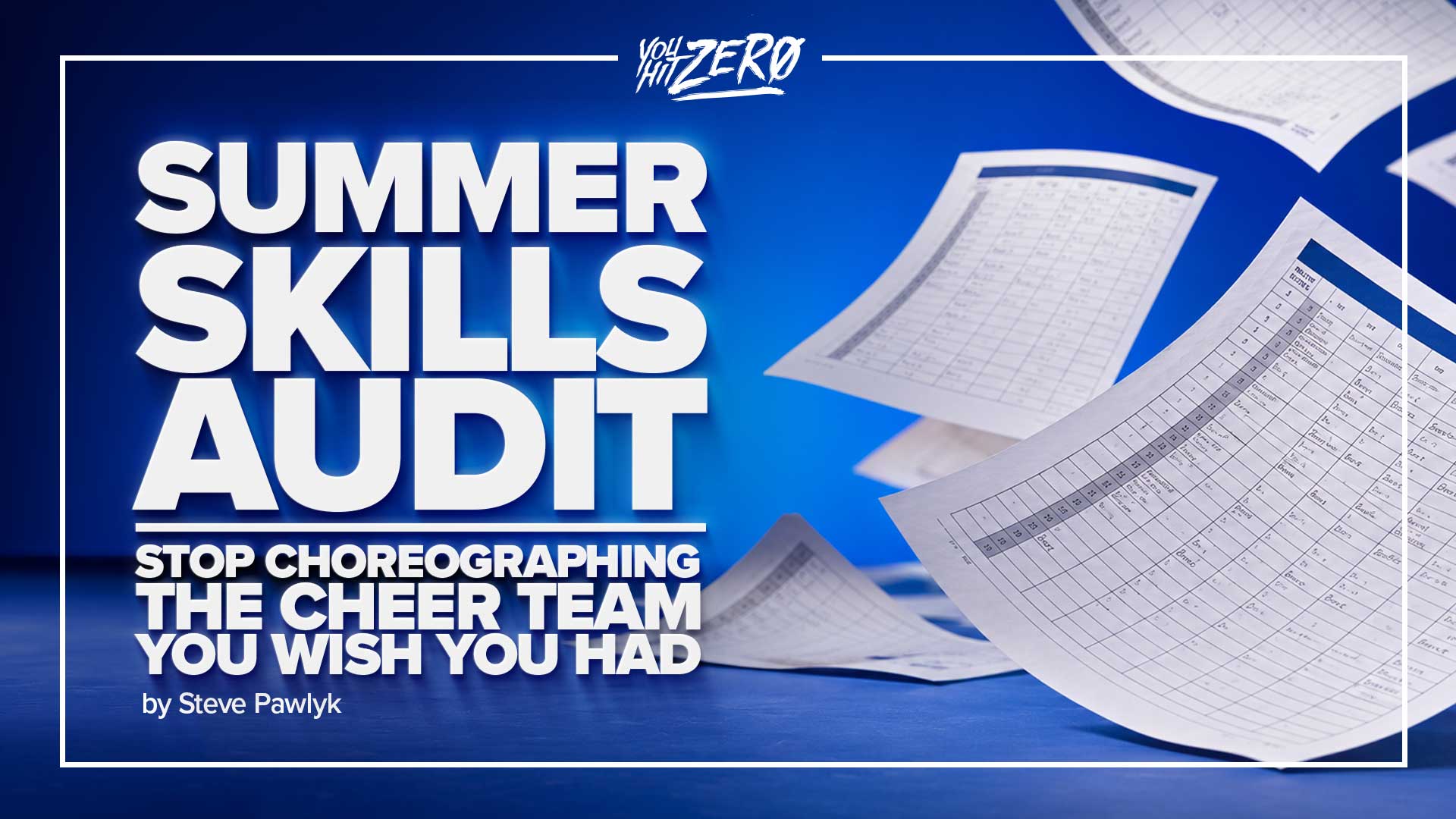
The summer skills audit: stop choreographing the cheer team you wish you had

cheerleading skills audit before choreography

By Steve Pawlyk

Published June 29, 2026

Every coach has done it.

You look at the team in June or July and imagine what they could become by competition season. The stunt group is close. The tumbling is almost there. The flyer has the body position if she stays tight. The bases can hit it when everyone is fresh. The jumps are not sharp yet, but they will be.

So the routine gets built around the future version of the team…a version that may never show up.

This is where a summer skills audit helps. It forces coaches to separate what athletes can actually hit from what they might hit later. That difference matters before choreography starts, before music gets ordered, and before athletes spend weeks learning a routine that does not fit them.

The goal is not to lower expectations. The goal is to build a routine with clean, realistic skills and smart upgrade paths. Coaches can still push the team. They just need to know which skills belong in the routine now, which skills need more time, and which skills should stay out until the team proves they can handle them.

What is a summer skills audit?

A summer skills audit is a routine-readiness check; not a tryout. It’s not a punishment or a way to embarrass athletes who are behind. It is a coaching tool.

The audit asks one question over and over: Can this team perform this skill safely, cleanly, and consistently enough for choreography?
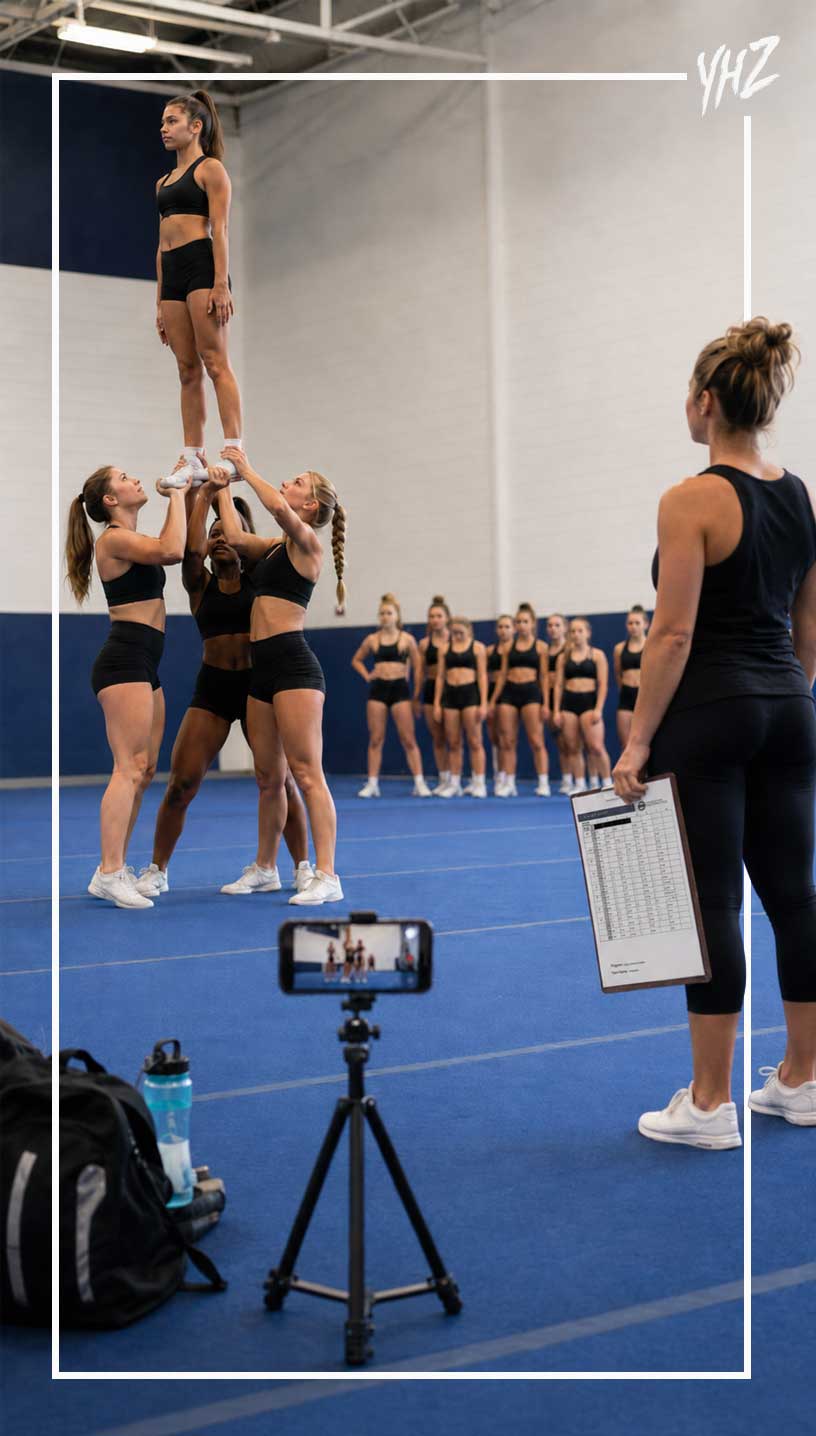
cheerleading practice plan

A skill that hits once in practice is not ready. A stunt that works only with one perfect group is not ready. A tumbling pass that lands when the athlete feels good but disappears under pressure is not ready. A pyramid section that needs five coach saves before it works is not ready. Summer is when coaches should find that out. Too many routines get choreographed around hope. Hope is fine in a team meeting.  It’s not a routine strategy.

Why coaches overestimate summer skills

Coaches usually do not overestimate their teams because they are careless. They do it because cheer makes almost-finished skills look tempting.

A stunt that hits three times in a row can feel routine-ready. Then the group loses it when they add counts, music, formations, fatigue, and pressure. A tumbler who lands a pass on a dead mat can look ready. Then the pass changes when the athlete has to wait through a transition, run from a new corner, and perform after jumps.

A flyer may hit a body position during drills. Then the same body position falls apart inside a full sequence with choreography before and after it. That’s normal…practice skills and routine skills are not the same thing. A summer skills audit closes that gap. It asks athletes to prove the skill in conditions that look more like the routine.

The 8-out-of-10 rule

A clean routine needs skills that repeat. For most teams, a useful standard is simple: if a skill does not hit cleanly at least 8 out of 10 times in practice, it should not be locked into choreography yet. That doesn’t mean the team stops training it. It means the coach treats it as an upgrade, not a foundation.

Use 3 categories:

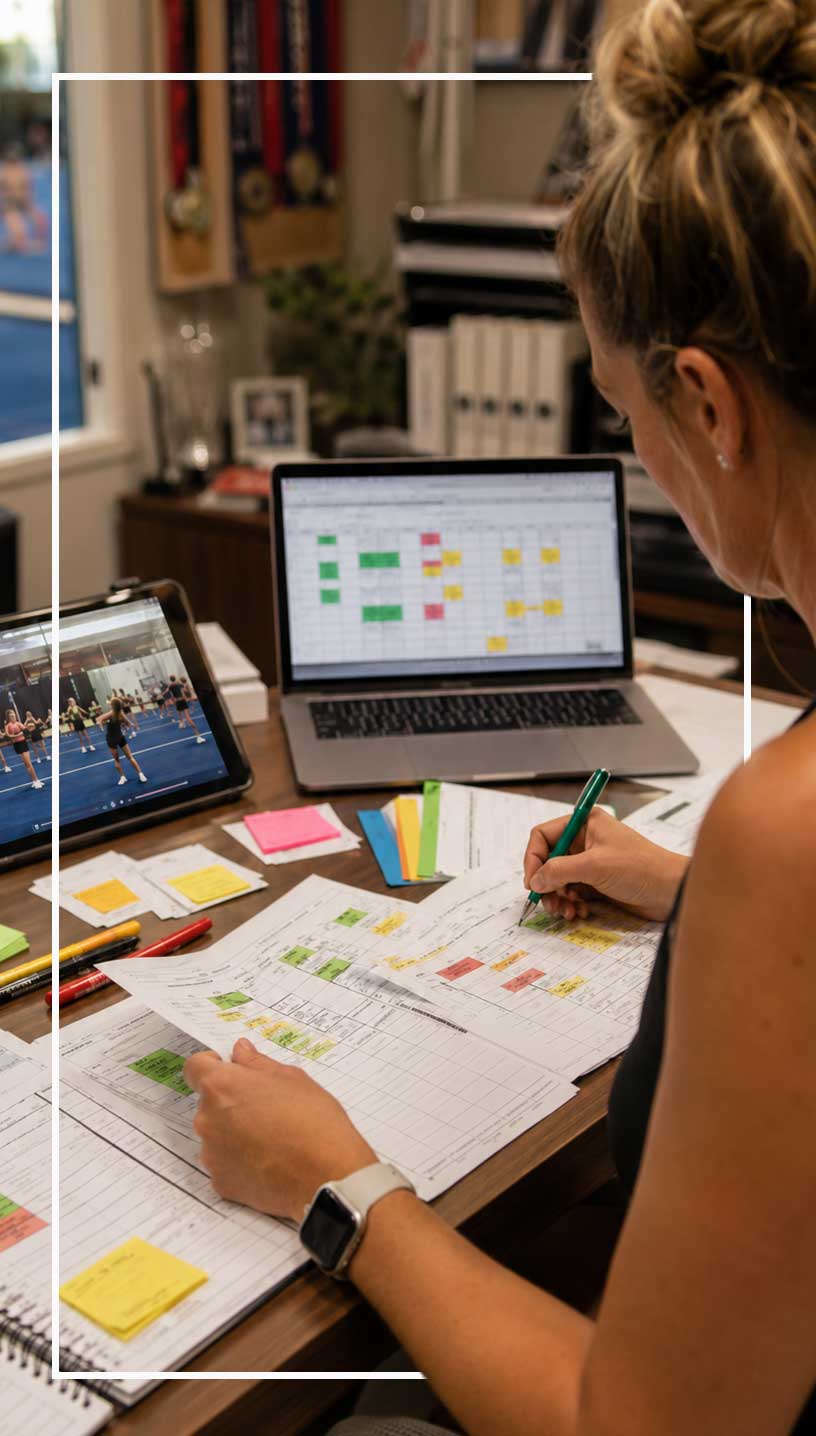
Green skills are ready. They hit most of the time. Athletes understand the timing. Coaches do not have to stop practice every time the skill appears. The skill can handle counts, music, and pressure.

Yellow skills are close. They hit sometimes, but they still need help. Timing changes. Technique slips. Groups need extra resets. These skills may work in a routine if the coach builds a backup plan.

Red skills are not ready. They miss too often, need heavy spotting, create safety concerns, or only work when conditions are perfect. Red skills belong in training, not choreography.

The categories should stay flexible. A yellow skill can become green. A green skill can become yellow when the team adds movement or music. The audit is not a one-day verdict. It is a way to keep the routine honest.

Need Competition Music Blue 1

Audit stunts first

Stunts deserve the first audit because they take the most time to fix after choreography. A shaky stunt section does not stay isolated. It affects formations, transitions, pyramid timing, music pacing, athlete confidence, and the rest of practice. If a coach builds the routine around stunt skills that are not ready, the team spends the whole season chasing the routine instead of cleaning it.

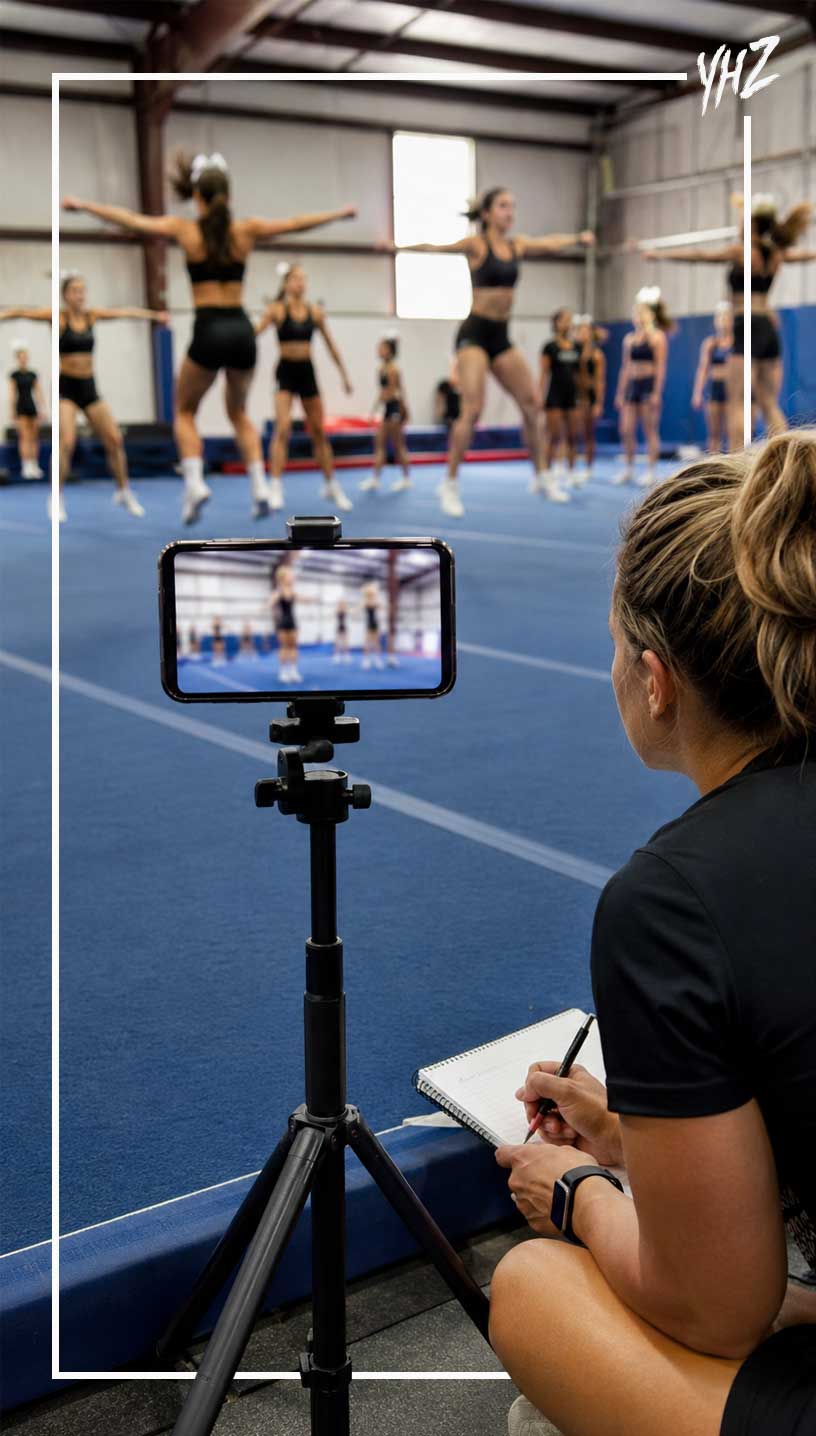
Start with each stunt group by itself. Ask the group to perform the skill ten times. Track clean hits, shaky hits, missed grips, late dips, unstable body positions, rough dismounts, and coach saves. Don’t count a skill as clean just because nobody fell.

A clean hit should look controlled. The flyer should show the intended body position. Bases should stay under the stunt. The back spot should not rescue every rep. The dismount should land safely. Athletes should know where they go next.

Then test the skill in motion. Add the entrance. Add counts. Add the transition before it. Add the transition after it. Add nearby groups. Add music when possible.

This is where the truth usually shows up. A stunt that looks good in isolation may not survive the routine. That does not make the skill useless. It tells the coach where the skill belongs.

Maybe it stays in training. Maybe it moves later in the routine. Maybe it gets simplified. Maybe only one group performs it. Maybe it becomes an upgrade after the first competition. That decision is easier in July than October.
summer skills audit

Do not let one strong stunt group trick you

One strong group can make a team look more advanced than it is. That group hits the elite skill. Everyone gets excited. The routine gets built around that level of difficulty. Then the other groups spend months trying to catch up.

This is a bad trade.

Competition routines are judged as full-team products. If one group looks great and two groups fight for survival, the routine does not look strong. It looks uneven. The summer skills audit should judge the team, not the best group.

If only one group can hit the skill, the coach has a choice to make. Feature that group intentionally, or choose a skill the full section can hit. Both choices can work. Pretending the whole team owns the skill does not work.

A clean stunt section with slightly lower difficulty will usually age better than a high-difficulty section that scares everyone in the gym.

Audit tumbling under routine conditions

Tumbling is another place where coaches overcount skills.

An athlete may have a pass. That does not mean the pass belongs in the routine.

Test tumbling in the way the routine will use it. If the athlete has to run from a corner, test that corner. If the pass comes after jumps, test it after jumps. If the pass comes after a long transition, test it after movement. If the athlete has to wait on music, test the timing.

A tumbling pass should not count as routine-ready until the athlete can land it with the same setup they will use in the routine.

Coaches should also separate technical readiness from performance readiness.

A pass may be legal and land safely, but still look messy. Bent legs, low chest, uncontrolled rebounds, and scary landings can hurt the routine. They can also make the athlete less confident over time.

Some passes need more training. Some need a different placement. Some need to come out until the athlete can hit them without the whole section holding its breath.

That is not negative coaching. That is good routine design.

Audit jumps without lying to yourself

Jumps often get treated as a small section. They should not.

A weak jump section can make a polished routine look unfinished fast. Bent knees, low height, loose arms, bad timing, and messy landings are easy to see. Judges do not need replay to notice them.

A summer jump audit should test three things: technique, timing, and recovery. Technique asks whether the jumps have the shape the coach wants. Timing asks whether the team can hit together. Recovery asks whether athletes can land and move into the next skill without falling apart.

That last part matters. Many jump sections look acceptable until the team has to tumble, transition, or stunt immediately after. If the jumps drain the athletes so much that the next section suffers, the coach needs to know that now.

Do not build the jump section around the one athlete with great flexibility. Build it around what the team can hit together. Clean, synchronized jumps usually beat ambitious jump combinations that land like popcorn.
cheer routine planning

Audit pyramids in pieces

Pyramids can fool coaches because small pieces may work even when the full structure is not ready. Start with the parts.

Can each group hit its job? Can the bracers stay connected? Can flyers maintain body positions? Can bases move safely? Can the team hit the timing without a coach talking them through every count? Then connect the pieces.

This is where pyramid problems usually appear. Groups that hit alone may not travel well. Bracers may arrive late. Flyers may look unsure. Transitions may take more counts than expected. The pyramid may technically hit, but the visual may not read from the front.

The audit should include a front-view check. Record the pyramid from the judges’ angle and watch it without sound. If the visual does not make sense on video, music will not fix it. Pyramid difficulty should serve the routine. It should not become a maze the team barely survives.

Audit transitions like skills

Transitions are skills. Coaches do not always treat them that way, but they should.

A transition needs timing, spacing, body control, traffic awareness, and performance quality. Bad transitions make strong skills look worse. They also create avoidable stress for athletes.

During the summer audit, coaches should identify the athletes who struggle with spacing, speed, direction changes, and formation responsibility. That information should shape choreography.

Some teams can handle fast, layered transitions. Some teams need cleaner pathways and simpler movement. Some teams need extra counts because they have younger athletes, mixed experience levels, or big formation changes. That does not mean the routine has to feel slow. It means the routine has to move in a way the team can execute.

A coach who ignores transition skill level will end up cleaning the same traffic problems all season.

Film everything

Video makes the audit harder to argue with.

Athletes often feel like a skill hit because they survived it. Coaches may remember the best rep because it was exciting. Parents may hear that a skill is close and assume it should go in the routine.

Film solves a lot of that.

Record stunt reps, tumbling passes, jump sections, pyramid pieces, and short routine-style sequences. Watch them from the front. Watch them without stopping after the first hit. Watch the misses too.

The camera shows what the judges will see.

It also helps coaches spot patterns. Maybe a stunt group misses every time the flyer rushes the body position. Maybe a tumbler changes technique when tired. Maybe the jump timing problem starts with the arms, not the legs. Maybe the transition looks messy because two athletes cross the same lane.

Those details are easy to miss live.

A summer skills audit does not need fancy software. A phone camera and honest eyes are enough.

summer skills audit

Create a no-drama scoring system

A skills audit can get emotional if athletes think every result is a judgment of their worth. Keep the language clean.

Do not label athletes as good or bad. Label skills as ready, close, or still training. That distinction matters.

A flyer is not a problem because one body position is inconsistent. A base is not a failure because one grip needs work. A tumbler is not behind as a person because one pass is not routine-ready.

The audit should help athletes see the path forward.

Use simple notes:

Ready for routine
Needs more reps
Needs technique fix
Needs safer version
Use only in featured spot
Train as upgrade
Do not use yet

That kind of language gives coaches useful information without turning the audit into a public ranking.

Build the routine with a base version and upgrades

The smartest coaches do not choose between easy and hard. They build layers.

Start with a base routine the team can hit. Then plan upgrades that can replace sections when the team earns them.

For example, a stunt group may start with a cleaner prep-level body position, while training the extended version as an upgrade. A tumbling section may start with the passes athletes can land under pressure, while keeping harder passes ready for later. A pyramid may use a safer connection first, then add a harder visual once timing improves. This approach gives the team confidence early.

It also keeps the routine from becoming stale. Athletes can work toward upgrades without feeling like the first version is a failure. The base version should still look intentional. It should not look like a watered-down placeholder. It should be choreographed to score as cleanly as possible.

If the upgrade never becomes safe or consistent, the team still has a routine. That is the point.

Set deadlines for routine decisions

A skill cannot stay “almost ready” forever. Coaches need decision deadlines. Without them, the team keeps waiting for skills that may not arrive in time.

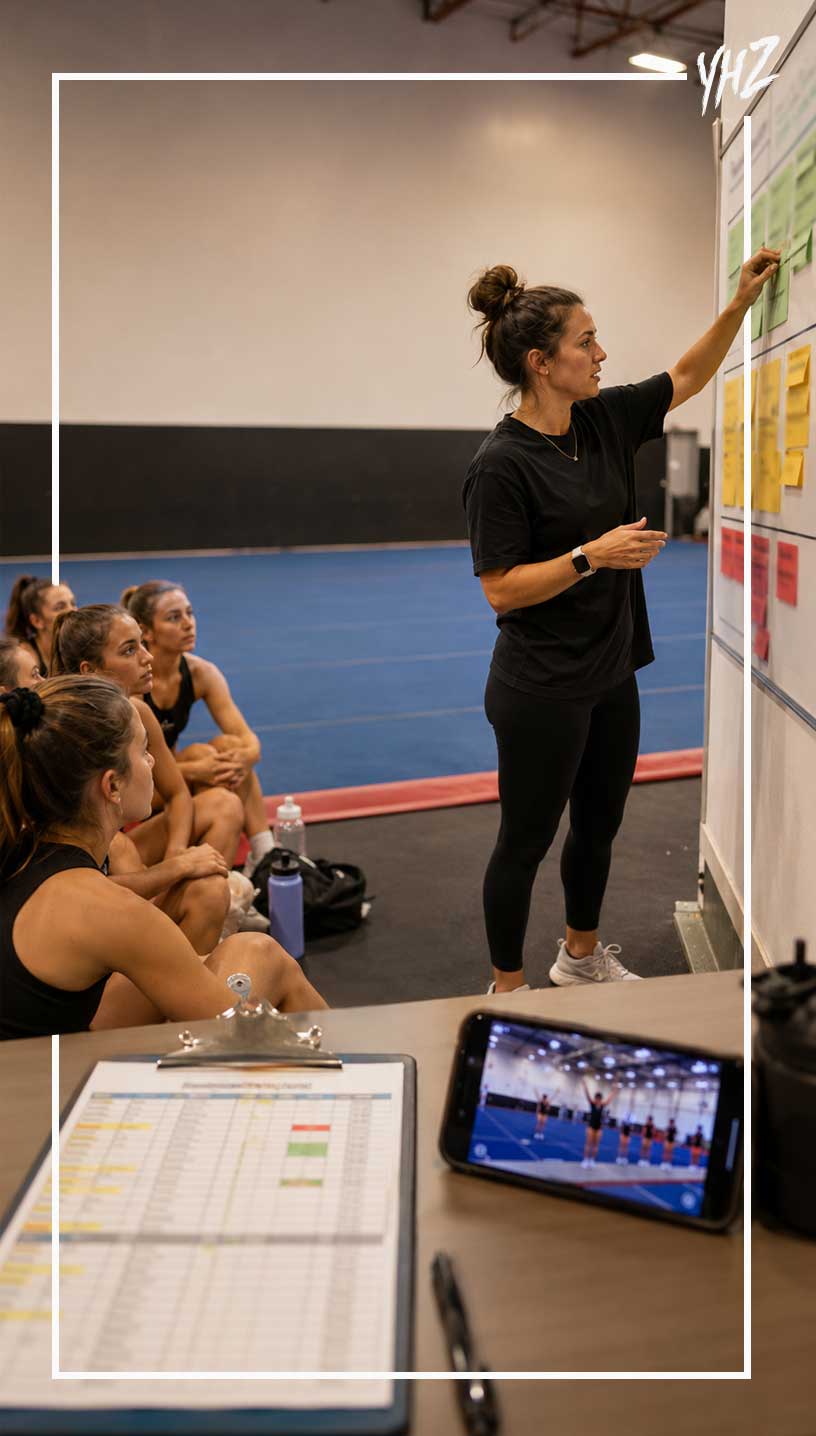
Set a date before choreography when each major skill must prove itself. Set another date after choreography for upgrades. Set a final date before the first competition when the coach stops adding risk and starts cleaning.

The exact timeline depends on the program, but the principle stays the same. At some point, a skill either belongs in the routine or it does not. This protects the team. It also protects practice time.

A team that changes major routine sections too late loses cleaning reps. Athletes get nervous. Coaches get frustrated. Music edits pile up. The routine starts to feel temporary. Temporary routines do not perform with confidence.
cheerleading tumbling audit

Watch for the “one more week” trap

“Give it one more week” can become a season-long habit. Sometimes one more week makes sense. A group may need reps. An athlete may be coming back from vacation. A stunt may need one technical fix. But coaches should ask what will actually change in that week.

Will the team get more reps with the full group present? Will a coach fix a specific technique problem? Will the athlete get private tumbling work? Will the group drill the entry that keeps breaking?

If the answer is no, one more week may only delay the decision. Hope is not a training plan.

When a skill stays inconsistent after repeated chances, the coach should move it out of the routine and keep training it separately. That choice may feel disappointing in the moment. It usually saves the routine later.

Match skills to the team’s identity

The summer audit should not only ask what the team can do. It should ask what the team can sell.

Some teams are explosive. Some are sharp and clean. Some have strong stunt technique. Some have big personalities. Some have excellent dancers. Some have powerful tumbling but need simpler transitions. Some have young athletes who perform better when the routine is clear and confident. The routine should fit that reality.

Do not build a routine that hides the team’s best qualities because everyone is chasing difficulty. Use the audit to find what the team can own.

If the team has strong jumps, give the jump section a real moment.

If the team has one standout tumbler, feature that pass without forcing everyone else into skills they cannot match.

If the team performs well, give them music and choreography that let them connect with the crowd.

If the team has clean stunts, do not bury them inside overcomplicated transitions.

A good routine makes the team look more like itself. A bad routine makes the team look like it is pretending.

Use the audit to guide music and count sheets

The skills audit should feed directly into the count sheet.

If the team needs extra time for stunt setups, the count sheet should show that. If a transition needs more room, plan the counts before the music gets built. If the pyramid has one major visual, make sure the music supports that moment. If jumps need a clean recovery before tumbling, do not cram the next section too close.

Music cannot solve a routine that ignores skill readiness. A producer can help with pacing, energy, voiceovers, sound effects, and section changes. But the coach has to know what the team can actually execute.

The audit gives the music producer better information. It also helps the choreographer make smarter choices. This is where planning pays off. The routine feels less forced because the counts, skills, and music all come from the same honest picture of the team.

What to do when parents push for harder skills

Parents hear what their athlete says. Athletes often say the skill is close. That can create pressure.

A parent may ask why a stunt is not in the routine. An athlete may say they hit it at practice. Another parent may compare the team to a rival program. Someone may post a video of one successful rep and wonder why the coach will not use it. This is where the audit helps.

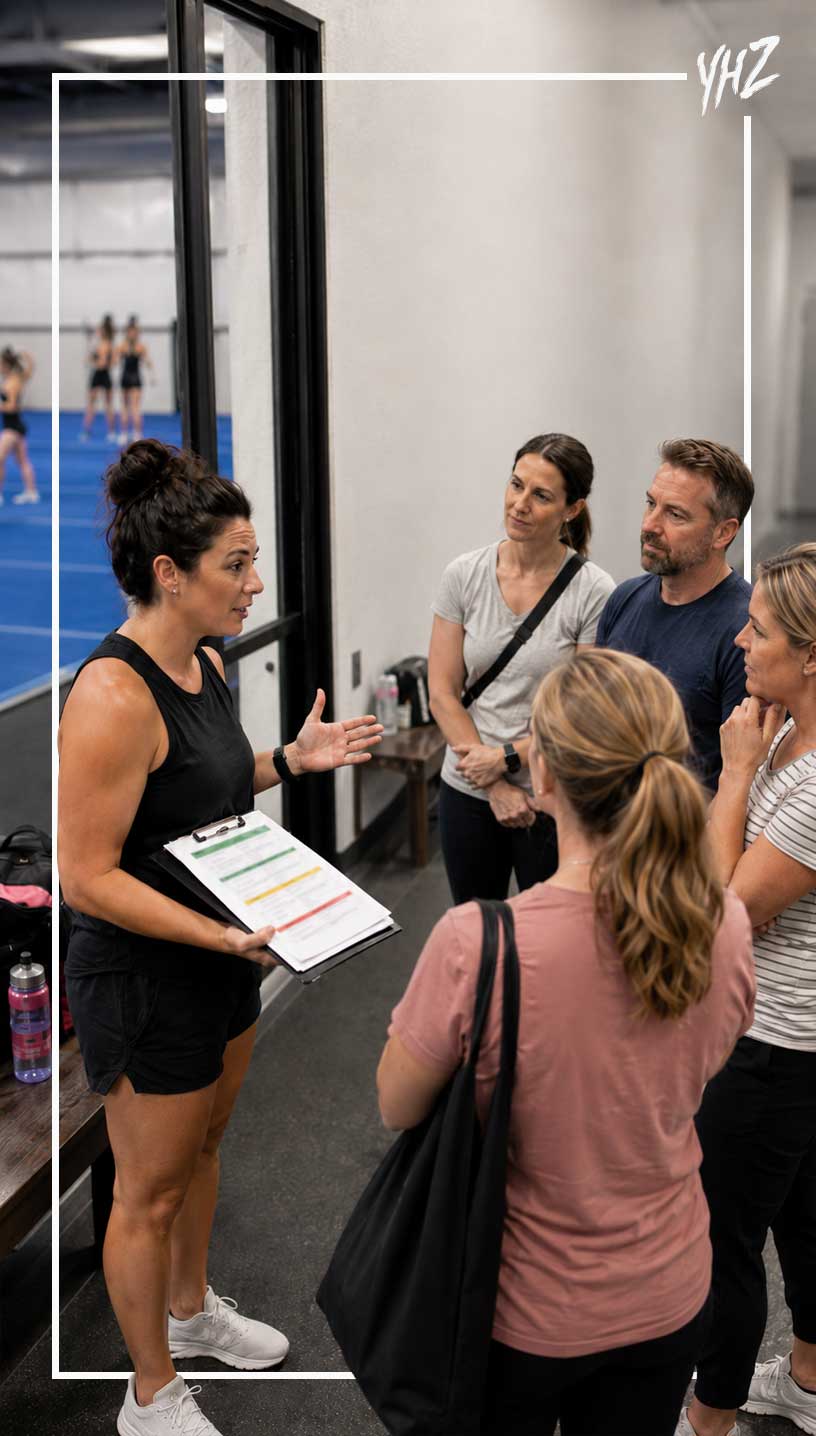
The coach can explain that routine decisions come from consistency, safety, and full-team execution. One hit does not decide choreography. Ten reps tell a better story. Routine conditions tell an even better one. Keep the message simple.

The team will train upgrades. The routine will use the skills that give the team the best chance to hit. The goal is not to avoid difficulty. The goal is to earn it.

Most parents can understand that when the coach explains it before emotions take over.

A sample summer skills audit plan

Coaches can run a basic audit in one or two practices. Start with stunts. Test the main skills each group wants to use. Track clean hits out of ten. Add entries and exits after the first round.

Move to tumbling. Test standing tumbling and running tumbling from routine-style setups. Record landings, timing, and consistency.
cheer tumbling readiness

Run jumps as a group. Check height, timing, arm placement, landings, and recovery into the next section. Break down pyramid pieces. Test each group, then connect sections. Film from the front.

Finish with transitions. Give athletes formation changes and watch spacing, speed, and confusion points. After practice, sort the results into green, yellow, and red.

Then make routine decisions from that list.

Green skills can go into the first choreography plan.

Yellow skills need backup versions.

Red skills stay in training until they prove they are ready.

The audit does not need to be complicated. It needs to be honest.

The coach’s real job

Cheer coaches live between ambition and reality. Push too little, and the team never grows. Push too much, and the routine becomes a weekly emergency.

The summer skills audit helps coaches find the middle. It gives athletes room to improve without letting unfinished skills take over the routine. It helps choreographers build around truth. It helps music producers support the routine instead of guessing. It helps parents understand why consistency matters more than one good video.

Most of all, it protects the team from spending the season chasing a version of itself that only exists in the coach’s imagination.

Build for the team in front of you.

Train for the team they can become.

Those are different jobs. Good coaches know when they are doing each one.

Steve Pawlyk Signature Full

IPP's Premade Mixes are USA Cheer Compliant and customizable!  Add Sound FX, swap songs, & more!  Add your Team Name to the mix for only $10! 

SLAM artwork
Full_Out_130 mp3 image
1 minute cheer mix
WAKE UP THE FIRE
SLAM artwork
WAKE UP THE FIRE
Full_Out_130 mp3 image
1 minute cheer mix

7 Routine Trends That Dominated Cheerleading Worlds 2026

cheerleading worlds 2026 routine trends

By Steve Pawlyk

Published June 23, 2026

Every coach watches Worlds looking for something to bring home: a stunt entry, a pyramid idea, a transition, a music moment, a dance section that makes the crowd lose it.

But Cheerleading Worlds 2026 told a bigger story than one new skill or one viral clip. The best teams in Orlando did not win because they crammed the most difficulty into two and a half minutes. They won because they made smart routine choices, protected their score, and gave judges a clear reason to reward every section.

The lesson from Worlds 2026 was not “go harder.” The lesson was “build smarter.”

From Top Gun TGLC winning Senior Large Coed again, to Cheer Extreme Senior Elite defending Large Senior, to The California All Stars Lady Bullets controlling Senior XSmall, the routines that stood out had more than difficulty. They had identity, structure, pacing, and discipline.

Here are the seven routine trends coaches should take from Cheerleading Worlds 2026:

all star cheer routines

1. Deductions Decided the Story

The cleanest lesson from Worlds 2026 came straight from the score sheet.

Difficulty mattered. It always matters.

But deduction control separated champions from runners-up.

Look at L6 Senior Medium Coed. Spirit of Texas Royalty posted the highest raw score in the division with a 163.4. That should put a team in position to win. But four points in deductions dropped Royalty to a 159.4 final event score. Top Gun All Stars Savannah Legends scored a 162.3 raw score, took only one point in deductions, and won the division with a 161.3.

That is not a small detail.

That is the entire division.

Senior Large told the same story. Central Jersey All Stars Bombshells outscored The Stingray Allstars Orange in raw score, 151.65 to 149.45. But Bombshells took three points in deductions. Orange took zero. Orange finished second. Bombshells finished third.

Coaches love talking about upgrades. Worlds 2026 gave everyone a reminder that an upgrade only helps if the team can hit it when the lights are brightest.

A harder elite stunt that falls does not make your routine more competitive, it makes your math worse.

What This Means for Your Routine

Before adding difficulty, ask one brutal question: Can this team hit this skill three times under pressure?

Not once in a great practice. Not once when everyone feels fresh.

Three times. Under pressure. With fatigue. With nerves. With the season on the line. If the answer is no, the skill may belong in the gym longer.

2. Zero-Deduction Routines Became the Biggest Flex

A zero-deduction routine at Worlds says more than “we hit.” It says the coaches chose the right skills, trained the right details, and built a routine athletes could handle when everything got loud. Plenty of major 2026 champions made that point.

Top Gun TGLC won L6 Senior Large Coed with a 166.1 and zero deductions. Prodigy All Stars Midnight won L6 Senior Small Coed with a 164.15 and zero deductions. Cheer Extreme Raleigh SSX won L6 Senior Small with a 163.25 and zero deductions. The California All Stars Lady Bullets won L6 Senior Extra Small with a 162.4 and zero deductions.

Those teams did not water down their routines. They made elite difficulty look stable. That difference matters.

Worlds-level judges do not reward survival. They reward control. They reward body positions that finish. They reward groups that move together. They reward tumbling that lands with confidence instead of panic. They reward routines that look like the team owns every skill.

The best routines at Worlds 2026 did not feel like athletes were hanging on. They felt trained.

What This Means for Your Routine

Clean is not boring. Clean is expensive. It takes time, reps, honest coaching, and the discipline to remove skills that only hit when everything goes perfectly. A routine that hits clean in April starts with smart decisions in summer.

Need Competition Music Blue 1

3. Program Identity Mattered More Than One Surprise Skill

The teams that people remembered had a point of view. You could feel it before awards.

Top Gun did not bring one team to Orlando with one style. The program brought different versions of the same confidence. TGLC won Senior Large Coed. Lady Jags won Senior Medium. Legends won Senior Medium Coed. Double O won International Open Large Coed Level 6. Toxic won International Open Small Coed Level 7.

Those routines did not look identical. They felt connected. That is program identity.

Cheer Extreme gave the same lesson in a different way. Courtney Smith’s Kernersville side had Senior Elite back on top in Large Senior. Kelly Helton’s Raleigh side had SSX winning Senior Small and Code Black winning International Open Coed Non-Tumbling Level 6.

Different teams. Different divisions. Same clear standard.

That matters because judges and fans can feel when a program knows exactly who it is. The routine has a tone. The athletes perform with confidence. The choreography matches the team. The music does not feel pasted on. The routine does not chase every trend at once. It commits.

What This Means for Your Routine

Your routine should not look like a highlight reel from five other gyms. Take inspiration from Worlds, but do not copy blindly.

Build around your team’s strengths, your program’s personality, and the athletes standing in front of you. A routine with a clear identity will always feel more confident than one built from random “cool parts.”

4. The Best Routines Used Pacing Like a Weapon

Worlds routines can get messy fast.

Everyone wants a big opening. Everyone wants an elite stunt. Everyone wants a basket moment. Everyone wants tumbling. Everyone wants a pyramid people remember.

The problem comes when a routine tries to scream for two and a half minutes.

The best Worlds 2026 routines understood pacing.

They gave the audience and judges a reason to keep watching. They built from section to section. They created rises and releases. They did not treat transitions as dead space. They used choreography to set up skills instead of simply filling time between them.

That is why routines like TGLC, Senior Elite, Orange, Lady Jags, Royalty, Legends, Peach, Midnight, Black Ops, and Double O kept showing up in fan conversations and replay lists. Those teams did not only perform skills. They managed attention.

That is a massive coaching skill.

A routine should not feel like a playlist of unrelated moments. It should feel like one idea that keeps developing.

cheerleading routine trends

What This Means for Your Routine

Watch your routine without music. If the structure still makes sense, you probably built something solid. If the routine only feels exciting because the music covers awkward transitions, you have work to do.

Transitions should move the story forward. They should set up formations, create visual interest, and help the next section arrive with purpose.

5. Crowd Favorites Had More Than Difficulty

Crowd reaction does not determine the score, but it tells coaches something useful.

The routines people replay after Worlds usually have a clear identity, strong pacing, and at least one moment fans want to see again. FloCheer’s most-watched Worlds 2026 list made that obvious. The Stingray Allstars Orange finished second in Senior Large, but ranked first among the most-watched routines. Spirit of Texas Royalty finished second in Senior Medium Coed, but ranked third on that replay list. Top Gun Lady Jags, Senior Elite, Legends, Peach, Midnight, TGLC, Black Ops, and Double O all landed in the top ten.

That list matters because it shows the difference between scoring well and being remembered. Coaches should care about both.

A routine does not need gimmicks to be memorable. It needs moments that feel earned. A stunt sequence that builds tension. A pyramid that resolves cleanly. A dance that matches the team’s personality. A music change that lands at the exact right second. A formation that makes the floor feel full.

The audience reacts when the routine gives them a reason.

What This Means for Your Routine

Do not add “performance value” as decoration at the end; build it into the routine from the start.

Performance value comes from confidence, pacing, musicality, formations, and athletes who know what the moment means. If your team only performs during dance, the routine will feel flat everywhere else.

6. International Programs Are No Longer Chasing From Far Behind

The international divisions made one thing clear: the gap keeps shrinking.

Unity Allstars Ruby from England won International Open Level 6 with a zero-deduction 132.05. Cheer Sport Sharks Ottawa Silky Sharks from Canada won International Open Non-Tumbling Level 6 with a zero-deduction 125.9. TR Cheer Beast from Canada won International Open Small Coed Level 5 with a zero-deduction 133.85. ACE Athletics Rouge from Canada won International Open Large Coed Level 5 with a zero-deduction 137.05. Then you had Barcelona Bears Legacy from Spain winning International Open Coed Non-Tumbling Level 7 with a zero-deduction 132.15.

That is not “international teams are improving” as a polite throwaway line, that is international programs winning divisions, hitting zero, and forcing everyone else to match their standard. The depth showed up across the results too. Canada, England, Australia, Germany, Japan, Mexico, Chile, Puerto Rico, Wales, Spain, Sweden, Ireland, and other countries appeared throughout Finals and Semi-Finals. Worlds has always been international by name, but in 2026, it felt international by competitive reality.

What This Means for Your Routine

Stop treating international teams as side stories. If you coach in the United States, the standard is no longer local, regional, or even national. The standard is global.

If you coach outside the United States, Worlds 2026 should give your athletes proof that the door is open. Programs from outside the U.S. are not just showing up. They are winning, globing, and hitting routines that belong on the biggest stage.

Worlds cheerleading results 2026

7. The Small Details Moved Teams Up the Rankings

Every coach says details matter. Worlds 2026 proved it.

Small details turned into placements. A cleaner landing. A sharper motion. A controlled body position. A stunt group that finishes together. A transition that does not waste counts. A pyramid that hits the picture without wobble.

These details do not always make the highlight clip, but they make the score sheet. The Senior Small Coed division gave coaches a perfect example. Prodigy Midnight, Brandon Senior Black, and CALI SMOED finished first, second, and third. All three hit zero-deduction routines. At that point, the division turned into a battle of execution quality, routine construction, and who could create the most complete performance without giving anything back.

That is Worlds. At lower levels, teams can sometimes survive messy details because the difficulty gap creates separation. At Worlds, every detail has a cost.

What This Means for Your Routine

Film everything. Not just full-outs. Film stunt reps. Film transitions. Film jumps. Film pyramid timing. Film athletes walking into formations. Film what happens after a skill hits. Then watch without making excuses.

If motions finish late, fix them. If groups dip at different times, fix them. If athletes travel through transitions without purpose, fix them. If your pyramid picture takes too long to settle, fix it. The fastest way to improve your routine may not be adding a skill. It may be cleaning the five seconds before the skill.

Cheerleading Worlds 2026 did not reward chaos; it rewarded control.

The champions and fan favorites had difficulty, but they also had restraint. They knew what their athletes could hit. They protected the score sheet. They built routines with identity. They gave each section a job. They created moments without letting performance value turn into clutter.

That is the real trend. Not one stunt. Not one pyramid. Not one dance move.

The best routines at Worlds 2026 looked intentional from the first count to the final pose. That should be the goal for every coach planning a new season.

Build a routine your athletes can hit. Give it a clear identity. Train the details until they look automatic. Then clean it again.

Worlds did not prove that safe routines win, it proved that smart routines win..and there’s a difference.

Steve Pawlyk Signature Full

IPP's Premade Mixes are USA Cheer Compliant and customizable!  Add Sound FX, swap songs, & more!  Add your Team Name to the mix for only $10! 

SLAM artwork
Full_Out_130 mp3 image
1 minute cheer mix
WAKE UP THE FIRE
SLAM artwork
WAKE UP THE FIRE
Full_Out_130 mp3 image
1 minute cheer mix

Guide to Syncing your Cheer Music with your Choreography: Tips for Cheer Coaches

By Steve Pawlyk

Published November 2, 2023

Music and choreography go hand in hand like peanut butter and jelly. However, seamlessly integrating the two can be a daunting task for many cheer coaches. So, what are the key elements to consider while aligning cheer music with choreography? How can one make the most of every beat, lyric, and musical transition? This comprehensive guide aims to answer these questions and more, making your life as a cheer coach just a little bit easier.

Understanding the Basics of Cheer Music: The Four Pillars

Mastering the art of synchronizing cheer music with choreography begins with understanding the underlying structure and nuances of the music itself. As a cheer coach, being well-versed in these fundamentals can significantly elevate your team’s performance. Let’s break down these core aspects one by one.

Musical Structure: The Backbone of Your Routine

In a typical cheer mix, you’ll usually find the following sections:

  • Intro: This section sets the tone for your entire performance. You can think of it as a hook that grabs the audience’s attention. Choreography in this section should be compelling but not give everything away just yet.
  • Cheer: This is the heart of your routine where you can incorporate most of your stunts, tumbles, and jumps. It’s the high-energy section that showcases your team’s athleticism and skill.
  • Dance: Here’s where you get to show off your team’s creativity and synchronization. Dance sections usually allow for artistic expression, so don’t shy away from experimenting with formations and styles.
  • Outro: This is your last impression on the judges and audience, so make it count. A well-thought-out outro can tie your entire performance together and leave a lasting impact.
Need Competition Music Blue 1

Understanding these sections helps in mapping out your choreography in a structured manner, ensuring that you maximize the impact of each part of your routine.

Beats and Counts: The Language of Precision

8-counts are to cheerleading what alphabets are to language. These are the building blocks that will guide your choreography. In an 8-count structure, each count corresponds to a particular movement, position, or transition.

  • Syncing with Music: Always ensure that your 8-count sheets are perfectly in sync with the music. For instance, a high-flying stunt could coincide with a climactic musical note for added dramatic effect.
  • Uniformity: Consistency in counts ensures that the entire team moves as a single unit. Even a half-count off can be noticeable and cost you valuable points.

Lyrics and Voiceovers: The Signposts of Your Routine

Customized cheer music often includes personalized lyrics and voiceovers that can serve as auditory cues for your team. For example, if your team name or a specific word is echoed, that could signal the beginning of a new formation or stunt.

  • Internal Cues: These voiceovers can serve as internal cues for your team, keeping everyone on track during the routine.
  • Audience Engagement: Clever use of voiceovers can also engage the audience and get them excited, especially if they’re designed to be interactive or catchy.

Genre and Mood: Matching the Vibe of Your Team

The genre and mood of the music should mirror the essence of your team and the message you want to convey. If your team excels in powerful, high-energy routines, a fast-paced pop or electronic song could be ideal. Alternatively, if your routine has a storyline or a thematic element, a slower, more dramatic piece might be more suitable.

RELATED ARTICLES

The Do’s and Don’ts of the 8-Count Sheet

Learn how to effortlessly create, fill out, and complete an 8-Count Sheet for a winning [Read More...]

How to Match Cheer Music with Your Team’s Skill Level

Discover how to elevate your cheerleading routine by matching the perfect IPP Music mix to [Read More...]

Choosing the Right Theme with Our Premade Cheer Music Mixes: Elevate Your Team’s Routine

Explore the power of themed premade cheer music mixes to elevate your team's routine, with [Read More...]

  • Audience Resonance: Choose a genre that not only suits your team but also resonates with your target audience. Sometimes, familiarity with the genre can evoke emotional engagement, adding another layer of impact to your performance.
  • Mood Transitions: If your routine includes different moods or narratives, consider using a multi-genre mix that transitions smoothly to tell your story effectively.

By mastering these four pillars of cheer music—Musical Structure, Beats and Counts, Lyrics and Voiceovers, and Genre and Mood—you’ll be well-equipped to design a routine that’s not just synchronized but also sensational.

Know Your Team’s Skill Level

Evaluating your team’s skill level is paramount when syncing music with choreography. Here’s how to go about it:

  • Identify Strengths and Weaknesses: Is your team excellent at tumbles but not so great at stunts? Use this information to highlight their strengths in the routine.
  • Complexity vs Simplicity: For novice teams, sticking to simpler choreography and musical elements is advised. Advanced teams can experiment with complex transitions and tricks.
  • Customization: Many services, like IPP Music, offer customized cheer music tailored to your team’s capabilities, ensuring a perfect match between music and moves.

Choosing the Right Tempo

A significant aspect to consider is the tempo of your cheer music. This will highly influence the pace and energy of your choreography.

  • Fast Tempo: Ideal for routines that require high energy and rapid movements.
  • Medium Tempo: Great for a balanced routine with a mix of stunts, jumps, and dance elements.
  • Slow Tempo: Suitable for dramatic, story-telling routines with intricate moves and stunts.

Mapping Out Your Routine

Once you have the basics down, you’ll want to start mapping out your routine, including:

  • Sequence Planning: Decide the order in which elements like tumbles, jumps, and stunts will appear in your routine.
  • Transitions: Plan transitions carefully. Good transitions are as important as the stunts or tumbles themselves.
  • Musical Cues: Make use of the built-in cues in your music to signal the start or end of specific elements.

Key Choreography Tips

  • Musicality: Aim to make your moves flow naturally with the music. Each beat, rhythm, and lyric should have a corresponding move or emotion.
  • Timing: Ensure that your team can execute moves within the timeframe of the music segments. Practicing with a metronome can be beneficial.
  • Variety: Add a mix of elements to keep the audience engaged. Variety is the spice of a winning routine!

How to Practice Effectively

Effective practice is the key to a flawless performance. Here are some tips:

  • Start Slow: Begin by practicing individual elements separately before combining them.
  • Record and Review: Record your practice sessions to identify areas of improvement.
  • Repetition: Consistency is key. The more your team practices, the more muscle memory they’ll build, making it easier to sync with the music.

Integrating cheer music and choreography is not just an art but also a science that requires meticulous planning and practice. By understanding the basics of cheer music, assessing your team’s skill level, choosing an appropriate tempo, and employing smart choreography tips, you can create a performance that is not just synchronized but also sensational.

I hope this guide has been helpful in answering some of the common questions cheer coaches have regarding cheer music and choreography. For customized cheer music to match your choreography needs, consider IPP Music  :)

Steve Pawlyk Signature Full

IPP's Premade Mixes are USA Cheer Compliant and customizable!  Add Sound FX, swap songs, & more!  Add your Team Name to the mix for only $10! 

SLAM artwork
Full_Out_130 mp3 image
1 minute cheer mix
WAKE UP THE FIRE
SLAM artwork
WAKE UP THE FIRE
Full_Out_130 mp3 image
1 minute cheer mix

The Comprehensive Guide to Stunt Progressions for Cheer Coaches

The Comprehensive Guide to Stunt Progressions for Cheer Coaches

By Steve Pawlyk

Published October 18, 2023

Today we’ll delve into the science of stunting, the psychology of team dynamics, and the art of performance, offering you actionable insights to elevate your squad to unparalleled heights.

Why Stunt Progressions Are Not Just for Rookies

While it’s easy to associate stunt progressions with beginner levels, even the most accomplished teams can benefit from revisiting these foundational building blocks. However, for the advanced team, the approach shouldn’t be repetitive but rather analytical. Here’s why:

  • Risk Mitigation: A nuanced understanding of each progression allows coaches to pinpoint minor, often overlooked errors that could spell disaster in complex stunts.
  • Skill Specialization: Mastering the nuances of each progression enables athletes to specialize in their roles, which in turn significantly improves individual and team performance.
  • Performance Metrics: Leveraging tools like video analysis and biomechanics software allows coaches to optimize each movement, timing, and force, lending a scientific rigor to the art of cheerleading.

The Roles Re-Examined: More than Just Titles

In competitive cheerleading, roles are not just labels but encapsulate specific skill sets, expectations, and responsibilities that each team member must fulfill.

Need Competition Music Blue 1
  • Flyer: At advanced levels, training should include vestibular exercises to improve body awareness, control, and mid-air adjustment skills. Psychological coaching can also be beneficial for managing performance anxiety.
  • Base: Specialized strength training regimes like plyometrics or isometric exercises can hone specific muscle groups that are vital for bases. Additionally, drills focusing on adaptive grip techniques can improve stunt stability.
  • Spotter: Rather than being passive overseers, spotters should engage in active problem-solving during stunts. Communication drills can help them deliver effective, real-time feedback and corrections.

Mastering the Nuances: Beyond Basic Skills

While basic stunts form the foundation of all cheerleading routines, mastering their intricacies can yield exponential performance improvements.

Prep-Level Stunts:

  • Thigh Stand with Core Activation: Incorporating core-engagement techniques can offer more stable thigh stands and can also improve the bases’ ability to adjust and adapt to movement variations from the flyer.

Extension-Level Stunts:

  • Full Extension with Synchronized Breathing: Introduce meditative breathing exercises to help your team focus. Synchronized breathing between the bases and the flyer can add an additional layer of stability and control.

Intermediate Skills: The Untold Tricks

These transitional stunts require a blend of solid foundational skills and advanced techniques, making them critical stepping stones for aspiring champions.

  • Bow and Arrow with Momentum Control: Emphasize the importance of core stability and dynamic balance to control momentum effectively. Advanced squads can also incorporate angular momentum calculations to improve performance.
  • Basket Toss with Aerial Awareness: Introduce visualization and spatial awareness drills that flyers can employ mid-air to adjust their body position for a safer and more precise landing.

Elite Stunt Techniques: The Next Frontier

For squads ready to break barriers and defy gravity, these high-difficulty stunts provide the ultimate test of skill, teamwork, and courage.

  • Rewind with Pre-Lift Cues: Employ auditory or tactile cues to ensure the entire team is mentally and physically prepared to execute a rewind flawlessly.
  • Double Down with Angular Momentum Conservation: Advanced squads can use biomechanical analysis tools to evaluate the optimum rotational speed and body posture for executing a flawless Double Down.

Unseen Pitfalls Even Pros Should Avoid

Even seasoned coaches and elite athletes are susceptible to pitfalls. These are often due to overconfidence or complacency.

  • Overconfidence: Assuming that a mastery of the basics negates the need for revisiting them can be a grave mistake.
  • Technique Stagnation: The world of cheerleading is dynamic and rapidly evolving. Refusing to update and adapt your techniques to new standards and best practices can lead to performance plateaus.

Safety Measures for the Advanced

Even with advanced skills, safety remains paramount. From regular biomechanical assessments to sophisticated technologies like pressure-sensitive mats and motion capture, advanced safety measures are an investment in your team’s longevity and success.

Excellence in cheerleading stunting doesn’t come from mere repetition but from deep, insightful understanding and continuous innovation. This Advanced Guide to Stunt Progressions aims to catalyze your journey towards technical mastery, optimized performance, and world-class excellence.

Steve Pawlyk Signature Full

IPP's Premade Mixes are USA Cheer Compliant and customizable!  Add Sound FX, swap songs, & more!  Add your Team Name to the mix for only $10! 
SLAM artwork
Full_Out_130 mp3 image
1 minute cheer mix
WAKE UP THE FIRE
SLAM artwork
WAKE UP THE FIRE
Full_Out_130 mp3 image
1 minute cheer mix

The Top 5 Video Recording Options for Cheer Coaches: Why Pivo Pod Leads the Pack

Top-5-Video-Recording-Options-for-Cheer-Coaches--Why-Pivo-Pod-Leads-the-Pack

By Steve Pawlyk

Published August 31, 2023

– YouHitZero and IPP Music have no financial interest or obligation to any of the companies or products listed in this article – 

In the dynamic world of cheer, capturing each performance accurately is crucial for both evaluation and improvement. As a cheer coach, finding the right recording tool can make a significant impact on your squad’s success.Today we’re gonna compare the top 5 video recording options available, with Pivo Pod emerging as the frontrunner for forward thinking coaches.

1. Pivo Pod

Key Features:

  • 360-degree Auto Tracking
  • Advanced AI technology
  • Remote control operation
  • Compact and portable

Why It’s Number One:

With its advanced 360-degree rotation and Auto Tracking features, the Pivo Pod offers unparalleled control and flexibility. Its remote control and high-speed tracking capabilities make it an indispensable tool for coaches who need detailed, comprehensive coverage of complex routines.

As a cheer coach, you know that perfecting a routine takes more than just talent; it requires continuous improvement based on accurate performance assessments. This is where the Pivo Pod comes into play. This smart camera mount offers a range of features specifically designed to help athletes — and their coaches — refine every aspect of their performance. Let’s explore how incorporating Pivo Pod into your coaching arsenal can be a real game-changer.

A New Dimension in Training: 360-Degree Rotation

Traditional video methods often fail to capture the full scope of a cheer routine. The Pivo Pod offers 360-degree rotation and automatic zoom, ensuring that you can capture every tumble, jump, and formation from multiple angles. It’s like having an extra set of eyes that can be everywhere at once, giving you unparalleled perspective for reviewing and improving routines.

Meet the Demands of High-Speed Routines

In a sport that values precision and synchronicity, the Pivo Pod keeps pace with your team’s fast movements with its 2x rotation speed and six tracking speeds. You can now record every action without sacrificing video quality, providing invaluable data for post-practice analysis.

Self-Review for Squad Improvement

Pivo Pod doesn’t just record; it enables deep analysis. With the ability to review footage from various angles, you and your athletes can scrutinize each movement for perfection. This makes it easier to pinpoint areas for improvement, be it individual performance or team synchronization.

Stay in the Frame with Advanced Auto-Tracking

While cheer routines involve complex movements and quick changes, the Pivo Pod’s advanced AI and 360 Auto Tracking capabilities ensure that the focus remains on your team. This offers a hands-free coaching experience where you can devote your full attention to the squad, rather than fiddling with camera settings.

Remote Convenience for Seamless Practice

Equipped with a Pivo Remote Control, you can manage all the recording features from up to 50 ft away. This allows you to stay engaged with your team while simultaneously controlling the camera—no need to interrupt practice sessions for tech adjustments.

Portability for Any Training Environment

Whether you’re in a gym, a practice field, or even at a competition venue for a last-minute run-through, the Pivo Pod’s compact size and tripod compatibility make it convenient for any situation.

As cheer coaches, we’re always looking for new tools and methods to elevate our teams to championship levels. The Pivo Pod promises to be a transformative addition to your coaching toolkit. From capturing every intricate detail in 360-degrees to enabling post-practice analytics, it’s an all-in-one solution for modern cheerleading coaching.

Key Takeaways

  • Full-circle filming for comprehensive performance evaluation
  • Speed and tracking options for high-intensity routines
  • Advanced AI technology to keep your team in focus
  • Convenient remote control features for uninterrupted coaching
  • Portability to adapt to different practice environments

If you’re committed to taking your cheerleading team to new heights, the Pivo Pod is a worthy investment. Start leveraging its advanced features today to make your coaching more effective and efficient.

Need Competition Music Blue 1

2. GoPro HERO9 Black

Key Features:

  • Wide-angle lens
  • Water-resistant
  • 5K video resolution
  • Voice-activated control

Why It’s a Contender:

Though the GoPro HERO9 Black is sturdy and offers high-resolution recording, its wide-angle lens can sometimes distort the performance field. Additionally, it lacks the auto-tracking and 360-degree rotation capabilities that make the Pivo Pod stand out.

3. DJI Osmo Pocket

Key Features:

  • Small and lightweight
  • Built-in gimbal for stabilization
  • 4K video quality
  • Single-axis rotation

Limitations:

While the DJI Osmo Pocket is extremely portable and offers smooth footage, its single-axis rotation limits the scope of what you can capture. It lacks the advanced tracking capabilities essential for a sport as dynamic as cheerleading.

4. Canon VIXIA HF R800

Key Features:

  • Optical zoom
  • Image stabilization
  • Touch panel LCD

Limitations:

This camcorder option provides good video quality but requires manual operation or a dedicated cameraperson. It lacks the modern, smart features like auto-tracking and remote control that make capturing cheer routines easier for coaches.

5. Smartphone on a Tripod

Key Features:

  • Convenience
  • Familiarity
  • Cost-effective

Limitations:

Though convenient and straightforward, using a smartphone on a tripod provides limited capabilities. It requires manual zoom and lacks the tracking features that help in capturing intricate movements and formations.

While each of these options has its merits, the Pivo Pod stands out as the most comprehensive and user-friendly solution for cheer coaches. Its smart features like 360-degree Auto Tracking, remote control, and advanced AI technology offer capabilities that go beyond mere recording, making it a powerful tool for performance analysis and improvement.

Key Takeaways

  • Pivo Pod’s 360-degree auto-tracking provides unparalleled recording capabilities.
  • Advanced technology features put Pivo Pod a step ahead of competitors.
  • While other options offer specific benefits, they lack the comprehensive functionality provided by Pivo Pod.

Invest in the Pivo Pod to bring your squad’s performance analysis to the next level. It’s the tool that understands the needs of a cheer coach

Steve Pawlyk Signature Full

IPP's Premade Mixes are USA Cheer Compliant and customizable!  Add Sound FX, swap songs, & more!  Add your Team Name to the mix for only $10! 

SLAM artwork
Full_Out_130 mp3 image
1 minute cheer mix
WAKE UP THE FIRE
SLAM artwork
WAKE UP THE FIRE
Full_Out_130 mp3 image
1 minute cheer mix

Who Makes the Music for Cheerleading Competitions? The Answer is IPP Music!

Who Makes the Music for Cheerleading Competitions? The Answer is IPP Music

By Steve Pawlyk

Published August 14, 2023

When it comes to the high-energy world of cheerleading competitions, music plays an essential role in setting the tone and energizing the crowd. But who is behind the pulsating beats and thrilling melodies that accompany these performances? The answer is none other than IPP Music, the global leader in customized cheer music.

IPP Music: The Heartbeat of Cheerleading Competitions

At IPP Music, we understand the unique needs of cheerleading programs across the world. Our team of talented composers and producers crafts music that resonates with the spirit and passion of cheerleading.

Customized Cheer Music for Every Team

Whether you’re a cheer coach or an athlete, IPP Music offers a wide range of services to meet your specific needs:

  • Tailor-Made Compositions: Our music is not one-size-fits-all. We create customized tracks that reflect your team’s personality and goals.
  • Compliance with Rules and Regulations: We ensure that all our music complies with the legal requirements and industry standards.
  • Global Reach: Serving cheerleading programs all over the world, our music knows no boundaries.

Why Choose IPP Music?

  • Experience: With years of experience in the industry, we know what it takes to create the perfect cheerleading soundtrack.
  • Quality: Our commitment to quality ensures that you receive music that is professionally produced and mixed.
  • Customer Satisfaction: We pride ourselves on our ability to meet and exceed our clients’ expectations.

IPP Music is Your Go-To Source

So, who makes the music for cheerleading competitions? The answer is clear: IPP Music. With our customized approach, commitment to quality, and passion for cheerleading, we are the go-to source for cheer music.

Steve Pawlyk Signature Full

IPP's Premade Mixes are USA Cheer Compliant and customizable!  Add Sound FX, swap songs, & more!  Add your Team Name to the mix for only $10! 
SLAM artwork
Full_Out_130 mp3 image
1 minute cheer mix
WAKE UP THE FIRE
SLAM artwork
WAKE UP THE FIRE
Full_Out_130 mp3 image
1 minute cheer mix

Cheer & Dance Championships will Return to Daytona Beach!

Cheer & Dance Championships will Return to Daytona Beach

By Steve Pawlyk

Published July 3, 2023

Calling all cheerleaders, dance teams, and coaches! It’s time to pack your pom-poms and prepare your routines as Daytona Beach, the World’s Most Famous Beach, will once again host the prestigious National Cheerleaders Association & National Dance Association Collegiate Cheer and Dance Championship. Thanks to a renewed three-year agreement with the county-run Ocean Center, this major cheer and dance competition is set to continue creating memorable moments against the beautiful backdrop of Daytona Beach.

Since its inaugural year in 1996, this competition has become an end-of-season highlight for cheer and dance teams nationwide. The 2023 edition saw an unprecedented turnout with over 10,000 participants from 450 teams and roughly 20,000 spectators, all contributing to the vibrant, cheer-infused atmosphere of Daytona Beach.

However, the journey to the championship hasn’t always been smooth. With the past year’s tropical storms, Ian and Nicole, event accommodation faced some challenges. Two major hotels were temporarily closed for repairs and renovations, causing room availability to become a pressing issue.

Despite these obstacles, the event organizers and city officials have expressed optimism for the upcoming championships. Bill Boggs, the senior vice president of the National Cheerleaders Association, stated, “We feel good about where we are going into next year and beyond with the availability of rooms that we will need.”

Cheer and dance teams, coaches, and spectators alike can look forward to the 2024 championship scheduled for April 8-14. Preparations are underway at Daytona Beach and the Ocean Center to welcome you with open arms.

Daytona Beach Mayor Derrick Henry and Lori Campbell Baker, executive director of the Daytona Beach Area Convention & Visitors Bureau, have both voiced their excitement for the continued relationship with the cheer and dance championship. It’s not just about the exhilarating performances; it’s also about the positive impact you all bring to the local economy and community.

Bob Davis, president and CEO of the Lodging & Hospitality Association of Volusia County, couldn’t agree more. He praised the championship participants, saying, “It’s a wonderful, well-behaved group that does a great job and they fill the hotels.”

So, cheerleaders, dancers, and coaches, gear up! Your performances, energy, and passion for the sport don’t just electrify the stage but also light up the spirit of the city, its residents, and visitors. Get ready to rock the sands of Daytona Beach with your cheers, flips, and dance moves! See you at the Collegiate Cheer and Dance Championship 2024.

Steve Pawlyk Signature Full

IPP's Premade Mixes are USA Cheer Compliant and customizable!  Add Sound FX, swap songs, & more!  Add your Team Name to the mix for only $10! 
SLAM artwork
Full_Out_130 mp3 image
1 minute cheer mix
WAKE UP THE FIRE
SLAM artwork
WAKE UP THE FIRE
Full_Out_130 mp3 image
1 minute cheer mix

The Essential Guide to Cheerleading Tumbling Progression

cheer tumbling progression chart

By Steve Pawlyk

Published June 29, 2023

Tumbling is an integral part of cheerleading. It enhances the visual appeal of routines and showcases the athletic prowess of the cheerleaders. However, learning tumbling skills is a gradual process that requires consistency, patience, and above all, a clear understanding of progression levels. In this article, we will walk through the tumbling progression guide, breaking down each level to help cheer coaches better structure their athletes’ training.

  • Level 1.0: The Foundation
    The first level focuses on basic gymnastic skills that lay the groundwork for more advanced moves. At this level, athletes will learn forward and backward rolls, handstands, and cartwheels, as well as handstand snap-downs, bridge downs, and opposite cartwheels. Each of these moves builds core strength, flexibility, and body awareness, critical attributes for future progress.
  • Level 1.5: Building Momentum
    At Level 1.5, the focus is on slightly more complex skills that build on the foundations set in Level 1.0. Here, athletes start learning moves like 2-step round-offs, power hurdle round-offs, backward roll press ups, and front and back walkovers. The Valdez, a graceful move performed from a seated position, also makes its debut at this level.
    • Level 2.0: Introducing the Back Handspring

      The back handspring – a cheerleading staple – is introduced at Level 2.0. Also added to the repertoire are round-off back handsprings, front handsprings, front walkover-round-offs, and back extension rolls. These moves require and help develop upper body strength, better control, and enhanced spatial awareness.

    • Level 2.5: Mastery of the Back Handspring

    Level 2.5 emphasizes the mastery and integration of the back handspring. The goal is to perform multiple back handsprings and seamlessly transition from a front walkover to a round-off back handspring. This level encourages fluidity in motion and lays the foundation for complex tumbling sequences.

    • Level 3.0: Daring Heights

      By Level 3.0, cheerleaders should be comfortable performing solo and sequence back handsprings. They’re now ready for high-flying moves like round-off back handspring tucks, standing tucks, and aerials. The cheerleader will also start working on coin tosses, punch fronts, and toe touch back handsprings, further expanding their tumbling skill set.

    • Level 4.0: Layouts & Advanced Skills
      Level 4.0 focuses on layouts and more advanced skills. Athletes start to incorporate skills like the round-off back handspring layout, cartwheel tuck, T-jump tuck, and whip throughs into their repertoire. They will also work on punch front step-outs, front handspring front punches, and Onodis.
    • Level 5.0: Full Twisting and Arabians
    • With a strong foundation in place, Level 5.0 cheerleaders are ready for full twists and Arabians. They’ll also learn whip tucks, toe touch tucks, and standing fulls. At this level, athletes also start practicing fulls with kicks, further enhancing their flexibility and control.

  • Level 6.0: Elite Tumbling
    Level 6.0 is the final and most advanced stage in this tumbling progression. Athletes at this level are expected to execute difficult skills like back handspring fulls, whip punch double twists, and Arabian step outs to double twists. They also continue practicing fulls with kicks. Mastery at this level reflects the pinnacle of tumbling proficiency.
  • Conclusion

    The process of learning and mastering tumbling in cheerleading is a journey that requires patience, practice, and persistent effort. By understanding and following this tumbling progression guide, cheer coaches can ensure their athletes develop the necessary skills in a safe and systematic manner. Remember, each level forms the foundation for the next – it’s important to master each skill before moving on to more advanced moves. Happy tumbling!

    Steve Pawlyk Signature Full

    IPP's Premade Mixes are USA Cheer Compliant and customizable!  Add Sound FX, swap songs, & more!  Add your Team Name to the mix for only $10! 
    SLAM artwork
    Full_Out_130 mp3 image
    1 minute cheer mix
    WAKE UP THE FIRE
    SLAM artwork
    WAKE UP THE FIRE
    Full_Out_130 mp3 image
    1 minute cheer mix
    SHARE YOUR CART