Tag Archives: tumbling

The summer skills audit: stop choreographing the cheer team you wish you had

cheerleading skills audit before choreography

By Steve Pawlyk

Published June 29, 2026

Every coach has done it.

You look at the team in June or July and imagine what they could become by competition season. The stunt group is close. The tumbling is almost there. The flyer has the body position if she stays tight. The bases can hit it when everyone is fresh. The jumps are not sharp yet, but they will be.

So the routine gets built around the future version of the team…a version that may never show up.

This is where a summer skills audit helps. It forces coaches to separate what athletes can actually hit from what they might hit later. That difference matters before choreography starts, before music gets ordered, and before athletes spend weeks learning a routine that does not fit them.

The goal is not to lower expectations. The goal is to build a routine with clean, realistic skills and smart upgrade paths. Coaches can still push the team. They just need to know which skills belong in the routine now, which skills need more time, and which skills should stay out until the team proves they can handle them.

What is a summer skills audit?

A summer skills audit is a routine-readiness check; not a tryout. It’s not a punishment or a way to embarrass athletes who are behind. It is a coaching tool.

The audit asks one question over and over: Can this team perform this skill safely, cleanly, and consistently enough for choreography?
cheerleading practice plan

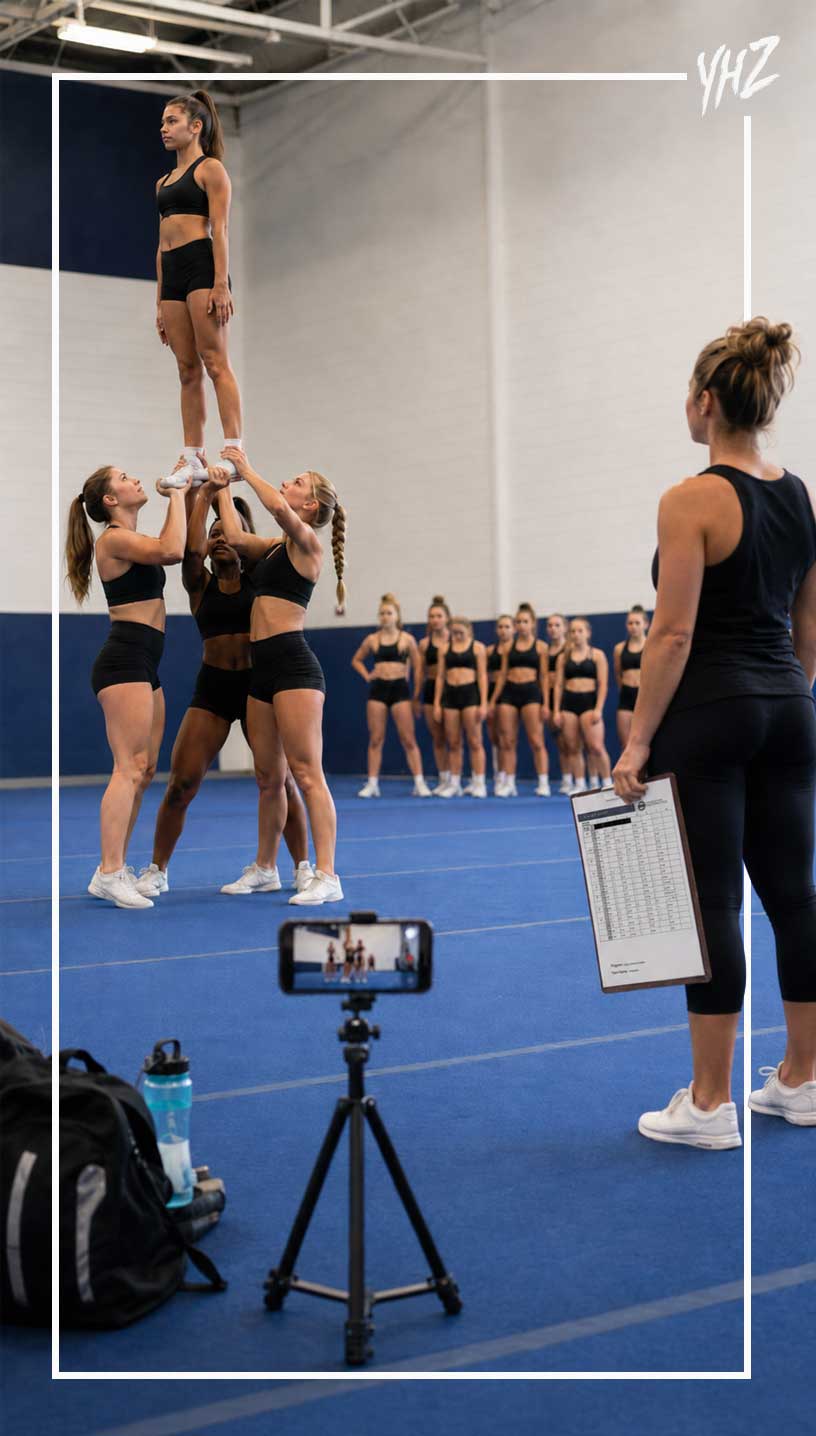
A skill that hits once in practice is not ready. A stunt that works only with one perfect group is not ready. A tumbling pass that lands when the athlete feels good but disappears under pressure is not ready. A pyramid section that needs five coach saves before it works is not ready. Summer is when coaches should find that out. Too many routines get choreographed around hope. Hope is fine in a team meeting.  It’s not a routine strategy.

Why coaches overestimate summer skills

Coaches usually do not overestimate their teams because they are careless. They do it because cheer makes almost-finished skills look tempting.

A stunt that hits three times in a row can feel routine-ready. Then the group loses it when they add counts, music, formations, fatigue, and pressure. A tumbler who lands a pass on a dead mat can look ready. Then the pass changes when the athlete has to wait through a transition, run from a new corner, and perform after jumps.

A flyer may hit a body position during drills. Then the same body position falls apart inside a full sequence with choreography before and after it. That’s normal…practice skills and routine skills are not the same thing. A summer skills audit closes that gap. It asks athletes to prove the skill in conditions that look more like the routine.

The 8-out-of-10 rule

A clean routine needs skills that repeat. For most teams, a useful standard is simple: if a skill does not hit cleanly at least 8 out of 10 times in practice, it should not be locked into choreography yet. That doesn’t mean the team stops training it. It means the coach treats it as an upgrade, not a foundation.

Use 3 categories:

Green skills are ready. They hit most of the time. Athletes understand the timing. Coaches do not have to stop practice every time the skill appears. The skill can handle counts, music, and pressure.

Yellow skills are close. They hit sometimes, but they still need help. Timing changes. Technique slips. Groups need extra resets. These skills may work in a routine if the coach builds a backup plan.

Red skills are not ready. They miss too often, need heavy spotting, create safety concerns, or only work when conditions are perfect. Red skills belong in training, not choreography.

The categories should stay flexible. A yellow skill can become green. A green skill can become yellow when the team adds movement or music. The audit is not a one-day verdict. It is a way to keep the routine honest.

Need Competition Music Blue 1

Audit stunts first

Stunts deserve the first audit because they take the most time to fix after choreography. A shaky stunt section does not stay isolated. It affects formations, transitions, pyramid timing, music pacing, athlete confidence, and the rest of practice. If a coach builds the routine around stunt skills that are not ready, the team spends the whole season chasing the routine instead of cleaning it.

Start with each stunt group by itself. Ask the group to perform the skill ten times. Track clean hits, shaky hits, missed grips, late dips, unstable body positions, rough dismounts, and coach saves. Don’t count a skill as clean just because nobody fell.

A clean hit should look controlled. The flyer should show the intended body position. Bases should stay under the stunt. The back spot should not rescue every rep. The dismount should land safely. Athletes should know where they go next.

Then test the skill in motion. Add the entrance. Add counts. Add the transition before it. Add the transition after it. Add nearby groups. Add music when possible.

This is where the truth usually shows up. A stunt that looks good in isolation may not survive the routine. That does not make the skill useless. It tells the coach where the skill belongs.

Maybe it stays in training. Maybe it moves later in the routine. Maybe it gets simplified. Maybe only one group performs it. Maybe it becomes an upgrade after the first competition. That decision is easier in July than October.
summer skills audit

Do not let one strong stunt group trick you

One strong group can make a team look more advanced than it is. That group hits the elite skill. Everyone gets excited. The routine gets built around that level of difficulty. Then the other groups spend months trying to catch up.

This is a bad trade.

Competition routines are judged as full-team products. If one group looks great and two groups fight for survival, the routine does not look strong. It looks uneven. The summer skills audit should judge the team, not the best group.

If only one group can hit the skill, the coach has a choice to make. Feature that group intentionally, or choose a skill the full section can hit. Both choices can work. Pretending the whole team owns the skill does not work.

A clean stunt section with slightly lower difficulty will usually age better than a high-difficulty section that scares everyone in the gym.

Audit tumbling under routine conditions

Tumbling is another place where coaches overcount skills.

An athlete may have a pass. That does not mean the pass belongs in the routine.

Test tumbling in the way the routine will use it. If the athlete has to run from a corner, test that corner. If the pass comes after jumps, test it after jumps. If the pass comes after a long transition, test it after movement. If the athlete has to wait on music, test the timing.

A tumbling pass should not count as routine-ready until the athlete can land it with the same setup they will use in the routine.

Coaches should also separate technical readiness from performance readiness.

A pass may be legal and land safely, but still look messy. Bent legs, low chest, uncontrolled rebounds, and scary landings can hurt the routine. They can also make the athlete less confident over time.

Some passes need more training. Some need a different placement. Some need to come out until the athlete can hit them without the whole section holding its breath.

That is not negative coaching. That is good routine design.

Audit jumps without lying to yourself

Jumps often get treated as a small section. They should not.

A weak jump section can make a polished routine look unfinished fast. Bent knees, low height, loose arms, bad timing, and messy landings are easy to see. Judges do not need replay to notice them.

A summer jump audit should test three things: technique, timing, and recovery. Technique asks whether the jumps have the shape the coach wants. Timing asks whether the team can hit together. Recovery asks whether athletes can land and move into the next skill without falling apart.

That last part matters. Many jump sections look acceptable until the team has to tumble, transition, or stunt immediately after. If the jumps drain the athletes so much that the next section suffers, the coach needs to know that now.

Do not build the jump section around the one athlete with great flexibility. Build it around what the team can hit together. Clean, synchronized jumps usually beat ambitious jump combinations that land like popcorn.
cheer routine planning

Audit pyramids in pieces

Pyramids can fool coaches because small pieces may work even when the full structure is not ready. Start with the parts.

Can each group hit its job? Can the bracers stay connected? Can flyers maintain body positions? Can bases move safely? Can the team hit the timing without a coach talking them through every count? Then connect the pieces.

This is where pyramid problems usually appear. Groups that hit alone may not travel well. Bracers may arrive late. Flyers may look unsure. Transitions may take more counts than expected. The pyramid may technically hit, but the visual may not read from the front.

The audit should include a front-view check. Record the pyramid from the judges’ angle and watch it without sound. If the visual does not make sense on video, music will not fix it. Pyramid difficulty should serve the routine. It should not become a maze the team barely survives.

Audit transitions like skills

Transitions are skills. Coaches do not always treat them that way, but they should.

A transition needs timing, spacing, body control, traffic awareness, and performance quality. Bad transitions make strong skills look worse. They also create avoidable stress for athletes.

During the summer audit, coaches should identify the athletes who struggle with spacing, speed, direction changes, and formation responsibility. That information should shape choreography.

Some teams can handle fast, layered transitions. Some teams need cleaner pathways and simpler movement. Some teams need extra counts because they have younger athletes, mixed experience levels, or big formation changes. That does not mean the routine has to feel slow. It means the routine has to move in a way the team can execute.

A coach who ignores transition skill level will end up cleaning the same traffic problems all season.

Film everything

Video makes the audit harder to argue with.

Athletes often feel like a skill hit because they survived it. Coaches may remember the best rep because it was exciting. Parents may hear that a skill is close and assume it should go in the routine.

Film solves a lot of that.

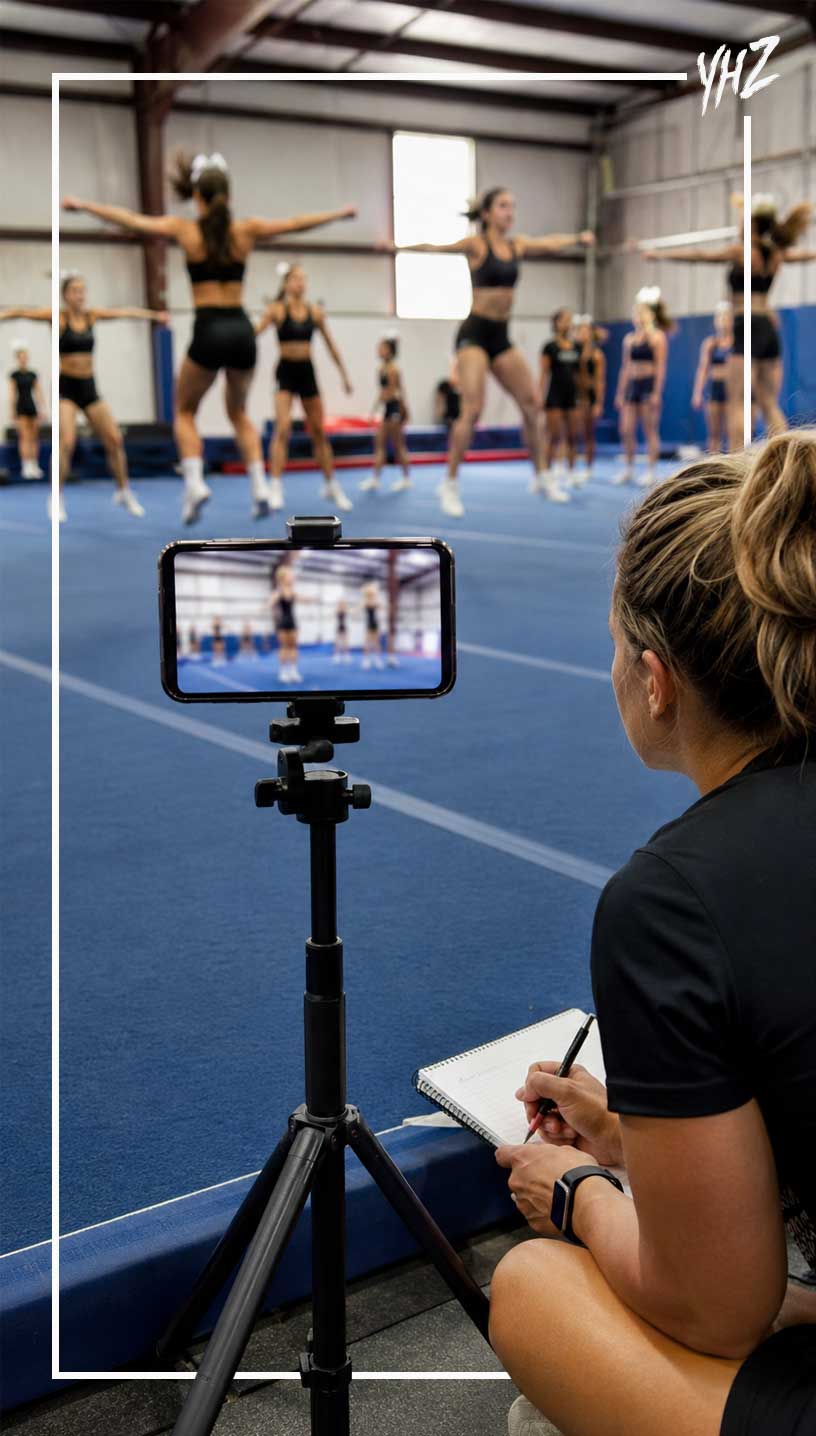
Record stunt reps, tumbling passes, jump sections, pyramid pieces, and short routine-style sequences. Watch them from the front. Watch them without stopping after the first hit. Watch the misses too.

The camera shows what the judges will see.

It also helps coaches spot patterns. Maybe a stunt group misses every time the flyer rushes the body position. Maybe a tumbler changes technique when tired. Maybe the jump timing problem starts with the arms, not the legs. Maybe the transition looks messy because two athletes cross the same lane.

Those details are easy to miss live.

A summer skills audit does not need fancy software. A phone camera and honest eyes are enough.

summer skills audit

Create a no-drama scoring system

A skills audit can get emotional if athletes think every result is a judgment of their worth. Keep the language clean.

Do not label athletes as good or bad. Label skills as ready, close, or still training. That distinction matters.

A flyer is not a problem because one body position is inconsistent. A base is not a failure because one grip needs work. A tumbler is not behind as a person because one pass is not routine-ready.

The audit should help athletes see the path forward.

Use simple notes:

Ready for routine
Needs more reps
Needs technique fix
Needs safer version
Use only in featured spot
Train as upgrade
Do not use yet

That kind of language gives coaches useful information without turning the audit into a public ranking.

Build the routine with a base version and upgrades

The smartest coaches do not choose between easy and hard. They build layers.

Start with a base routine the team can hit. Then plan upgrades that can replace sections when the team earns them.

For example, a stunt group may start with a cleaner prep-level body position, while training the extended version as an upgrade. A tumbling section may start with the passes athletes can land under pressure, while keeping harder passes ready for later. A pyramid may use a safer connection first, then add a harder visual once timing improves. This approach gives the team confidence early.

It also keeps the routine from becoming stale. Athletes can work toward upgrades without feeling like the first version is a failure. The base version should still look intentional. It should not look like a watered-down placeholder. It should be choreographed to score as cleanly as possible.

If the upgrade never becomes safe or consistent, the team still has a routine. That is the point.

Set deadlines for routine decisions

A skill cannot stay “almost ready” forever. Coaches need decision deadlines. Without them, the team keeps waiting for skills that may not arrive in time.

Set a date before choreography when each major skill must prove itself. Set another date after choreography for upgrades. Set a final date before the first competition when the coach stops adding risk and starts cleaning.

The exact timeline depends on the program, but the principle stays the same. At some point, a skill either belongs in the routine or it does not. This protects the team. It also protects practice time.

A team that changes major routine sections too late loses cleaning reps. Athletes get nervous. Coaches get frustrated. Music edits pile up. The routine starts to feel temporary. Temporary routines do not perform with confidence.
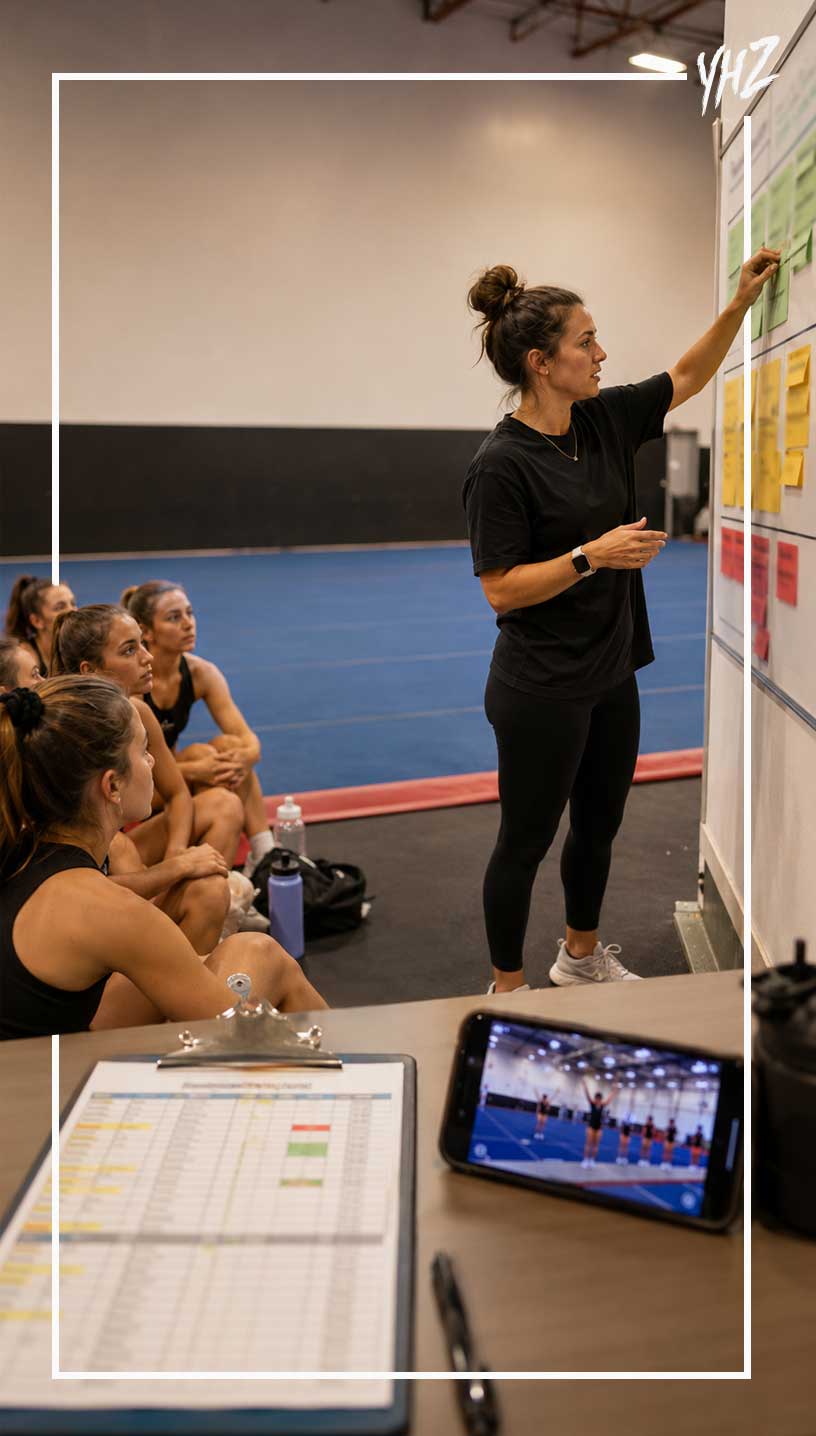
cheerleading tumbling audit

Watch for the “one more week” trap

“Give it one more week” can become a season-long habit. Sometimes one more week makes sense. A group may need reps. An athlete may be coming back from vacation. A stunt may need one technical fix. But coaches should ask what will actually change in that week.

Will the team get more reps with the full group present? Will a coach fix a specific technique problem? Will the athlete get private tumbling work? Will the group drill the entry that keeps breaking?

If the answer is no, one more week may only delay the decision. Hope is not a training plan.

When a skill stays inconsistent after repeated chances, the coach should move it out of the routine and keep training it separately. That choice may feel disappointing in the moment. It usually saves the routine later.

Match skills to the team’s identity

The summer audit should not only ask what the team can do. It should ask what the team can sell.

Some teams are explosive. Some are sharp and clean. Some have strong stunt technique. Some have big personalities. Some have excellent dancers. Some have powerful tumbling but need simpler transitions. Some have young athletes who perform better when the routine is clear and confident. The routine should fit that reality.

Do not build a routine that hides the team’s best qualities because everyone is chasing difficulty. Use the audit to find what the team can own.

If the team has strong jumps, give the jump section a real moment.

If the team has one standout tumbler, feature that pass without forcing everyone else into skills they cannot match.

If the team performs well, give them music and choreography that let them connect with the crowd.

If the team has clean stunts, do not bury them inside overcomplicated transitions.

A good routine makes the team look more like itself. A bad routine makes the team look like it is pretending.

Use the audit to guide music and count sheets

The skills audit should feed directly into the count sheet.

If the team needs extra time for stunt setups, the count sheet should show that. If a transition needs more room, plan the counts before the music gets built. If the pyramid has one major visual, make sure the music supports that moment. If jumps need a clean recovery before tumbling, do not cram the next section too close.

Music cannot solve a routine that ignores skill readiness. A producer can help with pacing, energy, voiceovers, sound effects, and section changes. But the coach has to know what the team can actually execute.

The audit gives the music producer better information. It also helps the choreographer make smarter choices. This is where planning pays off. The routine feels less forced because the counts, skills, and music all come from the same honest picture of the team.

What to do when parents push for harder skills

Parents hear what their athlete says. Athletes often say the skill is close. That can create pressure.

A parent may ask why a stunt is not in the routine. An athlete may say they hit it at practice. Another parent may compare the team to a rival program. Someone may post a video of one successful rep and wonder why the coach will not use it. This is where the audit helps.

The coach can explain that routine decisions come from consistency, safety, and full-team execution. One hit does not decide choreography. Ten reps tell a better story. Routine conditions tell an even better one. Keep the message simple.

The team will train upgrades. The routine will use the skills that give the team the best chance to hit. The goal is not to avoid difficulty. The goal is to earn it.

Most parents can understand that when the coach explains it before emotions take over.

A sample summer skills audit plan

Coaches can run a basic audit in one or two practices. Start with stunts. Test the main skills each group wants to use. Track clean hits out of ten. Add entries and exits after the first round.

Move to tumbling. Test standing tumbling and running tumbling from routine-style setups. Record landings, timing, and consistency.
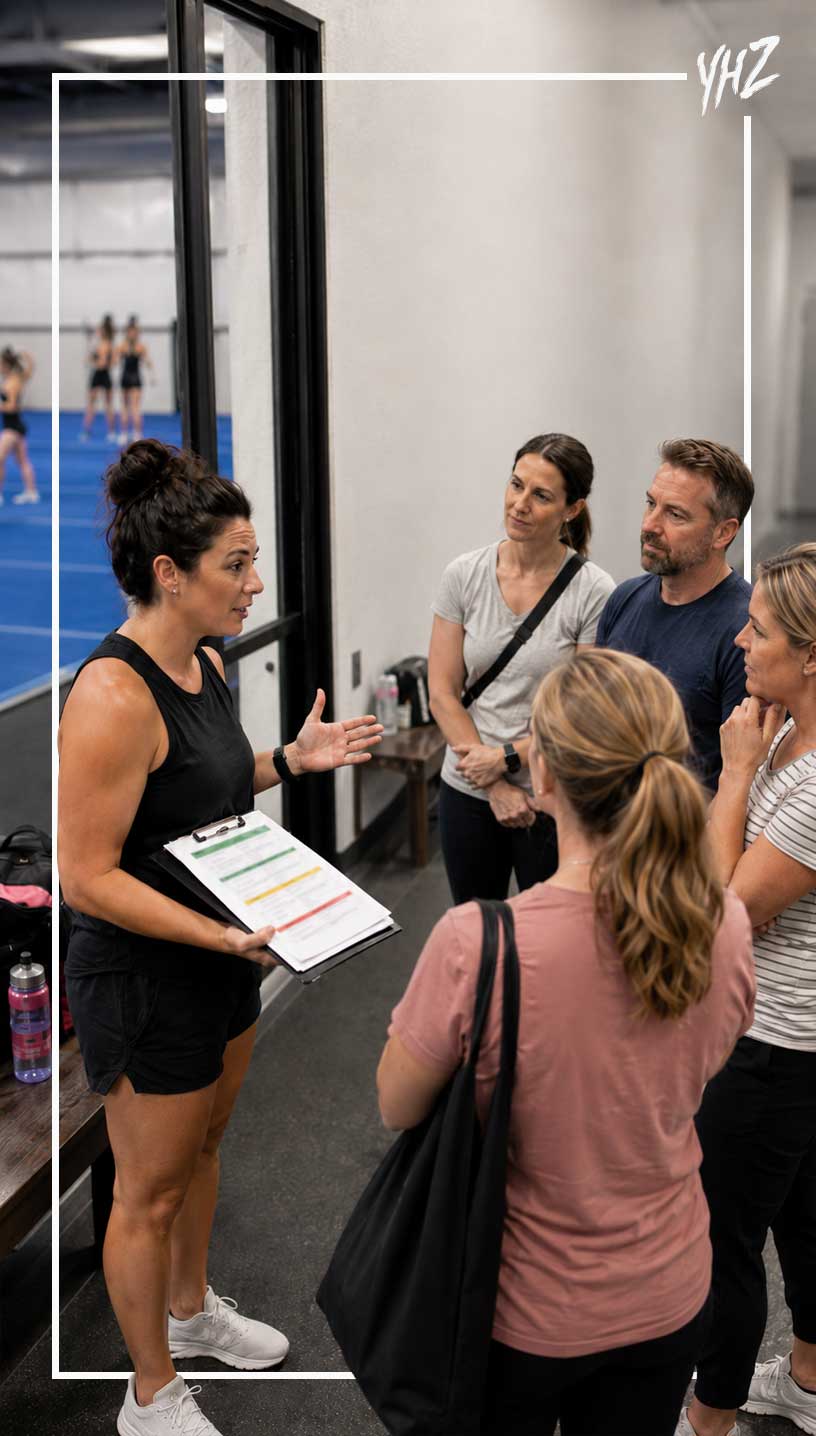
cheer tumbling readiness

Run jumps as a group. Check height, timing, arm placement, landings, and recovery into the next section. Break down pyramid pieces. Test each group, then connect sections. Film from the front.

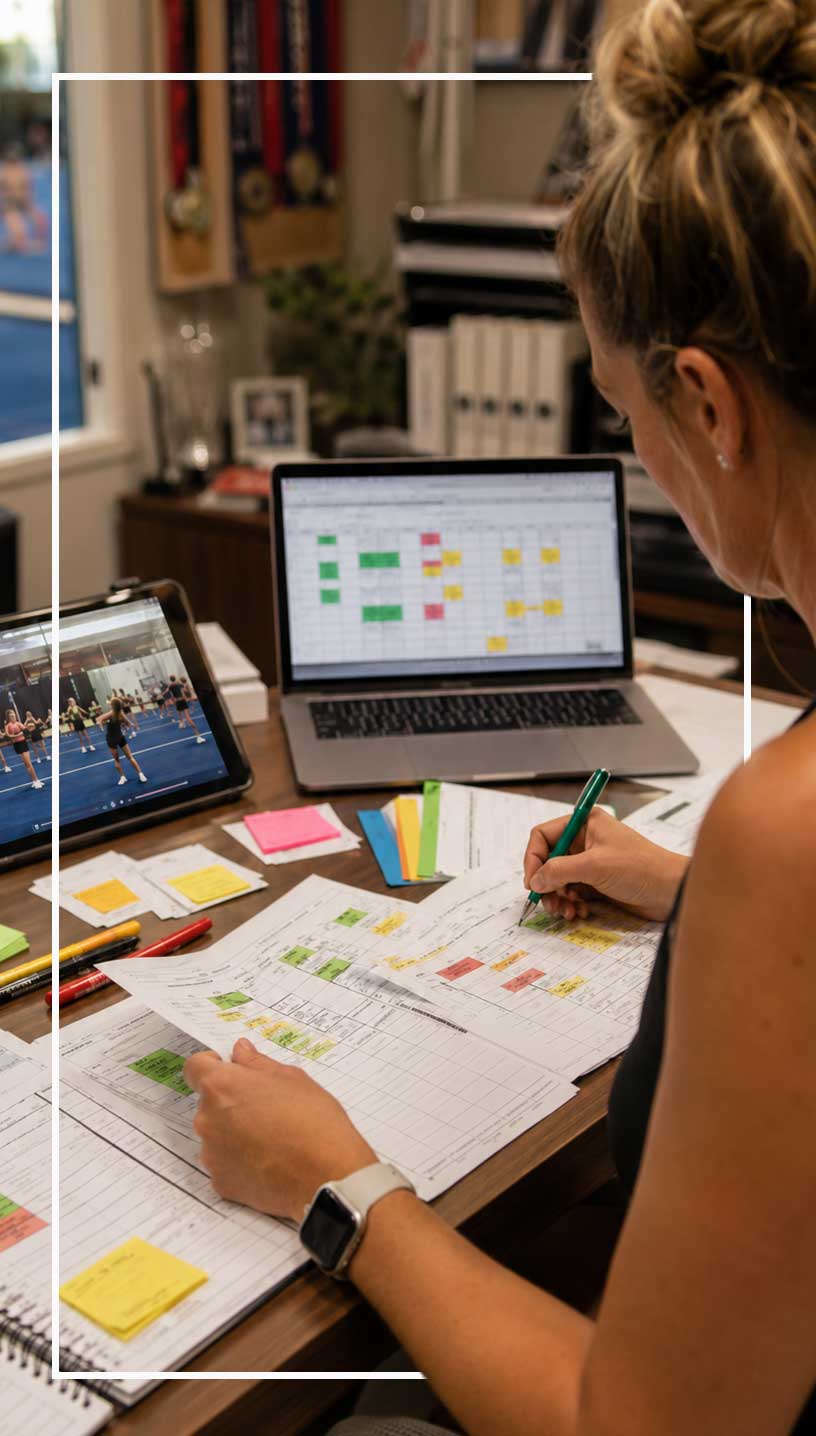
Finish with transitions. Give athletes formation changes and watch spacing, speed, and confusion points. After practice, sort the results into green, yellow, and red.

Then make routine decisions from that list.

Green skills can go into the first choreography plan.

Yellow skills need backup versions.

Red skills stay in training until they prove they are ready.

The audit does not need to be complicated. It needs to be honest.

The coach’s real job

Cheer coaches live between ambition and reality. Push too little, and the team never grows. Push too much, and the routine becomes a weekly emergency.

The summer skills audit helps coaches find the middle. It gives athletes room to improve without letting unfinished skills take over the routine. It helps choreographers build around truth. It helps music producers support the routine instead of guessing. It helps parents understand why consistency matters more than one good video.

Most of all, it protects the team from spending the season chasing a version of itself that only exists in the coach’s imagination.

Build for the team in front of you.

Train for the team they can become.

Those are different jobs. Good coaches know when they are doing each one.

Steve Pawlyk Signature Full

IPP's Premade Mixes are USA Cheer Compliant and customizable!  Add Sound FX, swap songs, & more!  Add your Team Name to the mix for only $10! 

SLAM artwork
Full_Out_130 mp3 image
1 minute cheer mix
WAKE UP THE FIRE
SLAM artwork
WAKE UP THE FIRE
Full_Out_130 mp3 image
1 minute cheer mix

The Top Rule Changes Coaches Need to Know for the Upcoming Season

The Top Rule Changes Coaches Need to Know for the Upcoming Season

By Steve Pawlyk

Published January 15, 2025

Cheerleading evolves every year, as governing bodies like the U.S. All Star Federation (USASF) and National Federation of State High School Associations (NFHS) refine rules to increase safety, fairness, and overall spectacle. While these updates may seem daunting at first, they can actually open doors for fresh choreography, innovative stunts, and advanced crowd engagement—if you know how to adapt. In this article, we’ll break down the most important rule changes you need to understand before your team takes the mat this season.

1. Stunting & Pyramids

What’s Changed?

  • Height & Inversion Restrictions: Certain levels now face tighter guidelines on how high flyers can go in extended stunts and how many inversions are allowed. This is largely to ensure the difficulty remains age-appropriate and to prioritize athlete safety.
  • New Spotter Requirements: Some divisions may mandate additional spotters for high-risk transitions (especially inversions and twisting mounts). Coaches must be aware of how many spotters are needed and in what positions.

Why It Matters

  • Minimizing Injuries: Stricter rules encourage safer stunts, reducing the risk of falls and associated injuries.
  • Routine Adaptations: If you’ve been using complex stunts, you may need to rework parts of your routine to fit new guidelines—particularly in levels where advanced inversions are limited

Practical Example

  • Level 3 Inversions: Suppose your team relies on a forward roll from a prep-level stunt into a load-in. Check if updated rules still allow this inversion at your team’s level or if a spotter is now explicitly required.
Need Competition Music Blue 1

2. Tumbling & Passes

What’s Changed?

  • Revised Skill Allowances: Each level has a specific range of permitted tumbling skills, such as back handsprings, tucks, and fulls. Some new rule sets might restrict (or expand) certain passes.
  • Focus on Progressions: Certain levels are emphasizing clear skill progressions—e.g., you cannot perform a front tuck if your team hasn’t demonstrated mastery of simpler skills.

Why It Matters

  • Score Sheet Implications: If a once-legal pass is now restricted, performing it may result in deductions. Conversely, if a skill was introduced into your allowed level, you can incorporate it to gain difficulty points.
  • Safety & Development: Encouraging coaches to stick to structured progressions helps prevent injuries and ensures athletes develop strong fundamentals.

Practical Example

  • No Jump Directly into Tuck: At some levels, new rules might prohibit jumping directly from a toe touch into a back tuck. This means your choreography must pivot to separate jumps from standing tucks.
Need Competition Music Blue 1

3. Music & Voice-Over Edits

What’s Changed?

  • Music Licensing: Rule updates often include clarifications on using licensed music versus royalty-free or custom mixes. Competitions may require proof of proper licensing to avoid disqualification.
  • Voice-Over Restrictions: Some leagues now have guidelines on how many voice-overs or sound effects can be used, preventing routines from becoming too cluttered with audio snippets.

Why It Matters

  • Legal Compliance: Failing to adhere to licensing requirements can result in major deductions or disqualification.
  • Routine Flow: With voice-over restrictions, coaches must be strategic. Instead of multiple quick phrases, consider fewer but more impactful voice-overs that guide transitions or highlight big stunts.

Practical Example

  • Custom Mix Adjustments: If you rely heavily on pop songs in your routine, you may need to work with a recognized music producer who can ensure the mix is licensed and meet competition guidelines.
Need Competition Music Blue 1

4. Division & Age Grid Adjustments

What’s Changed?

  • Age Grid Shifts: The minimum or maximum ages for certain divisions may have been altered, affecting team rosters.
  • Coed vs. All-Girl Splits: Some organizations tweak the thresholds for coed divisions based on the number of male athletes. Double-check your division if you’re near the cutoff.

Why It Matters

  • Roster Planning: Even a small age-grid change can disqualify an athlete from a division, forcing you to reshuffle.
  • Team Composition: If you have male athletes, a shift in the coed rules can move you to a completely different competitive bracket.

Practical Example

  • 12 vs. 13 Age Requirement: If your junior athlete recently turned 13 and the division cutoff changed to 12, that athlete might need to move up to the next level or division earlier than you planned.

5. Safety Clarifications & Penalties

What’s Changed?

  • Spotter Positioning: Some recent clarifications detail exactly where a spotter must stand for certain stunts, and how actively they must engage with the stunt group.
  • Uniform & Equipment Rules: Updated guidelines may specify new restrictions on jewelry, nails, or hair accessories to reduce potential hazards.
  • Deductions for Unintentional Contact: If a flyer or base collides with another group on the mat, even unintentionally, more competitions are now imposing severity-based deductions.

Why It Matters

  • Fewer Surprises: Knowing these clarifications helps you avoid unexpected penalties.
  • Consistency Across Events: Many competition hosts adopt these clarifications to unify safety standards.

Practical Example

  • Disallowed Hair Accessory: A bow with stiff or metallic parts might violate new safety criteria. The result could be a penalty or an immediate request to remove the accessory.

6. Scoring Emphasis on Execution

What’s Changed?

  • Technical Execution Weight: Across multiple competition brands, the percentage of your overall score for technique and synchronization might have increased.
  • Difficulty vs. Execution Balance: While difficulty remains key, a sloppy advanced skill might score lower than a clean intermediate skill.

Why It Matters

  • Coaching Focus: Coaches should spend more time perfecting timing, lines, and transitions.
  • Routine Strategy: Instead of squeezing in the hardest possible stunts, emphasize cleaner, well-executed elements for a more reliable score.

Practical Example

  • Double Down Deductions: If your team includes a double down from an extended stunt but consistently lands with bent knees or off counts, you’re better off sticking with a single down done perfectly.

How to Stay Ahead of Rule Changes

  1. Subscribe to Official Updates
    • Follow USASF, NFHS, and any regional competition circuit newsletters or social media.
  2. Attend Coaches’ Conferences
    • Many organizations host rule interpretation sessions—take advantage of these to ask questions and get clarifications.
  3. Leverage Experienced Choreographers
    • Professional choreographers often keep up with rule shifts. Collaborating with them ensures your routine meets the latest guidelines.
  4. Communicate with Parents & Athletes
    • If an athlete ages out of a division, or a new stunt is disallowed, inform everyone promptly to manage expectations.

Rule changes can feel overwhelming, but they’re ultimately designed to keep athletes safe and encourage continuous advancement in cheerleading. By staying informed, making proactive adjustments, and emphasizing clean execution, your team can transform new regulations into opportunities for growth—and deliver a winning routine that wows both judges and crowds.

Steve Pawlyk Signature Full

IPP's Premade Mixes are USA Cheer Compliant and customizable!  Add Sound FX, swap songs, & more!  Add your Team Name to the mix for only $10! 

SLAM artwork
Full_Out_130 mp3 image
1 minute cheer mix
WAKE UP THE FIRE
SLAM artwork
WAKE UP THE FIRE
Full_Out_130 mp3 image
1 minute cheer mix

2024 UCA National High School Cheerleading Championship Results (searchable)

2024 UCA National High School Cheerleading Championship Results

By Steve Pawlyk

Published February 14, 2024

The electricity in the air at the 2024 UCA National High School Cheerleading Championship last weekend was palpable, as top cheerleading teams from across the nation gathered at the ESPN Wide World of Sports Complex at The Walt Disney World Resort® to showcase their incredible talent, dedication, and spirit. With a record-breaking 1,183 teams from 34 states competing, this year’s championship was not just a competition; it was a celebration of cheerleading excellence, athleticism, and the relentless pursuit of perfection. The air buzzed with excitement as these teams, having qualified at regional competitions throughout 2023, took to the floor to perform routines that were the culmination of countless hours of practice, all under the watchful eyes of the cheerleading world.

This championship, a significant event in the cheerleading calendar, has evolved since its inception in 1980 into a prestigious showcase featured on ESPN, bringing together the best high school cheerleaders to compete in categories that test every aspect of their skills, from stunting and tumbling to crowd-leading and overall performance. The anticipation was high as teams like Live Oak High School, Mater Dei High School, and Dutchtown took center stage, each aiming to leave an indelible mark on the judges and the audience.

The results were nothing short of spectacular, with Live Oak High School dazzling in the Large Varsity Division I with a score of 97.4, and Mater Dei High School’s Monarchs reigning supreme in the Small Varsity DI, capturing the title with a score of 96.1, closely followed by the impressive Owasso High School. The level of competition and the sheer talent displayed were a testament to the hard work, passion, and spirit of all the athletes and their coaches, making the 2024 UCA National High School Cheerleading Championship a memorable event that celebrated the very essence of cheerleading.

Need Competition Music Blue 1

Steve Pawlyk Signature Full

IPP's Premade Mixes are USA Cheer Compliant and customizable!  Add Sound FX, swap songs, & more!  Add your Team Name to the mix for only $10! 

SLAM artwork
Full_Out_130 mp3 image
1 minute cheer mix
WAKE UP THE FIRE
SLAM artwork
WAKE UP THE FIRE
Full_Out_130 mp3 image
1 minute cheer mix

Enhancing Spatial Awareness for Improved Tumbling in Cheerleading

Enhancing-Spatial-Awareness-for-Improved-Tumbling-in-Cheerleading--A-Comprehensive-Guide

By Steve Pawlyk

Published August 1, 2023

Cheerleading is a demanding sport that requires a high degree of physical strength, agility, and precision. Among these crucial skills, spatial awareness stands out as a significant contributor to a cheerleader’s performance, particularly in tumbling. If you’re a cheerleader finding yourself getting lost mid-full, you’re not alone. We’re here to discuss strategies that can help you refine your spatial awareness and get back on track with your tumbling.

Spatial awareness is a sense of one’s physical position in relation to the surroundings. In cheerleading, it is essential for executing complex tumbling sequences, like standing fulls or full whips, without losing orientation. However, developing and maintaining this sense can be challenging.

Revisit Basics

When struggling with spatial awareness during complex sequences, it can be beneficial to revisit the basics. Try practicing simpler moves and gradually increasing the difficulty. This can help your body regain the sense of spatial orientation and build a solid foundation.

Mental Visualization

Visualize your routines. Before executing a move, imagine each step vividly in your mind. Picture yourself in the air, your rotation, and your landing. This mental rehearsal can help improve your spatial awareness and execution of the skills.

Eye-Focus Training

Try to consciously keep your eyes open during your routines. It’s common for cheerleaders to close their eyes involuntarily during tumbling, which can disrupt spatial orientation. Practice drills where you focus on a particular point during the maneuver can help you stay oriented.

Need Competition Music Blue 1
Spatial-Awareness-for-Improved-Tumbling-in-Cheer

Use Spotting Techniques

Spotting techniques involve focusing on a particular point in your surroundings to maintain balance and orientation. These can be incredibly helpful during full rotations and can prevent you from getting lost mid-move.

Invest in Coaching and Feedback

If you’re still struggling, consider seeking advice from your coach or even investing in additional professional guidance. They can provide personalized feedback, identify problem areas, and suggest targeted exercises to improve your spatial awareness.

Try Proprioceptive Exercises

Proprioceptive exercises that focus on balance and body movement can help improve your spatial awareness. These can include activities like yoga, Pilates, or even specific balance-focused exercises on a stability ball or BOSU.

Refining your spatial awareness as a cheerleader can feel like an uphill battle, but with the right strategies and dedication, you can regain your confidence and excel in your tumbling. Remember, it’s essential to be patient with yourself during this process. Improvements might not be noticeable overnight, but consistent effort will yield results

Steve Pawlyk Signature Full

IPP's Premade Mixes are USA Cheer Compliant and customizable!  Add Sound FX, swap songs, & more!  Add your Team Name to the mix for only $10! 
SLAM artwork
Full_Out_130 mp3 image
1 minute cheer mix
WAKE UP THE FIRE
SLAM artwork
WAKE UP THE FIRE
Full_Out_130 mp3 image
1 minute cheer mix

The 3 Key Moves in Cheerleading: Boosting Your Routine with IPP Music

Boost your cheer routine with key moves: High V, T-Jump, Liberty Stunt

By Steve Pawlyk

Published May 30, 2023

When it comes to mastering the art of cheerleading, understanding key moves is crucial. These moves form the basis of any routine, and perfecting them can take your cheerleading performance from good to exceptional. At IPP Music, we understand the power of rhythm and music in enhancing these moves, which is why we provide tailored cheerleading music to support and uplift your performance.

Cheerleading is an energetic, powerful, and dynamic sport that requires skill, agility, and precision. With the combination of tumbling, jumps, stunts, and dance, cheerleading is as much about athleticism as it is about spirit and synchronization. 

To help you boost your cheerleading routine, we will outline three key moves in cheerleading that every cheerleader should know. These moves are the High V, the T-Jump, and the Liberty Stunt. With the right music from IPP Music, you can make these moves pop and make your performance unforgettable.

The High V

The High V is a foundational move in cheerleading, often used in cheers, chants, and routines. It’s a move that every cheerleader learns early in their training. Here’s how to perfect your High V:

  1. Stand tall with your feet hip-width apart.
  2. Extend your arms up and out in a V shape. 
  3. Keep your arms straight, and make sure your palms face outward.
  4. Maintain a tight, sharp position, with your thumbs facing the back.

The High V is great for creating a dramatic effect, especially when matched with powerful, beat-driven music. IPP Music offers a range of tracks that can help you make the most of this move, helping to create a captivating and exciting performance.

The T-Jump

The T-Jump, or toe touch, is a classic cheerleading jump that demands flexibility and precision. Here’s how to perform a T-Jump:

  1. Start with your feet together and arms in a High V.
  2. Bend your knees and jump off both feet.
  3. At the peak of your jump, split your legs into a V shape.
  4. Reach your hands towards your toes, creating a T shape with your body.
  5. Land safely with your knees slightly bent to absorb the impact.

Matching the T-Jump with the right music can add a significant impact to your routine. At IPP Music, we provide a diverse selection of music to suit any cheerleading routine, whether you’re looking for fast-paced tracks to match the energy of the T-Jump or slower beats for a graceful execution.

The Liberty Stunt

The Liberty Stunt is a popular move that involves a flyer balancing on one foot, held up by bases. It’s a move that showcases teamwork and trust among cheerleaders. Here’s how to perform a Liberty Stunt:

  1. The flyer stands on one foot, while the bases support the flyer’s foot with their hands.
  2. The flyer keeps the other leg bent at the knee, creating a 90-degree angle.
  3. The back spot supports the flyer’s back and helps to keep her steady.
  4. The flyer extends her arms into a High V for balance and effect.

The Liberty Stunt is a dramatic and impactful move that requires just the right music to match its intensity. IPP Music provides a range of music that can help accentuate this stunt, making your routine stand out from the rest.

In conclusion, there are six main levels in cheerleading, each with its unique set of skills and requirements. These levels provide a roadmap for cheerleaders, helping them progress from beginners to advanced athletes. Understanding these levels is essential for anyone interested in cheerleading, whether they’re aspiring cheerleaders, parents, or fans of this dynamic sport.

So, next time someone asks you, “How many levels of cheer are there?” you’ll be ready with an informed answer that will illuminate the complex and fascinating world of cheerleading. Stay tuned for more insights into the sport of cheerleading!

Conclusion

The High V, the T-Jump, and the Liberty Stunt are three key moves in cheerleading that, when executed correctly and paired with the right music, can take your cheerleading routine to the next level. IPP Music is dedicated to providing the best cheerleading music that complements your routine

Steve Pawlyk Signature Full

Home Quarantine Workouts by Jess Forte of Cheer Intensity (with videos)

Home Quarantine Workouts for Cheerleading

By Jess Forte

Published March 20, 2020

This is our world...

I often liken the anticipation, the adrenaline we experience to climbing that first major drop of the highest roller coaster in the amusement park. It’s “Scary” in a sense, but also exhilarating!  This sense of “fear” has ironically preceded almost anything and everything great in my life. Or is it not irony? 


One of my Level 5 athletes was walking to perform in A Hall at NCA Nationals a few weeks ago and asked me “why do I keep doing this, even though I feel like I am about to vomit? But I continue to want to cheer, to put myself back on that stage?”

On Deck
The butterflies
The jittery hands
The lights blinding
The roar of the crowd
The smell of sweat
The 9 panels
The music starts
A snap, a wink, a smile
Let’s go
The point stunt
The last pass
Your coaches’ eyes scream “you’ve got this!”
The final structure
The last pose
The embraces
The tears

I recently read a book entitled “Fearvana” by Akshay Nanavati. He firmly believes that fear is an essential element to unlocking our potential, our success, and our passion. That finding and enduring a worthy struggle can open doors that we didn’t know existed and allow us the ultimate amount of  bliss and fulfillment. So basically, All-Star Cheerleaders are onto something! Akshay defines fearvana as “the bliss that results from engaging our fears to pursue our own worthy struggle.” We experience our own version of “Fearvana” when we stand in the corner to throw a new pass, or when we set for our routine at Nationals. 


So now on May 20, 2020 we find ourselves in a very odd situation. Our season, as we had envisioned it, was stripped from us by the Coronavirus. And there are so many unknowns. As an adult, I am having to draw on all I have known in my life to come to a logical conclusion that “this too shall pass;” that difficult situations come upon us and we are equipped as humans to work through them and overcome obstacles. Our athletes may not have this frame of reference. For them, their world is potentially about to be turned upside down. What I want to tell them is that you are right where you are supposed to be. If that is in a state of FEAR, that’s ok. 

Because fear keeps us on our toes; it elicits a heightened sense of reality that allows us to be our best selves. And who is better equipped to handle this fear than an all-star cheerleader? You all face it head on every day! And not only that, but you thrive on it! You hit that stunt, you land that pass, and you rock that dance – butterflies and all! So you have the tools to handle this, too. 

SO WHAT ARE YOU GOING TO DO?

Every athlete is being dealt the same hand right now. But it is your choice how you decide to handle it. If you are forced to be home for an undetermined amount of time, what is going to propel you from the state of fear, disappointment, or anger into a state of being that is productive for your goals in the sport! Here is a suggested to do list:

  1. Write down 3 of your goals every morning. The same 3!

  2. Write down actions you can take NOW to take a step towards those goals (conditioning, studying technique, reading motivational books, contacting college coaches if you are an upperclassman, applying for scholarships at your dream school, e-mailing you gym owner to ask for internship hours, or your coach to help set a plan to achieve your goals when the gym opens back up.)

  3. Schedule those actions for each day. For example:

  • 9:00 am – wake up and get ready
  • 9:30 am – eat a breakfast high in protein and fats! (Think eggs, sausage, bacon)
  • 10:00 am – journal goals and current emotions (this will be cool to look back on)
  • 10:30 am – school work
  • 12:30 pm – lunch high in nutrients (think salads, fruits, veggies)
  • 1:30 pm – Conditioning workout (example below)
  • 2:30 pm – more school work
  • 3:30 pm – watch tumbling technique videos, read a motivational book, or work towards goals
  • 4:30 pm – flexibility regimen
  • 5:30 pm – Dinner high in protein and carbs (think pasta, steak, potatoes, meat)
  • 6:30 pm – Relax and connect with teammates, coaches, etc.
    Get at least 8 hours of sleep!


Adam Forte's Conditioning Workout

1. WARM UP

30 seconds each exercise X 3

  • Jog in place
  • High Knees
  • Butt Kicks
  • Mummys
  • Heisman

2. JOINT ROTATIONS

Upper Body 

    1. Finger wiggle and squeeze
    2. Motorcycles
    3. Wrist circles (both ways)
    4. Arms behind head
    5. Arms across body
    6. Hold hands behind back and pull up
    7. Look up, down
    8. Tilt head to both sides
    9. Shoulder rolls
    10. Arm circles forward and back
    11. Small arm circles forward and back
    12. Arms up tilt both ways
    13. Hips washing machine
    14. Hips figure 8
    15. Leg swings forward/back 5x each
    16. Cross leg swings (knee to front)
    17. Pony (alternating knees)
    18. Ankle circles (both ways)
    19. Sit on shins and rock back and forth
    20. Sit on heels and arms behind head turn (to both sides) and tilt 3x
    21. Hands and knees one arm behind head elbow up/elbow down 5x

Wrists 

    1. On hands and knees circle around
    2. Fingers facing you
    3. Side to side
    4. Cross hands (both ways)
    5. Back to all fours and do 5 flicks
    6. Palms up

3. JUMP FOCUS

  • 10 Double Marked Jumps
  • 10 Double T Jumps

4. JUMP Conditioning

3 Rounds

  • Fast Kicks – 20
  • Side Hurdler Lifts – 20 Right and Left
  • Hip Rolls – 20 Right and Left
  • Toe Lifts – 20
  • Floor Jumps – 20

5. TUMBLING Conditioning

3 Rounds (you can lower amount on each if you would like)

  • Plank – 1 Min
  • Side Plank – Right and Left 30 Min
  • Superman Hold – 1 min
  • Lunge Hold – 30 Sec*
  • Lever Hold – 30 Sec*
  • Heel Kicks – 30*

*Do one leg then the other

6. Stunt Focus

3 Rounds of 30 seconds each

  • Mountain Shrugs – 20
  • Lib Lifts – 10 Right and Left 10 
  • Full Up Squats – 20
  • Ext Pops – 10

7. Cool down/stretch


Adam Forte's Flexibility Workout

1. WARM UP

30 seconds each exercise X 3

  • Jumping Jacks – 30 Seconds
  • High Knees – 30 Seconds
  • Butt kicks – 30 Seconds
  • Mummys – 30 Seconds
  • Sprawls – 10

2. BRIDGES

3 Rounds

  • 3 Count Bridges – 10
  • Bridge Hold – 30 Seconds
  • 1 Leg Bridge Kick Right – 20
  • 1 Leg Bridge Kick Right – 20

3. Split Warm Up

Alternate Right and Left Leg 3x

  • Leg Lift Kicks – 12/10/8
  • Forward Lunge Twist Stretch – 30 Seconds
  • Forward lunge kick – 30/20/10

4. Right and Left Splits

1 Min hold each

  • Sit up – 30 Seconds flex foot and lock back leg
  • Chest Down
  • Head up arms back in should stretch

4. CENTER

1 Min hold each

  • Squat Stretch
  • Frog Stretch
  • Center Split

7. Cool down


How To Prepare For Your Choreographer

IPP YOUHITZERO Twisted Choreo wide

By Luke Johnson

Updated June 5, 2019


How To Prepare For Your Choreographer

A brand new season is here and it’s time for choreography. This can be one of the most exciting times of the season. You’re so excited for your choreographer to arrive so that you can learn your new stunt sequence and practice the newest and most creative transitions in the industry. Can you picture it? It’s going to be a blast!

For some this a year-after-year experience and you know just how to prepare your athletes for choreography week. However, for other, this may be a brand new experience. There are always many questions regarding preparation. Being unprepared can waste valuable time and money. Therefore, we thought we’d help you with how to prepare for your choreographer!


What can I have ready before my choreography camp?

It is very helpful to have stunt groups figured out before the choreographer arrives. The groups should be practicing basic and elite stunt skills. This helps to make transitions easier when building the routine.

Knowing what your skill level is

Summertime is the time to learn and work on new and bigger skills. Having a good understanding and realistic expectations of your team’s capabilities will help guide the choreographer in the direction to best place the elements of the routine to max out the score sheet.


Teach the basics

Seat rolls, show and go, knowing what a line and space is, practice tumbling in different formations, and know your approach for standing tumbling.

Placement of Skills

For example: if you know your team struggles with tumbling, let the choreographer know so they don’t put it at the very end when the athletes are tired. Maybe your team is excellent at Stunts – the choreographer will want to know so they can highlight them as much as possible.


Choreography Camp Attendance

Attendance is very important in being able to learn the routine as it’s being taught by the Creative. It is key to show up with a positive attitude and be ready to learn. The choreographers feed off of the energy you project, so give them something good work with :-)  We understand things come up and you can’t make your choreography date – figure out how to get a fill-in. It could be a coach, another athlete, someone who can visually help the choreographer place people correctly to complete the full picture.


Record the choreography

This is the BEST way to be able to reference back after your choreographer has departed from camp. Your TWISTED Choreographer is able to help some from on the road, but keep in mind they do a lot of routines during the summer and having a video refresher makes the job easier.


During Camp

Being respectful to the choreographer makes everyone’s experience much more enjoyable. Know that Choreographers work long hours for days in a row – the best thing to keep them motivated – is positive energy. Be excited to learn, have fun with the process, you get to meet someone new – be the athlete/team/program that gets remembered for the positive things, not the negative ones.


It is always nice to be appreciated

  • Welcome signs at the hotel, gift baskets, special food or drinks the choreographer likes, are all wonderful ways to show your appreciation.
  • Choreography sessions may be scheduled for more time than regular practice is, be prepared with water and nourishing food to help you keep your energy level up.
  • Be patient with yourself – there is a ton of learning going on and nobody expects it to be perfect after a couple of tries – give yourself the time to learn and grow with the material as you practice more.
  • Communicate with your Choreographer. They want to give you a routine that you LOVE – talk with them if there is a part you don’t like – they truly won’t get upset with you if you are honest.


Luke Johnson Signature

SHARE YOUR CART