Tag Archives: coaching cheerleading

Competition Anxiety: Your Team Isn’t Choking, the Room Got Bigger

Competition Anxiety Your Team Isnt Choking the Room Got Bigger

By Steve Pawlyk

Published June 3, 2026

A JV coach posted a question on Reddit that a lot of you will recognize. Her team made nationals last year, looked sharp at every local comp, then fell apart in front of a packed arena.

She has 26 years in cheer and still couldn’t believe the size of that crowd. Her girls are good enough, she says. They just got scared. Here is how to help them handle it before next time.
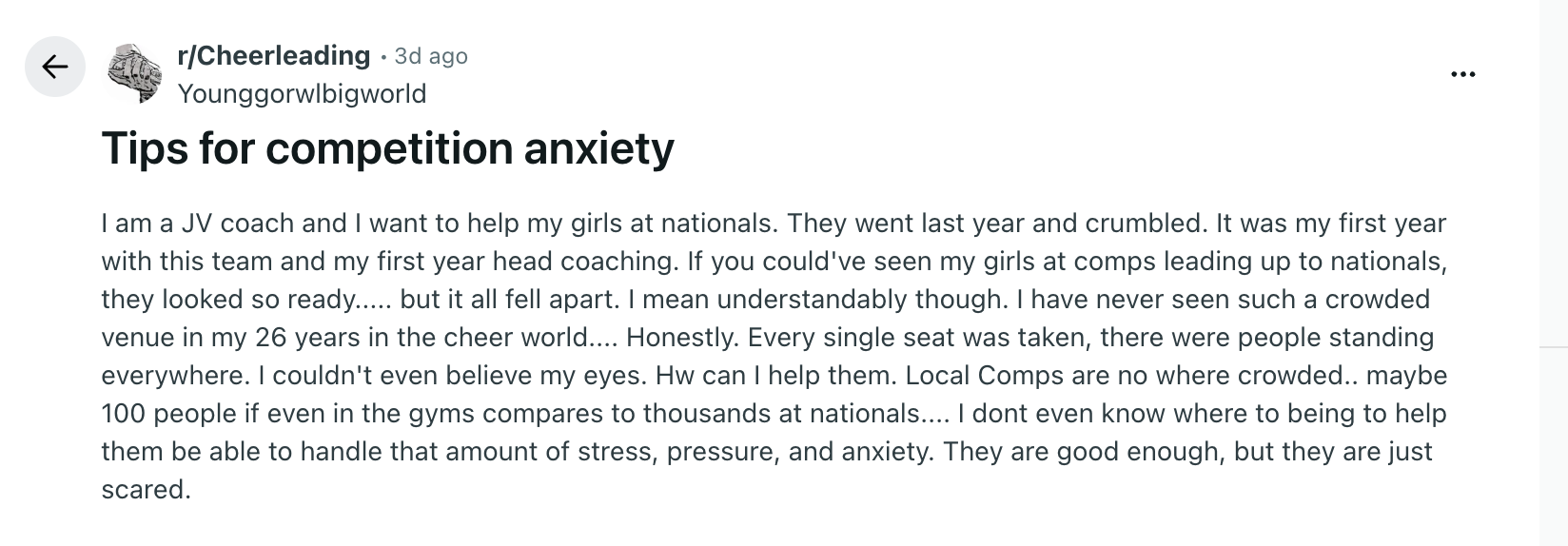
reddit post about cheerleading competition anxiety

Your girls didn’t forget their routine at nationals. They forgot they knew it.

You said they looked ready at every local comp, and I believe you. The skills were there. Then they walked into a room with thousands of people instead of a hundred. The room changed, and their bodies did the rest.

Here is the good news. You can train for the room, not just the routine.
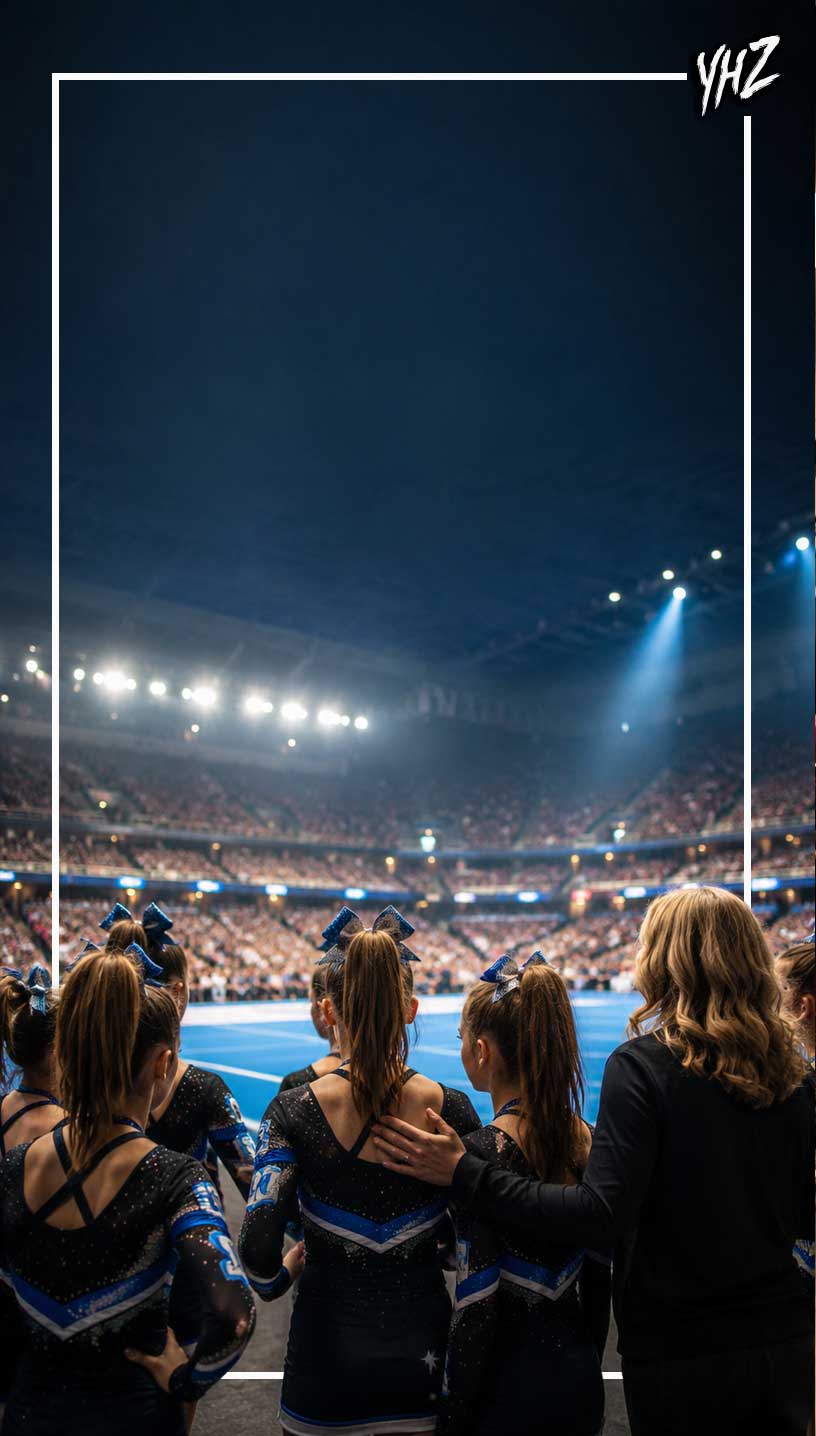
competition anxiety

The crowd is the opponent, not the routine

Nerves don’t show up because athletes doubt their tumbling. They show up because the brain reads a giant, loud, packed arena as a threat.

The heart races. The hands shake. The memory goes foggy. That is the nervous system reacting to scale, not skill.

So running the routine one more time won’t fix it. Changing how a big room feels to them will.

Recreate the chaos in practice

Your gym is quiet. Nationals is not. That gap is the problem you need to close.

Make practice loud and uncomfortable on purpose. Blast crowd noise through a speaker at full volume during full-outs. Pull up arena audio on YouTube and play buzzers, cheering, and announcers while they perform.

Invite people to watch, too. Ask other teams, parents, siblings, and the front desk staff to fill the gym. A bigger crowd in practice makes the real one feel smaller.

Give them a routine before the routine

Pressure makes athletes forget what to do with the ninety seconds before they take the floor. So hand them a script.

Same warm-up. Same stretch order. Same words in the huddle. Same spot in line, every single time.

A repeatable pre-performance routine tells the body it has done this before. Familiar actions quiet a panicked brain.

Teach them to breathe on command

Anxiety speeds up the breath, which speeds up everything else. Slow the breath and you slow the panic.

Teach box breathing and drill it until it sticks. Breathe in for four counts, hold for four, out for four, hold for four.

Run it at every rehearsal so it turns automatic. Then they can use it in the lineup without thinking.

Rename the feeling

A pounding heart before you compete feels almost the same as a pounding heart from excitement. Your athletes get to choose the label.

Stop telling them to calm down. Tell them they are excited and ready to go.

Athletes who treat nerves as fuel perform better than athletes who fight the feeling. So give that feeling a better name.

Need Competition Music Blue 1

Shrink the goal to one 8-count

Standing on the mat thinking about winning nationals is too big. The brain freezes under a goal that size.

Teach them to think about the next eight count and nothing else. Hit this section, then the next one, then the next.

A whole routine feels like a mountain. One 8-count feels like a single step.

They are watching your face

Athletes borrow their coach’s energy. If you look tense in the warm-up room, they will feel it before they hit the floor.

Stay loose. Crack a joke. Walk like you have done this a hundred times, even on the first time.

Your calm spreads to them. So does your panic. Pick one on purpose.

Talk about it before you go

Last year the nerves ambushed them. This year, take the surprise away.

Tell them straight. The arena will be huge and loud, their hearts will pound, and their legs might feel weird. That feeling is normal and expected.

When the nerves arrive right on schedule, they feel like part of the plan instead of a sign something went wrong.

full out practice tips for competition anxiety cheerleading

Your team is good enough. You said so yourself, and I trust your read after 26 years in this sport.

They don’t need better skills. They need reps in the chaos, a routine they trust, and a coach who looks unshakeable in the tunnel.

Train the room this season, not just the mat. Then walk into nationals like you own the place 😊

Steve Pawlyk Signature Full

IPP's Premade Mixes are USA Cheer Compliant and customizable!  Add Sound FX, swap songs, & more!  Add your Team Name to the mix for only $10! 

SLAM artwork
Full_Out_130 mp3 image
1 minute cheer mix
WAKE UP THE FIRE
SLAM artwork
WAKE UP THE FIRE
Full_Out_130 mp3 image
1 minute cheer mix

Preparing Your Team for End-of-Season Cheer Events: A Coach’s Guide

Preparing Your Team for End of Season Cheer Events A Coachs Guide

By Steve Pawlyk

Published September 3, 2024

As the cheerleading season progresses, the stakes get higher, and the competition gets tougher. The end-of-season events, such as the Allstar World Championship and the ICU World Championship, are some of the most prestigious competitions in the cheerleading world. For coaches, preparing a team to excel in these events requires meticulous planning, intense training, and a strong mental game. Here’s how you can ensure your team is ready to shine when it matters most.

1. Start with a Strong Foundation

  • Refine Basic Skills: Before delving into complex routines, make sure your team has mastered the basics. Stunts, tumbling, and jumps should be flawless and consistent. This foundation is crucial for building more intricate performances.
  • Conditioning and Strength Training: Incorporate regular conditioning sessions focused on building the strength and endurance needed for high-energy performances. This includes exercises that target core stability, flexibility, and explosive power.

2. Crafting the Perfect Routine

  • Routine Composition: Create a routine that highlights your team’s strengths while adhering to the scoring criteria of the competition. Balance difficulty with execution to avoid deductions. Consider consulting with choreographers who specialize in end-of-season competitions to gain an edge.
  • Incorporate Unique Elements: To stand out, incorporate creative elements such as unique transitions, visual effects, or unexpected musical choices. Judges often appreciate originality, provided it doesn’t compromise the routine’s execution.

3. Mental Preparation

* Visualization Techniques: Encourage athletes to use visualization techniques, imagining themselves successfully performing the routine. This mental rehearsal can boost confidence and reduce anxiety.
* Focus on Team Cohesion: Building a strong sense of unity and trust within the team is crucial. Team-building activities, group discussions, and positive reinforcement can help foster a supportive environment, essential for high-pressure situations.

4. Simulate Competition Conditions

* Mock Competitions: Hold full-out performances under conditions that simulate the actual competition environment. This includes performing in front of an audience, adhering to strict time limits, and dealing with potential distractions.
* Video Analysis: Record these performances and review them with the team. Highlight both the strengths and areas that need improvement. Use this feedback loop to make necessary adjustments and refine the routine further.

Need Competition Music Blue 1

5. Focus on Recovery and Injury Prevention
* Injury Prevention: As training intensity ramps up, so does the risk of injury. Ensure that athletes are following proper warm-up and cool-down protocols. Regularly check in with athletes about any aches or pains and address them promptly.
* Rest and Recovery: Plan for adequate rest days and recovery sessions. Overtraining can lead to burnout and diminish performance. Incorporate activities like yoga, stretching, and massage therapy to aid in recovery.
6. Fine-Tuning and Final Adjustments
* Routine Adjustments: As the competition approaches, make any final tweaks to the routine based on feedback and performance. Focus on cleaning up the details—pointed toes, sharp motions, and synchronized timing.
* Mental Rehearsals: In the final days before the competition, reduce physical training and focus on mental rehearsals. Use this time to build confidence and ensure that each athlete knows their role inside and out.
7. Prepare for the Event Day
* Event Logistics: Ensure that all logistics, from travel arrangements to uniform checks, are in order well in advance. Reducing stress on event day allows the team to focus solely on their performance.
* Nutrition and Hydration: Educate athletes on the importance of proper nutrition and hydration leading up to the event. A well-fueled body is essential for peak performance.

8. During the Competition
* Stay Calm and Focused: As a coach, your demeanor sets the tone for the team. Stay calm, offer constructive feedback, and keep the team focused on their goals.
* Post-Performance Reflection: After the performance, regardless of the outcome, gather the team for a reflection session. Highlight what went well and what can be improved for future performances. Use this as a learning experience for all athletes.

Preparing for end-of-season cheerleading events requires more than just skill; it requires strategy, mental toughness, and a well-rounded approach to training. By focusing on these key areas, you can help your team not only compete but excel on the biggest stages in cheerleading. Remember, the journey to these events is as important as the performance itself—every practice, every drill, and every moment of preparation contributes to the final outcome.

Steve Pawlyk Signature Full

IPP's Premade Mixes are USA Cheer Compliant and customizable!  Add Sound FX, swap songs, & more!  Add your Team Name to the mix for only $10! 

SLAM artwork
Full_Out_130 mp3 image
1 minute cheer mix
WAKE UP THE FIRE
SLAM artwork
WAKE UP THE FIRE
Full_Out_130 mp3 image
1 minute cheer mix
SHARE YOUR CART