
 •
• English
 日本語
日本語 Español
 Português
 Français
 Polski
 Deutsch
 Italiano
 Nederlands
 한국어
한국어 Русский
 简体中文
简体中文





Nov



By Steve Pawlyk
Published November 18, 2025
Consistency in motion execution is what makes a cheer team look professional and synchronized under pressure. Every perfect hit, clean line, and timed transition is the product of muscle memory – the body’s ability to reproduce movement automatically after enough structured repetition. Building that memory isn’t about doing endless reps; it’s about doing the right reps, with precision, timing, and awareness.
This guide provides All-Star and High School coaches with a system for teaching athletes how to engrain sharp motions into their neuromuscular patterns through progressive drills, cue phrasing, and conditioning that reinforce strength and accuracy over fatigue.
Understanding Muscle Memory in Cheer Technique
Definition:
Muscle memory is the automatic execution of a movement pattern through repeated neural reinforcement. When taught correctly, it allows athletes to hit perfect motions even under stress or fatigue.
How It Works:
- Cognitive Stage: Athlete consciously focuses on technique and positioning.
- Associative Stage: Movements become smoother as the brain refines timing and coordination.
- Autonomous Stage: The athlete executes motions without conscious effort – consistency achieved.
Key Principle:
Repetition alone doesn’t create good muscle memory – perfect repetition does. Poorly executed reps hardwire bad habits.
Step-by-Step: Building Muscle Memory One-on-One
Step 1: Lock in Perfect Form
Before any repetition begins, correct form must be flawless.
Cue: “You’re not training speed yet – you’re training accuracy.”
- Have the athlete hold each motion (High V, T, Low V, etc.) for 10 seconds.
- Check alignment: wrists, elbows, shoulders, and posture.
- Only when it’s perfect, begin repetitions.
Step 2: Use Isolated Reps
Perform each motion independently for 20–30 reps.
- Start slow (counted tempo).
- Cue: “Every hit should feel identical – no freelancing.”
- Record video for self-analysis if possible.
Step 3: Add Controlled Transitions
After form mastery, link two or three motions together (e.g., T → High V → Low V).
Cue: “Same path, same stop, same body tension every time.”
Step 4: Integrate Feedback Loops
Have the athlete perform 10 reps, pause, and assess one technical element (e.g., wrist height).
This breaks the mindless repetition cycle and keeps focus on micro-correction.
Teaching Small Groups
Step 1: Repetition Blocks
Group athletes in sets of 3–5 and assign a “motion captain.”
- The captain counts rhythm and monitors alignment.
- After 20 reps, rotate captains to develop peer correction habits.
Step 2: The “Mirror Wall” Method
Line up facing mirrors. Perform the same motion sequence simultaneously.
Cue: “Every reflection should move as one body.”
Step 3: Accountability Through Counting
Use a metronome or voice count (“1-2-HIT”) to unify timing.
If anyone breaks rhythm or position, the group restarts.
Encourages focus, teamwork, and precise repetition.
Teaching Full-Team Consistency
Step 1: Team Motion Circuits
Design circuits combining 4–6 motions repeated for 8-count cycles.
Example: High V → T → Punch → Low V → High V → T
Run for 4 sets of 8 counts each, resting 15 seconds between.
Cue: “Every rep builds your muscle’s memory bank – make it count.”
Step 2: Layered Speed Progression
- Slow drills for angle control.
- Medium-speed drills for rhythm.
- Full-speed music drills for endurance and performance readiness.
Step 3: Coach’s Visual Consistency Check
Record full-team reps from multiple angles.
Freeze frames to compare arm levels, tension, and spacing.

Coaching Language That Reinforces Repetition Quality
Effective Cues:
- “Precision over pace.”
- “Your body learns what you repeat – teach it the right thing.”
- “Every rep is a blueprint.”
- “Consistency lives in your shoulders and core.”
- “Don’t just move – memorize.”
Avoid:
- “Again!” without feedback – it trains errors.
- “Faster!” before accuracy is built.
Common Athlete Errors and How to Correct Them
|
Error |
Cause |
Correction Strategy |
|
Inconsistent arm height |
Visual feedback missing |
Mirror or video recording between reps. |
|
Fatigue leading to slouch |
Weak shoulder/core endurance |
Add plank variations and static V-holds. |
|
Speed sacrificing control |
Overemphasis on tempo |
Return to half-speed repetitions with counts. |
|
Bent elbows mid-rep |
Poor tension control |
Cue: “Steel arms, soft shoulders.” Use resistance bands. |
|
Uneven motion timing |
Lack of auditory rhythm |
Drill with metronome or 8-count track. |
Drills to Build Long-Term Muscle Memory
- Timed Repetition Sets
Perform 30 seconds of continuous motions, focusing on identical form each rep. Rest 15 seconds. Repeat 3 sets. - Mirror Match Drill
Partner athletes to mirror one another’s timing and motion accuracy. Visual reinforcement builds synchronization. - Count Control Drill
Run 8-count transitions slowly, freezing on each count. Forces awareness of arm path and pause integrity. - “Fade Test” Drill
Perform 25 perfect reps, then 5 more at fatigue level. Evaluate how form deteriorates. Reinforces endurance awareness. - Endurance Ladder
Add one rep per round (10 → 11 → 12, etc.). Athletes must maintain quality under load.
Conditioning for Muscle Memory Retention
Muscle memory relies on neural efficiency and physical endurance. Integrate these supportive exercises:
- Shoulder isometric holds: 3×30 seconds per position.
- Core rotations: 3×15 to maintain torso control through motion.
- Scapular pushups: 3×20 to reinforce shoulder stability.
- 8-count repetition drills: 4 rounds at full speed to simulate performance pressure.
Cue: “Train your body to remember perfect, not just repeat motion.”
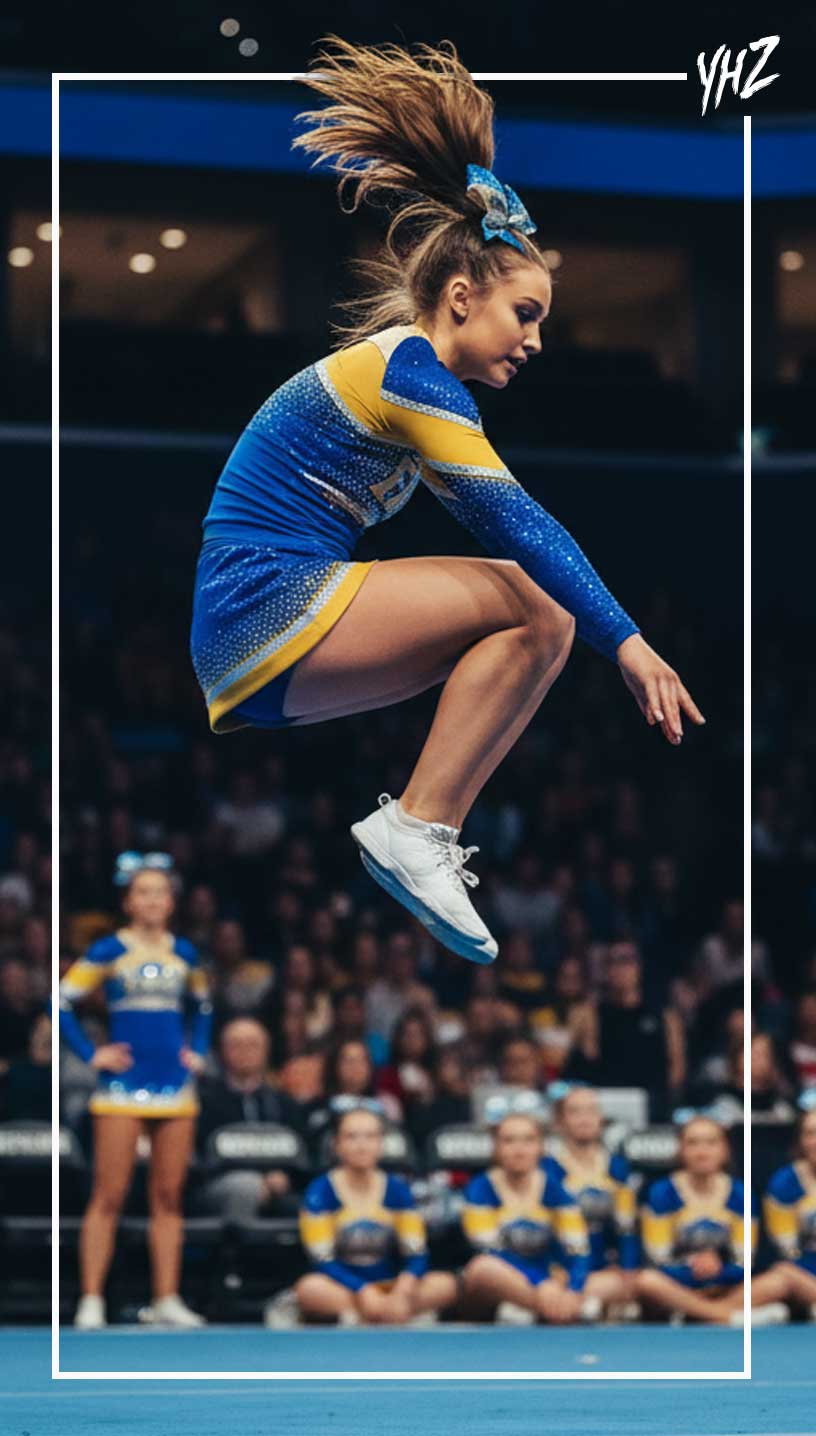
Repetition is only effective when it’s intentional. Muscle memory develops through technical accuracy, consistent cueing, and mindful pacing. As an All-Star coach, your job is to make every repetition meaningful – teaching athletes that quality repetition builds confidence and reliability under competition stress. Perfect repetition creates automatic excellence.

IPP's Premade Mixes are USA Cheer Compliant and customizable! Add Sound FX, swap songs, & more! Add your Team Name to the mix for only $10!



 Cheer Mixes
 Past-Season Mixes (40% off!)
 You Hit Zero Cheer Blog
 Spotify Playlists
 Quick Quote Video Tutorial