
 •
• English
 日本語
日本語 Español
 Português
 Français
 Polski
 Deutsch
 Italiano
 Nederlands
 한국어
한국어 Русский
 简体中文
简体中文


Jun



By Steve Pawlyk
Published June 23, 2026
Every coach watches Worlds looking for something to bring home: a stunt entry, a pyramid idea, a transition, a music moment, a dance section that makes the crowd lose it.
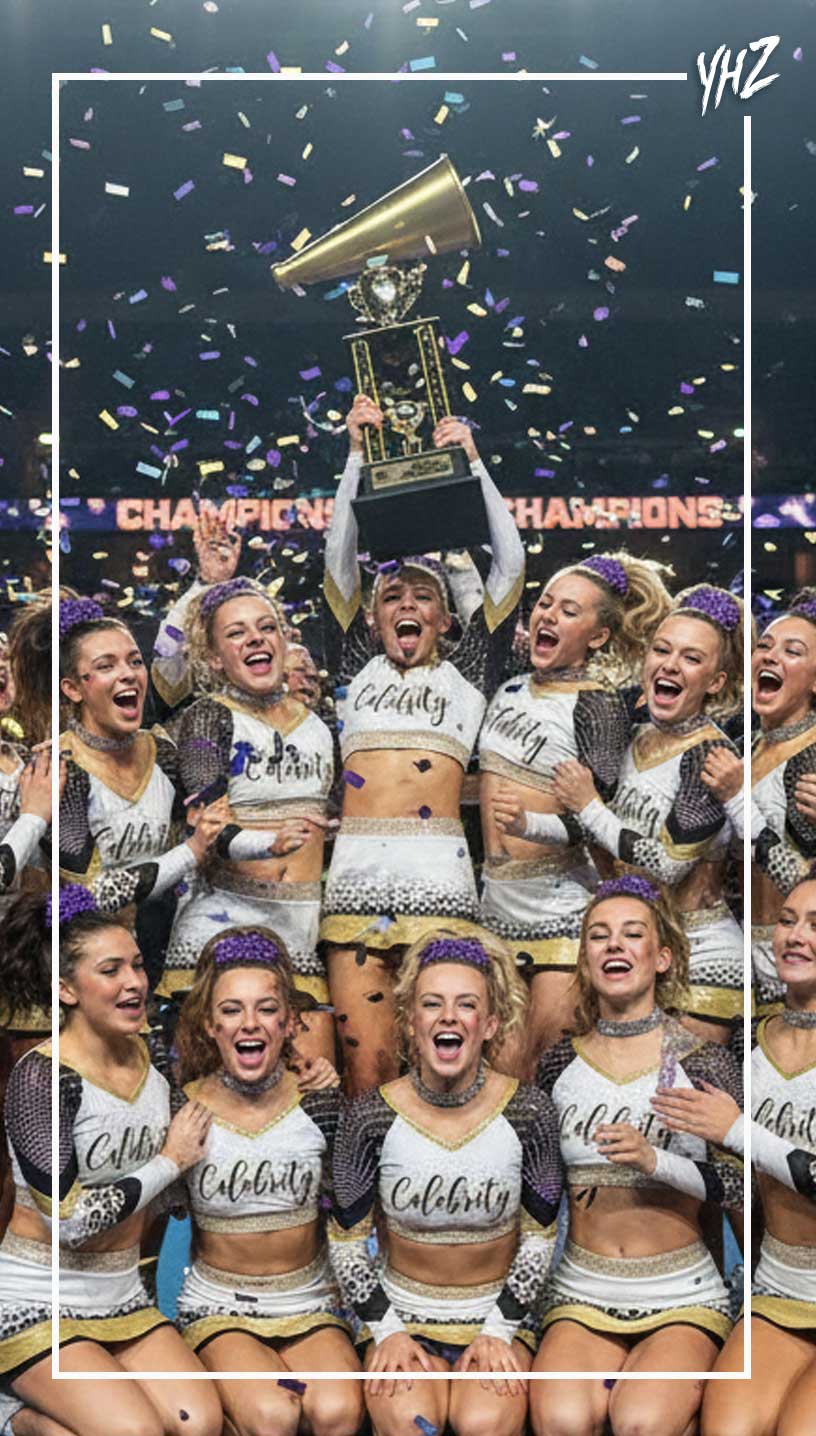
But Cheerleading Worlds 2026 told a bigger story than one new skill or one viral clip. The best teams in Orlando did not win because they crammed the most difficulty into two and a half minutes. They won because they made smart routine choices, protected their score, and gave judges a clear reason to reward every section.
The lesson from Worlds 2026 was not “go harder.” The lesson was “build smarter.”
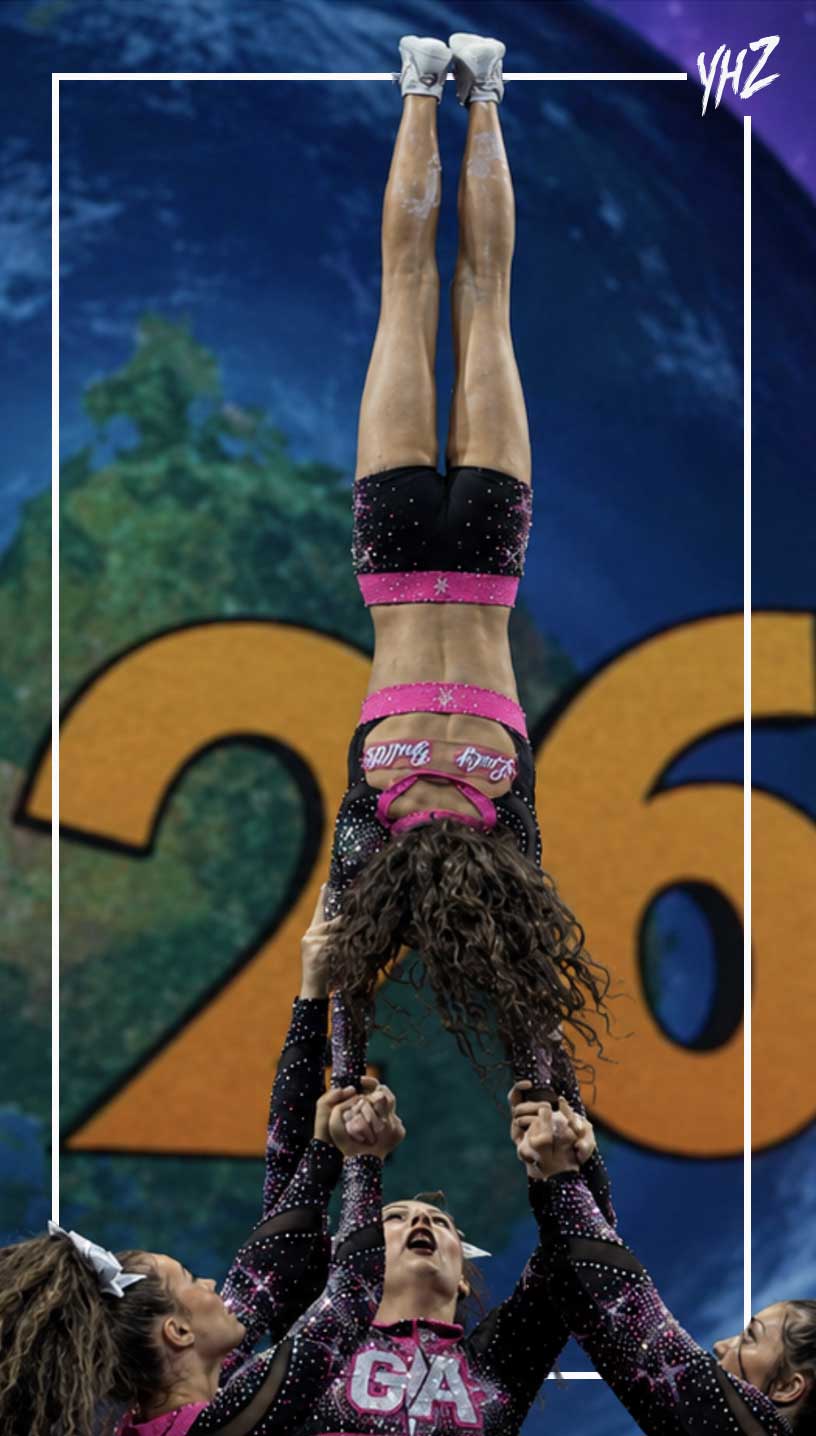
From Top Gun TGLC winning Senior Large Coed again, to Cheer Extreme Senior Elite defending Large Senior, to The California All Stars Lady Bullets controlling Senior XSmall, the routines that stood out had more than difficulty. They had identity, structure, pacing, and discipline.
Here are the seven routine trends coaches should take from Cheerleading Worlds 2026:
1. Deductions Decided the Story
The cleanest lesson from Worlds 2026 came straight from the score sheet.
Difficulty mattered. It always matters.
But deduction control separated champions from runners-up.
Look at L6 Senior Medium Coed. Spirit of Texas Royalty posted the highest raw score in the division with a 163.4. That should put a team in position to win. But four points in deductions dropped Royalty to a 159.4 final event score. Top Gun All Stars Savannah Legends scored a 162.3 raw score, took only one point in deductions, and won the division with a 161.3.
That is not a small detail.
That is the entire division.
Senior Large told the same story. Central Jersey All Stars Bombshells outscored The Stingray Allstars Orange in raw score, 151.65 to 149.45. But Bombshells took three points in deductions. Orange took zero. Orange finished second. Bombshells finished third.
Coaches love talking about upgrades. Worlds 2026 gave everyone a reminder that an upgrade only helps if the team can hit it when the lights are brightest.
A harder elite stunt that falls does not make your routine more competitive, it makes your math worse.
What This Means for Your Routine
Before adding difficulty, ask one brutal question: Can this team hit this skill three times under pressure?
Not once in a great practice. Not once when everyone feels fresh.
Three times. Under pressure. With fatigue. With nerves. With the season on the line. If the answer is no, the skill may belong in the gym longer.
2. Zero-Deduction Routines Became the Biggest Flex
A zero-deduction routine at Worlds says more than “we hit.” It says the coaches chose the right skills, trained the right details, and built a routine athletes could handle when everything got loud. Plenty of major 2026 champions made that point.
Top Gun TGLC won L6 Senior Large Coed with a 166.1 and zero deductions. Prodigy All Stars Midnight won L6 Senior Small Coed with a 164.15 and zero deductions. Cheer Extreme Raleigh SSX won L6 Senior Small with a 163.25 and zero deductions. The California All Stars Lady Bullets won L6 Senior Extra Small with a 162.4 and zero deductions.
Those teams did not water down their routines. They made elite difficulty look stable. That difference matters.
Worlds-level judges do not reward survival. They reward control. They reward body positions that finish. They reward groups that move together. They reward tumbling that lands with confidence instead of panic. They reward routines that look like the team owns every skill.
The best routines at Worlds 2026 did not feel like athletes were hanging on. They felt trained.
What This Means for Your Routine
Clean is not boring. Clean is expensive. It takes time, reps, honest coaching, and the discipline to remove skills that only hit when everything goes perfectly. A routine that hits clean in April starts with smart decisions in summer.

3. Program Identity Mattered More Than One Surprise Skill
The teams that people remembered had a point of view. You could feel it before awards.
Top Gun did not bring one team to Orlando with one style. The program brought different versions of the same confidence. TGLC won Senior Large Coed. Lady Jags won Senior Medium. Legends won Senior Medium Coed. Double O won International Open Large Coed Level 6. Toxic won International Open Small Coed Level 7.
Those routines did not look identical. They felt connected. That is program identity.
Cheer Extreme gave the same lesson in a different way. Courtney Smith’s Kernersville side had Senior Elite back on top in Large Senior. Kelly Helton’s Raleigh side had SSX winning Senior Small and Code Black winning International Open Coed Non-Tumbling Level 6.
Different teams. Different divisions. Same clear standard.
That matters because judges and fans can feel when a program knows exactly who it is. The routine has a tone. The athletes perform with confidence. The choreography matches the team. The music does not feel pasted on. The routine does not chase every trend at once. It commits.
What This Means for Your Routine
Your routine should not look like a highlight reel from five other gyms. Take inspiration from Worlds, but do not copy blindly.
Build around your team’s strengths, your program’s personality, and the athletes standing in front of you. A routine with a clear identity will always feel more confident than one built from random “cool parts.”
4. The Best Routines Used Pacing Like a Weapon
Worlds routines can get messy fast.
Everyone wants a big opening. Everyone wants an elite stunt. Everyone wants a basket moment. Everyone wants tumbling. Everyone wants a pyramid people remember.
The problem comes when a routine tries to scream for two and a half minutes.
The best Worlds 2026 routines understood pacing.
They gave the audience and judges a reason to keep watching. They built from section to section. They created rises and releases. They did not treat transitions as dead space. They used choreography to set up skills instead of simply filling time between them.
That is why routines like TGLC, Senior Elite, Orange, Lady Jags, Royalty, Legends, Peach, Midnight, Black Ops, and Double O kept showing up in fan conversations and replay lists. Those teams did not only perform skills. They managed attention.
That is a massive coaching skill.
A routine should not feel like a playlist of unrelated moments. It should feel like one idea that keeps developing.
What This Means for Your Routine
Watch your routine without music. If the structure still makes sense, you probably built something solid. If the routine only feels exciting because the music covers awkward transitions, you have work to do.
Transitions should move the story forward. They should set up formations, create visual interest, and help the next section arrive with purpose.
5. Crowd Favorites Had More Than Difficulty
Crowd reaction does not determine the score, but it tells coaches something useful.
The routines people replay after Worlds usually have a clear identity, strong pacing, and at least one moment fans want to see again. FloCheer’s most-watched Worlds 2026 list made that obvious. The Stingray Allstars Orange finished second in Senior Large, but ranked first among the most-watched routines. Spirit of Texas Royalty finished second in Senior Medium Coed, but ranked third on that replay list. Top Gun Lady Jags, Senior Elite, Legends, Peach, Midnight, TGLC, Black Ops, and Double O all landed in the top ten.
That list matters because it shows the difference between scoring well and being remembered. Coaches should care about both.
A routine does not need gimmicks to be memorable. It needs moments that feel earned. A stunt sequence that builds tension. A pyramid that resolves cleanly. A dance that matches the team’s personality. A music change that lands at the exact right second. A formation that makes the floor feel full.
The audience reacts when the routine gives them a reason.
What This Means for Your Routine
Do not add “performance value” as decoration at the end; build it into the routine from the start.
Performance value comes from confidence, pacing, musicality, formations, and athletes who know what the moment means. If your team only performs during dance, the routine will feel flat everywhere else.
6. International Programs Are No Longer Chasing From Far Behind
The international divisions made one thing clear: the gap keeps shrinking.
Unity Allstars Ruby from England won International Open Level 6 with a zero-deduction 132.05. Cheer Sport Sharks Ottawa Silky Sharks from Canada won International Open Non-Tumbling Level 6 with a zero-deduction 125.9. TR Cheer Beast from Canada won International Open Small Coed Level 5 with a zero-deduction 133.85. ACE Athletics Rouge from Canada won International Open Large Coed Level 5 with a zero-deduction 137.05. Then you had Barcelona Bears Legacy from Spain winning International Open Coed Non-Tumbling Level 7 with a zero-deduction 132.15.
That is not “international teams are improving” as a polite throwaway line, that is international programs winning divisions, hitting zero, and forcing everyone else to match their standard. The depth showed up across the results too. Canada, England, Australia, Germany, Japan, Mexico, Chile, Puerto Rico, Wales, Spain, Sweden, Ireland, and other countries appeared throughout Finals and Semi-Finals. Worlds has always been international by name, but in 2026, it felt international by competitive reality.
What This Means for Your Routine
Stop treating international teams as side stories. If you coach in the United States, the standard is no longer local, regional, or even national. The standard is global.
If you coach outside the United States, Worlds 2026 should give your athletes proof that the door is open. Programs from outside the U.S. are not just showing up. They are winning, globing, and hitting routines that belong on the biggest stage.
7. The Small Details Moved Teams Up the Rankings
Every coach says details matter. Worlds 2026 proved it.
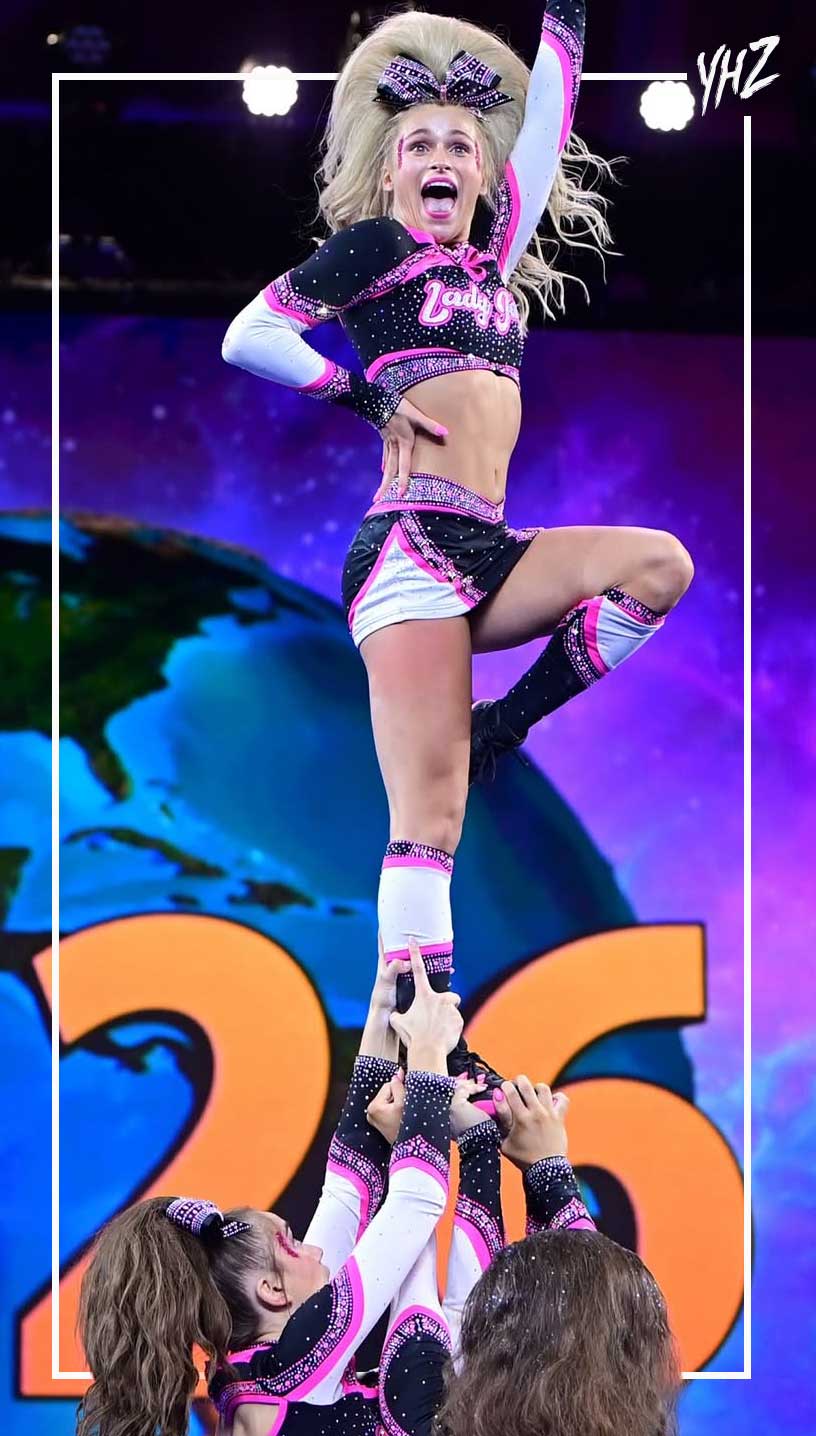
Small details turned into placements. A cleaner landing. A sharper motion. A controlled body position. A stunt group that finishes together. A transition that does not waste counts. A pyramid that hits the picture without wobble.
These details do not always make the highlight clip, but they make the score sheet. The Senior Small Coed division gave coaches a perfect example. Prodigy Midnight, Brandon Senior Black, and CALI SMOED finished first, second, and third. All three hit zero-deduction routines. At that point, the division turned into a battle of execution quality, routine construction, and who could create the most complete performance without giving anything back.
That is Worlds. At lower levels, teams can sometimes survive messy details because the difficulty gap creates separation. At Worlds, every detail has a cost.
What This Means for Your Routine
Film everything. Not just full-outs. Film stunt reps. Film transitions. Film jumps. Film pyramid timing. Film athletes walking into formations. Film what happens after a skill hits. Then watch without making excuses.
If motions finish late, fix them. If groups dip at different times, fix them. If athletes travel through transitions without purpose, fix them. If your pyramid picture takes too long to settle, fix it. The fastest way to improve your routine may not be adding a skill. It may be cleaning the five seconds before the skill.
Cheerleading Worlds 2026 did not reward chaos; it rewarded control.
The champions and fan favorites had difficulty, but they also had restraint. They knew what their athletes could hit. They protected the score sheet. They built routines with identity. They gave each section a job. They created moments without letting performance value turn into clutter.
That is the real trend. Not one stunt. Not one pyramid. Not one dance move.
The best routines at Worlds 2026 looked intentional from the first count to the final pose. That should be the goal for every coach planning a new season.
Build a routine your athletes can hit. Give it a clear identity. Train the details until they look automatic. Then clean it again.
Worlds did not prove that safe routines win, it proved that smart routines win..and there’s a difference.

IPP's Premade Mixes are USA Cheer Compliant and customizable! Add Sound FX, swap songs, & more! Add your Team Name to the mix for only $10!


 Cheer Mixes
 Past-Season Mixes (50% off!)
 You Hit Zero Cheer Blog
 Spotify Playlists
 Quick Quote Video Tutorial