Category Archives: Cheer How-To Series

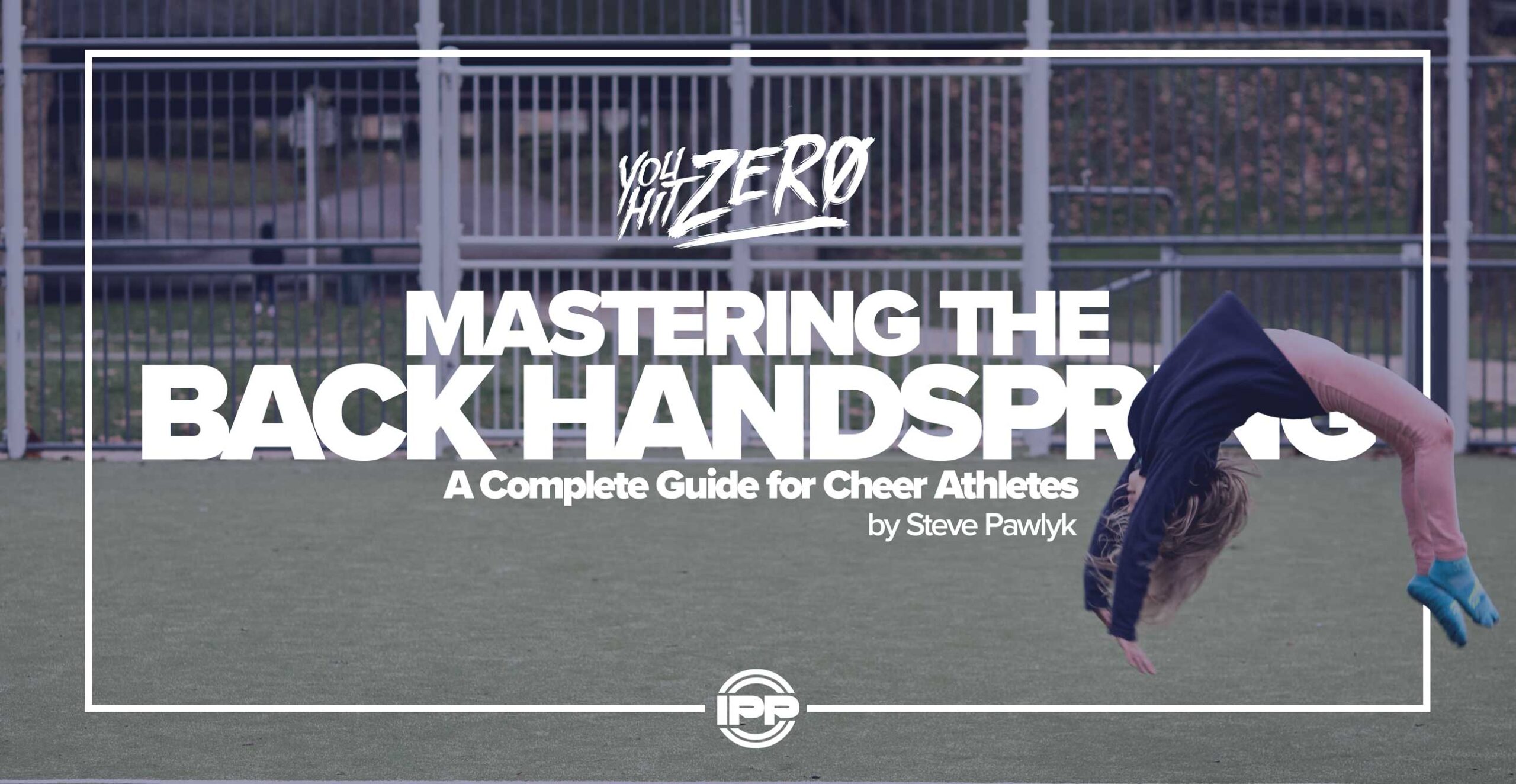
Mastering the Back Handspring: A Complete Guide for Cheer Athletes

mastering-the-back-handspring-complete-guide

By Steve Pawlyk

Published July 14, 2023

Today, we’re focusing on a core cheerleading move, the back handspring. This move is not only crucial for a successful routine, but it also helps in building strength, agility, and precision in cheerleaders.

A back handspring, also known as a flip-flop or flick-flack, is an acrobatic move where the athlete jumps backwards onto their hands and then pushes off the ground to land back on their feet. It’s a mainstay in cheerleading and although it looks complex, it can be mastered with the right technique, consistent practice, and a few of our lesser-known tips and tricks.

Let’s start this journey to mastering the back handspring!

Stage 1: Strength and Flexibility Exercises

Before attempting the back handspring, it’s crucial to develop the necessary strength and flexibility. Here are some key exercises:

1. Handstands: Practicing handstands not only enhances your upper body strength but also accustoms your body to being upside down, a crucial aspect of the back handspring.

2. Hollow Body Holds and Rocks: These exercises strengthen your core, a vital area for executing a back handspring with control.

3. Bridge Push-ups: These help improve shoulder flexibility and strength.

4. Jump Squats: They increase leg power, crucial for launching your body into the back handspring.

5. Wrist and Ankle Mobility Exercises: Conditioning these areas is essential as they bear the impact in a back handspring.

Stage 2: Drilling the Technique

Once your strength and flexibility are up to par, start working on the technique. Initially, practice with a spotter or use equipment like a back handspring trainer or an incline mat.

1. Start Position: Stand straight, with your feet together. Bend your knees slightly and swing your arms backwards.

2. Jump Phase: Swing your arms forward and upwards, and push off the ground with your feet. At the peak of your jump, your body should be in a “C” shape with your hands reaching for the ground.

3. Handstand Phase: As your hands contact the ground, your legs should continue their upward momentum. Aim for a brief handstand position before moving into the next phase.

4. Push-Off Phase: Push hard off your hands, using your shoulder strength, allowing your hips and legs to flip over.

5. Landing Phase: Your feet should hit the ground at the same time, completing the jump.

Stage 3: Lesser-Known Tips and Tricks

After familiarizing yourself with the basics, it’s time to apply some insider secrets to refine your back handspring:

1. Spot the Landing: Many cheerleaders close their eyes while executing the back handspring. Try to keep your eyes open and spot the landing to improve accuracy and build confidence.

2. The Power of Visualization: Before performing a back handspring, visualize each phase in your mind. This mental rehearsal can greatly improve your technique.

3. Practice Patience: Mastering a back handspring can take time. Break down the technique into small parts and master each before moving on to the next. Remember, consistency is key!

4. Breathing is Essential: It’s common to hold your breath during this move, but proper breathing can enhance performance. Try to exhale during the jump and push-off phases.

5. Stay Tight: Keeping your body taut throughout the move can help maintain control and make the back handspring smoother.

Mastering the back handspring is a journey that demands dedication, persistence, and patience. Remember to always prioritize safety and never rush the process. Practice regularly, and don’t hesitate to seek help from a coach or spotter. With time, practice, and the right approach, you’ll be executing flawless back handsprings in no time!

Every journey starts with a single flip. Here’s to your back handspring journey, and remember, you’re just a hop, flip, and a jump away from making the crowd cheer! Keep hitting zero with IPP Music, and stay tuned for more tips, tricks, and cheerleading guidance.

Steve Pawlyk Signature Full

IPP's Premade Mixes are USA Cheer Compliant and customizable!  Add Sound FX, swap songs, & more!  Add your Team Name to the mix for only $10! 

SLAM artwork
Full_Out_130 mp3 image
1 minute cheer mix
WAKE UP THE FIRE
SLAM artwork
WAKE UP THE FIRE
Full_Out_130 mp3 image
1 minute cheer mix

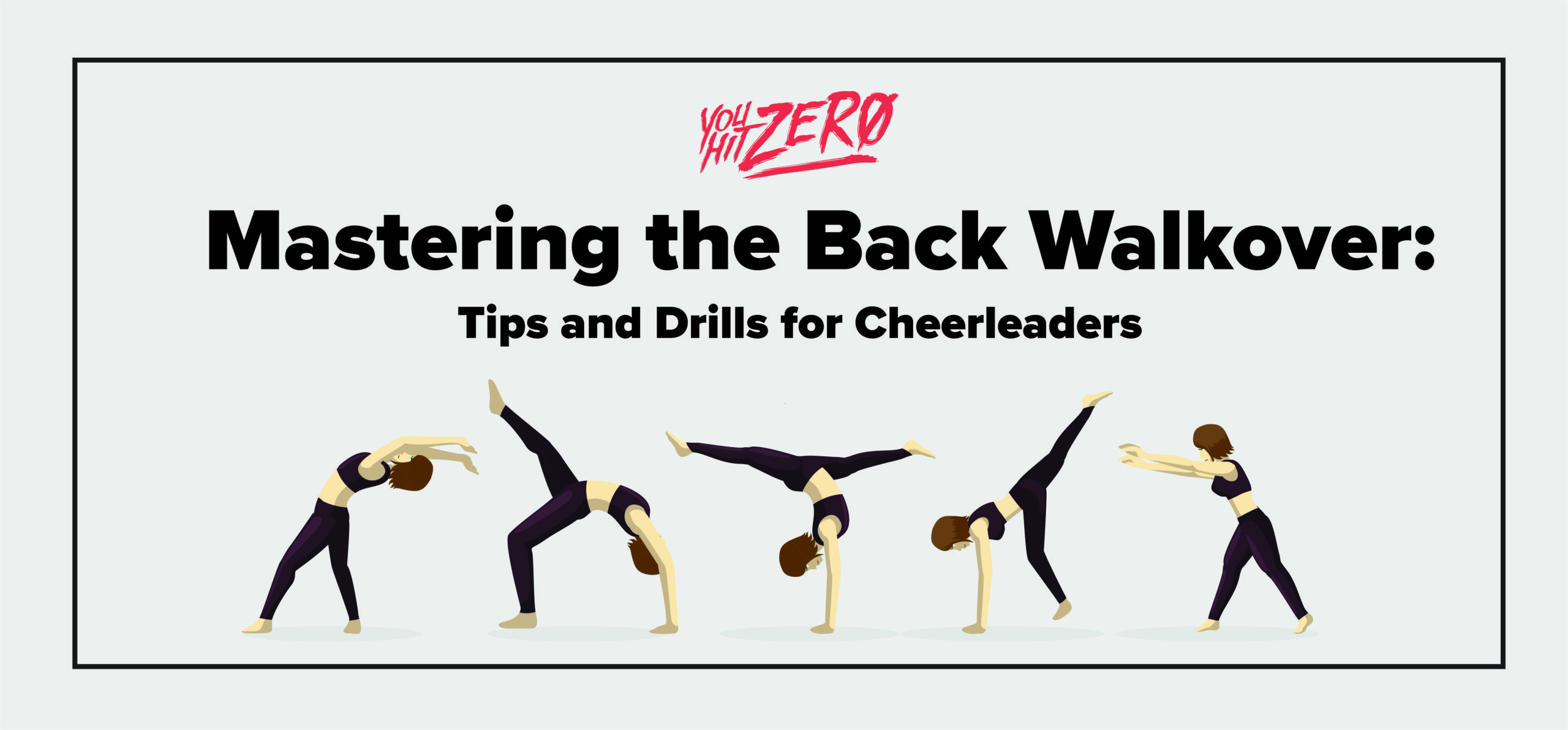
Mastering the Back Walkover: Expert Tips and Drills for Cheerleaders

Mastering the Back Walkover: Expert Tips and Drills for Cheerleaders

By Steve Pawlyk

Published July 14, 2023

Today, we’re addressing a common challenge that many cheerleaders face: mastering the back walkover. This skill is a fundamental part of many routines and can be a hurdle for some athletes. Often cheerleaders struggle with back walkovers, despite regular practice and stretching. So let’s dive into some tips and drills that can help you conquer this move.

Understanding the Back Walkover

The back walkover is a gymnastic skill that requires a combination of strength, flexibility, and balance. It involves starting from a standing position, reaching backwards into a bridge, and then kicking over to return to a standing position. The cheerleader who posted her frustration with this on Reddit mentioned that she can fall into a bridge but struggles with the kick over. This suggests that she may need to focus on building strength and improving technique.

Building Strength

While flexibility is crucial for a back walkover, strength is equally important. You need strong shoulders, back, and core muscles to control your body as you kick over from the bridge position. Here are a few exercises to help build this strength:

1. Planks: Planks are excellent for strengthening your core. Try to hold a plank for 30 seconds to a minute, and gradually increase your time as your strength improves.

2. Push-ups: Push-ups can help build shoulder and arm strength. If regular push-ups are too challenging, start with knee push-ups and gradually progress to full push-ups.

3. Bridge push-ups: These target your shoulders, back, and core. Start in a bridge position and try to push your body up and down.

Improving Technique

The technique is key in a back walkover. Here are a few drills to help improve your technique:

1. Bridge kickovers: Start in a bridge position with your feet on an elevated surface like a mat or a step. Kick over one leg at a time. This drill can help you get the feel of the kickover motion.

2. Spotter-assisted back walkovers: Ask a coach or a teammate to spot you as you attempt your back walkover. They can provide support as you kick over, helping you understand the movement and build confidence.

3. Wall walkovers: Stand a few feet away from a wall, facing away from it. Reach back into a bridge against the wall and use it to push off and kick over. This drill can help you practice the kickover motion with some support.

Increasing Flexibility

Even though our cheerleader friend has been stretching daily, she might need to incorporate some specific stretches to increase her back and shoulder flexibility:

1. Doorway stretch: Stand in an open doorway, place your hands on the door frame slightly above your head, and lean forward to stretch your shoulders.

2. Cobra pose: This yoga pose is great for increasing back flexibility. Lie on your stomach, place your hands under your shoulders, and push your upper body off the ground.

3. Bridge stretch: Regularly practicing your bridge can also help improve your flexibility. Try to hold the position for longer periods and work on straightening your legs and pushing your shoulders over your hands.

Perfecting the Back Walkover: A Detailed Breakdown

The back walkover can be a challenging skill to master, but breaking it down into smaller, more manageable movements can make it easier to understand and execute. Let’s delve into a more detailed explanation of the back walkover, focusing on the bridge position and the transition to the kickover.

The Bridge Position

When you’re in the bridge position, it’s important to push your shoulders forward as far as possible. This movement will naturally start to straighten your legs. The goal here is to create a strong, stable base from which you can initiate the kickover.

The Kickover Transition

Once your legs are close to straight, bring one foot in, so one leg is bent and the other is straight. This is the starting position for the kickover. From here, you’ll want to look at your hands and aggressively push the bent leg straight while lifting the other leg up.

It’s crucial to think of this movement less as a “kick” and more as a “push and swing.” You’re pushing through the bent leg so it extends fully, and simultaneously swinging the straight leg up and over. This combination of movements creates the momentum you need to complete the back walkover.

Working with a Spotter

If you’re still finding the back walkover challenging, working with a spotter can be very helpful. They can provide physical support and guidance as you practice the movement, helping you build confidence and improve your technique.

The Bridge Position

When you’re in the bridge position, it’s important to push your shoulders forward as far as possible. This movement will naturally start to straighten your legs. The goal here is to create a strong, stable base from which you can initiate the kickover.

The Kickover Transition

Once your legs are close to straight, bring one foot in, so one leg is bent and the other is straight. This is the starting position for the kickover. From here, you’ll want to look at your hands and aggressively push the bent leg straight while lifting the other leg up.

It’s crucial to think of this movement less as a “kick” and more as a “push and swing.” You’re pushing through the bent leg so it extends fully, and simultaneously swinging the straight leg up and over. This combination of movements creates the momentum you need to complete the back walkover.

Working with a Spotter

If you’re still finding the back walkover challenging, working with a spotter can be very helpful. They can provide physical support and guidance as you practice the movement, helping you build confidence and improve your technique.

You can also practice back walkovers going down a cheese mat (an incline mat) with a spotter. The incline can help make the movement easier by using gravity to assist with the momentum. This can be a great way to get a feel for the back walkover and understand how the movements should flow together.

The Back Walkover vs. The Kickover

Interestingly, many cheerleaders find the back walkover easier to perform than a kickover from a bridge. This is because the momentum going backwards in a back walkover naturally makes your legs follow, making the movement feel more fluid and less forced.

So, if you’re struggling with the kickover, try practicing back walkovers instead. You might find that the backwards momentum helps you understand and execute the movement more easily

Remember, mastering a skill like the back walkover takes time, patience, and lots of practice. Don’t be discouraged if you don’t get it right away. Keep practicing, stay consistent with your strength training and stretching, and don’t hesitate to ask for help from your coach or teammates. You’re not alone in this journey, and with dedication and perseverance, you’ll be able to nail that back walkover in no time 👍

Steve Pawlyk Signature Full

IPP's Premade Mixes are USA Cheer Compliant and customizable!  Add Sound FX, swap songs, & more!  Add your Team Name to the mix for only $10! 

SLAM artwork
Full_Out_130 mp3 image
1 minute cheer mix
WAKE UP THE FIRE
SLAM artwork
WAKE UP THE FIRE
Full_Out_130 mp3 image
1 minute cheer mix

New to Cheer: Overcoming Initial Challenges and Winning over your Teammates

new-to-cheer-bullying-and-winning-over-your-teammates

By Steve Pawlyk

Published July 11, 2023

Today’s topic is inspired by a question we stumbled upon on Reddit, posted by a new cheerleader who is feeling ostracized and disrespected by their team. To the poster and any other cheerleaders finding themselves in a similar situation, this article is for you.

Being the new person in any team or group can be intimidating and often daunting, and cheerleading teams are no exception. But before you start questioning if this “cold shoulder” treatment is a universal cheerleading phenomenon, let’s unpack your experience and offer some insights.

Understanding the Dynamics

Cheerleading, like any sport, requires a certain degree of skill, discipline, and hard work. When you join a team where the majority of members have been together for a while, they’ve already formed a certain bond and rhythm. The frustration you’re experiencing might not be a personal disregard towards you, but instead, the team members grappling with adjusting to a new addition.

Building Your Skills

You mentioned that you are still learning the basics. Cheerleading involves a lot of practice and precision in skills like jumps, kicks, cheers, and more. If you’re struggling with these, remember that all cheerleaders were beginners at some point. Keep practicing, seek help from your coach or teammates, and stay patient with your progress. The more competent you become, the more you’ll likely feel integrated into the team.

Communication is Key

It’s essential to express your feelings if you’re comfortable doing so. Talk to your coach or even a teammate you feel slightly closer to. You’re a part of the team, and your feelings matter. If the situation doesn’t improve after voicing your concerns, you might need to reconsider if this particular team is the right fit for you.

Initiate Interaction

Since you mentioned you are pretty shy, it might be a challenge for you to take the initiative. But remember, little steps can lead to significant changes. Start by saying ‘hi’ to your teammates, ask them about their day, or cheer them on during practice. They might just need to see a bit more of your personality to start warming up to you.

Addressing Bullying within the Team

While we’re hopeful that the situations we’ve previously discussed are simply team dynamics at play, we must address a more severe concern: bullying. Bullying – whether it’s verbal, physical, or through exclusion – is completely unacceptable in any environment, including cheerleading teams.

Recognizing Bullying

Bullying can manifest in many ways. It could be consistent negative remarks about your performance, exclusion from team activities, or any behavior designed to make you feel uncomfortable, humiliated, or unwanted. Recognizing bullying behavior can sometimes be difficult, especially if it’s subtle or if the majority of the team participates in, or is indifferent to it.

Stand Up and Speak Out

If you suspect bullying, it’s essential to stand up against it. Confront the individuals involved if you feel safe doing so. However, this may not always be possible, particularly when there’s a significant power dynamic at play, or if the bullying is widespread within the team.

Seek Help from Trusted Authorities

In such cases, reach out to your coach or another trusted adult and explain your situation. It’s crucial to be as specific as possible in describing what you’ve experienced and who was involved. Remember, it’s not tattling or overreacting. Coaches, team advisors, and school authorities have a responsibility to ensure a safe, respectful, and supportive environment for all team members.

Building a Positive Team Culture

In an ideal world, all cheerleading teams would foster a culture of respect, encouragement, and inclusivity. A healthy team encourages its members to uplift each other, celebrates individual and team successes, and treats each other with kindness and respect. Bullying has no place in this environment.

Don’t Suffer in Silence

Feeling like your team dislikes you or enduring consistent bullying can be incredibly painful and isolating. Please, don’t suffer in silence. Reach out to your family, friends, or mental health professionals who can provide support and guidance. You deserve to be treated with respect, and it’s important to prioritize your well-being over any sport or activity.

Remember, being part of a cheerleading team should be a positive experience that nurtures camaraderie, skills, and mutual respect. Bullying should never be tolerated, and it’s important to address it head-on to protect your mental and emotional health. Remember, you have the right to cheer in a safe, supportive environment.

Cheerleaders: A Diverse and Inclusive Community

In response to the query, “Is this just how all cheerleaders are?” – Absolutely not. Cheerleading attracts a diverse group of individuals, and it’s unfair to stereotype all cheerleaders based on the actions of a few. Just like any sport or community, there will be individuals and teams that exhibit negative behavior, but these do not represent the cheerleading community as a whole.

The heart of cheerleading lies in teamwork, camaraderie, and mutual respect. Countless cheer teams around the world exhibit these values daily, creating inclusive, supportive environments where each member is valued and respected. If you’re in a situation where this isn’t the case, know that this is not the norm, nor should it be acceptable.

Cheerleading – A Sport of Team Spirit

At its core, cheerleading is all about team spirit. Every cheerleader, whether seasoned or a newbie, contributes to the overall energy and performance of the team. If you’re feeling ignored or disrespected, that’s not reflective of the true ethos of cheerleading. Rest assured, this is not the universal experience for all cheerleaders.

To wrap up, you’re not alone in your feelings of alienation as a new member. It’s a common experience that extends beyond cheerleading and into many areas of life. Be patient with yourself, keep improving your skills, and try opening channels of communication. Soon enough, you’ll hit your stride, and hopefully, your team will recognize and appreciate the unique value you bring to the table. Keep cheering!

Steve Pawlyk Signature Full

IPP's Premade Mixes are USA Cheer Compliant and customizable!  Add Sound FX, swap songs, & more!  Add your Team Name to the mix for only $10! 

SLAM artwork
Full_Out_130 mp3 image
1 minute cheer mix
WAKE UP THE FIRE
SLAM artwork
WAKE UP THE FIRE
Full_Out_130 mp3 image
1 minute cheer mix

The Essential Guide to Cheerleading Tumbling Progression

cheer tumbling progression chart

By Steve Pawlyk

Published June 29, 2023

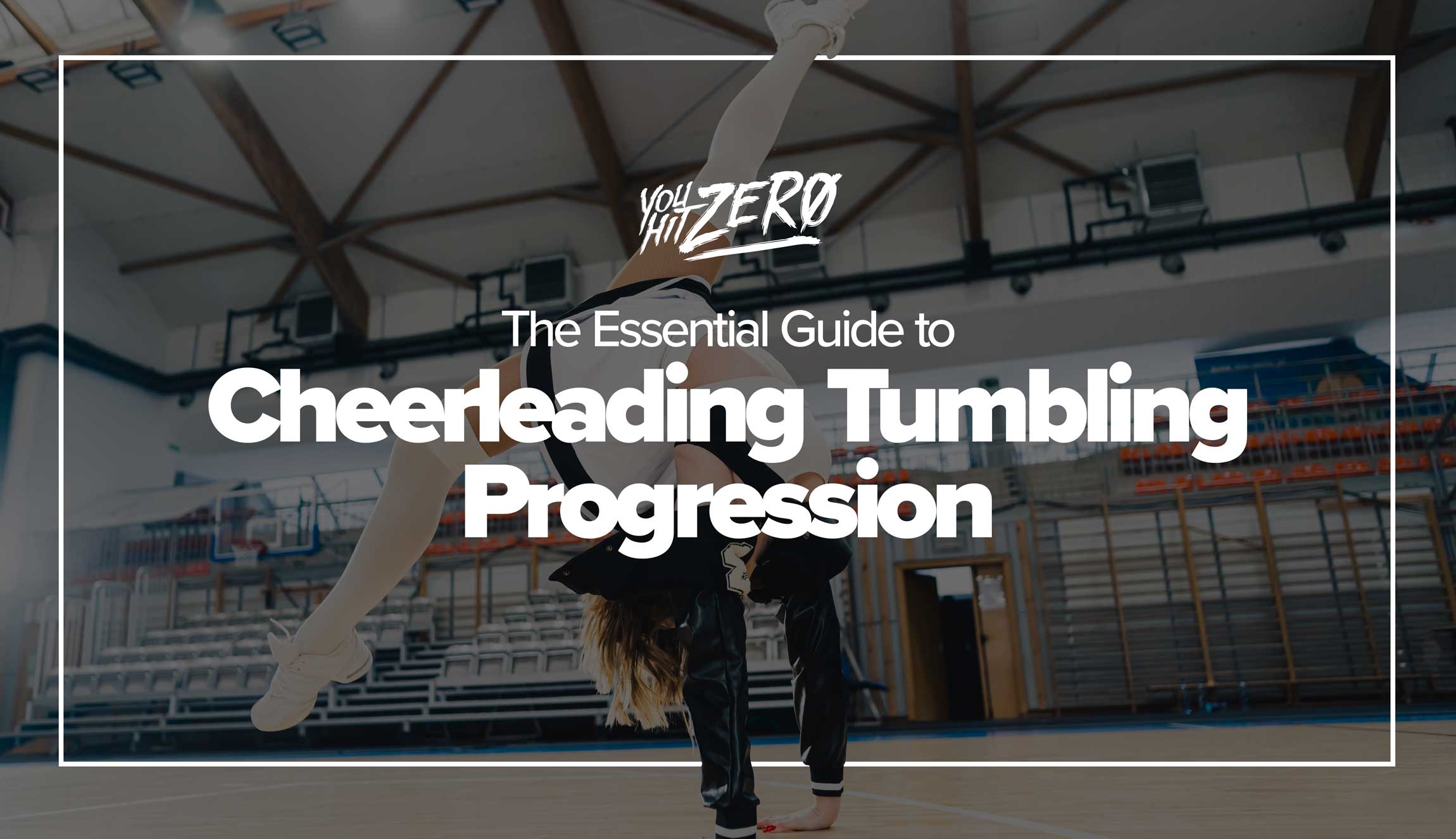
Tumbling is an integral part of cheerleading. It enhances the visual appeal of routines and showcases the athletic prowess of the cheerleaders. However, learning tumbling skills is a gradual process that requires consistency, patience, and above all, a clear understanding of progression levels. In this article, we will walk through the tumbling progression guide, breaking down each level to help cheer coaches better structure their athletes’ training.

  • Level 1.0: The Foundation
    The first level focuses on basic gymnastic skills that lay the groundwork for more advanced moves. At this level, athletes will learn forward and backward rolls, handstands, and cartwheels, as well as handstand snap-downs, bridge downs, and opposite cartwheels. Each of these moves builds core strength, flexibility, and body awareness, critical attributes for future progress.
  • Level 1.5: Building Momentum
    At Level 1.5, the focus is on slightly more complex skills that build on the foundations set in Level 1.0. Here, athletes start learning moves like 2-step round-offs, power hurdle round-offs, backward roll press ups, and front and back walkovers. The Valdez, a graceful move performed from a seated position, also makes its debut at this level.
    • Level 2.0: Introducing the Back Handspring

      The back handspring – a cheerleading staple – is introduced at Level 2.0. Also added to the repertoire are round-off back handsprings, front handsprings, front walkover-round-offs, and back extension rolls. These moves require and help develop upper body strength, better control, and enhanced spatial awareness.

    • Level 2.5: Mastery of the Back Handspring

    Level 2.5 emphasizes the mastery and integration of the back handspring. The goal is to perform multiple back handsprings and seamlessly transition from a front walkover to a round-off back handspring. This level encourages fluidity in motion and lays the foundation for complex tumbling sequences.

    • Level 3.0: Daring Heights

      By Level 3.0, cheerleaders should be comfortable performing solo and sequence back handsprings. They’re now ready for high-flying moves like round-off back handspring tucks, standing tucks, and aerials. The cheerleader will also start working on coin tosses, punch fronts, and toe touch back handsprings, further expanding their tumbling skill set.

    • Level 4.0: Layouts & Advanced Skills
      Level 4.0 focuses on layouts and more advanced skills. Athletes start to incorporate skills like the round-off back handspring layout, cartwheel tuck, T-jump tuck, and whip throughs into their repertoire. They will also work on punch front step-outs, front handspring front punches, and Onodis.
    • Level 5.0: Full Twisting and Arabians
    • With a strong foundation in place, Level 5.0 cheerleaders are ready for full twists and Arabians. They’ll also learn whip tucks, toe touch tucks, and standing fulls. At this level, athletes also start practicing fulls with kicks, further enhancing their flexibility and control.

  • Level 6.0: Elite Tumbling
    Level 6.0 is the final and most advanced stage in this tumbling progression. Athletes at this level are expected to execute difficult skills like back handspring fulls, whip punch double twists, and Arabian step outs to double twists. They also continue practicing fulls with kicks. Mastery at this level reflects the pinnacle of tumbling proficiency.
  • Conclusion

    The process of learning and mastering tumbling in cheerleading is a journey that requires patience, practice, and persistent effort. By understanding and following this tumbling progression guide, cheer coaches can ensure their athletes develop the necessary skills in a safe and systematic manner. Remember, each level forms the foundation for the next – it’s important to master each skill before moving on to more advanced moves. Happy tumbling!

    Steve Pawlyk Signature Full

    IPP's Premade Mixes are USA Cheer Compliant and customizable!  Add Sound FX, swap songs, & more!  Add your Team Name to the mix for only $10! 

    SLAM artwork
    Full_Out_130 mp3 image
    1 minute cheer mix
    WAKE UP THE FIRE
    SLAM artwork
    WAKE UP THE FIRE
    Full_Out_130 mp3 image
    1 minute cheer mix

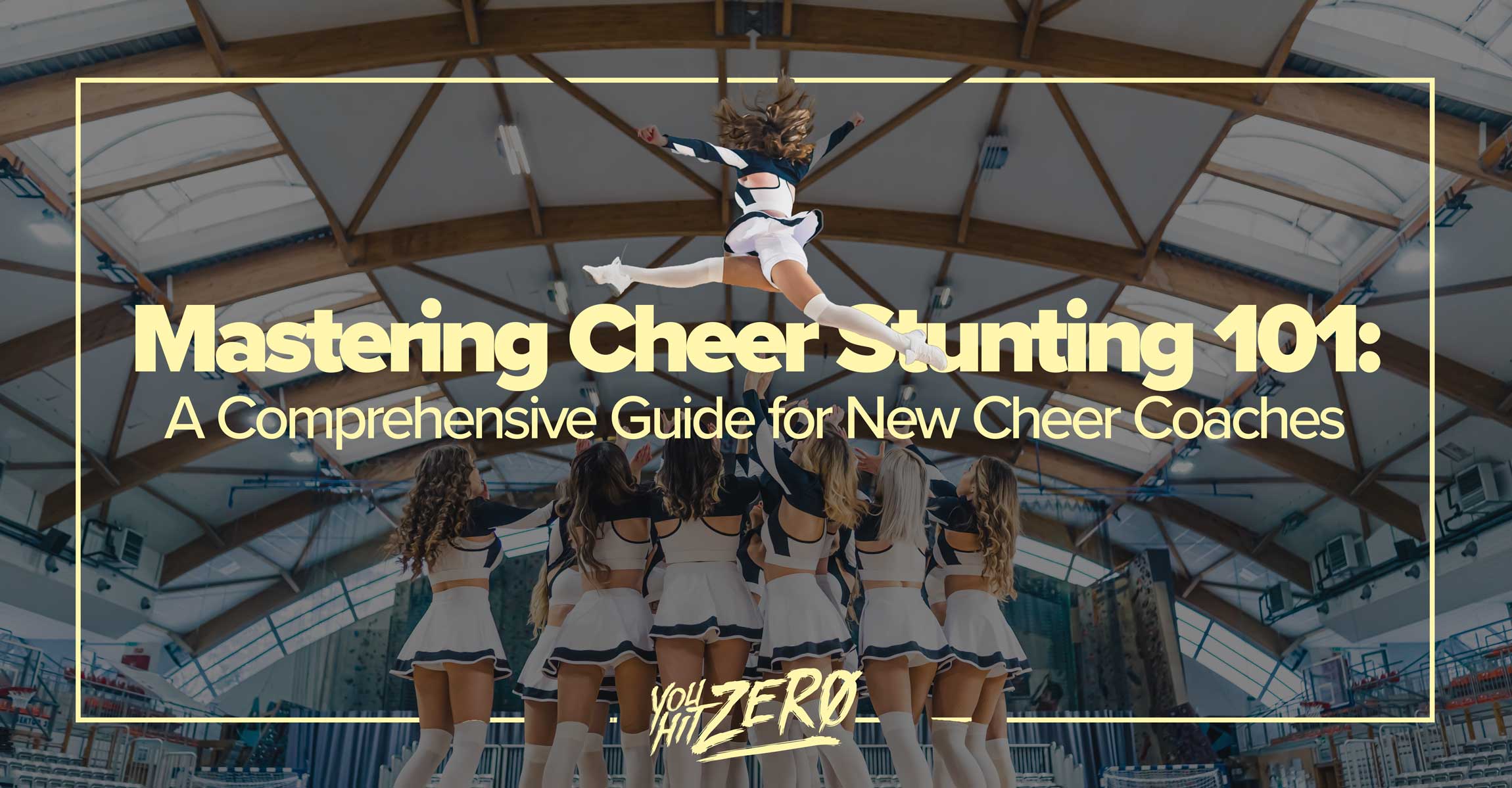
    Mastering Cheer Stunting 101: A Comprehensive Guide for New Cheer Coaches

    Mastering Cheer Stunting 101: A Comprehensive Guide for New Cheer Coaches

    By Steve Pawlyk

    Published June 28, 2023

    Every cheerleading performance is a mesmerizing blend of rhythm, athleticism, and sheer enthusiasm, with stunting taking center stage. Stunting, the act of lifting a team member during a performance, is not just about the high-flying spectacle; it requires precision, strength, and an intricate understanding of cheerleading guidelines. For any new cheer coach looking to ensure their team’s stunting routines are not only breathtaking but also adhere to American cheerleading rules and regulations, this guide offers a step-by-step breakdown.

    Understanding the Key Roles in Cheer Stunting

    Each stunt in cheerleading is made possible by the combined effort of the flyer, the bases, the backspot, and, sometimes, the front spot. All roles are bound by the safety guidelines set forth by the American Association of Cheerleading Coaches and Administrators (AACCA) and the U.S. All Star Federation (USASF).

    1. Flyer: Flyers need a solid sense of balance, flexibility, and confidence. They must follow safety guidelines, such as not reaching out to the crowd or performing any dangerous dismounts without proper support.
    2. Bases: Bases must be strong enough to lift and catch the flyer. They should always watch the flyer and not the crowd or competition, as stipulated by AACCA safety guidelines.
    3. Backspot: The backspot’s responsibility extends to ensuring the stunt’s timing, protecting the flyer’s head and neck, and maintaining constant awareness of the stunt group’s stability.
    4. Front Spot: This optional role can add an extra layer of safety, aiding in lifting the flyer, and providing additional stability to the stunt.

    Stunt Conditioning Drills: Building Strength and Stability

    The next step is conditioning your cheerleaders for stunting. Strength, flexibility, and balance exercises should be part of your team’s regular workout regimen, in line with the conditioning guidelines of the USASF.

    1. Core Strength Exercises: The core is fundamental for all stunting roles. Exercises such as planks, sit-ups, and Russian twists can help build core strength.
    2. Leg and Arm Strength Workouts: Squats, lunges, and push-ups can help bases and spotters develop the power they need to support flyers.
    3. Balance Drills: Balance exercises, such as yoga poses or balance beam exercises, are important for flyers to maintain their poise while aloft.
    4. Flexibility Training: Stretching routines, straddle stretches, and split routines help flyers achieve the flexibility they need to perform various stunts.

    Stunt Progressions: Learning to Stunt Safely

    Safety is paramount in cheerleading, and stunt progressions allow your squad to build confidence and skills while adhering to the AACCA’s risk management guidelines. Here are a few progression steps:

    1. Thigh Stand: This beginner-friendly stunt helps team members understand the basics of balance and coordination.
    2. Prep or Half Elevator: Here, the flyer stands on the bases’ hands at chest level. This stunt introduces height and requires more strength from bases.
    3. Full Elevator or Extension: This full-height stunt is a test of your team’s stunting abilities and should only be performed once the other levels are mastered.

    It is essential to incorporate these progressions into your training regimen, making sure to adhere to the USASF Level Rules and Age Grids.

    When teaching stunts, remember that every cheerleader’s safety is your priority. Use appropriate safety mats and spotting until your squad is fully comfortable with their stunts. As a cheer coach, your primary goal should be to foster an environment where your cheerleaders can safely learn, grow, and shine under your guidance.

    The art of stunting is one of the many elements that make cheerleading performances compelling and breathtaking. By incorporating the right drills, exercises, and safety practices into your coaching, and always adhering to the cheerleading rules and regulations, you can ensure your squad delivers not just a great performance, but a safe one. Keep the spirit high, the music inspiring, and let the joy of cheerleading resonate with every stunt your team executes.

    Steve Pawlyk Signature Full

    IPP's Premade Mixes are USA Cheer Compliant and customizable!  Add Sound FX, swap songs, & more!  Add your Team Name to the mix for only $10! 
    SLAM artwork
    Full_Out_130 mp3 image
    1 minute cheer mix
    WAKE UP THE FIRE
    SLAM artwork
    WAKE UP THE FIRE
    Full_Out_130 mp3 image
    1 minute cheer mix

    Challenging Stereotypes and Navigating Pressures in College Cheerleading

    Stereotypes and Pressures in College Cheerleading

    By Steve Pawlyk

    Published June 19, 2023

    I saw a heartbreaking post in the r/cheerleading subreddit this morning that I thought I should address:


    Cheerleading is more than just a sport. It’s a lifestyle, a commitment, and for many, it becomes an integral part of their identity. However, with the privilege of being the face of a college/school/gym also comes a set of expectations that can take a toll on even the most dedicated athletes.

    At IPP Music, we’ve worked closely with cheerleading teams across the nation, and we’ve seen firsthand the struggles they face beyond mastering intricate routines or synchronizing to the perfect cheer music mix.

    In an environment where every move is under scrutiny, cheerleaders are often expected to look and act a certain way. They are supposed to embody the spirit of their schools, maintain an upbeat and social disposition, and fit into a certain physical image that can often feel unachievable. While these expectations can instigate discipline and camaraderie, they can also impose a mental and emotional burden on cheerleaders, chipping away at their self-esteem and personal well-being.

    A survey conducted by the National Eating Disorders Association found that athletes in judged sports, like cheerleading, are at a higher risk of developing eating disorders. This can be attributed, in part, to the pressure to fit into a certain uniform size or maintain a certain look. Cheerleaders have been told they are “too pale”, “too fat”, or “not enough” of something in a realm where there is always room for comparison and criticism.

    Moreover, the constant need to appear cheerful and sociable can become draining. Cheerleaders often find themselves being told they are “not social enough,” which can be particularly difficult for those who are introverted or dealing with personal issues.

    So, how can we challenge these stereotypes and alleviate these pressures?

    1. Open Discussions:

    Creating a space where cheerleaders can openly discuss their feelings and experiences without judgment is crucial. Coaches and team leaders should foster an environment where athletes can express their concerns about body image, societal pressure, and mental health. These discussions can go a long way towards dispelling harmful stereotypes and promoting self-acceptance.

    2. Redefining Standards:

    The notion that all cheerleaders must look or behave a certain way is outdated and restrictive. Teams and coaches can work towards breaking these norms by encouraging diversity and individuality. The most powerful cheerleading squads aren’t those with members who all look the same; they’re those where each cheerleader brings their unique strengths and personalities to the team.

    3. Support Systems:

    Establishing a network of support that includes coaches, peers, and mental health professionals can make a significant difference in the lives of cheerleaders. Knowing they have people to turn to, who understand their struggles and offer solutions, can mitigate the stress associated with the pressures of cheerleading.

    4. Emphasizing Health Over Aesthetics:

    Prioritizing the health and fitness of cheerleaders over their appearance is essential. Training should focus on building strength, stamina, and flexibility rather than achieving a specific body shape or size.

    Cheerleading should be an experience that builds character, fosters friendships, and instills a sense of school spirit. It should not be a breeding ground for insecurities or a source of undue stress. As we work together to create the perfect cheer music for your routines at IPP Music, we also hope to inspire a harmonious environment that celebrates each cheerleader’s individuality and passion.

    Cheerleading is a beautiful sport filled with vigor, enthusiasm, and teamwork. It’s high time we break the mould, challenge the stereotypes, and ensure our cheerleaders feel cherished, appreciated, and comfortable being themselves

    What can I do about it as a cheerleader?

    Cheerleaders themselves play a crucial role in bringing about this change. Here are a few steps they can take to navigate the pressures of college cheerleading:

    1. Speak Up:

    If you’re feeling overwhelmed by expectations, don’t hesitate to voice your concerns. Open communication can lead to understanding, support, and change. If something makes you uncomfortable, let your coach or a trusted team member know. Remember, your mental and physical well-being is as important as the performance itself.

    2. Self-care:

    Take time for yourself amidst the busy cheer schedule. Engage in activities that help you relax, and ensure you’re getting adequate sleep and proper nutrition. It’s not selfish to prioritize your health and well-being – it’s necessary.

    3. Set Personal Boundaries:
    While being part of a team, it’s essential to set boundaries that protect your individuality and mental health. Don’t feel pressured to conform to norms that don’t align with your beliefs or comfort. It’s okay to say ‘no’ when necessary.

    4. Practice Self-love and Acceptance:
    Remember, the perceived “perfect cheerleader” doesn’t exist. Celebrate your strengths and understand that everyone has areas of improvement. It’s okay not to fit into the mould. Appreciate your unique qualities and talents – they’re what make you an asset to your team

    5. Support Your Teammates:
    Just as you may be feeling pressure, your fellow cheerleaders might be experiencing the same. Be supportive of each other. Foster a positive team culture that values every member’s contributions and encourages open communication.

    6. Seek Professional Help If Needed:
    If the pressures of cheerleading are causing significant stress or leading to harmful behaviors, it’s important to reach out to mental health professionals. Therapists and counselors can provide strategies to cope with stress and address any potential mental health issues.

    Remember, cheerleading is about creating a sense of unity and school spirit. It’s about teamwork, passion, and having fun. The uniform you wear or how outgoing you are should never overshadow your love for the sport. Stay true to yourself, prioritize your well-being, and remember that you bring something unique and invaluable to your team. You are more than enough just as you are

    Steve Pawlyk Signature Full

    IPP's Premade Mixes are USA Cheer Compliant and customizable!  Add Sound FX, swap songs, & more!  Add your Team Name to the mix for only $10! 
    SLAM artwork
    Full_Out_130 mp3 image
    1 minute cheer mix
    WAKE UP THE FIRE
    SLAM artwork
    WAKE UP THE FIRE
    Full_Out_130 mp3 image
    1 minute cheer mix

    The 3 Key Moves in Cheerleading: Boosting Your Routine with IPP Music

    Boost your cheer routine with key moves: High V, T-Jump, Liberty Stunt

    By Steve Pawlyk

    Published May 30, 2023

    When it comes to mastering the art of cheerleading, understanding key moves is crucial. These moves form the basis of any routine, and perfecting them can take your cheerleading performance from good to exceptional. At IPP Music, we understand the power of rhythm and music in enhancing these moves, which is why we provide tailored cheerleading music to support and uplift your performance.

    Cheerleading is an energetic, powerful, and dynamic sport that requires skill, agility, and precision. With the combination of tumbling, jumps, stunts, and dance, cheerleading is as much about athleticism as it is about spirit and synchronization. 

    To help you boost your cheerleading routine, we will outline three key moves in cheerleading that every cheerleader should know. These moves are the High V, the T-Jump, and the Liberty Stunt. With the right music from IPP Music, you can make these moves pop and make your performance unforgettable.

    The High V

    The High V is a foundational move in cheerleading, often used in cheers, chants, and routines. It’s a move that every cheerleader learns early in their training. Here’s how to perfect your High V:

    1. Stand tall with your feet hip-width apart.
    2. Extend your arms up and out in a V shape. 
    3. Keep your arms straight, and make sure your palms face outward.
    4. Maintain a tight, sharp position, with your thumbs facing the back.

    The High V is great for creating a dramatic effect, especially when matched with powerful, beat-driven music. IPP Music offers a range of tracks that can help you make the most of this move, helping to create a captivating and exciting performance.

    The T-Jump

    The T-Jump, or toe touch, is a classic cheerleading jump that demands flexibility and precision. Here’s how to perform a T-Jump:

    1. Start with your feet together and arms in a High V.
    2. Bend your knees and jump off both feet.
    3. At the peak of your jump, split your legs into a V shape.
    4. Reach your hands towards your toes, creating a T shape with your body.
    5. Land safely with your knees slightly bent to absorb the impact.

    Matching the T-Jump with the right music can add a significant impact to your routine. At IPP Music, we provide a diverse selection of music to suit any cheerleading routine, whether you’re looking for fast-paced tracks to match the energy of the T-Jump or slower beats for a graceful execution.

    The Liberty Stunt

    The Liberty Stunt is a popular move that involves a flyer balancing on one foot, held up by bases. It’s a move that showcases teamwork and trust among cheerleaders. Here’s how to perform a Liberty Stunt:

    1. The flyer stands on one foot, while the bases support the flyer’s foot with their hands.
    2. The flyer keeps the other leg bent at the knee, creating a 90-degree angle.
    3. The back spot supports the flyer’s back and helps to keep her steady.
    4. The flyer extends her arms into a High V for balance and effect.

    The Liberty Stunt is a dramatic and impactful move that requires just the right music to match its intensity. IPP Music provides a range of music that can help accentuate this stunt, making your routine stand out from the rest.

    In conclusion, there are six main levels in cheerleading, each with its unique set of skills and requirements. These levels provide a roadmap for cheerleaders, helping them progress from beginners to advanced athletes. Understanding these levels is essential for anyone interested in cheerleading, whether they’re aspiring cheerleaders, parents, or fans of this dynamic sport.

    So, next time someone asks you, “How many levels of cheer are there?” you’ll be ready with an informed answer that will illuminate the complex and fascinating world of cheerleading. Stay tuned for more insights into the sport of cheerleading!

    Conclusion

    The High V, the T-Jump, and the Liberty Stunt are three key moves in cheerleading that, when executed correctly and paired with the right music, can take your cheerleading routine to the next level. IPP Music is dedicated to providing the best cheerleading music that complements your routine

    Steve Pawlyk Signature Full

    When Choosing Cheerleading Music, Consider This: The Ultimate Guide for Perfect Performance Music

    When Choosing Cheerleading Music Consider This: The Ultimate Guide for Perfect Performance Cheerleading Music

    By Steve Pawlyk

    Published May 16, 2023

    Cheerleading has evolved into a dynamic display of athleticism, spirit, and yes, music. Choosing the right cheerleading music can make or break your team’s routine, and at IPP Music, we understand that. So, how do you select the best cheerleading music that will make your team stand out at the next competition? Here are some key points to consider.

    1. Picking the Right Tempo:

    One of the first things to think about when choosing cheerleading music is the tempo. The tempo sets the pace for your entire routine, whether it’s a fast-paced, high-energy performance, or a more slow and dramatic display. At IPP Music, we offer a diverse range of premade and custom music options so that you can find the perfect beat for your team’s unique style and routine.

    2. Matching the Music to the Moves:

    A good cheerleading routine is like a well-choreographed dance—it pairs perfectly with the music. When picking your music, it should enhance and complement the moves in your routine. At IPP Music, our tracks can be customized to match your choreography, ensuring a seamless performance that will impress the judges and the audience alike.

    3. Ensuring Your Music Is Licensed:

    One of the major considerations when choosing cheerleading music is copyright laws. Using music without the appropriate license could lead to legal issues or even disqualification from competitions. IPP Music offers fully licensed music, giving you peace of mind knowing your team can perform legally and ethically.

    4. Customizing Your Music:

    When it comes to cheerleading music, one size does not fit all. Your music should reflect your team’s unique personality and style. At IPP Music, our custom music service allows you to tailor your tracks to your needs. You can choose the tempo, mix different songs, and even add in sound effects or voiceovers to make your performance truly one-of-a-kind.

    5. Considering the Audience and Judges:

    Finally, remember that your music isn’t just for your team—it’s also for the audience and the judges. Choose music that will engage the audience and impress the judges. If you’re unsure, our experienced team at IPP Music can help guide you in selecting tracks that are popular and impactful while still fitting your routine.

    Conclusion:

    Choosing the right cheerleading music is a vital part of creating a standout performance. It requires careful thought and consideration, and that’s where IPP Music can assist. We offer a range of licensed, customizable music options tailored to cheerleading teams. So whether you’re looking for premade tracks or want to create a unique mix, IPP Music has got you covered. 

    Remember, when it comes to cheerleading music, consider the tempo, choreography, licensing, customization, and audience appeal. Get in touch with IPP Music today and let’s create the perfect soundtrack for your next cheerleading performance.

    Steve Pawlyk Signature Full

    Amplify Your Cheerleading Performance: Getting Loud in Cheer

    How do you get loud in cheerleading?

    By Steve Pawlyk

    Published May 16, 2023

    When you think of cheerleading, what comes to mind? Spirited chants, gravity-defying stunts, and yes, lively, high-energy music. At IPP Music, we understand the impact that the right soundtrack can have on a cheerleading performance. Whether it’s a high school pep rally or a national cheerleading competition, the music can make or break the performance. So, how do you get loud in cheerleading? Let’s dive into the world of cheerleading music to explore this topic.

    Getting Loud in Cheerleading:

    Cheerleading is all about projecting energy, enthusiasm, and spirit, and nothing does that better than the volume of your performance. But getting loud in cheerleading isn’t just about cranking up the decibels. It’s a combination of powerful vocals, coordinated team chants, and most importantly, booming, captivating music. 

    • Powerful Vocals:

    The first component to getting loud is the strength of the cheerleaders’ voices. Coaches work hard to train their teams to project their voices, enunciate clearly, and maintain a consistent volume. But powerful vocals alone aren’t enough. They need to be coupled with the right music to really amp up the energy.

    • Coordinated Team Chants:

    Team chants are a core element of cheerleading. The more in sync the team is, the louder and more impressive the chant. Effective chants are catchy, easy to follow, and fit well with the chosen music. 

    • High-Energy, Licensed Music:

    The final, and arguably most important, piece of the puzzle is the music. The right music can elevate a cheerleading performance from good to unforgettable. At IPP Music, we specialize in creating customizable, licensed cheerleading music that will truly make your performance stand out.

    IPP Music – Your Partner for Loud Cheerleading Performances:

    At IPP Music, we understand that cheerleading is about more than just cheers and stunts – it’s about the entire experience. That’s why we offer a wide range of customizable, licensed music that caters specifically to cheerleading teams. 

    Our music is designed to complement and enhance your cheerleading routines, taking into account the rhythm, pacing, and energy required in the cheerleading world. The music you choose can add that extra punch to your performance, helping you make the impact you’re aiming for.

    Licensed Music – The Legal Way to Get Loud:

    One of the most important aspects of choosing music for cheerleading is ensuring it is licensed. Using unlicensed music can result in hefty fines and penalties. At IPP Music, all our music tracks are fully licensed, meaning you can focus on your performance without worrying about legal issues.

    Customizable Music – Making Your Cheerleading Routine Unique:

    Another key aspect of getting loud in cheerleading is having unique music that sets your team apart. At IPP Music, we offer customizable music options. Whether you want to add a particular song, adjust the tempo, or include specific sound effects, we can tailor the music to suit your needs.

    Conclusion:

    Getting loud in cheerleading involves more than just raising your voice. It’s about a combination of powerful vocals, coordinated chants, and the right, high-energy music. At IPP Music, we’re here to help you amplify your cheerleading performance with our customizable, licensed music. Let us help you make your cheerleading performance as loud and spirited as it can be.

    Remember, in cheerleading, as in life, it’s not just about the noise you make, but the impression you leave. So, get ready to leave a lasting impression with IPP Music!

    Steve Pawlyk Signature Full

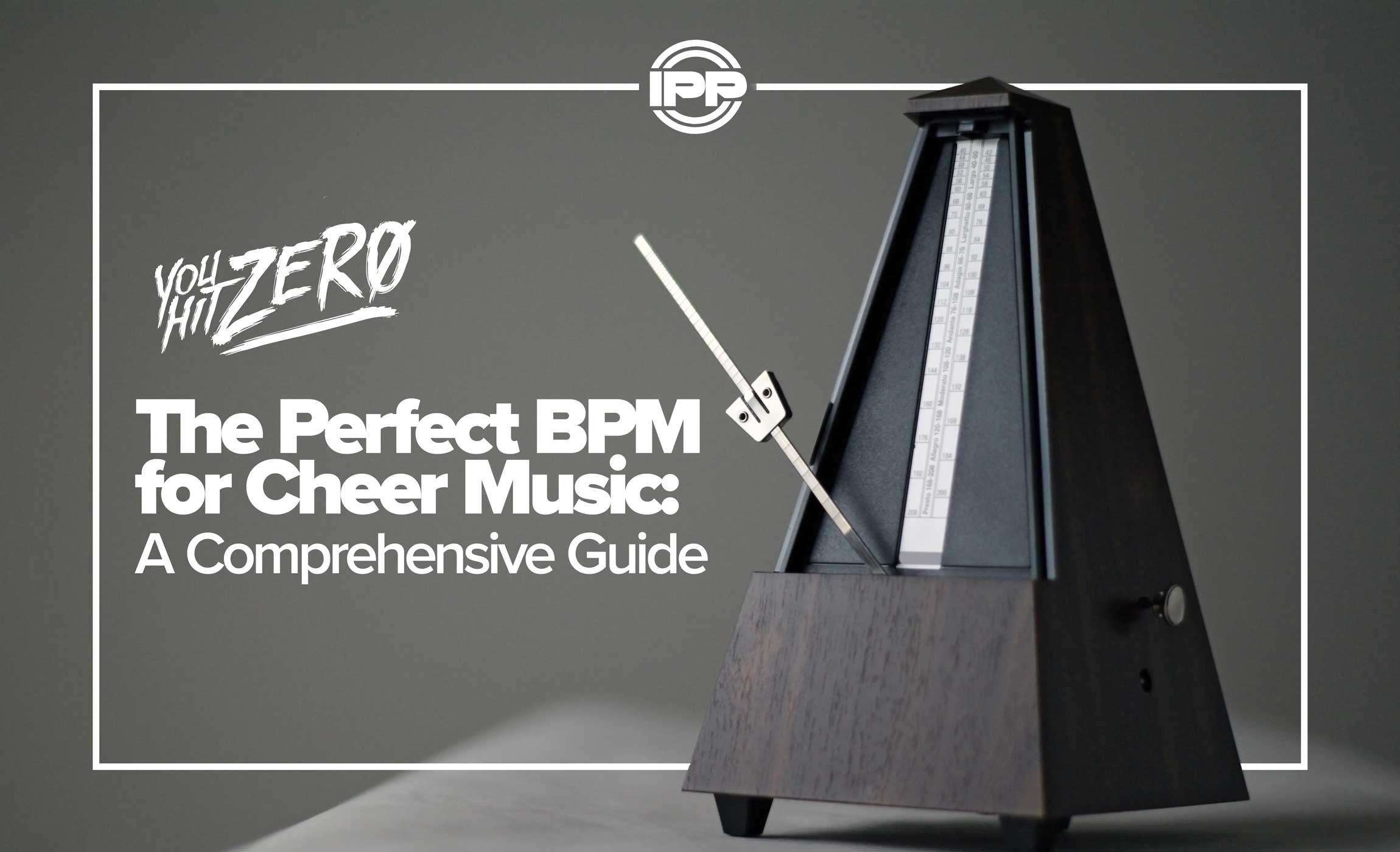
    The Perfect BPM for Cheer Music: A Comprehensive Guide

    cheer music bpm tempo

    By Steve Pawlyk

    Published May 15, 2023

    Are you a cheerleader or cheer coach looking to perfect your routine with the right music tempo? Understanding the beats per minute (BPM) of cheer music is critical to synchronizing your team’s movements and timing. The majority of cheer industry professionals consider the ideal BPM for most cheer music to be around 146 BPM.

    Understanding BPM in Cheer Music

    BPM, or beats per minute, is a unit used to measure the pace of music. It tells you how many beats there are in a minute of a particular song or musical piece. In cheerleading, the BPM of the music plays a crucial role as it forms the backbone of the cheer routine’s timing and synchronization. 

    When it comes to cheer music, the consensus in the cheer community is that 146 BPM is the sweet spot. This tempo is fast enough to keep the energy high and the routine exciting, but not so fast that the cheerleaders can’t keep up.

    The Magic of 146 BPM in Cheer Music

    Why 146 BPM, you might ask? This BPM strikes the perfect balance between energy and control. At this pace, cheer routines can have a high-impact, dynamic performance without losing synchronization or risking safety. The tempo allows cheerleaders to perform their stunts, tumbling, and dance movements in time with the music, creating a seamless, rhythmic routine that is a pleasure to watch.

    Using IPP Music to Understand Cheer Music BPM

    IPP Music has become a go-to resource for cheerleaders and cheer coaches trying to understand the relationship between music counts and BPM. Their comprehensive guides and informative graphs provide valuable insights into how BPM affects the execution of cheer routines. By studying IPP Music’s resources, you can better comprehend why 146 BPM is often the chosen tempo for cheer music.

    Within every premade mix page on the IPP Music site, you’ll find helpful guides that show how to count music and match these counts with your cheer routine. These guides can be particularly helpful when choreographing routines to music with a BPM of 146, ensuring every beat is met with precision and enthusiasm.

    IPP's Premade Mixes are USA Cheer Compliant and customizable!  Add Sound FX, swap songs, & more!  Add your Team Name to the mix for only $10! 
    SLAM artwork
    Full_Out_130 mp3 image
    1 minute cheer mix
    WAKE UP THE FIRE
    SLAM artwork
    WAKE UP THE FIRE
    Full_Out_130 mp3 image
    1 minute cheer mix

    Conclusion

    In the high-energy world of cheerleading, music is not merely a backdrop; it’s an integral part of the performance. Choosing cheer music with a BPM of 146 can provide the right tempo to enhance the excitement of the performance while ensuring the safety and synchronization of your team.

    Whether you’re a cheerleader, a coach, or someone interested in the mechanics of cheerleading, understanding the BPM of cheer music is essential. Resources like IPP Music can provide you with the tools and knowledge you need to navigate the world of cheer music BPM confidently. Remember, the next time you’re selecting or choreographing to cheer music, aim for that magic number: 146 BPM.

    Steve Pawlyk Signature Full

    Building a Strong Team: Strategies for Effective Cheerleading Squad Management

    Building-a-strong-team-Strategies-for-effective-cheerleading-squad-management

    By Steve Pawlyk

    Published March 6, 2023

    As a cheer coach, one of your main responsibilities is to build and manage a successful cheer squad. A strong team is essential to achieving success in cheerleading, both on and off the field. In this article, we’ll explore strategies for effective cheerleading squad management, and how to build a strong team that can achieve its goals.

    First and foremost, effective communication is key to building a strong team. Regular team meetings, whether in-person or virtual, can help to keep your squad members informed about upcoming events, practice schedules, and any changes to the team’s goals or objectives. It is also important to establish open lines of communication, and to encourage your squad members to share their thoughts and ideas.

    Another important strategy for effective cheerleading squad management is to establish clear roles and responsibilities for each squad member. This can help to ensure that everyone knows what is expected of them and can help to prevent confusion and conflicts. It’s also important to recognize and reward your squad members for their hard work and dedication, whether it’s through verbal encouragement or rewards program.

    Creating a positive and supportive team culture is also crucial for building a strong team. This means fostering an environment that encourages teamwork, mutual respect, and trust among your squad members. This can be achieved through team-building activities, such as bonding events and retreats, and by promoting a culture of inclusion and diversity.

    It’s also important to establish a clear set of team rules and expectations, and to enforce them consistently. This can include things like attendance policies, dress codes, and social media guidelines. By having clear rules and expectations in place, it will be easier for you to hold your squad members accountable and ensure that everyone is on the same page.

    Finally, effective cheerleading squad management also involves providing your squad members with the necessary resources and support to achieve their goals. This can include things like providing proper equipment, arranging for coaching and training, and even arranging for mental health support.

    In conclusion, building a strong team is essential to achieving success in cheerleading. By implementing effective strategies for cheerleading squad management, such as clear communication, clear roles and responsibilities, and positive team culture, you can help your squad members to achieve their goals and perform at their best. Additionally, by providing necessary resources and support to your squad members, you can ensure that they have what they need to succeed.

    In conclusion, building a strong team is essential to achieving success in cheerleading. By implementing effective strategies for cheerleading squad management, such as clear communication, clear roles and responsibilities, and positive team culture, you can help your squad members to achieve their goals and perform at their best. Additionally, by providing necessary resources and support to your squad members, you can ensure that they have what they need to succeed.

    Steve Pawlyk Signature Full

    SHARE YOUR CART